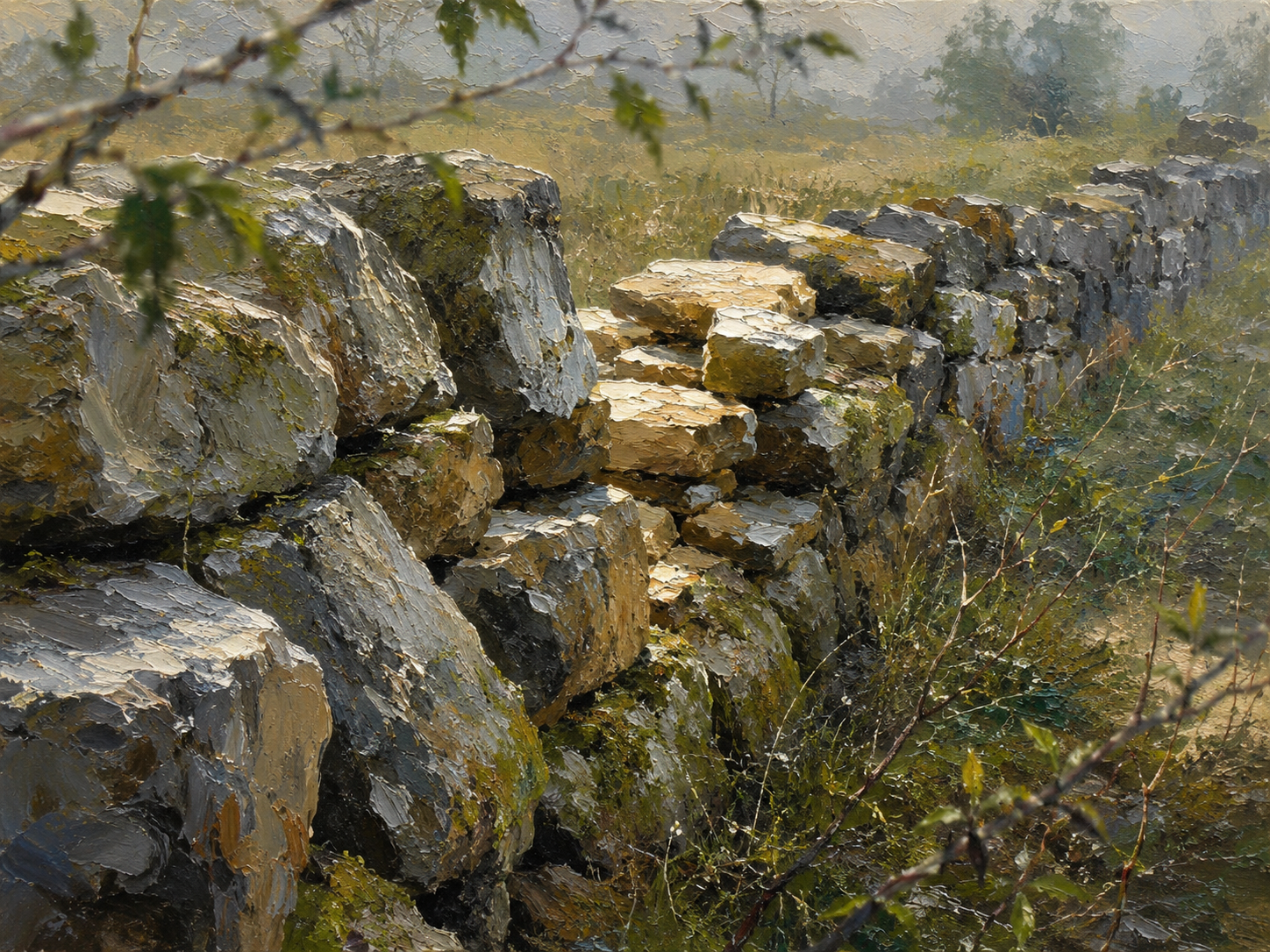
The Silent Witness to Generations
Critique
1. Introduction This oil painting features a detailed study of a traditional dry stone wall extending across a quiet rural landscape. The artist focuses on the rugged, enduring nature of the structure, using a vigorous application of paint to convey the physical presence of the ancient stones. 2. Description The composition follows the diagonal line of the wall as it recedes from the lower left foreground into the hazy, soft-focus distance of the upper right. The stones are depicted with a variety of textures, ranging from sharp, angular edges to soft patches of green moss and lichen. In the background, a muted yellow-green field stretches under a pale, misty sky, while thin branches in the immediate foreground add a layer of environmental detail. 3. Analysis The primary technical achievement of this work is the use of heavy impasto, where thick ridges of paint physically represent the uneven surfaces of the rocks. This technique creates a strong sense of three-dimensionality and weight, making the wall feel grounded and permanent. The color palette is dominated by earthy greys, ochres, and deep greens, which harmonize to create a unified and naturalistic atmosphere. 4. Interpretation and Evaluation The wall serves as a powerful symbol of human labor and the demarcation of space within the natural world. Its weathered appearance suggests a long history, acting as a silent witness to the changing seasons and the passage of generations. The artist’s ability to transform a simple functional element into a monumental subject through texture and light is highly effective. 5. Conclusion This painting succeeds in capturing the quiet dignity of the rural countryside through a sophisticated handling of medium. The combination of structural solidity and atmospheric depth results in a compelling and evocative landscape study.
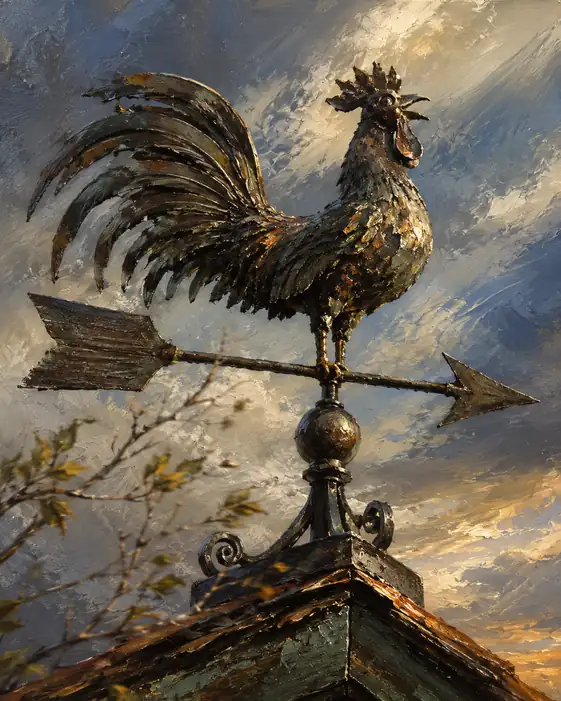 A Proud Song for the Coming Dawn
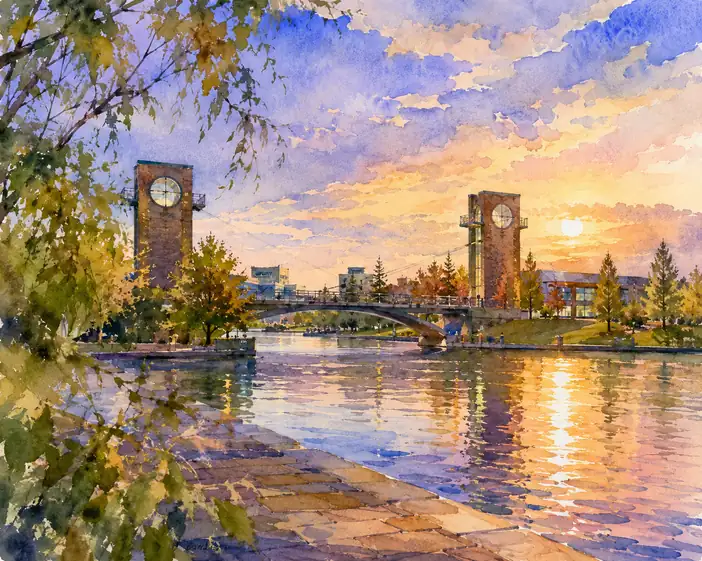 Serenade of the Setting Sun
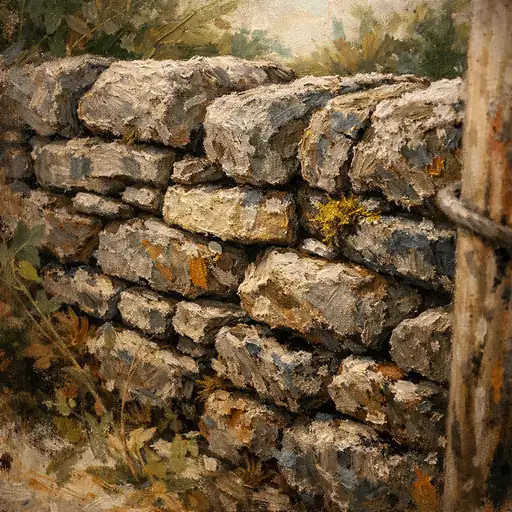 The Silent Bastion
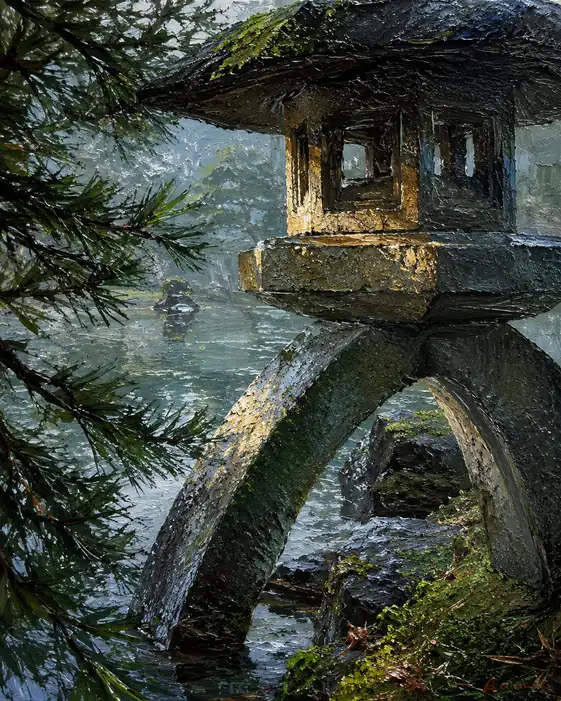 The Silent Watcher of the Garden
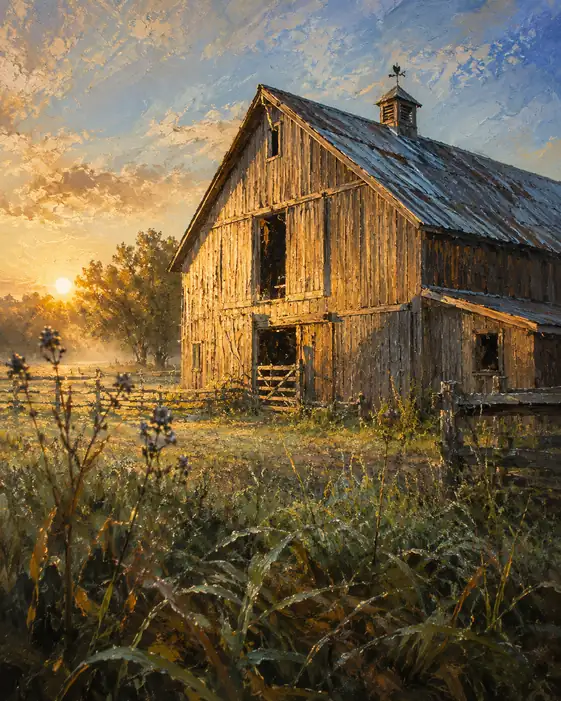 Prologue of the Morning Dew
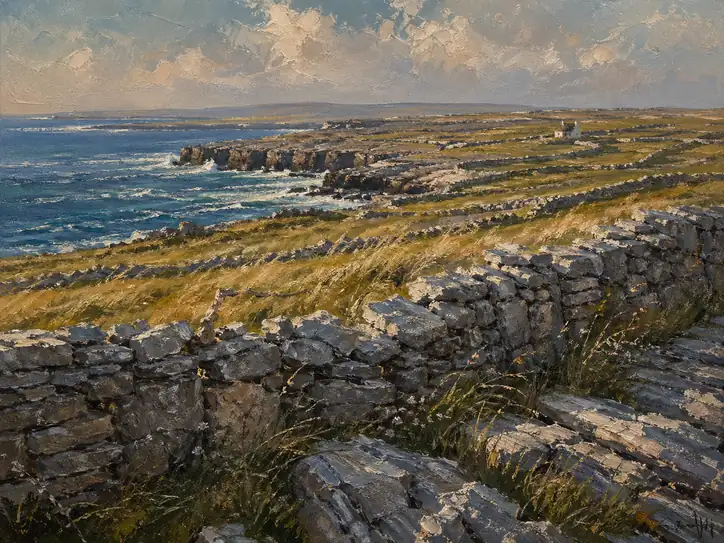 Echoes of the Stones
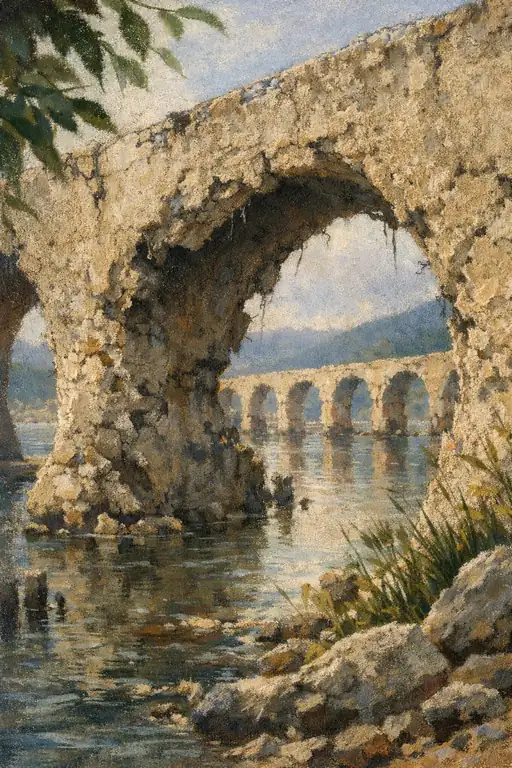 Echoes of the Ancients
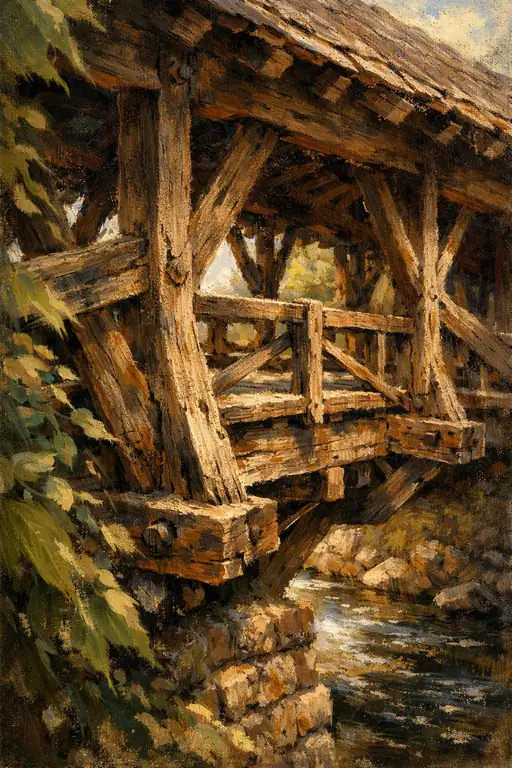 The Bridge That Remembers
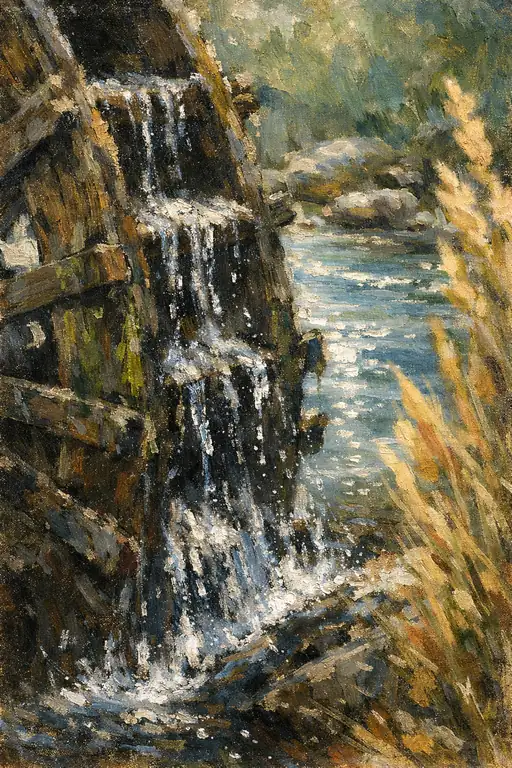 The Wheel of Time
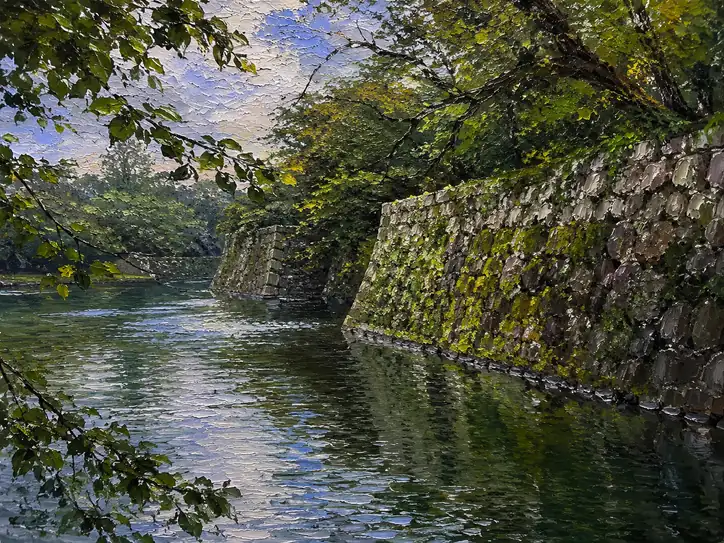 Eternal Vigilance of Moss and Stone
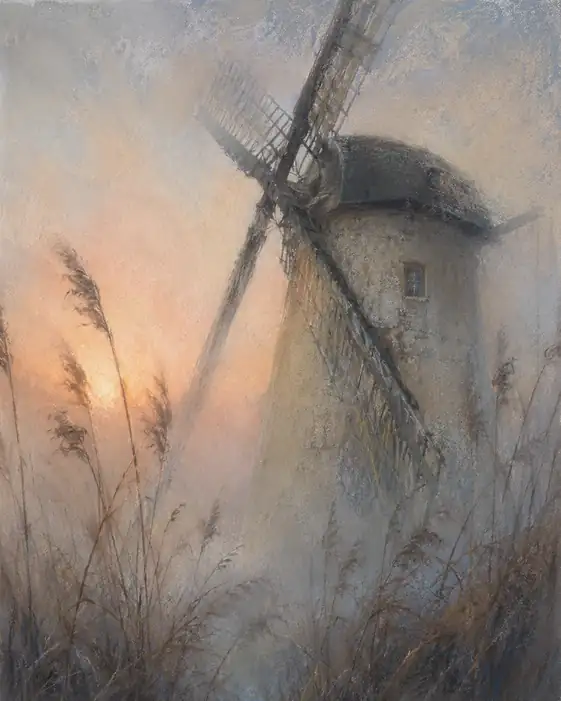 The Ghost in the Golden Haze