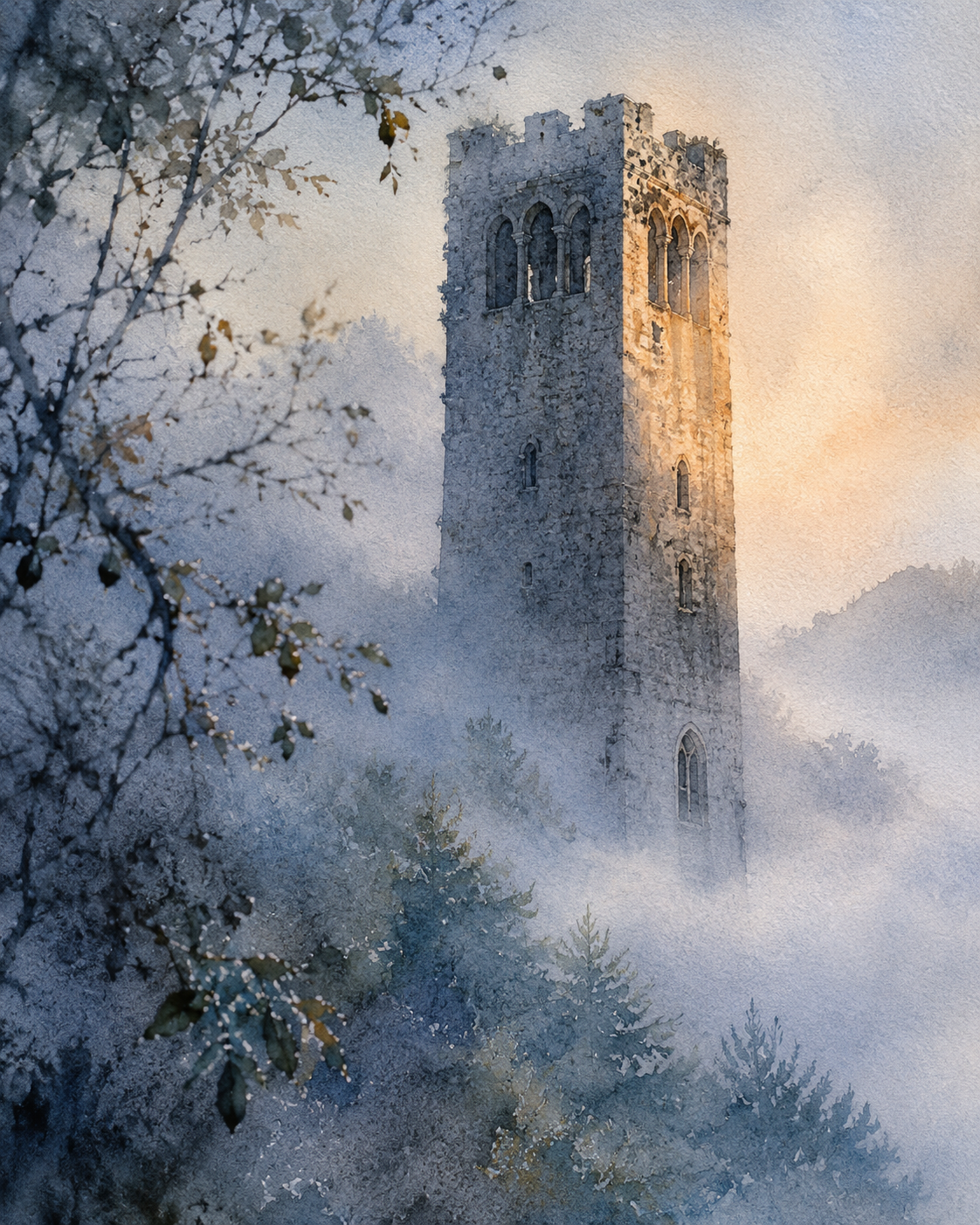
The Silent Witness in the Mist
Critique
1. Introduction This watercolor painting depicts an ancient stone tower emerging from a dense shroud of morning mist. The work captures a sense of timelessness and solitude, positioning a singular architectural monument within a soft, atmospheric landscape. It serves as an exploration of the relationship between man-made structures and the ephemeral qualities of light and weather in a mountainous region. 2. Description The composition is dominated by a tall, rectangular stone tower with arched windows and crenellations, rendered in cool gray tones that suggest weathered granite. A warm, golden light strikes the right side of the structure, contrasting with the shadowed left side and the pale, misty background. In the foreground, delicate, leafless branches extend from the left, while the base of the tower is obscured by thick layers of white and pale blue fog that drift over a coniferous forest. 3. Analysis The artist employs a wet-on-wet technique to achieve the soft transitions in the mist and sky, creating a powerful sense of atmospheric depth. The tower’s solid form is balanced by the ethereal nature of the fog, which uses a limited palette of muted blues and grays. The verticality of the tower is emphasized by the upward movement of the mist and the framing branches, while the subtle texture of the stone is suggested through careful stippling and dry-brush effects. 4. Interpretation and Evaluation The painting successfully evokes a mood of serene isolation, where the tower stands as a silent witness to the passing of time. The use of light is particularly effective, as the golden glow provides a focal point that breathes life into the otherwise cool and somber scene. This technical mastery of watercolor allows for a delicate balance between the detailed architecture and the abstract, fluid qualities of the natural environment, resulting in a cohesive and emotive work. 5. Conclusion Through its refined use of color and soft edges, the artwork transforms a simple architectural subject into a poetic vision of heritage and nature. The initial impression of a cold, foggy mountain is softened by the radiant warmth of the rising sun hitting the ancient stone. The piece remains a distinguished example of how watercolor can be used to convey both the permanence of stone and the fleeting beauty of a misty morning.
Same Subcategory
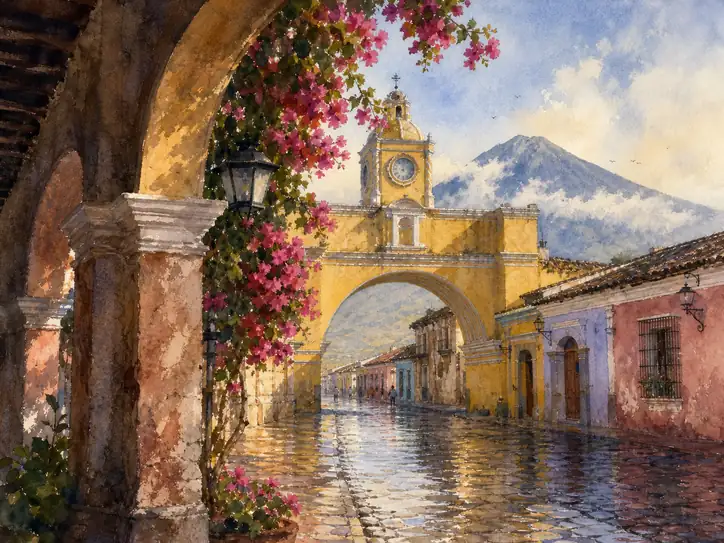 Morning Glory Under the Volcano
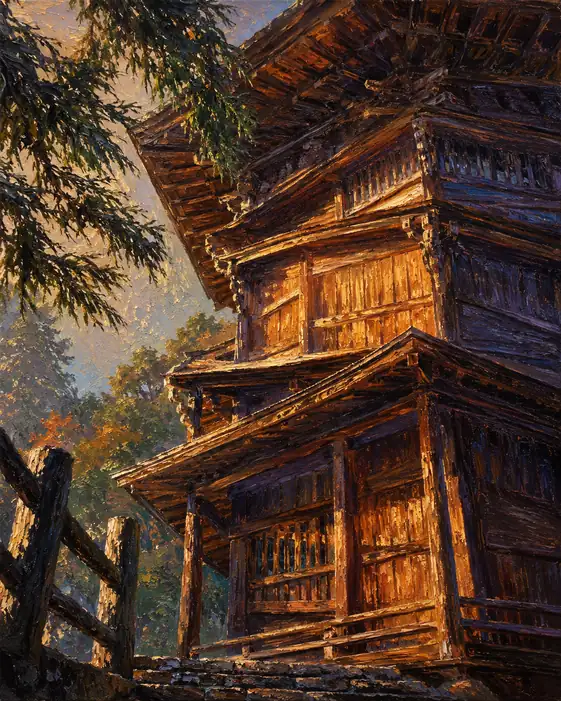 Echoes of the Ancient Wood in Sunset
Similar Artworks
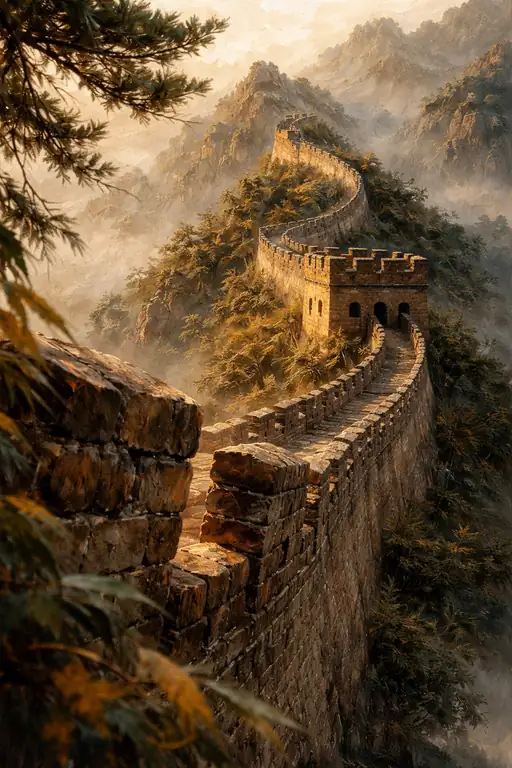 The Stone Serpent Bathing in Golden Mists
 Awakening of the Golden Citadel
 Silent Guardian of the Peak
 Where the Golden River Whispers
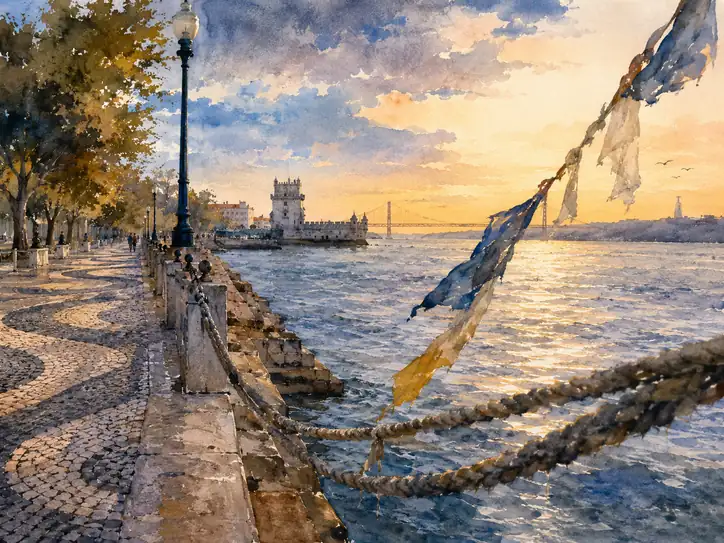 Whispers of the Vanished Sails
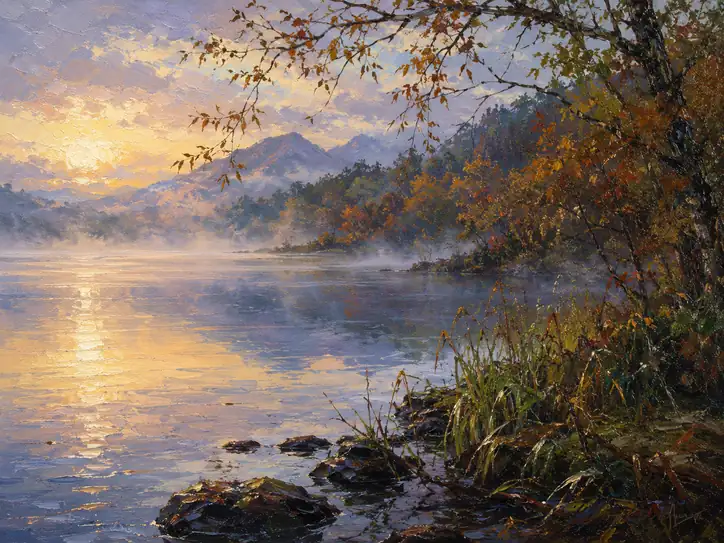 Solitude by the Fog-Bound Pond
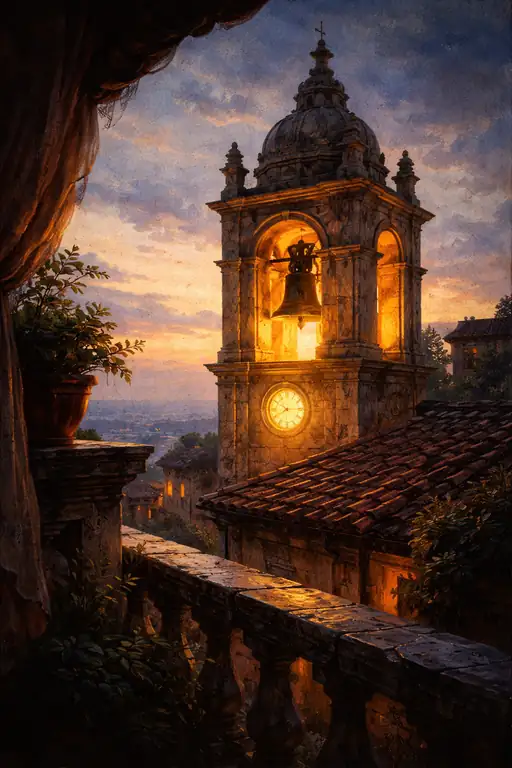 The Sentinel of Sunset
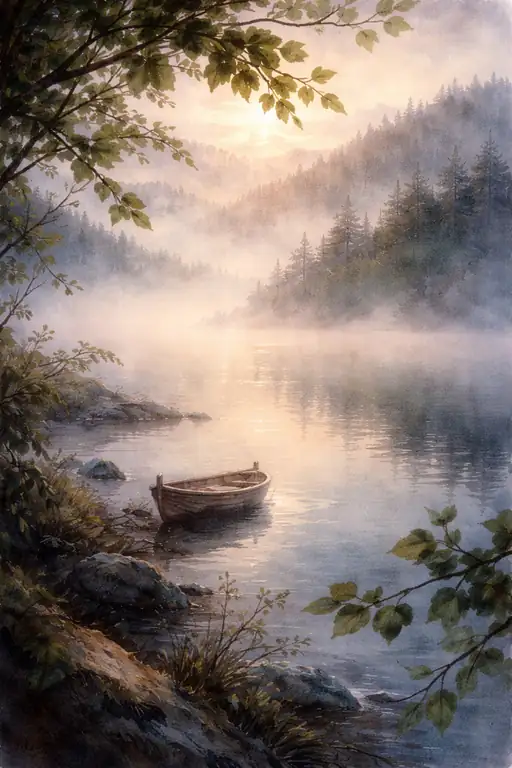 Echoes of Gold in the Misted Silence
 The Walled Dream of Golden Twilight
 Silent Steps through the Sacred Forest