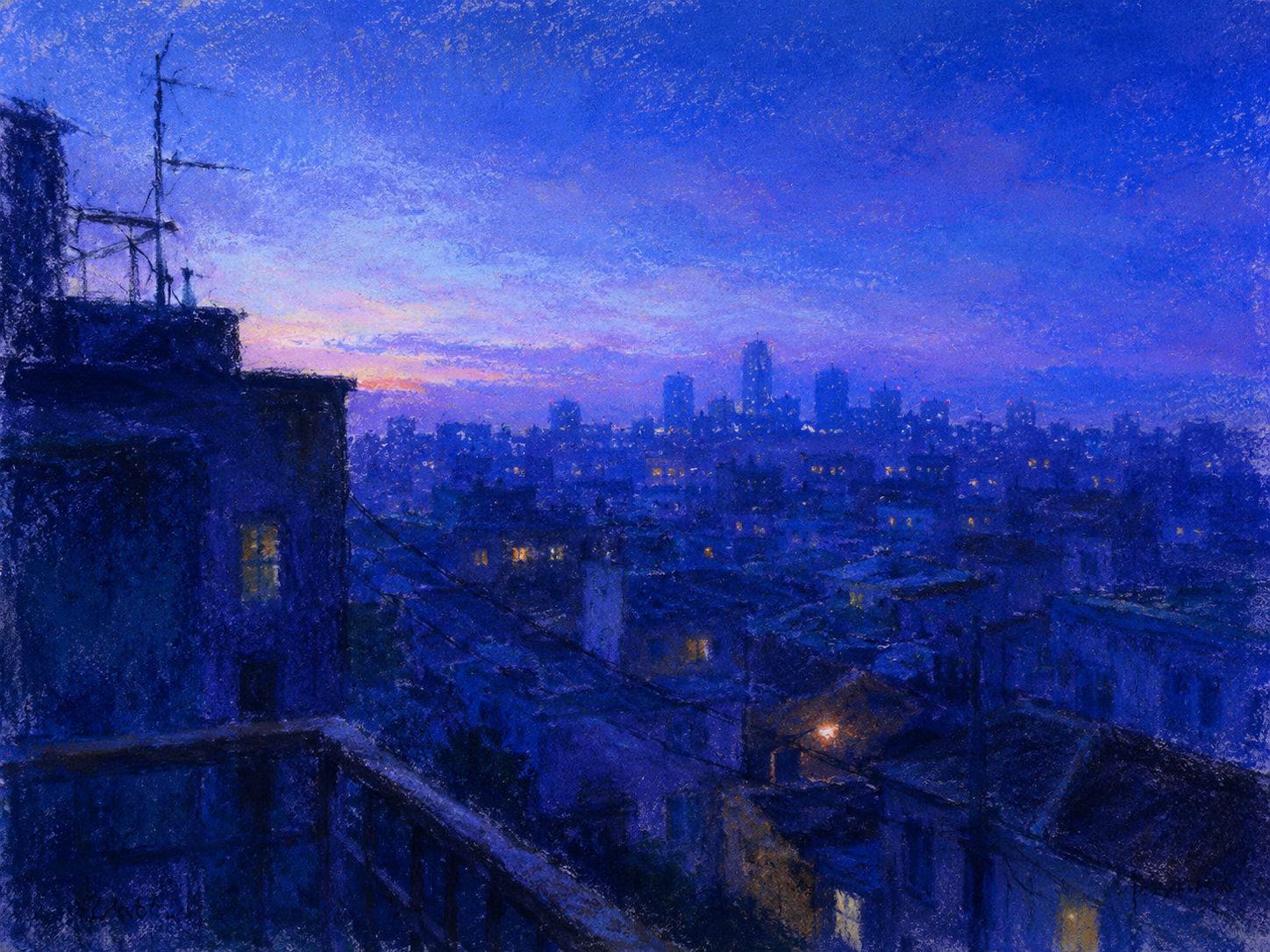
The City Holds Its Breath at Blue Hour
Critique
1. Introduction This cityscape painting captures the atmospheric transition of the "blue hour," depicting an urban environment as day fades into night. The view, likely from an elevated vantage point such as a rooftop, looks across a sprawling network of lower buildings toward a distant, illuminated skyline. Through its rich, textured application of color and emphasis on nocturnal illumination, the work explores the quiet beauty found in the densely packed structures of a modern city. The piece serves as a visual record of a specific time of day when the natural light of the horizon meets the artificial glow of human habitation. 2. Description The canvas is saturated with various shades of deep blue, ranging from vibrant cobalt in the upper sky to dark ultramarine in the foreground shadows. On the far left horizon, a narrow band of soft orange and pink suggests the final remnants of sunset. The middle ground is filled with the intricate silhouettes of rooftops, punctuated by the warm, amber glow of lights from scattered windows. In the immediate foreground, the dark, textured form of a building with an antenna provides a sense of proximity, while distant skyscrapers rise like faint monuments against the twilight sky. Fine lines representing power cables cut across the lower half, adding a layer of urban detail. 3. Analysis The artist utilizes a heavily grained, tactile technique that gives the painting a physical presence reminiscent of dry pastel or oil crayon. This texture creates a visual vibration, preventing the dominant blue palette from appearing flat and instead imbuing the scene with a sense of atmospheric depth. The composition follows a classical perspective, with the foreground elements framing the view and guiding the eye toward the distant horizon. The strategic placement of small, bright points of light creates a rhythmic pattern across the canvas, effectively balanced by the large, dark masses of the architectural forms in the lower quadrants. 4. Interpretation and Evaluation This work can be interpreted as a study of urban isolation and the collective energy of a city. The view from a solitary rooftop suggests a personal, reflective moment, yet the thousands of window lights signify a vast, unseen population living in close proximity. The technical execution is notable for its sophisticated handling of "blue-on-blue" values, where subtle shifts in hue and saturation define complex spatial relationships. The contrast between the organic, fading light of the sky and the geometric, persistent light of the city creates a poignant tension, highlighting the dual nature of the urban landscape as both a physical structure and a living organism. 5. Conclusion In conclusion, the painting is a masterful exploration of the urban nocturne, blending realistic observation with a highly expressive style. The orchestration of light, color, and texture results in a work that is both visually immersive and emotionally evocative, capturing the unique mood of the city at dusk. While the initial impression is one of overwhelming blue, the richness of the details and the warmth of the artificial lights reveal a hidden complexity and life within the urban expanse. The piece ultimately succeeds in transforming a common metropolitan view into a powerful and atmospheric work of art.
Same Subcategory
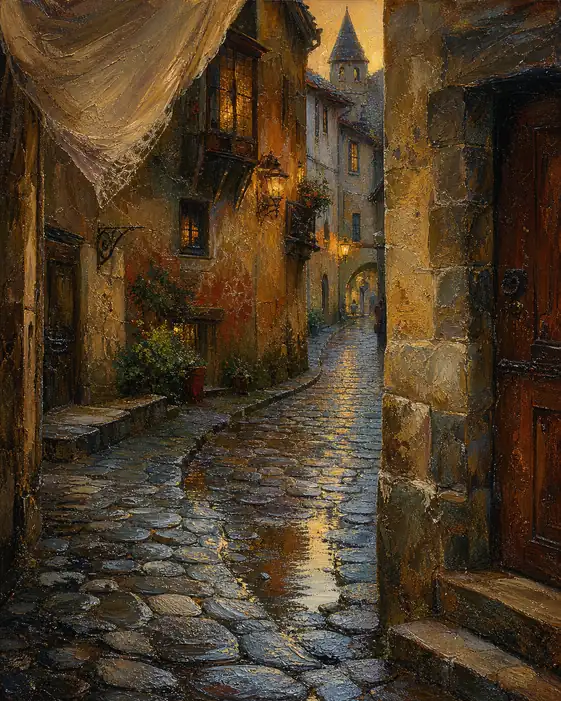 Amber Dreams on the Cobblestone Alley
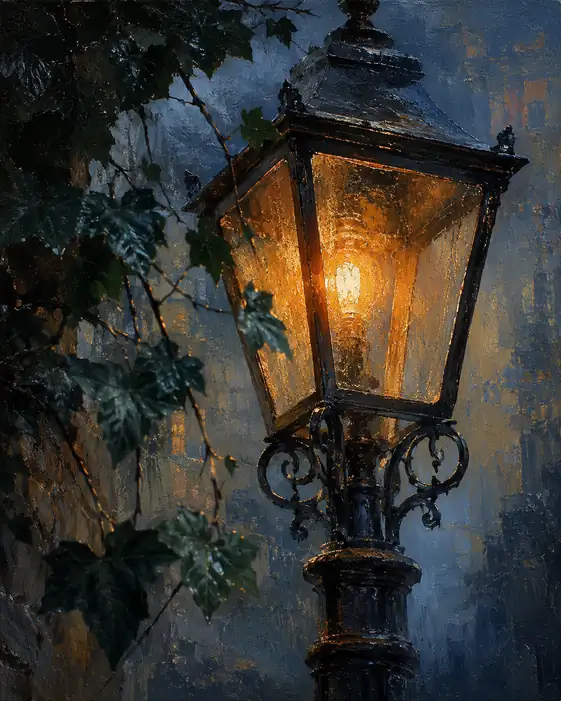 The Night's Warm Heart
Similar Artworks
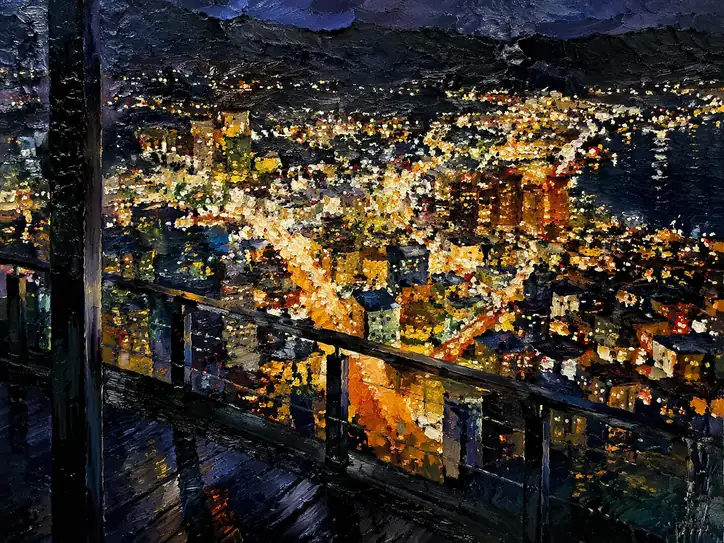 Luminous Urban Tapestry
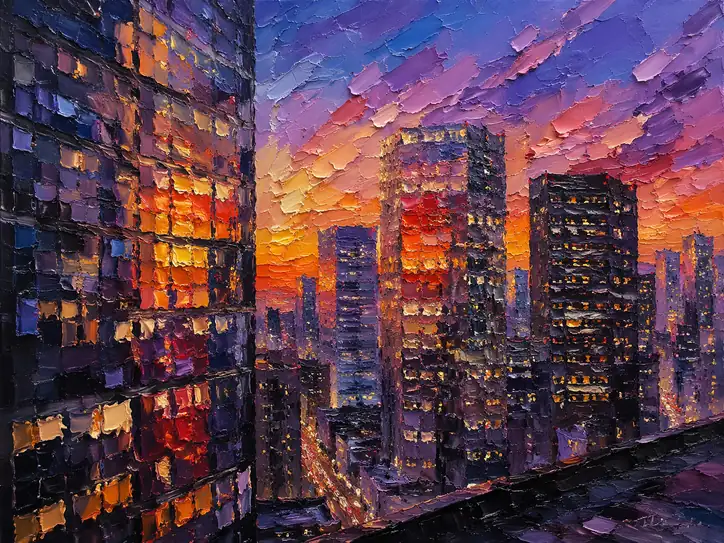 The City Awakens
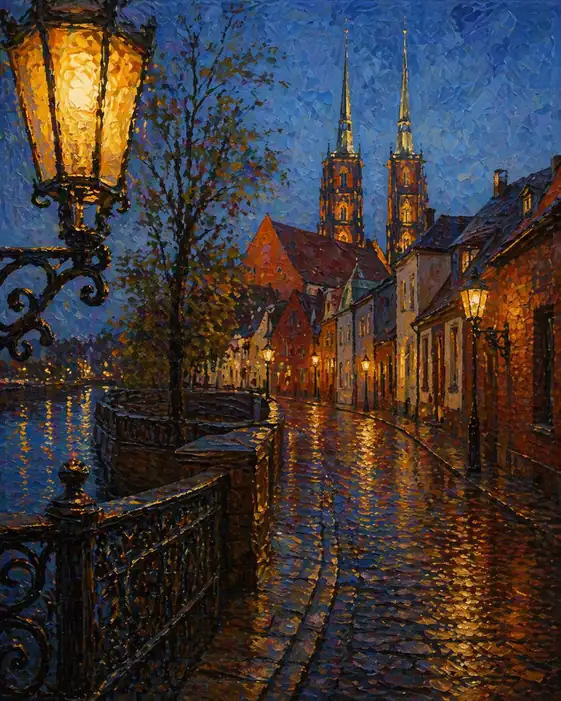 Gleaming Footsteps in the Cobalt Night
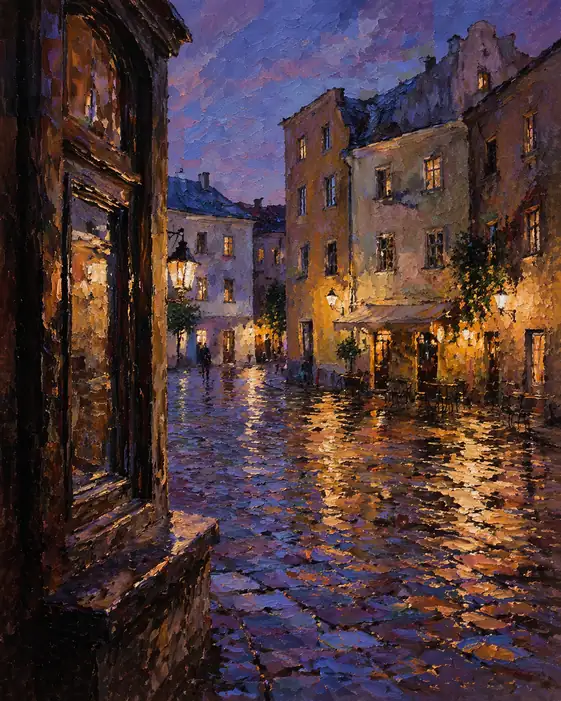 Reflections of Evening: Cobblestone Glow
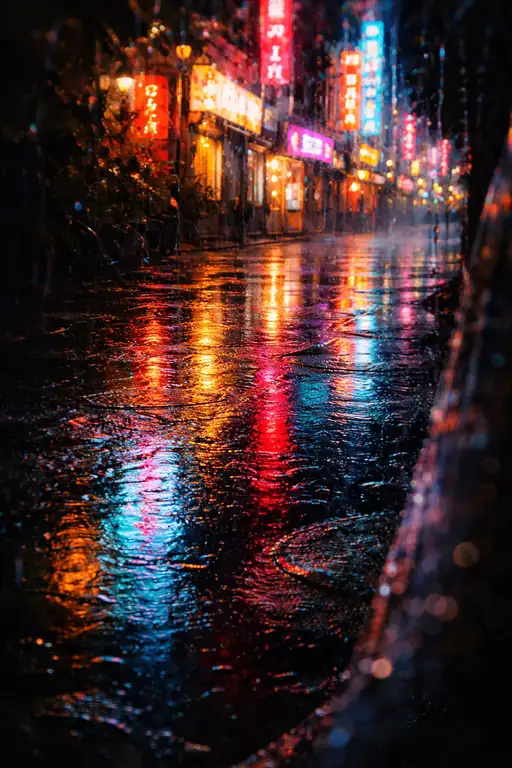 Neon Echoes on the Midnight Pavement
 Twilight Gaze Over the Glowing Metropolis
 Nocturne of the Glimmering City
 Twilight's Quiet Vigil over the Shimmering Basin
 Glimmering Dreams of the Midnight City
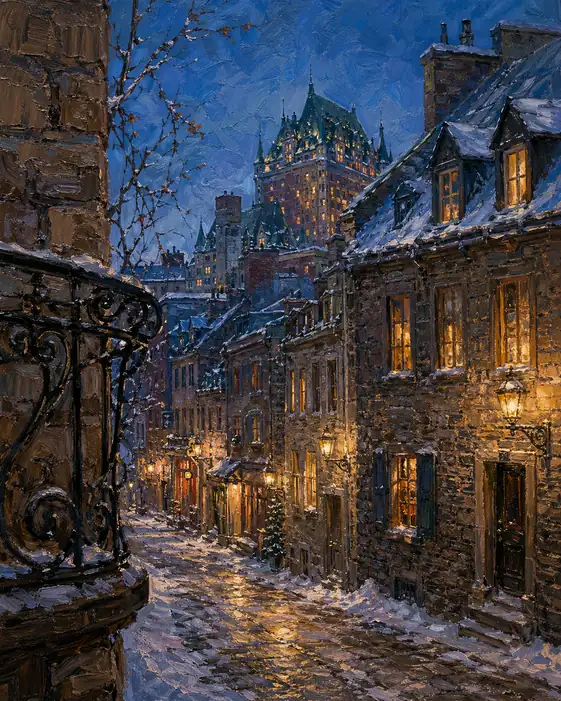 The Warmth of the Northern Night: A Quebec Winter