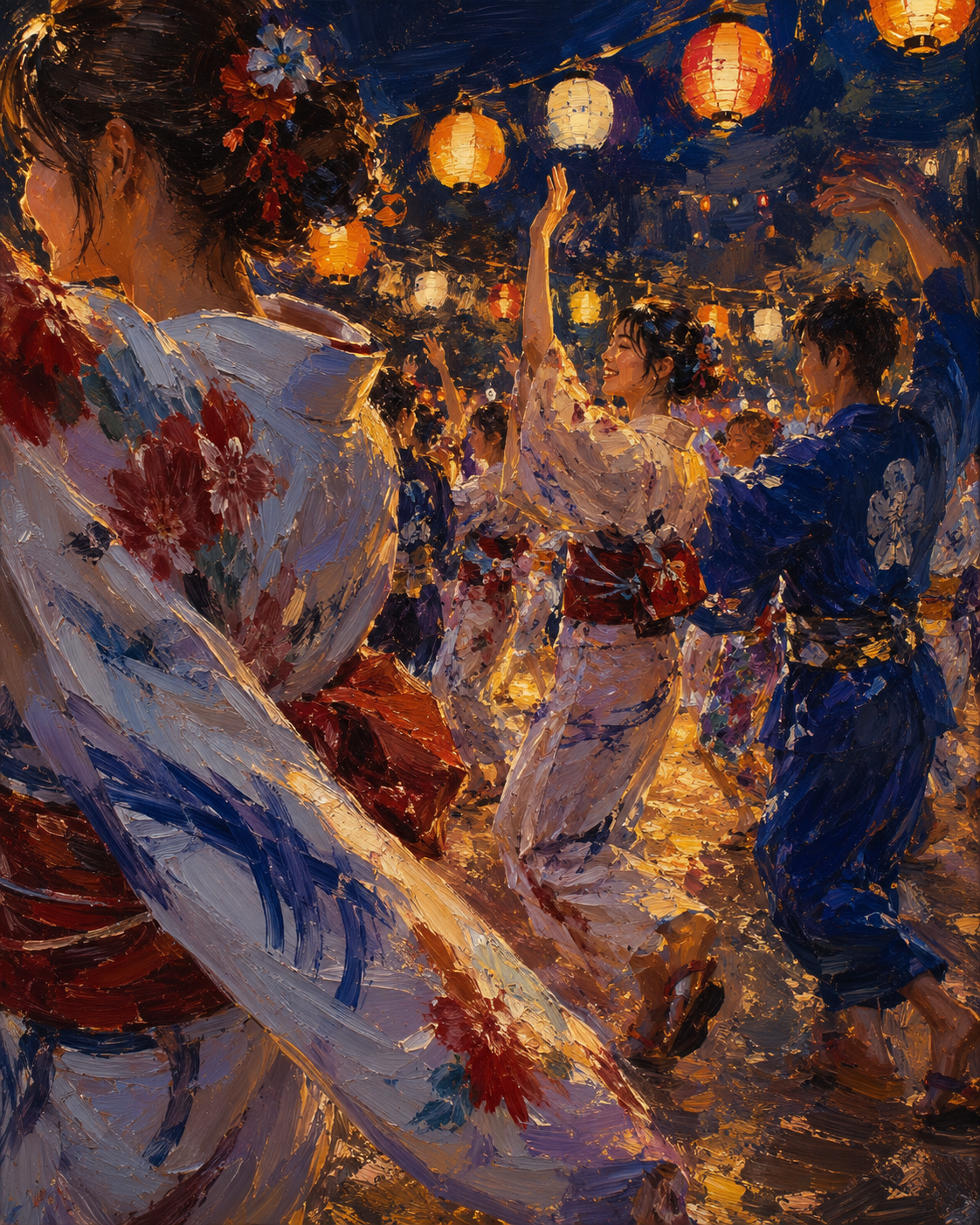
The Pulse of the Summer Night
Critique
1. Introduction This vibrant oil painting captures the exuberant spirit of a Japanese summer festival, specifically the traditional Bon Odori dance, through a masterful application of thick impasto. The artist employs a heavy, expressive brushwork that gives the scene a remarkable tactile quality and a sense of physical energy. The composition is filled with movement and light, immediately immersing the viewer in the festive atmosphere of a warm summer night. By focusing on the interplay between the dancing figures and the glowing lanterns, the work evokes a strong sense of cultural heritage and communal joy. 2. Description In the foreground, the back and shoulder of a woman in a white yukata with red floral patterns are seen, acting as a portal into the festivities. Beyond her, a young woman and a man in a blue yukata are captured mid-dance, their arms raised in rhythmic motion. A string of glowing paper lanterns (chochin) in shades of orange, yellow, and white stretches across the top of the frame, casting a warm radiance over the participants. The background is a deep, textured indigo, representing the night sky, which serves as a dramatic foil to the brilliant illumination of the festival below. 3. Analysis The painting is defined by its dynamic use of color and texture, with the complementary contrast between the warm orange of the lanterns and the cool blue of the night sky creating a powerful visual tension. The artist uses short, stabbing strokes of thick paint to represent the flickering light and the movement of the dancers, resulting in a surface that feels alive. The lighting is multi-directional and complex, with golden highlights dancing across the folds of the garments and the hair of the figures. This rhythmic repetition of light and form echoes the repetitive nature of the dance itself, unifying the composition. 4. Interpretation and Evaluation This work is a celebration of life, community, and the sensory richness of traditional celebrations. The artist succeeds in conveying not just the visual appearance of the festival, but the feeling of heat, sound, and collective excitement that characterizes such events. Technically, the handling of the impasto medium is exceptional, using it to build both form and atmosphere simultaneously. The composition is sophisticated, using the large figure in the foreground to create depth and guide the eye toward the central dancers. The overall execution demonstrates a high level of skill in capturing fleeting light and complex human movement. 5. Conclusion Ultimately, the painting leaves the viewer with a profound sense of the vitality and warmth of the human spirit. The thick layers of paint seem to hold the energy of the dance, making the scene feel permanent rather than transitory. It is a work that rewards prolonged viewing, as the eye discovers new details in the rugged terrain of the painted surface. By transforming a familiar cultural scene into a powerful expressive statement, the artist has created a piece that is both deeply local and universally resonant. The festival's glow continues to linger in the mind long after one has looked away.
Same Subcategory
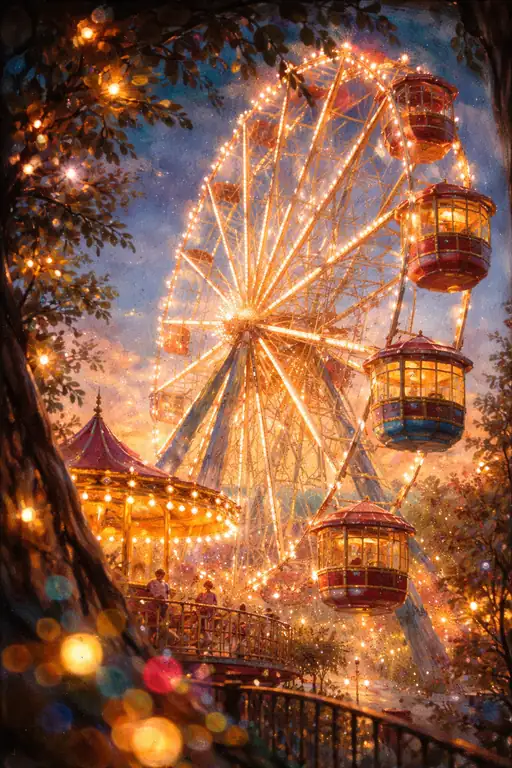 Twilight Radiance: The Ferris Glow
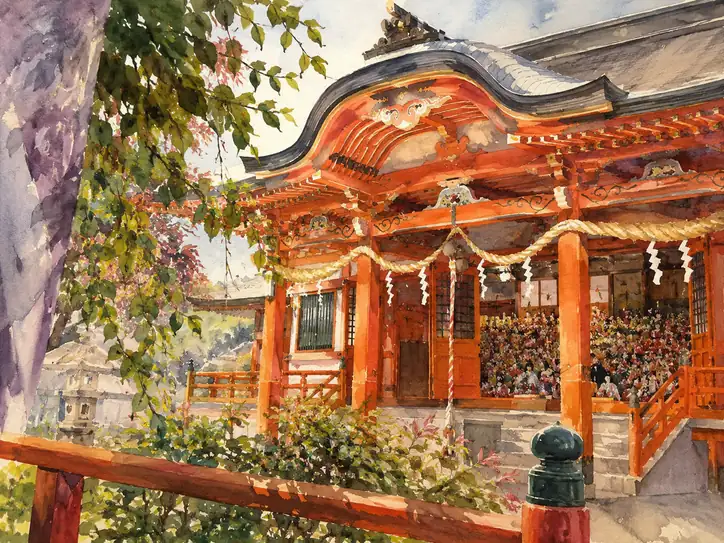 A Thousand Prayers in Vermilion
Similar Artworks
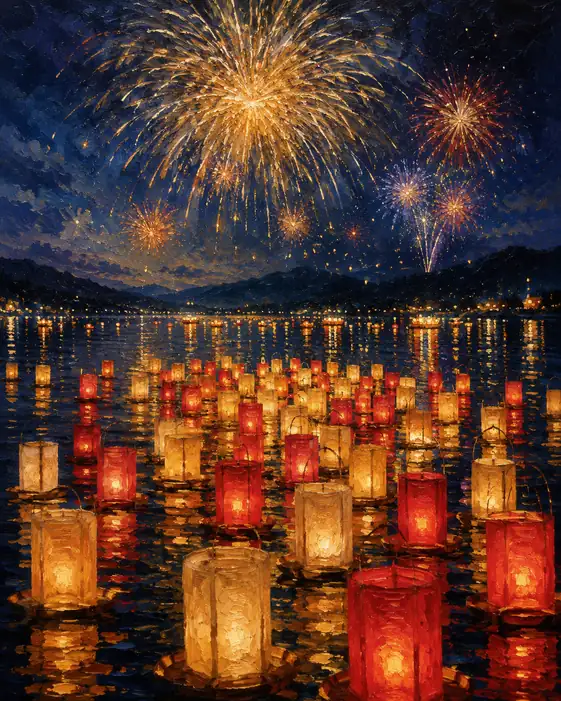 Floating Lanterns and Fireworks Over Lake
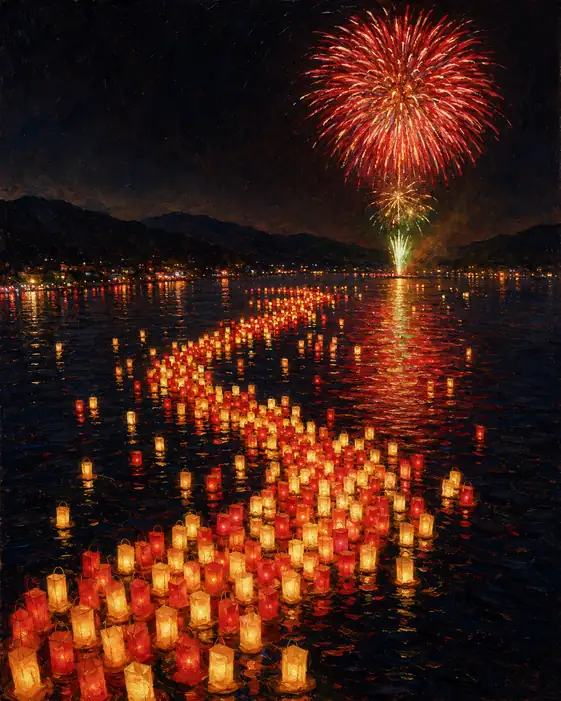 Scarlet Fireworks and the Flow of Light
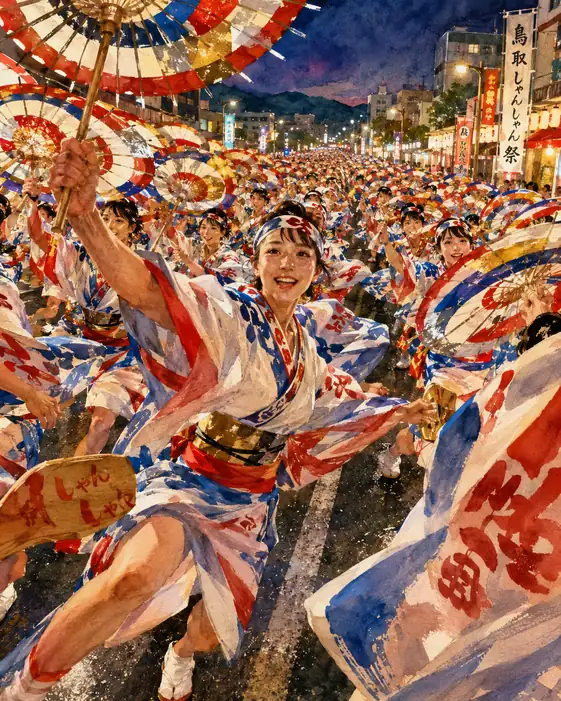 Joyful Whirl of the Shan-Shan Umbrellas
 Night Festival Bon Dance in Yukata
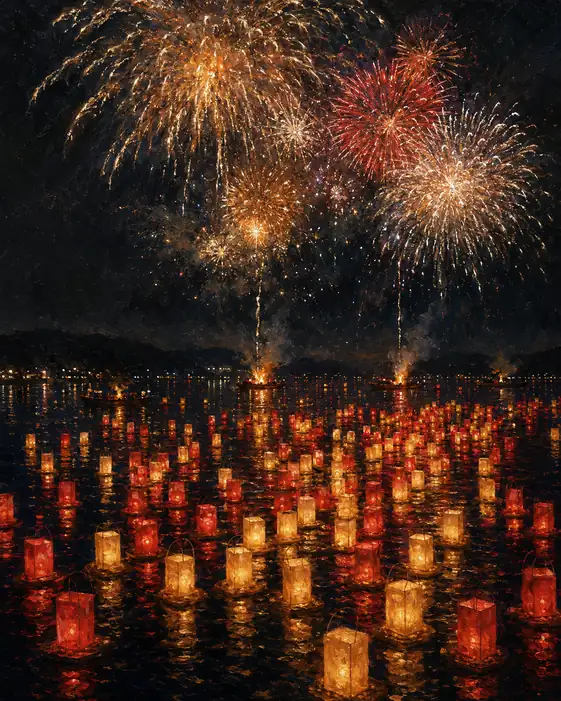 Golden Canopy Over Lake Lanterns
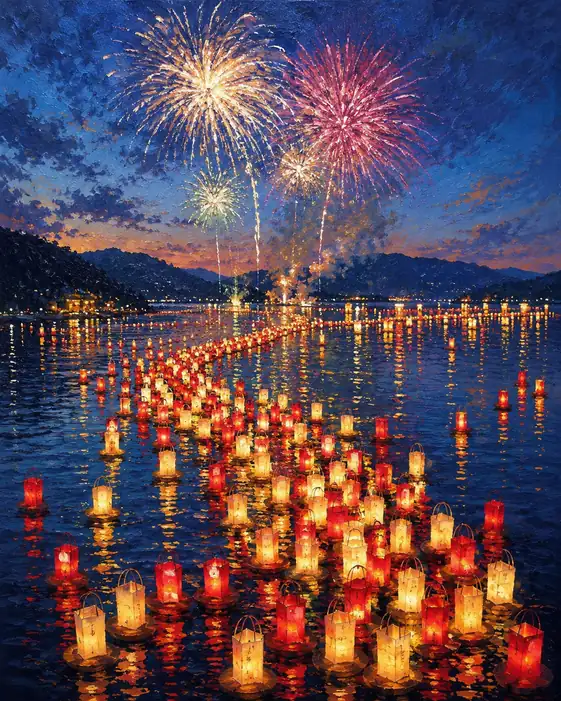 River of Lanterns and Summer Fireworks
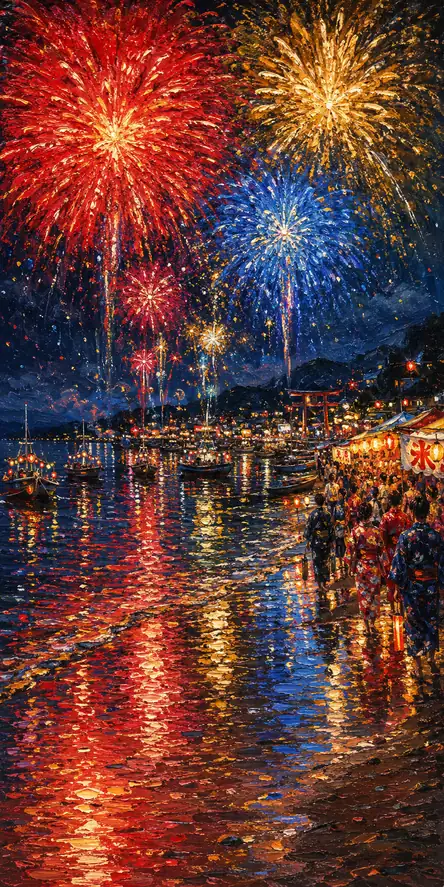 An Eternal Spark of a Passing Summer
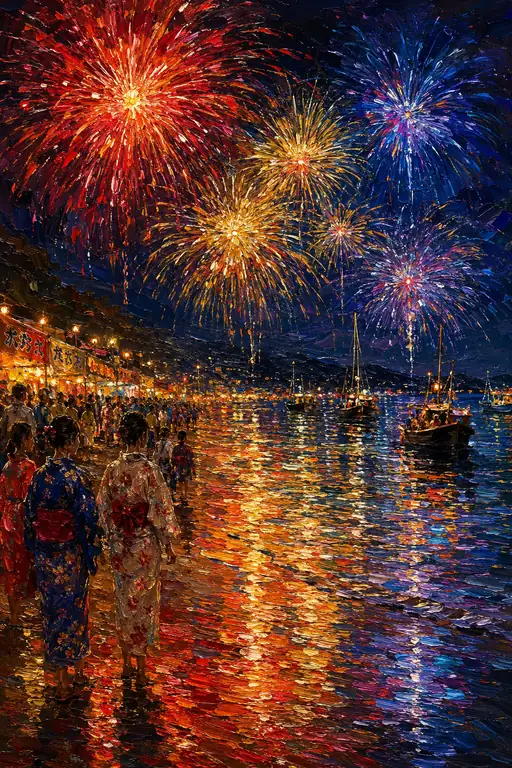 The Night We Watched the Sparks Fade
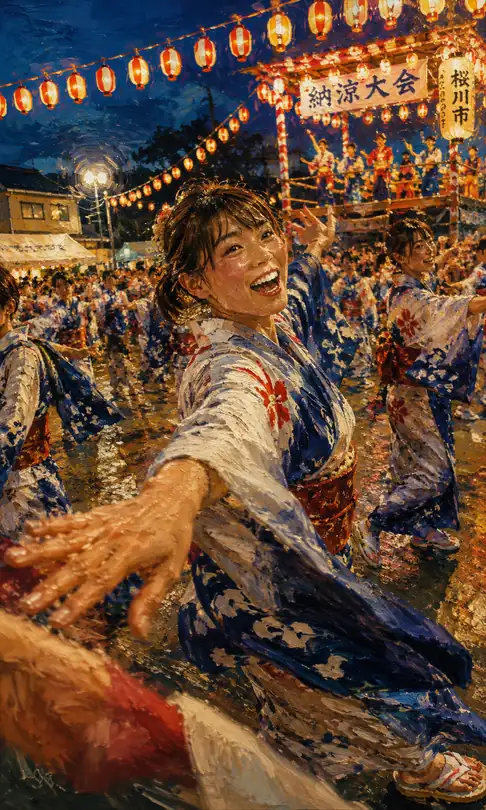 Lantern Lights Binding Eternal Ties
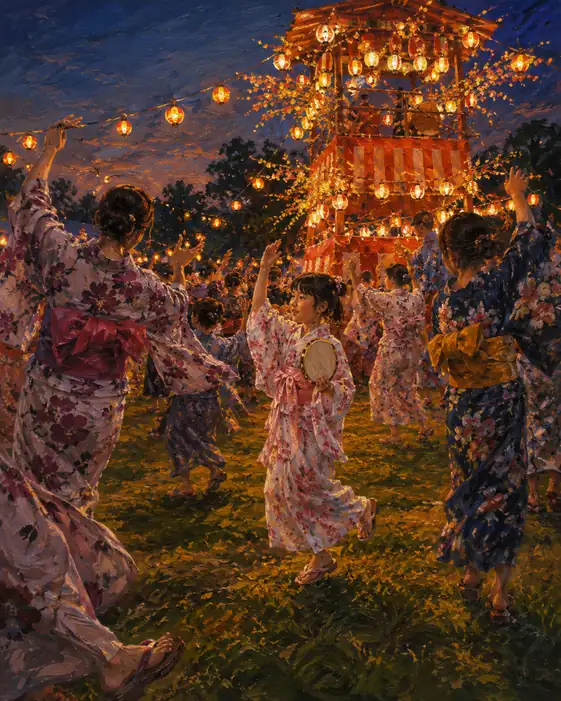 Swirling Summer Robes in Night Air (No. 17)