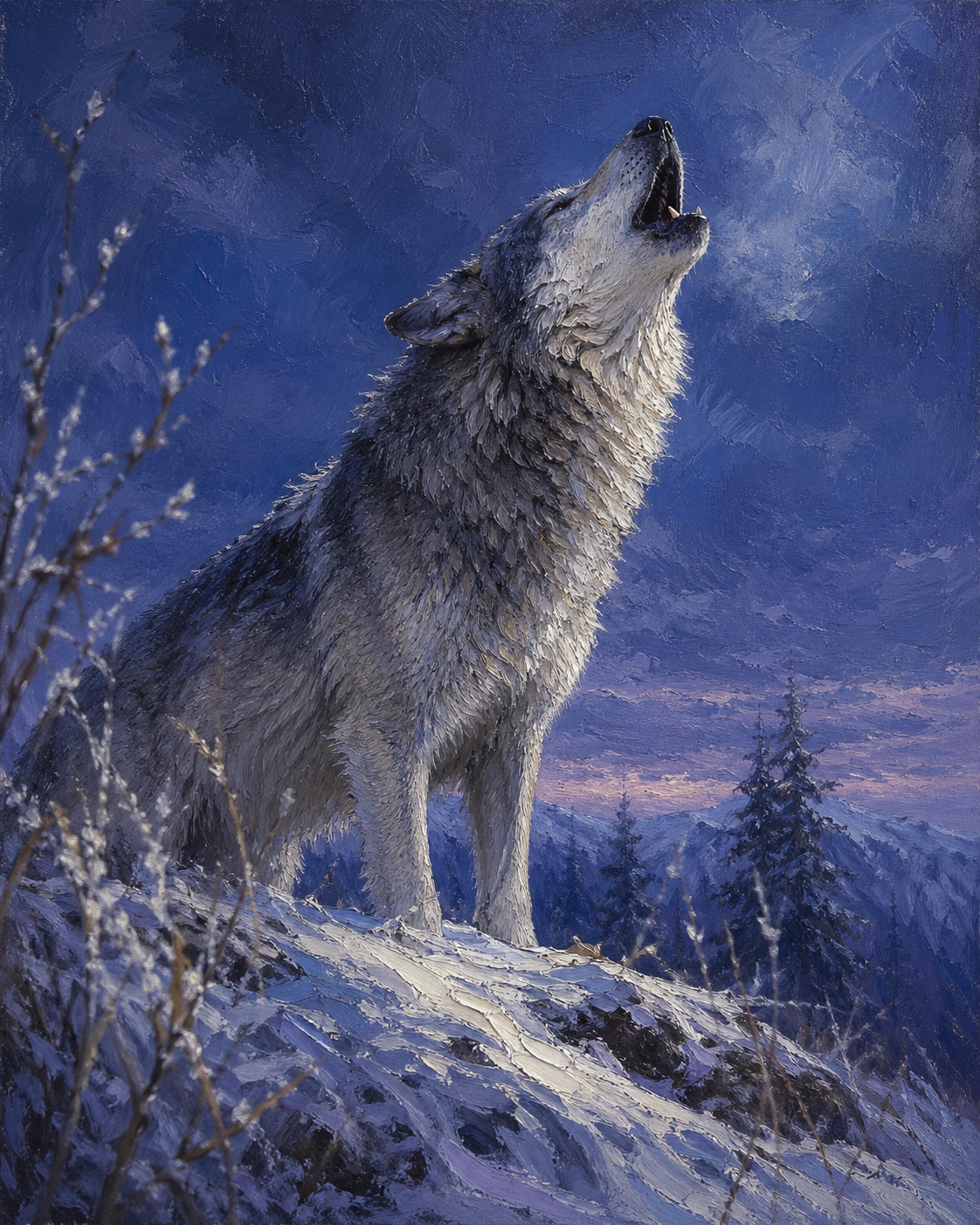
Echoes from the Edge of the World
Critique
1. Introduction This powerful oil painting captures a quintessential moment of wildlife drama, depicting a gray wolf howling from a snowy ridge at twilight. The artist employs a vigorous impasto technique, using thick, visible brushstrokes to build form and texture directly on the canvas. Set against a backdrop of distant mountains and a darkening sky, the work evokes a sense of primordial solitude and the raw energy of the natural world. By emphasizing the physical presence of the paint itself, the piece transcends mere representation, offering a tactile exploration of the relationship between a predator and its vast, wintry domain. 2. Description The central subject is a gray wolf standing on a snow-covered incline, its head tilted sharply upward with its mouth open in a resonant howl. The animal's fur is rendered with layered strokes of silver, charcoal, and white, creating a dense, bristling texture that suggests both weight and movement. In the foreground, a few skeletal branches emerge from the heavily textured snow, while the background reveals a majestic range of jagged, blue-toned mountains. The sky transitions from a deep, velvety ultramarine at the top to a soft, glowing band of lavender and pale pink at the horizon, where silhouetted evergreen trees stand as silent witnesses. 3. Analysis Technically, the painting is defined by its sculptural use of medium, where the thick application of oil paint creates actual shadows and highlights on the surface. The color palette is masterfully structured around a range of cool blues and purples, which are enlivened by the warm, subtle glow emanating from the horizon. This lighting effect creates a dramatic backlighting on the wolf's throat and chest, emphasizing its powerful anatomy. The vertical orientation of the canvas, combined with the diagonal slope of the foreground, creates a sense of upward momentum that echoes the sound of the howl, guiding the viewer's eye from the base of the mountain to the vast sky above. 4. Interpretation and Evaluation The work successfully interprets the wolf not as a mere figure in a landscape, but as an embodiment of the wilderness itself. The choice of impasto is particularly effective here, as the ruggedness of the paint mirrors the harshness of the sub-arctic environment. Artistically, the piece demonstrates a high level of technical proficiency in its ability to maintain structural clarity amidst such expressive brushwork. The contrast between the solid, heavily worked foreground and the more atmospheric, blended sky creates a compelling sense of depth. This painting is a testament to the enduring appeal of the wolf as a symbol of untamed nature, rendered with a modern appreciation for the expressive power of oil paint. 5. Conclusion In summary, the painting offers a visceral and emotionally resonant portrayal of a wolf in its element. The initial impression of a dramatic wildlife scene is deepened upon closer inspection by the artist's sophisticated handling of light and texture. Through the deliberate layering of pigment and the careful orchestration of color, the work achieves a rare balance between physical intensity and atmospheric delicacy. It remains a significant example of how traditional wildlife subjects can be revitalized through a bold, textural approach, ultimately leaving the viewer with a lasting sense of the quiet majesty and enduring spirit of the wild.
Same Subcategory
 Rhythm of the Teal Tides
Similar Artworks
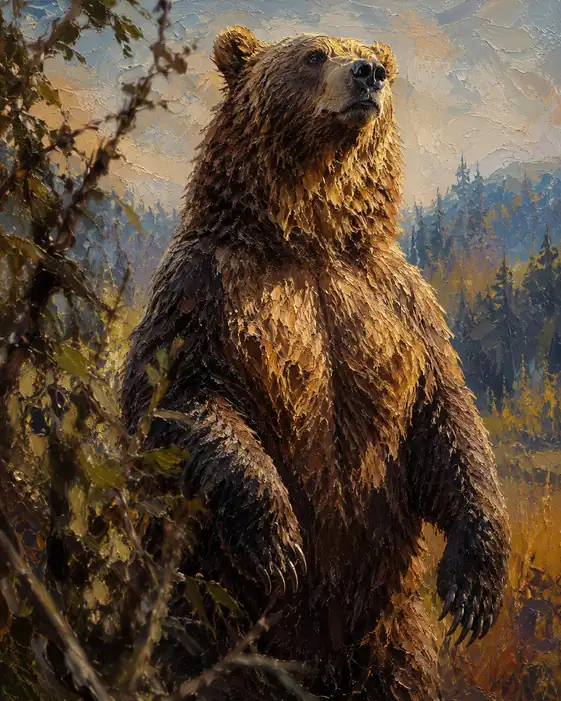 Sovereign of the Golden Forest
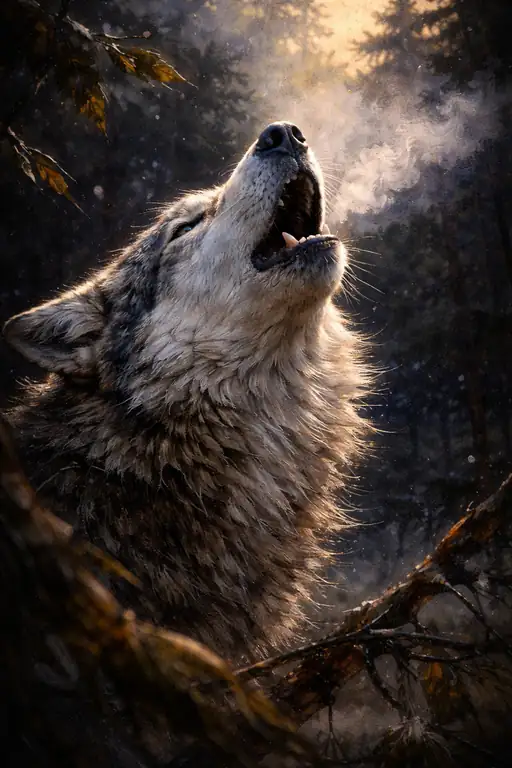 Breath of the Wild Communion
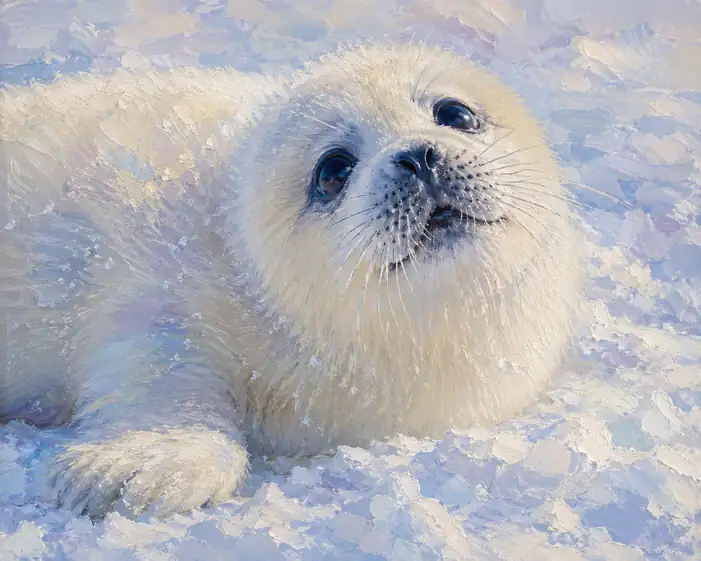 Warmth in the White Silence
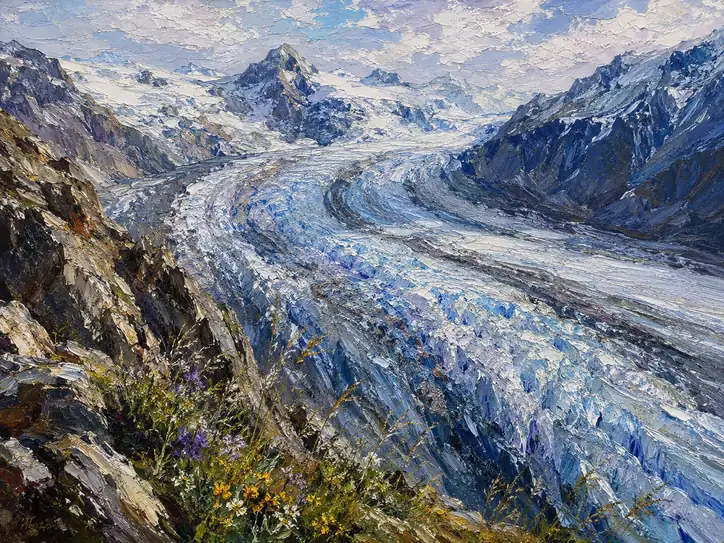 Whisper of Life in the Frozen Silence
 Monarch of the Golden Frost
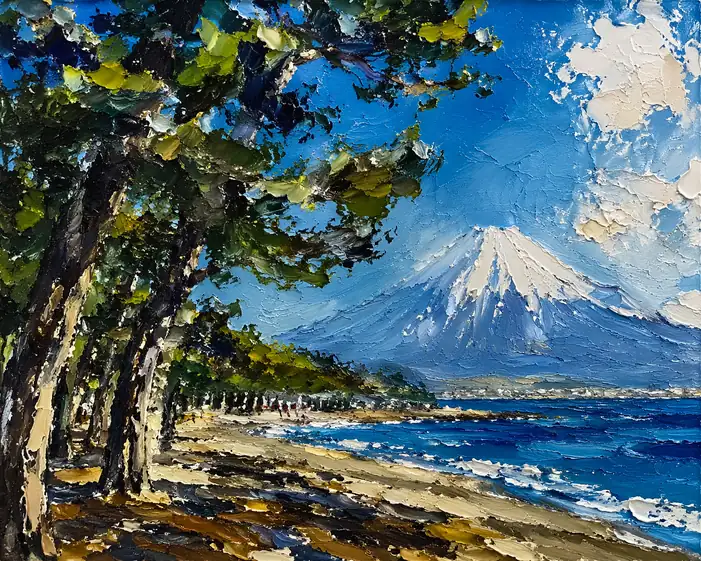 Majestic Shoreline Echoes
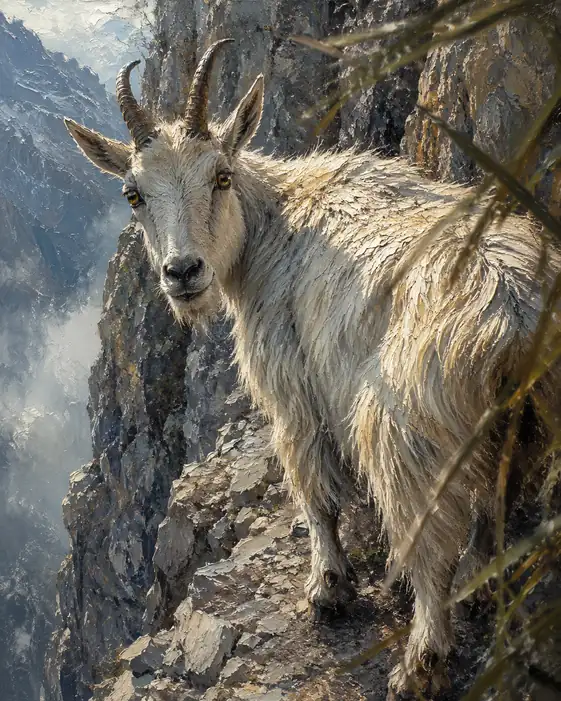 Guardian of the Silent Heights
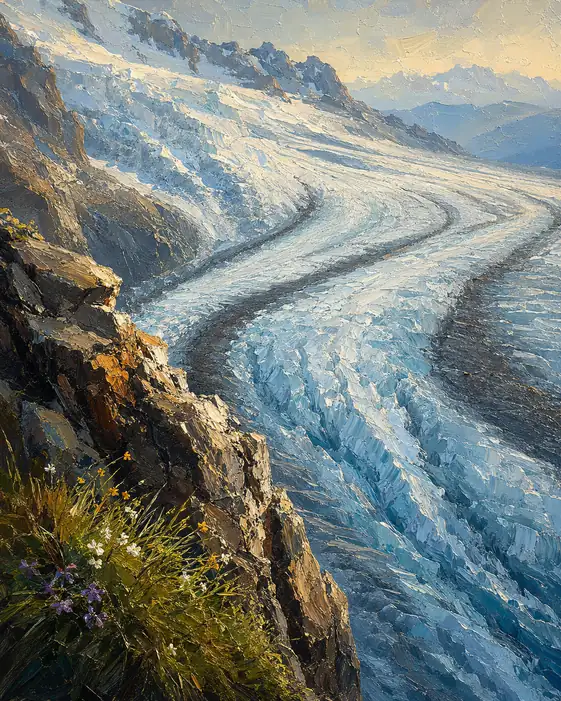 Spring Whispering on the Glacier's Edge
 Monarch of the Winter Dawn
 Quiet Dignity in the Frost