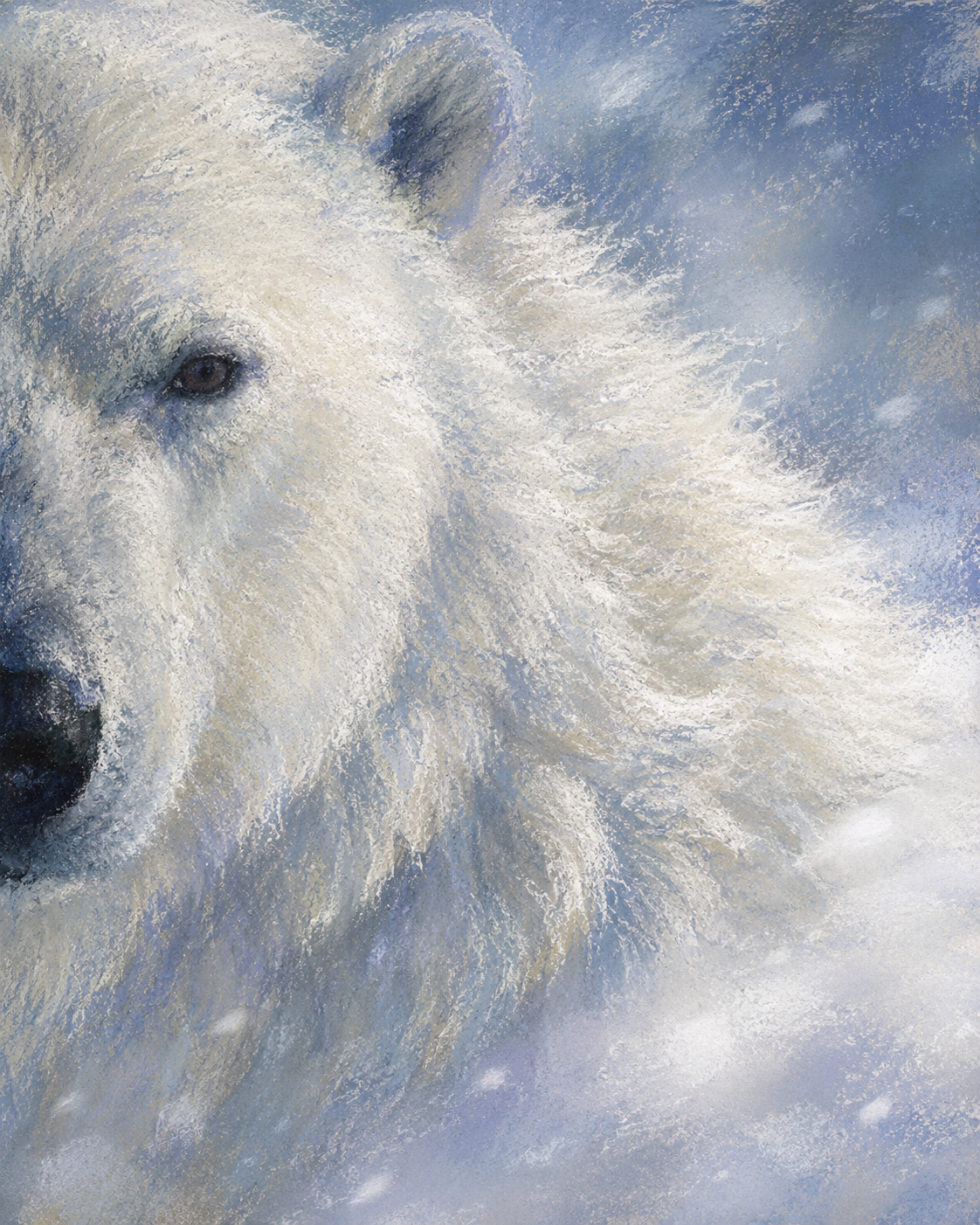
Silent King of the Storm
Critique
1. Introduction This evocative painting presents a compelling study of a polar bear navigating the harsh, atmospheric conditions of the Arctic. The artist utilizes a heavily textured approach to capture the visceral experience of a snowstorm, placing the viewer in close proximity to the majestic predator. By blending naturalistic observation with an expressive, almost impressionistic style, the work moves beyond a simple animal portrait to evoke the vastness and intensity of the polar environment. The composition emphasizes the symbiotic relationship between the bear and its frigid surroundings, creating a scene that is both intimate and formidable. 2. Description The subject is a close-up of a polar bear's head, positioned primarily on the left side of the frame. Its thick, multi-layered fur is rendered in shades of brilliant white, cream, and subtle gold, flowing dynamically as if caught in a strong wind. A single, dark eye peers out from the textured surface, providing a sharp point of focus amidst the swirling elements. The background is a chaotic yet harmonious blend of icy blues, lavenders, and grays, interspersed with blurred white spots that suggest falling snow or ice crystals. The lower right portion of the canvas dissolves into a misty, snow-filled void, further enhancing the sense of a blinding blizzard. 3. Analysis Technically, the painting is characterized by its rich impasto and varied brushwork, which create a tangible sense of volume and movement. The artist employs a cool-toned palette dominated by cerulean and ultramarine, which are masterfully balanced by the warm undertones in the bear's pelt. The asymmetrical composition, with the bear's face partially cropped, creates a sense of immediacy and suggests a world extending far beyond the edges of the canvas. Light appears diffused and non-directional, consistent with the overcast light of a high-latitude storm, while the contrast between the sharp eye and the soft, textured fur draws the viewer's attention to the animal's unwavering gaze. 4. Interpretation and Evaluation The work serves as a powerful metaphor for resilience and adaptation within one of the earth's most extreme climates. The choice to render the fur with such tactile density allows the viewer to almost feel the weight and insulation of the bear's coat against the biting cold. Artistically, the piece is highly successful in its ability to balance figurative representation with abstract qualities, particularly in the treatment of the background. The technical execution of the fur's texture is a standout feature, demonstrating a sophisticated understanding of how light interacts with translucent surfaces. The painting effectively communicates the quiet strength of the subject, making it a significant contribution to contemporary wildlife art. 5. Conclusion In summary, this painting offers a profound visual exploration of the Arctic's stark beauty and the formidable creatures that inhabit it. The initial impact of the cool color scheme and heavy texture gives way to a deeper appreciation for the subtle emotional depth captured in the bear's expression. Through its deliberate composition and masterful handling of medium, the work achieves a rare balance between environmental realism and artistic expression. It remains an enduring testament to the power of texture and color in conveying the essence of a landscape and its inhabitants, ultimately leaving a lasting impression of the Arctic's silent, icy majesty.
Same Subcategory
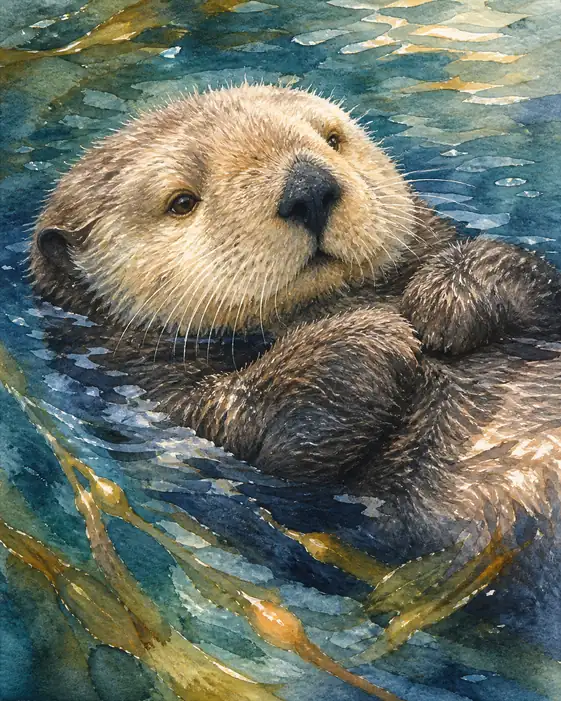 Rhythm of the Teal Tides
Similar Artworks
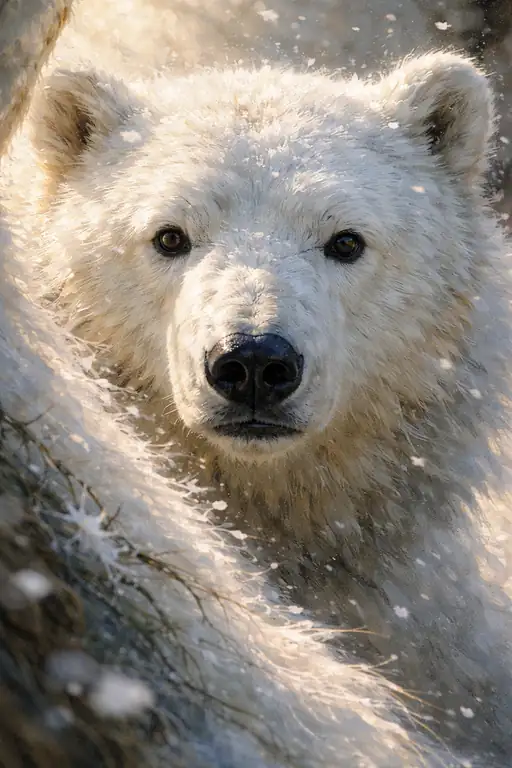 Quiet Dignity in the Frost
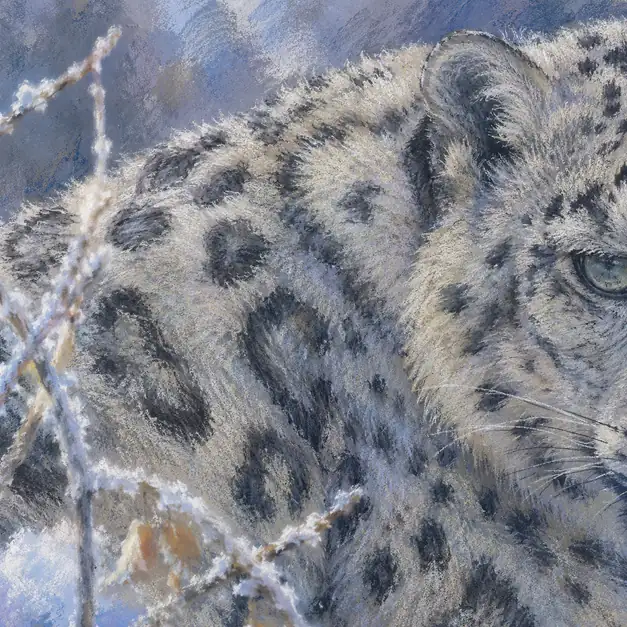 Ghost of the High Peaks
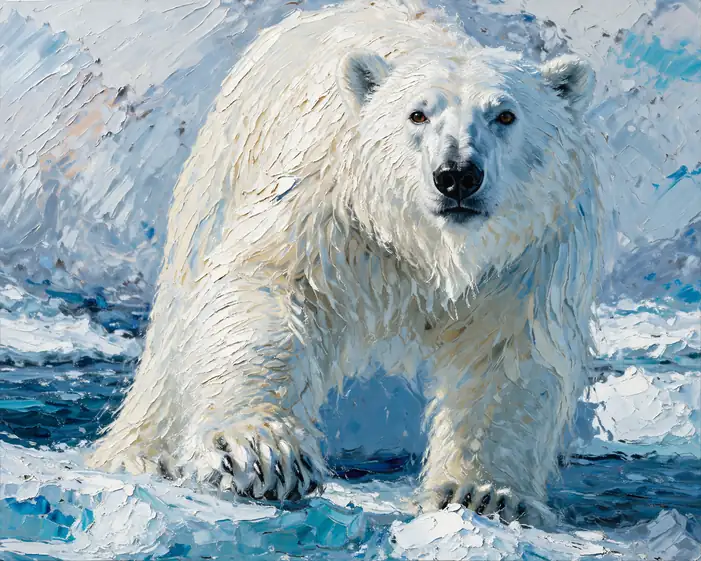 The Indomitable Form Within the Freezing Expanse
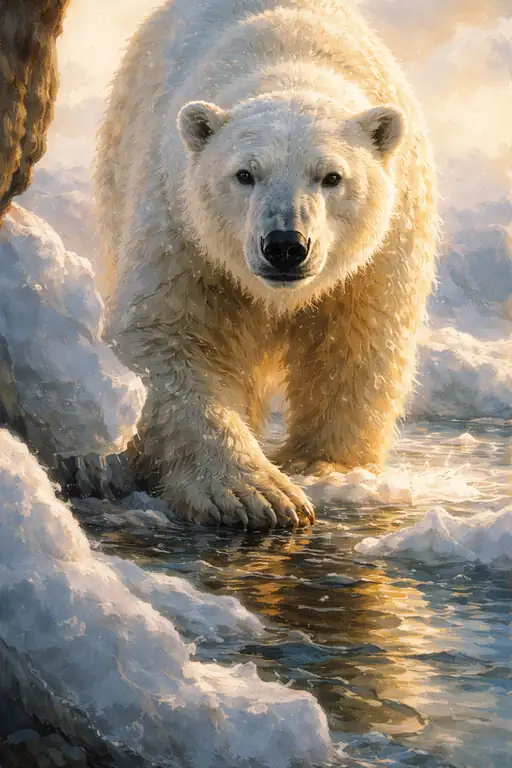 Serenade of the Babbling Brook
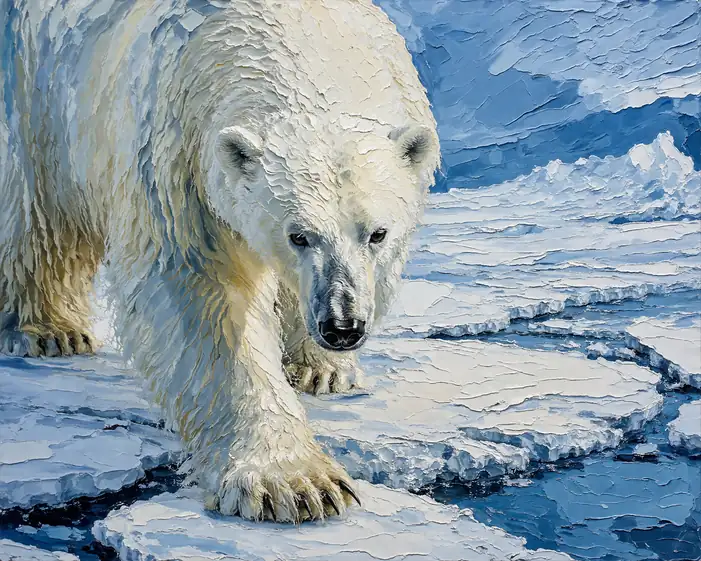 The Solitary Path Across the Fractured Realm
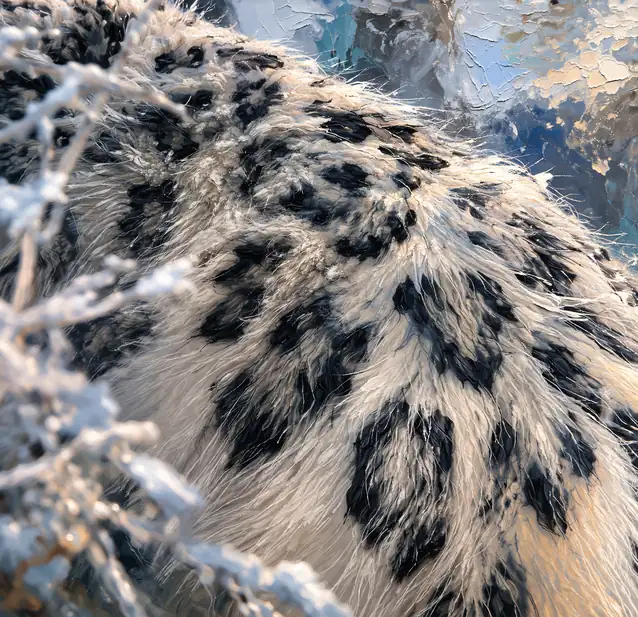 Quiet Endurance Beneath the Frost
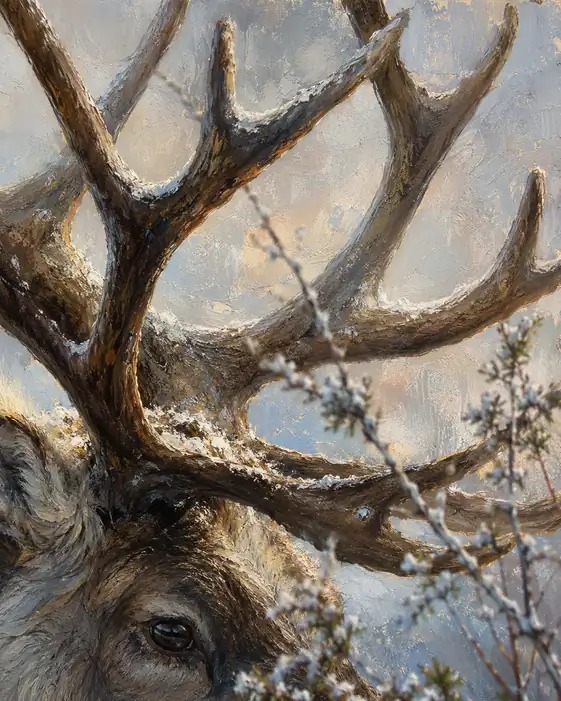 Stoic Crown of the Tundra
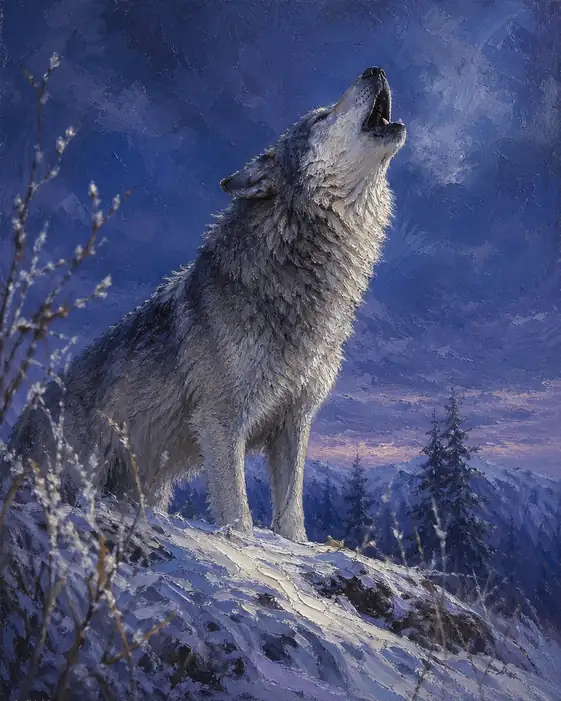 Echoes from the Edge of the World
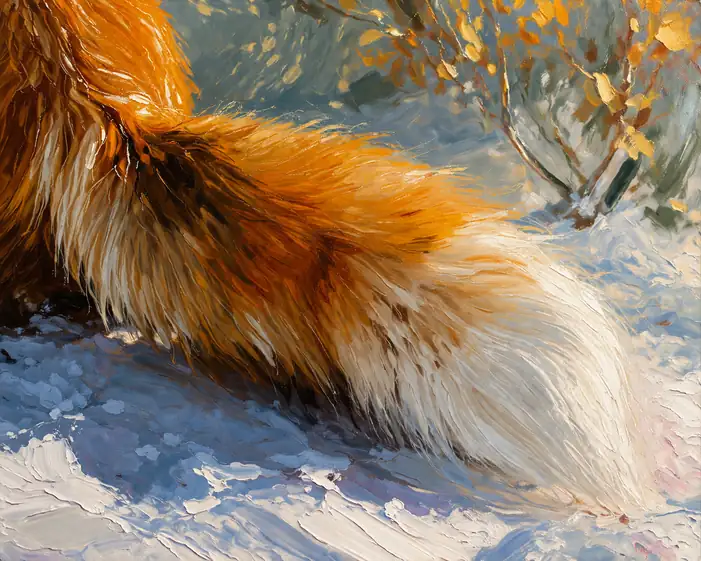 Winter's Warmth
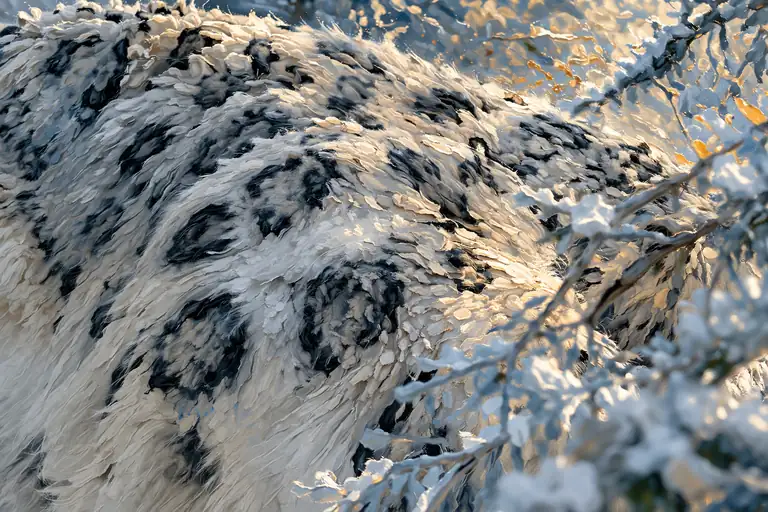 Golden Warmth on Frosted Camouflage