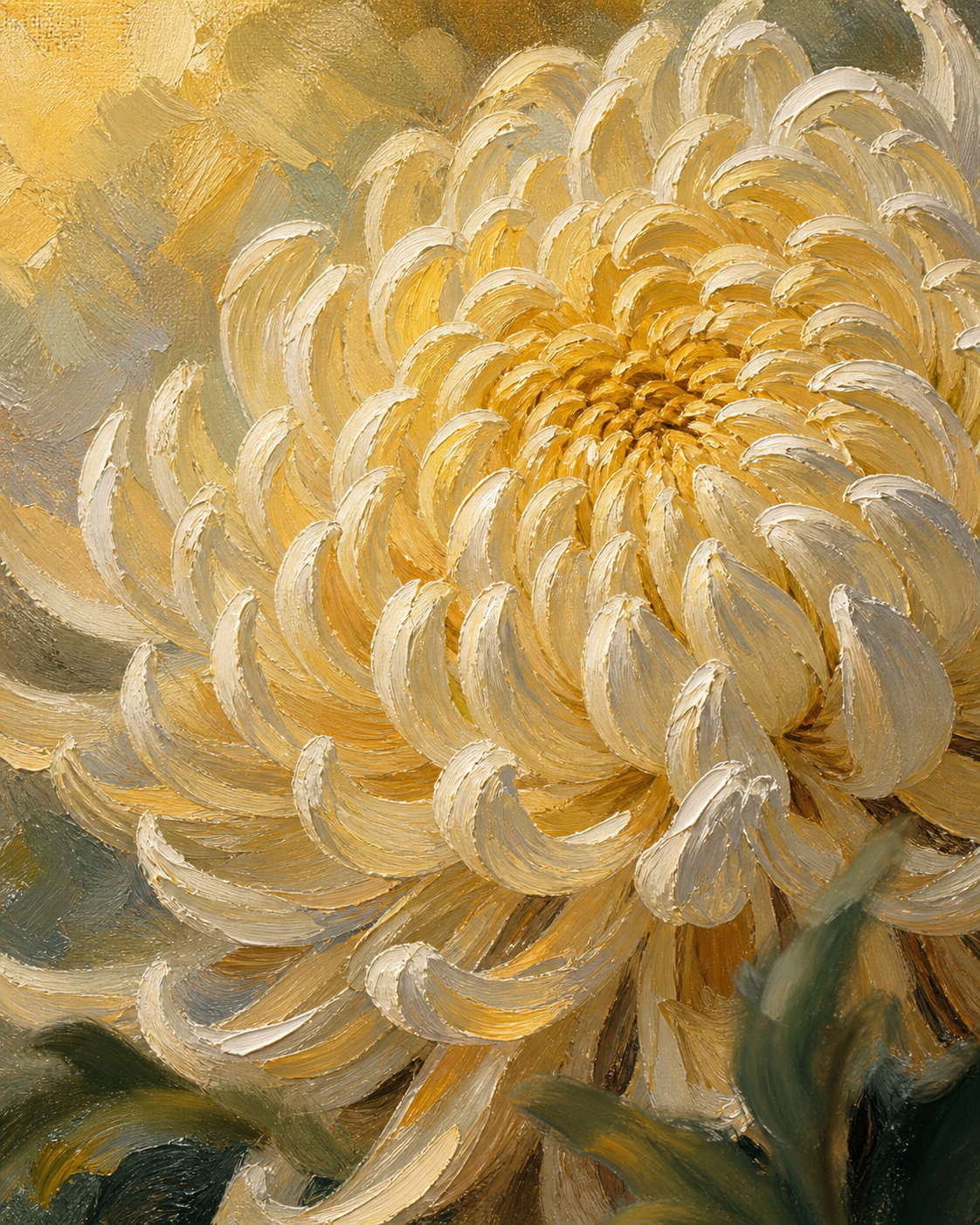
Serenity in White Ivory
Critique
1. Introduction This oil painting presents a magnificent close-up of a white chrysanthemum, emphasizing its complex radial structure through the use of thick, expressive impasto. The artwork centers on the luminous bloom, which radiates from a warm, yellow core out to the edges of the frame. Through a sophisticated handling of paint and light, the artist creates a sense of elegance and physical presence that defines the entire composition. 2. Description The central flower is composed of numerous elongated, curving petals rendered in shades of creamy white and pale ivory. At its heart, the petals are shorter and more densely packed, showing a warm golden-yellow hue that suggests the flower's interior depth. The background consists of muted greenish-gray washes, while the lower right corner features dark, blurred green leaves that provide a stable base for the bright, airy subject. 3. Analysis The artist employs a vigorous impasto technique, where the physical ridges of the paint mirror the curving form of each petal, creating a tactile surface that catches the light and adds a three-dimensional quality to the floral form. The light source appears to be diffused from the upper left, casting subtle shadows between the overlapping petals and highlighting the creamy texture of the oil paint, which enhances the flower's structural complexity. 4. Interpretation and Evaluation This work is a successful exploration of form and texture, where the medium itself becomes a primary subject of interest. The choice of a white chrysanthemum, with its naturally rhythmic and repetitive petal patterns, provides an ideal template for the artist's expressive brushwork. The high key of the color palette, combined with the energetic application of paint, evokes a sense of purity and vitality, demonstrating a high level of technical mastery. 5. Conclusion In conclusion, the painting effectively combines botanical accuracy with a strong sense of artistic expression. The initial impression of delicate beauty is reinforced by the powerful physical presence of the impasto surface upon closer viewing. It serves as a compelling example of how traditional floral themes can be revitalized through a modern emphasis on the material properties of paint and the dramatic interplay of light and shadow.
Same Subcategory
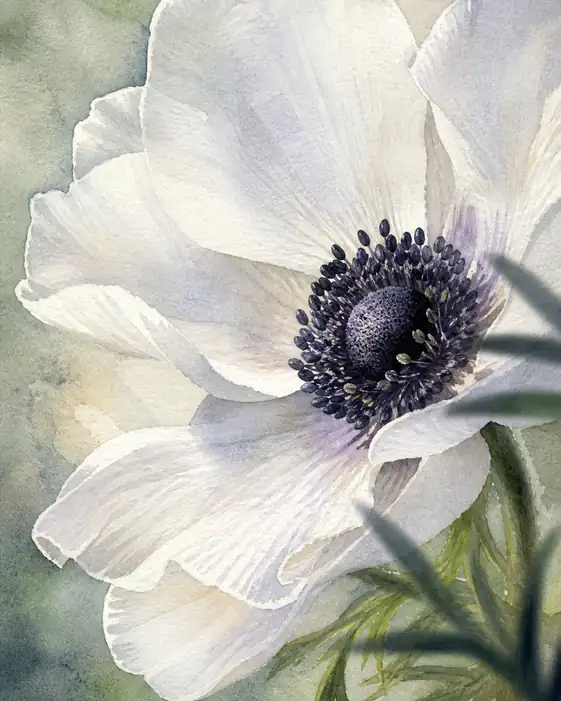 Whisper of the Anemone
Similar Artworks
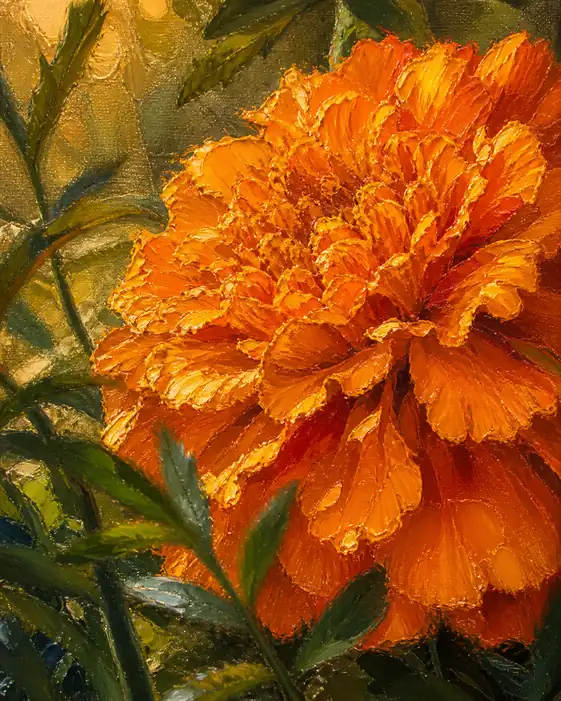 The Sun's Fiery Heart
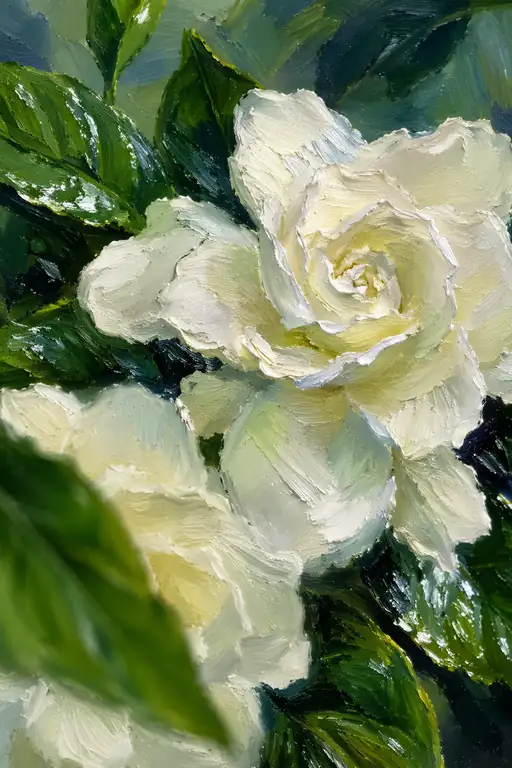 Thick-Painted White Gardenia
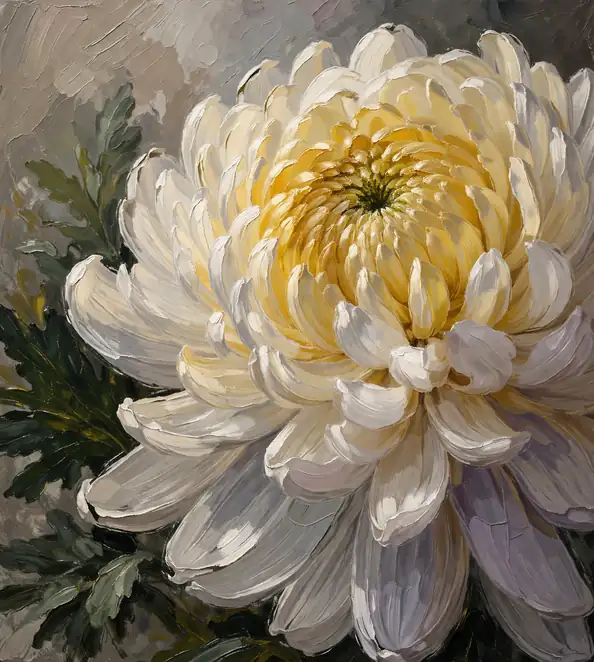 Close-up of a Majestic Chrysanthemum
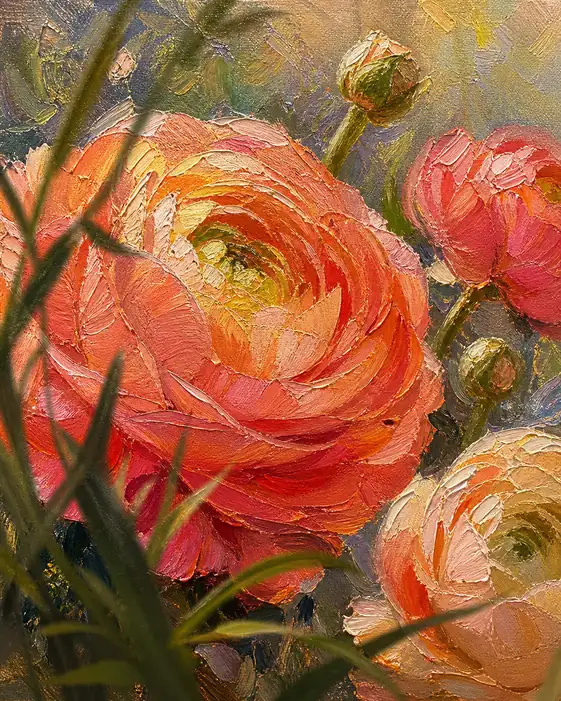 Radiant Layers of Vitality
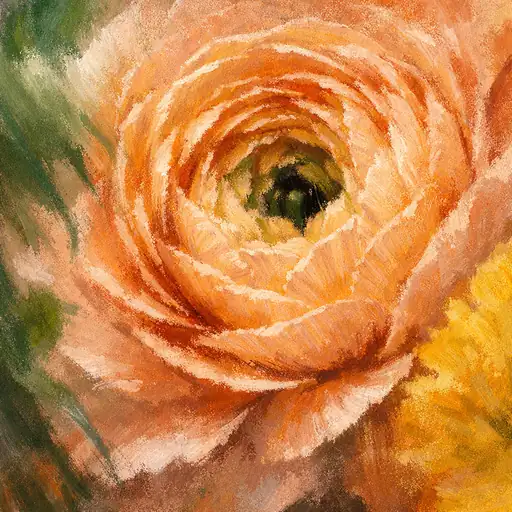 Golden Spiral: The Heart's Infinite Labyrinth
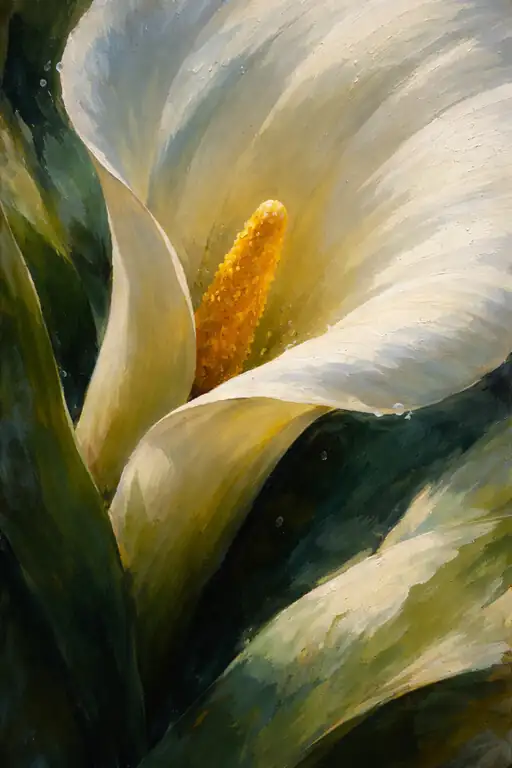 The Final Chord in the Salon
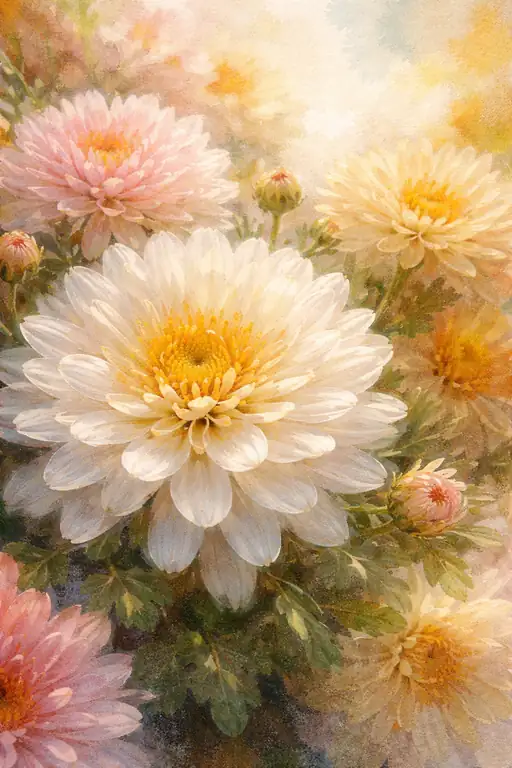 Eternal Serenity: The Soul's Silent Bloom
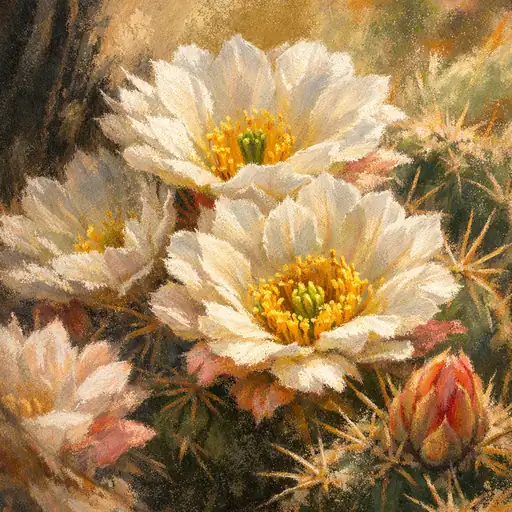 Radiant white cactus flowers bloom amidst sharp spines, celebrating desert life.
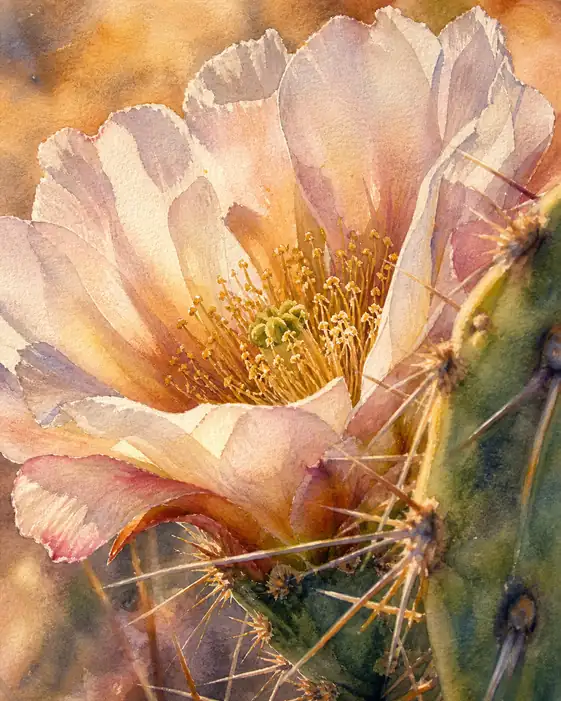 Jewel of the Desert Sun
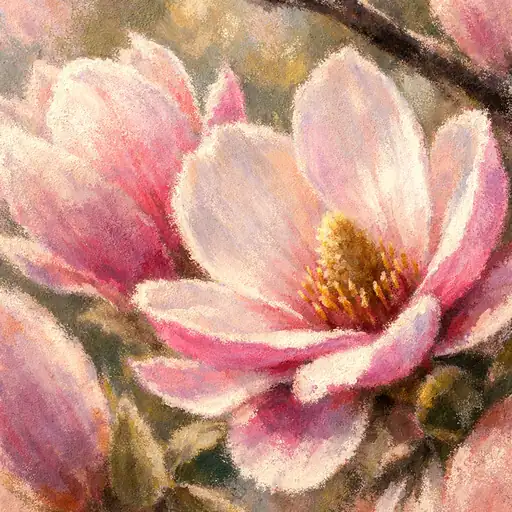 The Rose Magnolia Awakening