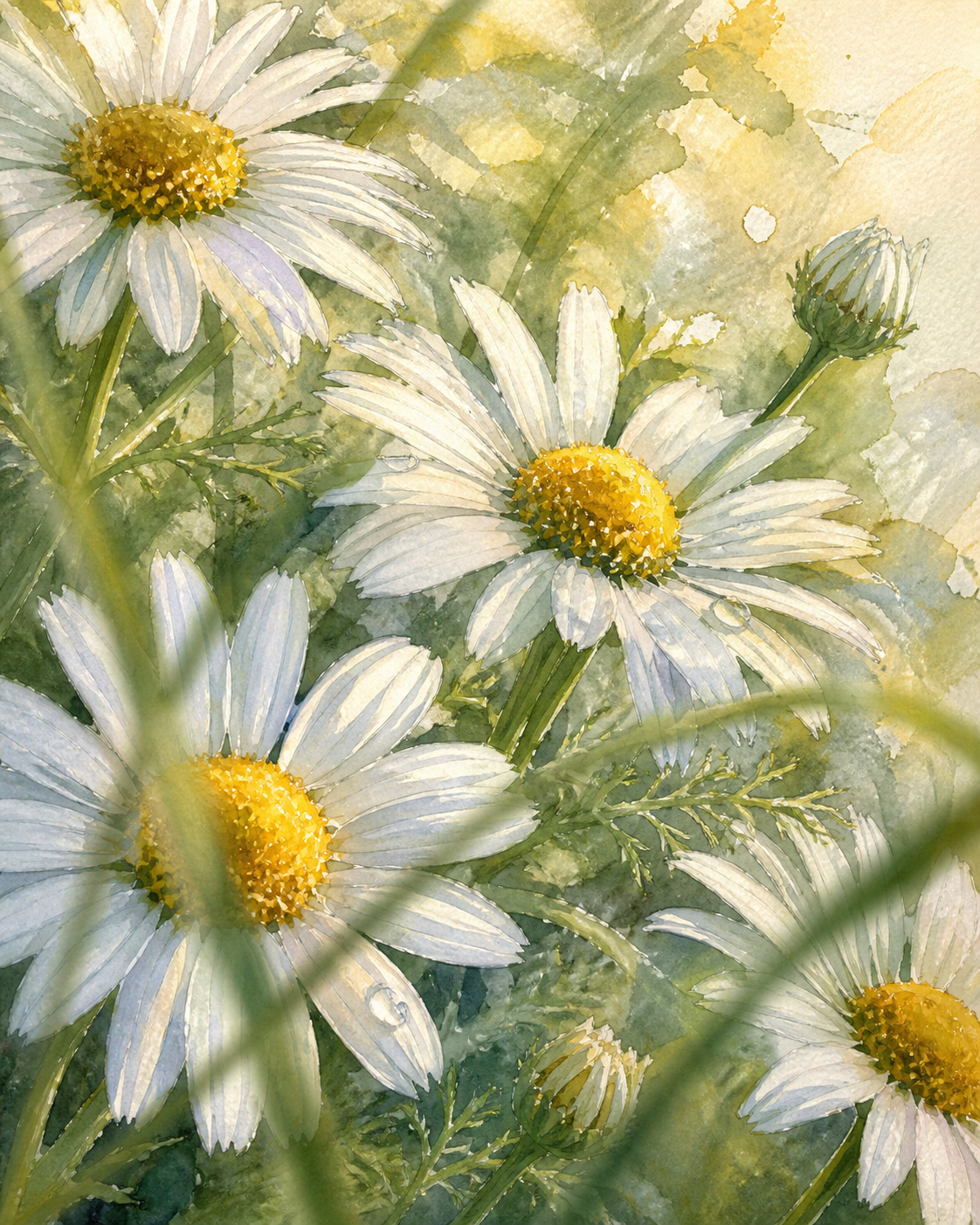
Dancing with the Morning Dew
Critique
1. Introduction This luminous watercolor painting captures a cluster of daisies in a sun-drenched meadow, evoking a quintessential sense of spring. The artist employs the fluid and spontaneous nature of the medium to depict the delicate beauty of these common wildflowers. By focusing on the interplay of light and dew, the work elevates a simple botanical subject into a vibrant and life-affirming visual experience that celebrates the freshness of the natural world. 2. Description The composition features several fully bloomed daisies with bright white petals and textured, golden-yellow centers, accompanied by smaller buds. Tiny, translucent dew drops are meticulously rendered on several petals, catching the morning light. The flowers are set against a lush, multi-layered background of greens and yellows, where soft, out-of-focus foliage creates a sense of depth. Diagonal bands of light and shadow sweep across the frame, suggesting the presence of overhanging branches or tall grass. 3. Analysis Technically, the painting is characterized by a sophisticated use of the wet-on-wet technique, particularly in the background, which allows colors to bleed together harmoniously. The artist demonstrates exceptional control in the rendering of the white petals, using subtle blue and violet shadows to define their form without sacrificing their brightness. The dappled light effect is achieved through strategic layering and lifting of pigment, creating a dynamic rhythmic quality. The inclusion of dew drops adds a layer of intricate detail that contrasts with the broader, more gestural strokes of the leaves. 4. Interpretation and Evaluation The artwork successfully conveys a feeling of optimism and the fleeting beauty of a morning in nature. The choice of a high-key color palette and the emphasis on radiant light imbue the scene with a joyful, airy atmosphere. The artist’s ability to capture the specific texture of the daisies’ centers—their disk florets—shows a high level of botanical observation. This piece demonstrates a masterful understanding of watercolor’s unique luminosity, allowing the white of the paper to function as the primary source of light. 5. Conclusion In conclusion, this painting is a delightful and technically accomplished representation of floral beauty, rendered with a sensitivity that highlights the artist’s connection to nature. The balance of detailed realism and atmospheric abstraction results in a composition that is both grounded and ethereal. The initial impression of simple charm gradually reveals a sophisticated orchestration of light and color. This work stands as a testament to the enduring appeal of botanical subjects when approached with such technical proficiency and emotional warmth.
Same Subcategory
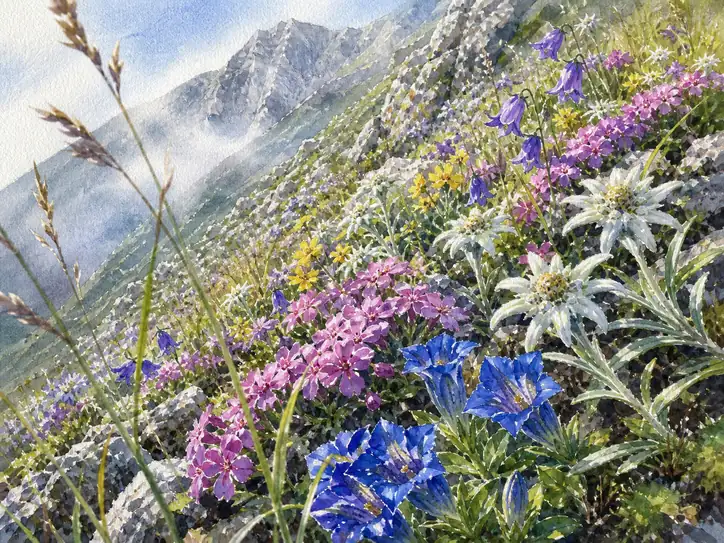 Jewels of the Peaks: A Resilience in Bloom
Similar Artworks
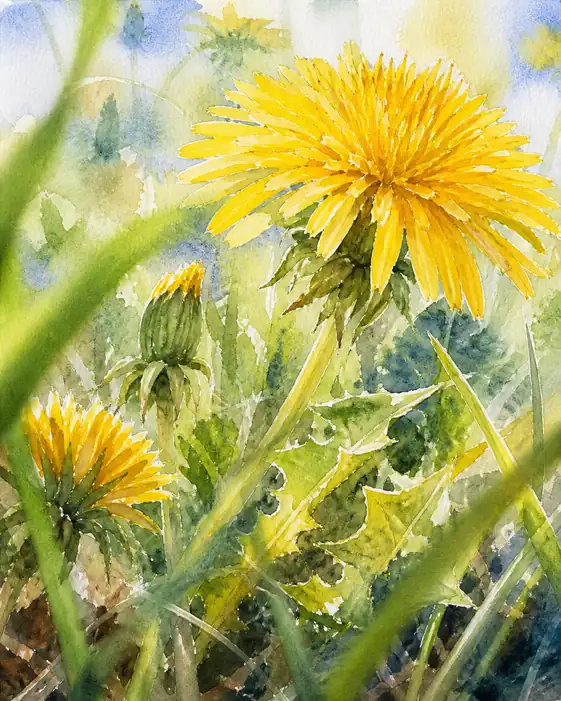 Whispers of the Golden Weed
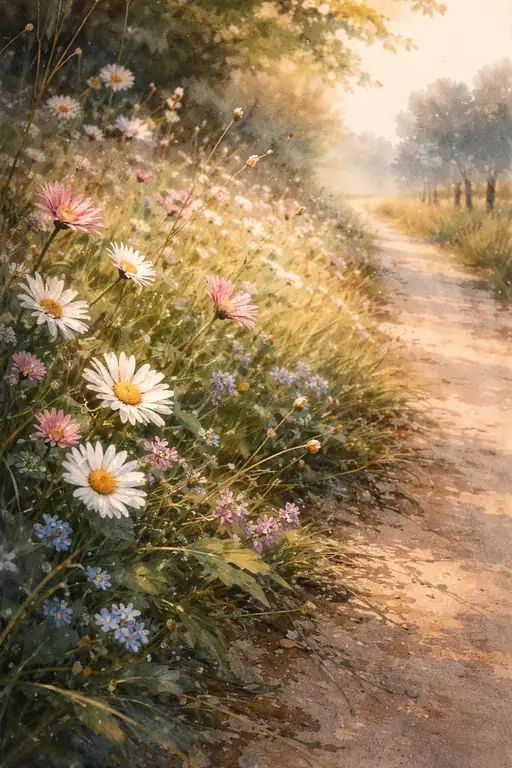 Path of Wildflowers
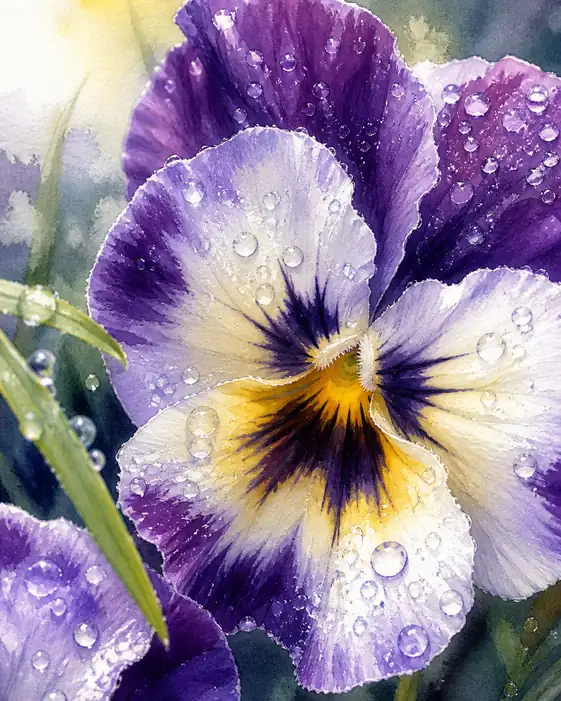 The Morning's Velvet Tears
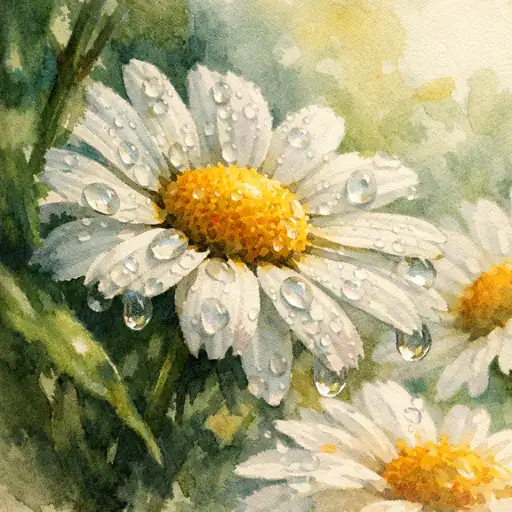 Crystal dewdrops on a pure white daisy after rain, capturing fresh morning light
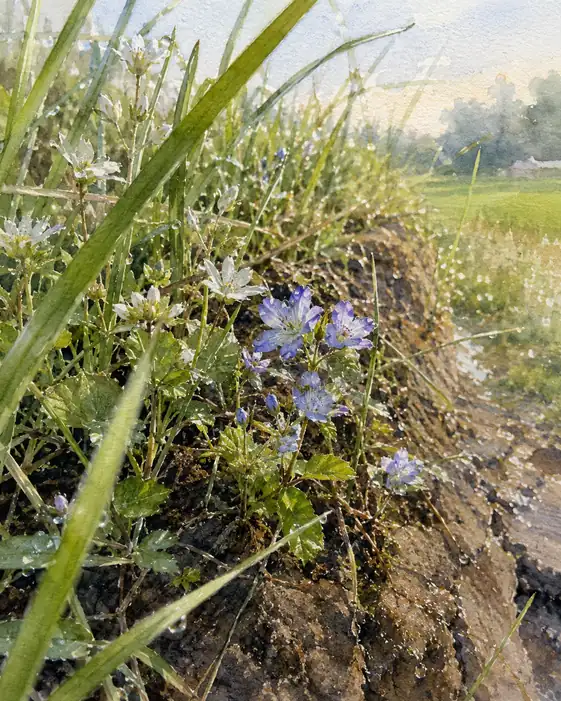 Awakening of the Tiny Stars
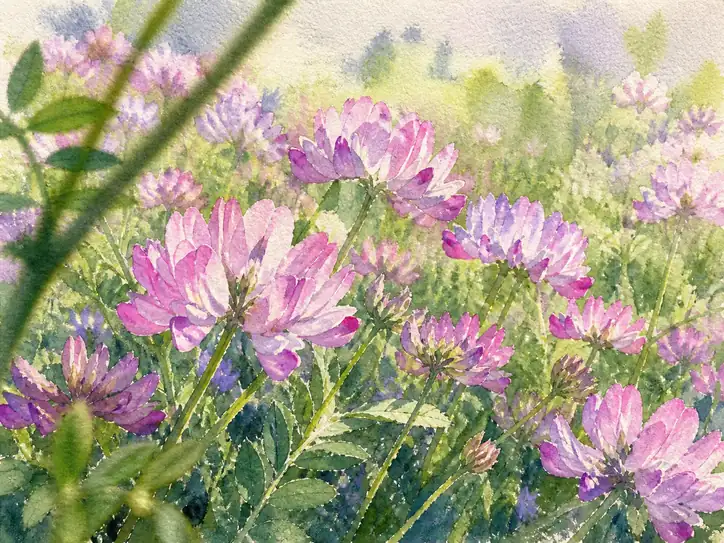 Springtime Hymn in the Grass
 A Hymn to Light: The Morning's Radiant Promise
 Whispers of the Spring Meadow
 Dance of the Sunlit Bee
 Purity Awakening in Green