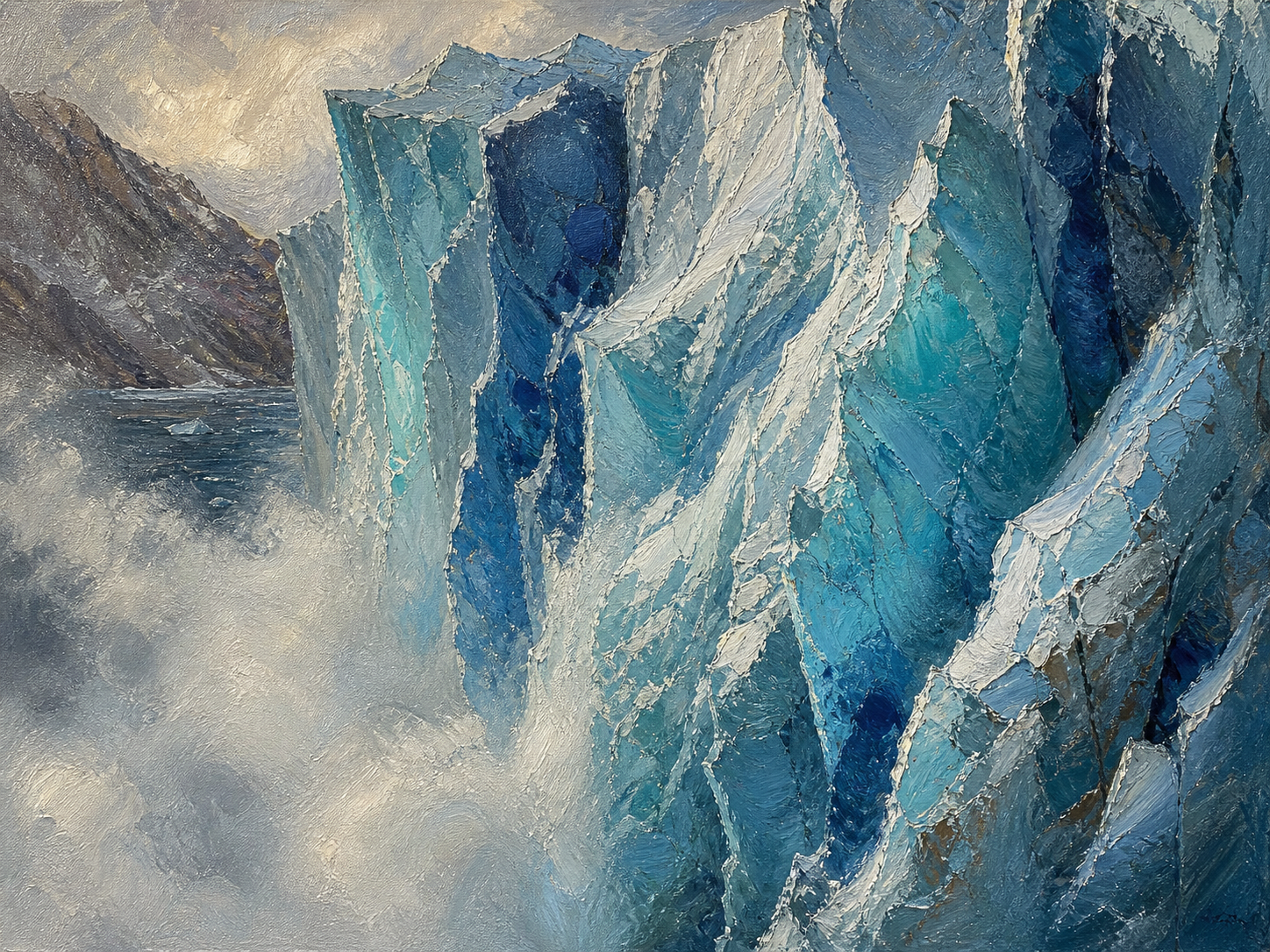
Whispers of the Ancient Frost
Critique
1. Introduction This powerful landscape painting, rendered with an expressive impasto technique, explores the monumental presence of a glacial ice wall. The artist utilizes a restricted yet nuanced palette of blues and whites to convey the cold, formidable nature of the polar environment. By emphasizing the physical weight and jagged texture of the ice through thick applications of paint, the work creates a tactile representation of a landscape that is both majestic and inhospitable. 2. Description The composition is dominated by a series of towering, vertical ice formations that rise sharply from a base of swirling mist and turbulent water. These crystalline structures are characterized by their sharp, angular peaks and deep, cobalt-blue crevices that suggest ancient, compacted layers. In the background, dark, snow-dusted mountains provide a somber contrast to the luminous turquoise and white of the ice. The foreground is filled with a chaotic, frothy movement of spray, rendered with softer, more fluid strokes. 3. Analysis Technically, the painting is a masterclass in the use of texture to define form; the thick ridges of paint physically replicate the fractured surface of the glacier. The artist employs a directional application of the palette knife to emphasize the verticality and upward thrust of the ice walls, creating a sense of dynamic growth. Color is handled with great sensitivity, using subtle variations in temperature to distinguish between sunlit surfaces and the translucent depths of the ice. The contrast between the solid, opaque paint of the glacier and the ethereal quality of the mist enhances the sense of scale. 4. Interpretation and Evaluation The artwork successfully evokes the raw power and overwhelming scale of the natural world, positioning the viewer at the foot of an imposing geological force. The tactile quality of the impasto technique allows the viewer to almost feel the sub-zero temperatures and the abrasive texture of the frozen landscape. The artist’s ability to capture the internal light of the ice—giving it a crystalline, gem-like quality—is particularly impressive. This piece demonstrates an exceptional ability to balance representational accuracy with a highly expressive and physical approach to the medium. 5. Conclusion In conclusion, this painting is a compelling tribute to the sublime beauty of the Arctic landscape, rendered with a physical intensity that demands attention. The marriage of structural precision and energetic brushwork results in a vivid and lasting impression of glacial majesty. The initial sense of cold and distance eventually shifts toward a profound respect for the enduring, crystalline structures of the earth, as interpreted through the artist's robust and masterful vision.
Same Subcategory
Similar Artworks
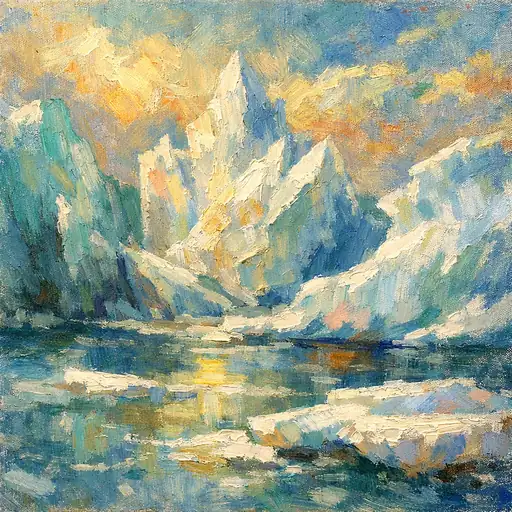 Echoes of the Glacier: The Golden Ice
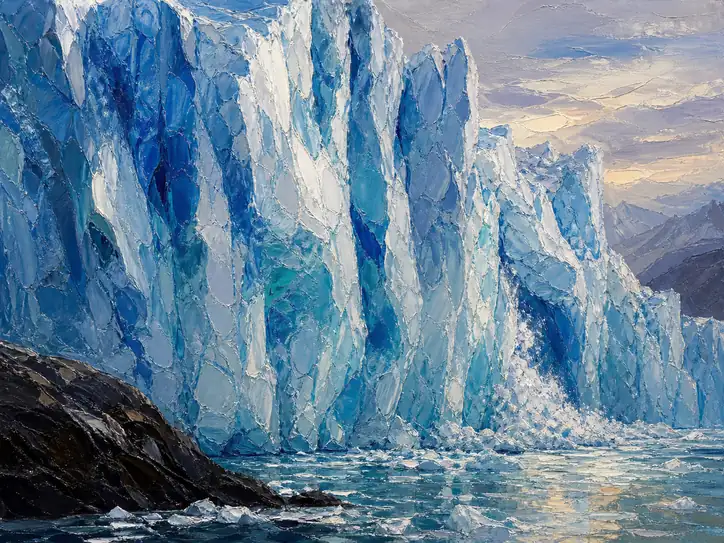 The Awakening of the Ancient Blue
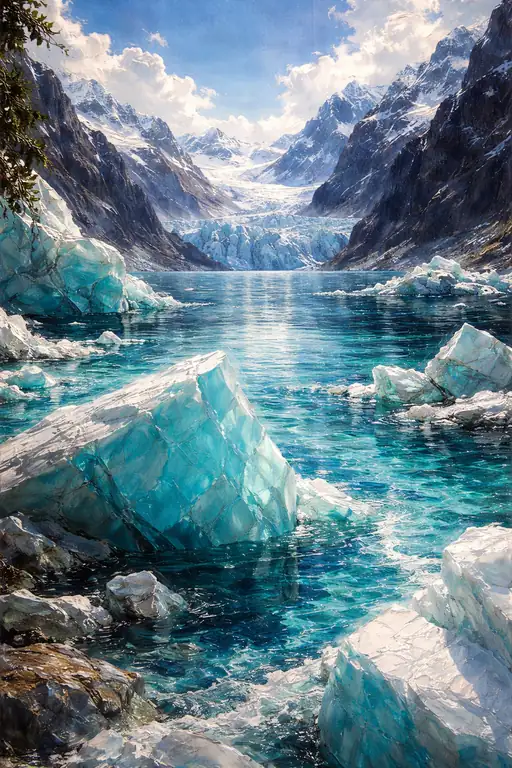 The Solitude of Frozen Wonders
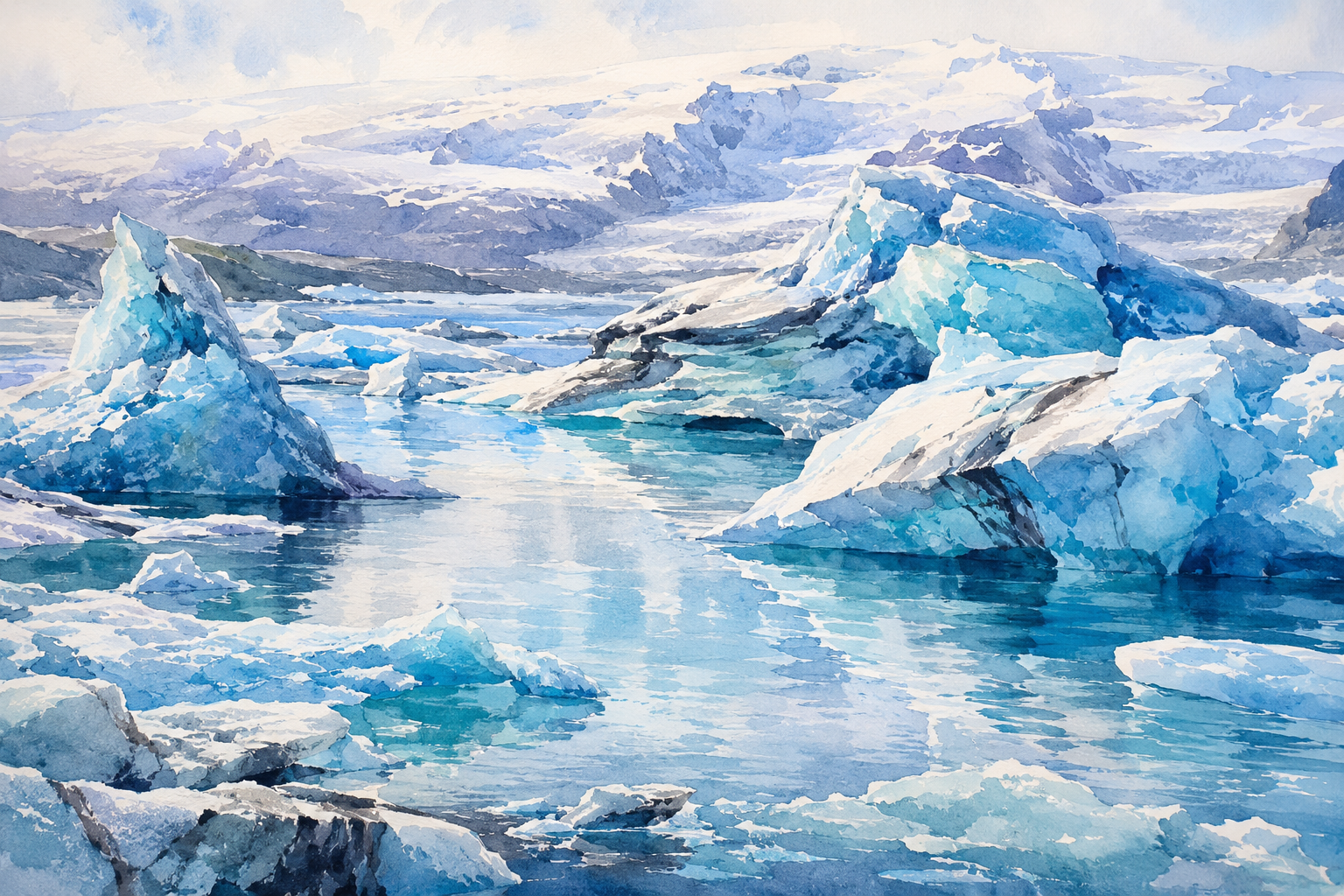 Whispers of the Crystalline Silence
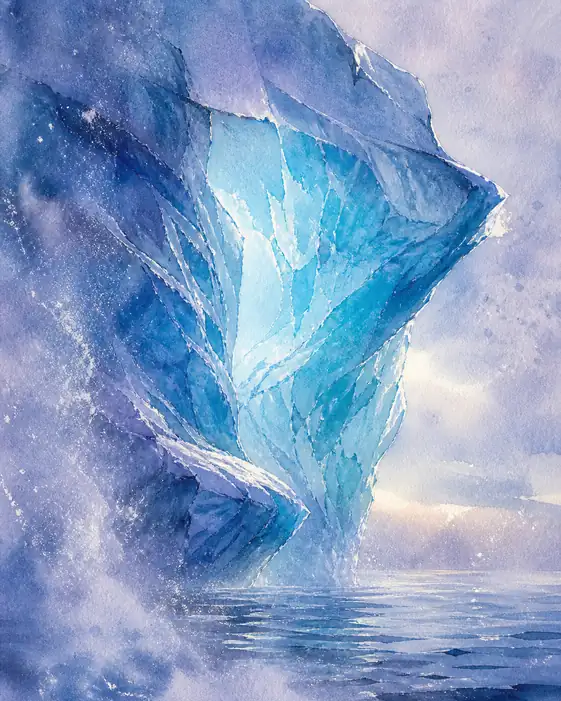 The Sacred Core of Eternal Blue
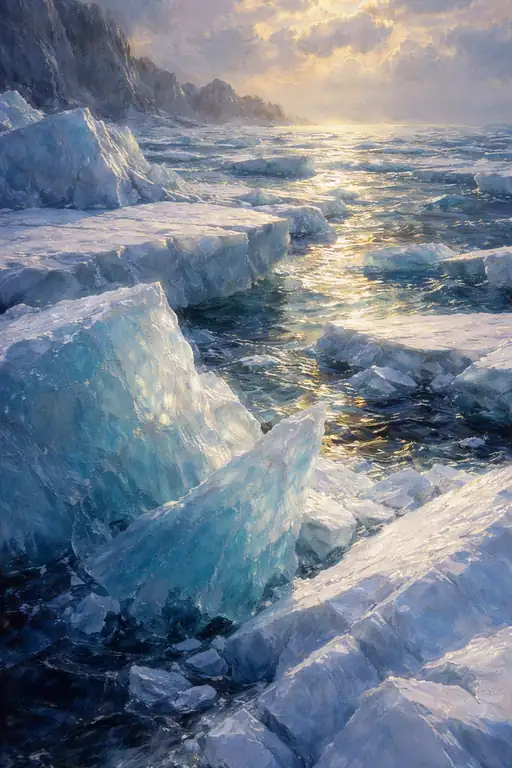 The Last Light of the Polar Kingdom
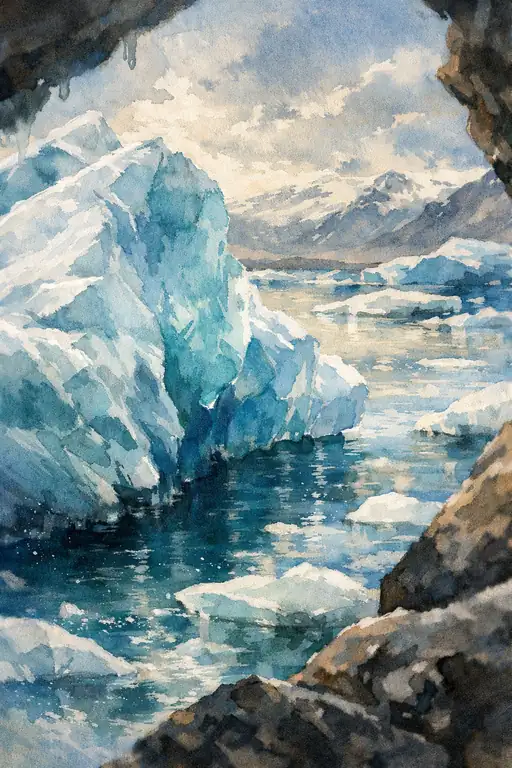 The Ice Giant's Silence
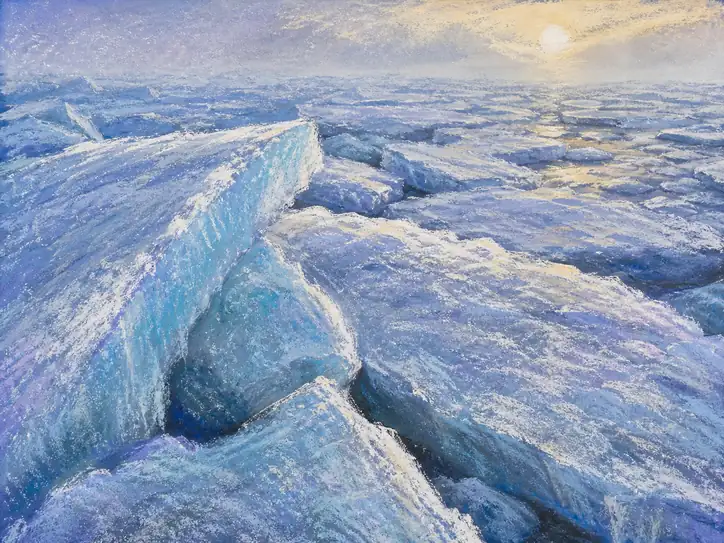 The Eternal Radiance of Frozen Frontiers
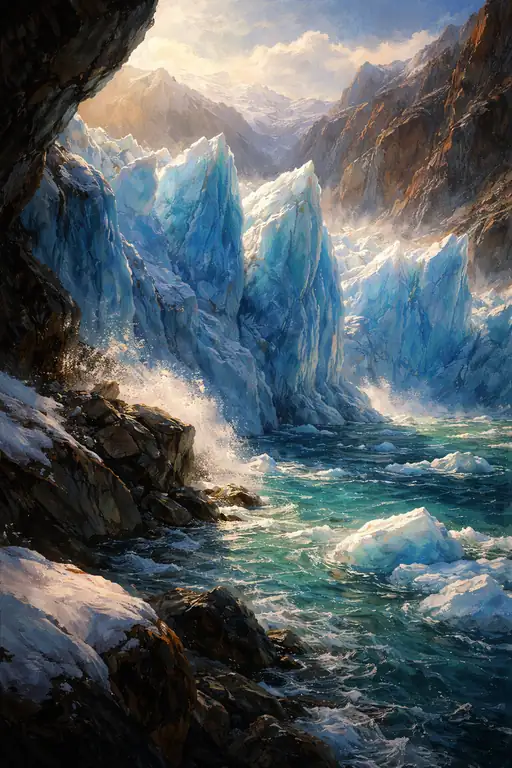 Dramatic Iceberg Waves
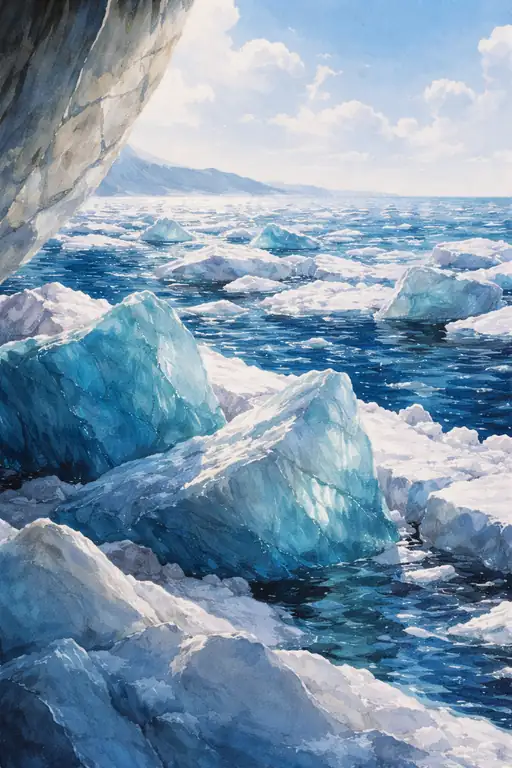 Silence of the Sleeping Glaciers