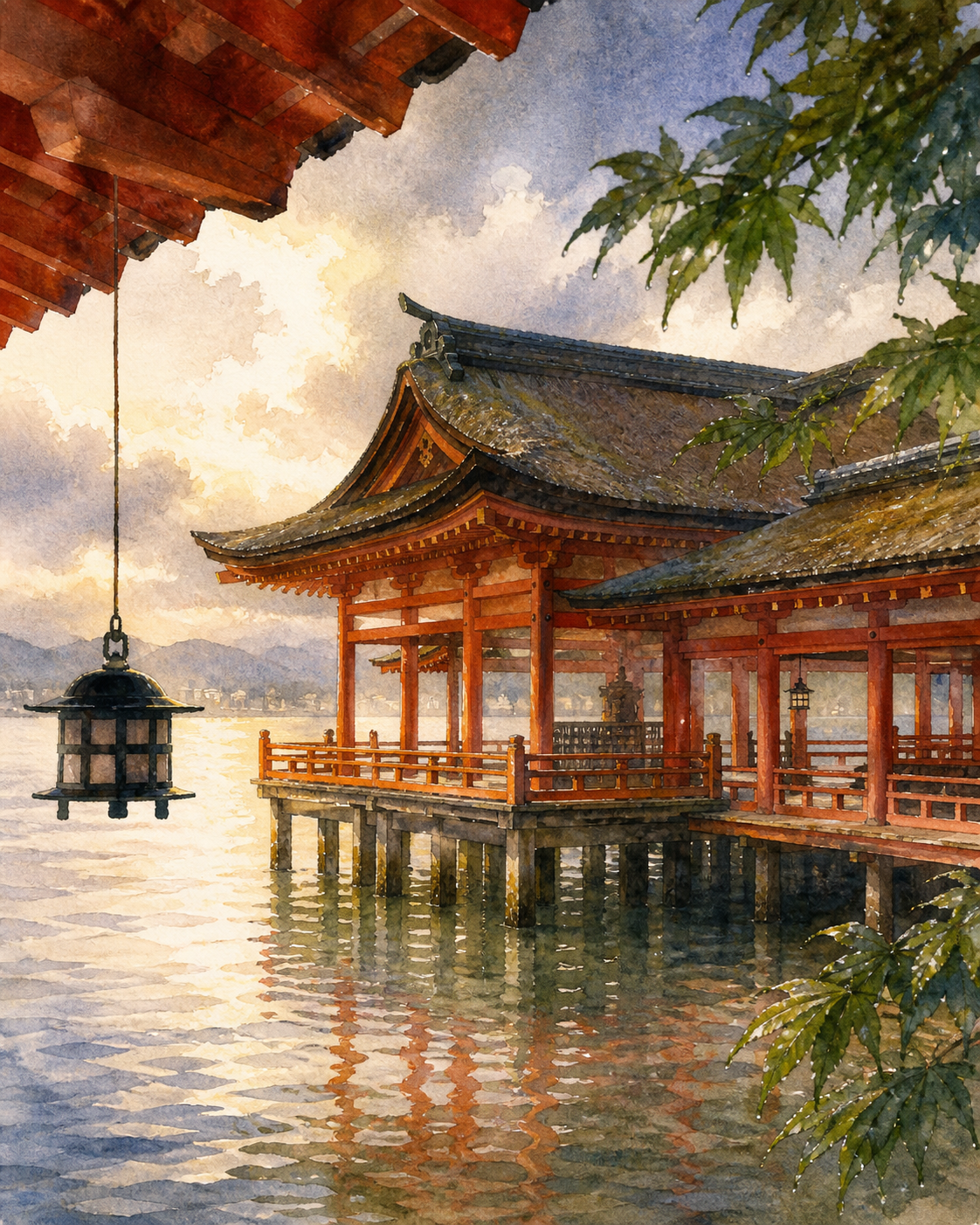
The Vermilion Sanctuary of Twilight Waters
Critique
1. Introduction This watercolor painting beautifully captures the serene majesty of a traditional Japanese shrine built over the water, reminiscent of the iconic Itsukushima Shrine. Bathed in the soft, golden light of sunset, the vermilion structure glows against a backdrop of misty mountains and a changing sky. The artist, Palettina, masterfully combines architectural precision with the fluid transparency of watercolor to create a scene that feels both grounded and ethereal. This work is a standard of excellence, representing the intersection of cultural heritage and natural beauty. 2. Description The central focus is the intricate vermilion pavilion and its connecting corridors, supported by sturdy pillars rising from the water. In the foreground, a dark hanging lantern is suspended from an eave on the left, acting as a silhouetted frame for the brightly lit center. The water's surface reflects the building's warm colors and the cooling sky with delicate ripples. Lush green maple leaves, some still glistening with moisture, frame the right side of the composition, adding a touch of seasonal vitality. Distant mountain ranges under a soft purple sky complete the panoramic depth. 3. Analysis The color palette is a sophisticated mix of warm reds and oranges contrasted against cool blues and purples. This temperature contrast enhances the luminosity of the sun-drenched architecture. Technique-wise, the artist uses wet-on-wet washes for the sky and water, while employing more controlled, fine-line work for the shrine's roof tiles and structural details. The play of light is crucial here; the source is positioned low on the left, casting long, dramatic shadows that define the three-dimensional form of the complex structure and its reflection. 4. Interpretation and Evaluation This artwork transcends simple representation by capturing the spiritual tranquility inherent in Japanese religious architecture. The technical skill required to render the overlapping reflections and the subtle gradations of the evening light is substantial. In terms of evaluation, the painting successfully balances the solidity of the man-made structure with the ephemeral qualities of light and water. The inclusion of the foreground lantern and maple leaves demonstrates a strong sense of composition, leading the viewer's eye into a timeless moment of quiet reflection and reverence. 5. Conclusion While the initial impact is one of vibrant color and light, further inspection reveals the delicate textures and carefully considered details that give the piece its soul. The harmony between the built environment and the surrounding nature is perfectly realized through the artist's refined watercolor technique. Ultimately, this painting is a testament to the enduring allure of traditional Japanese landscapes. It stands as a high-quality achievement that resonates with both historical significance and contemporary artistic sensibility, leaving a lasting impression of peace and grace.
Same Subcategory
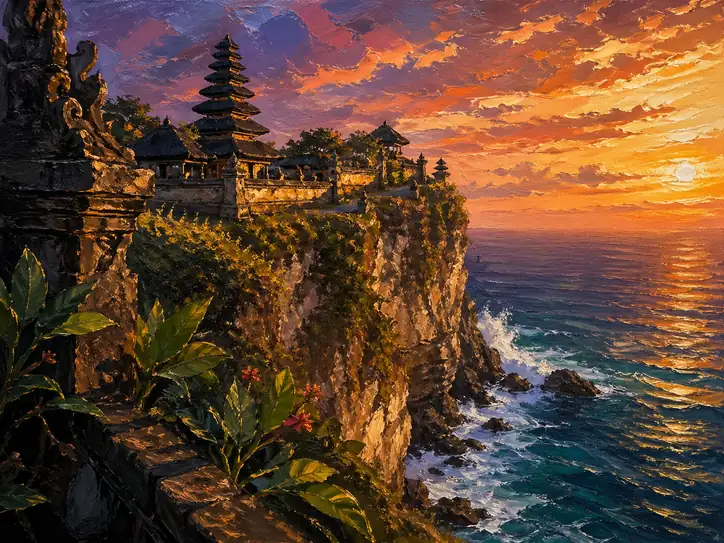 Dignity at the Edge of the World
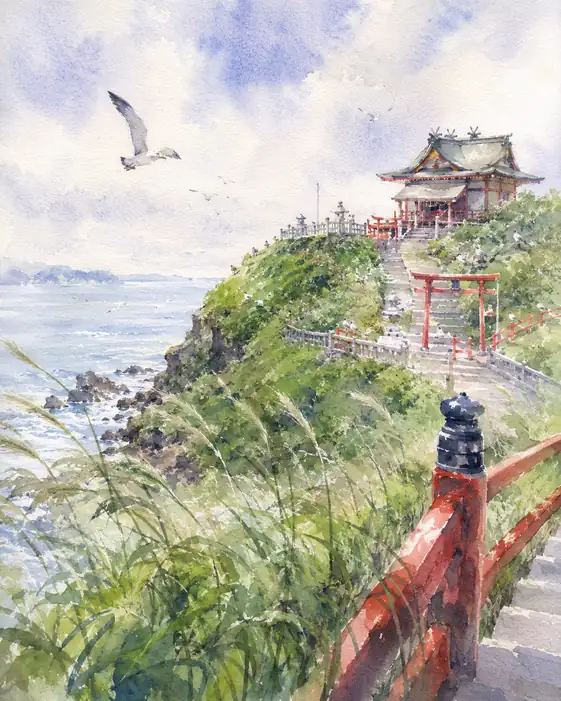 Path of the Sea Breeze and Sacred Vermilion
Similar Artworks
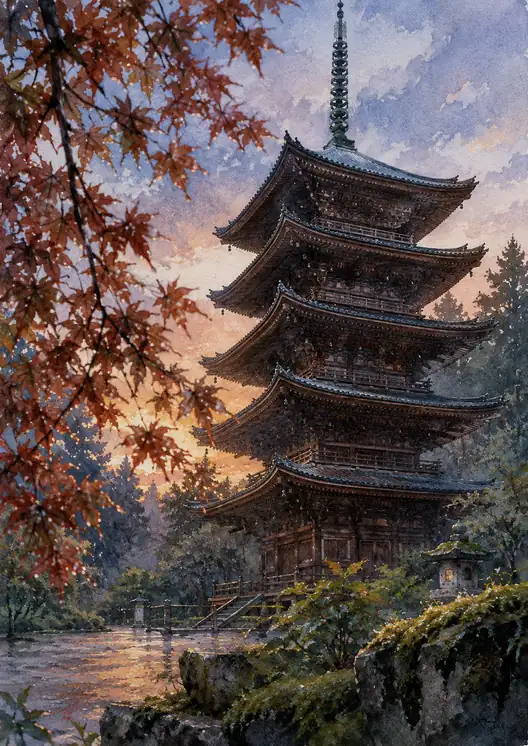 Autumn twilight, the Pagoda’s Silent Prayer
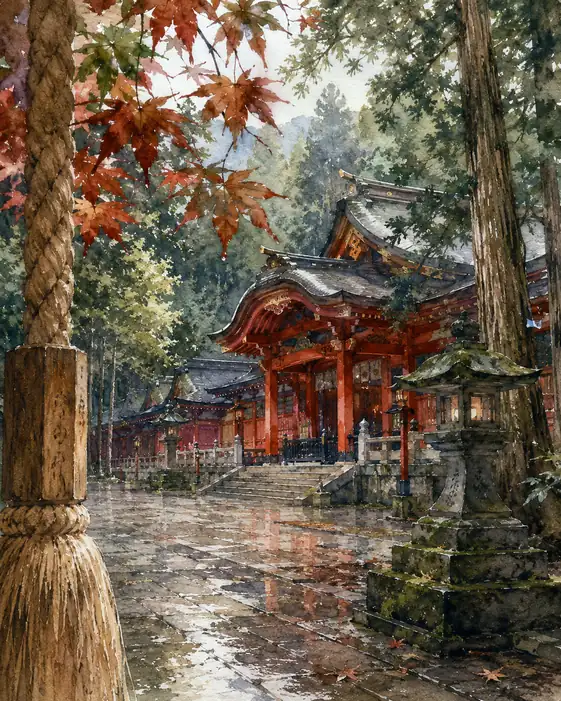 Serenity in the Autumn Rain
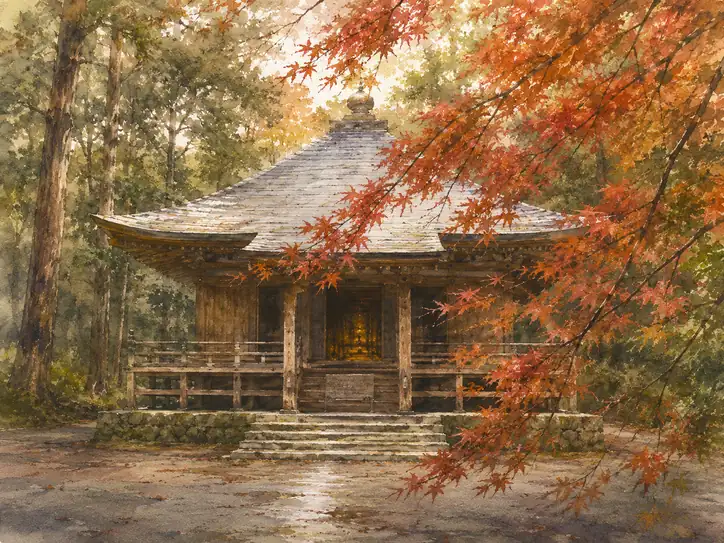 Golden Glow in the Maple Shadows
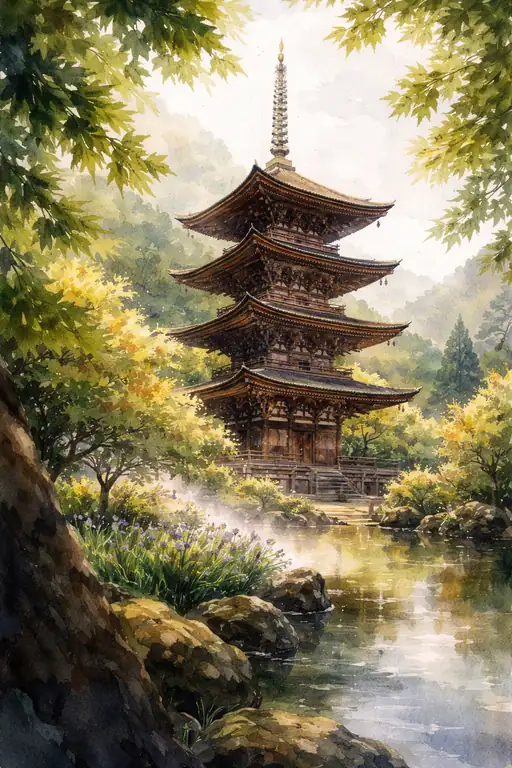 Reflection of the Silent Pagoda
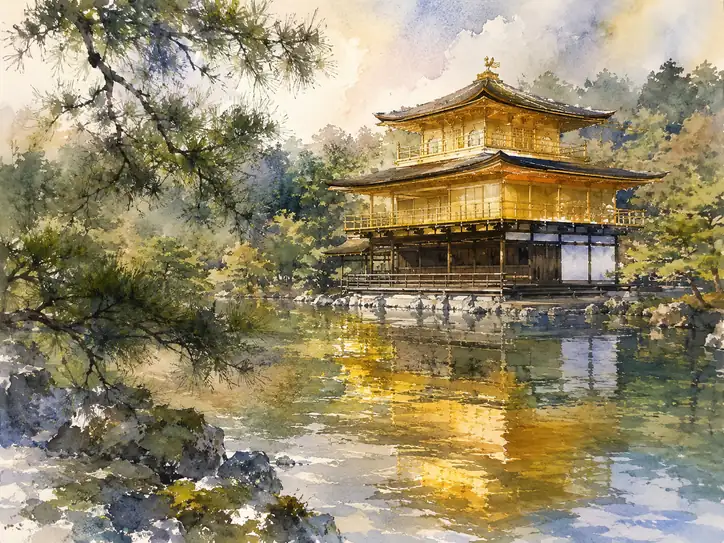 Ripples of Eternal Gold
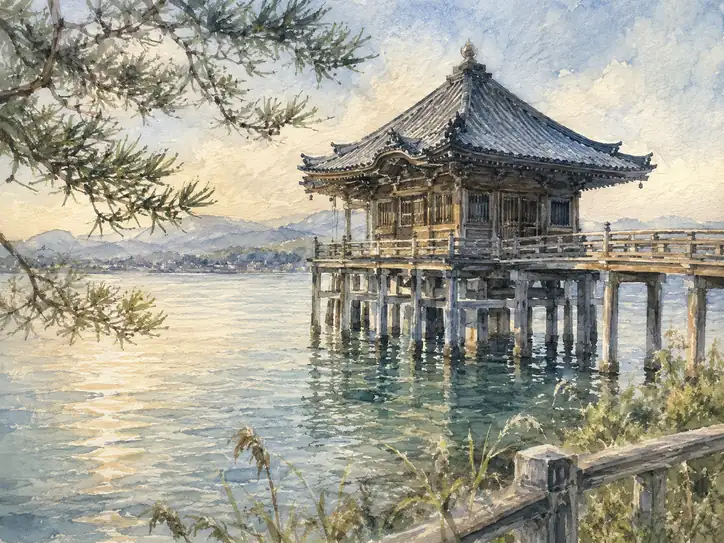 Timeless Serenity of the Floating Pavilion
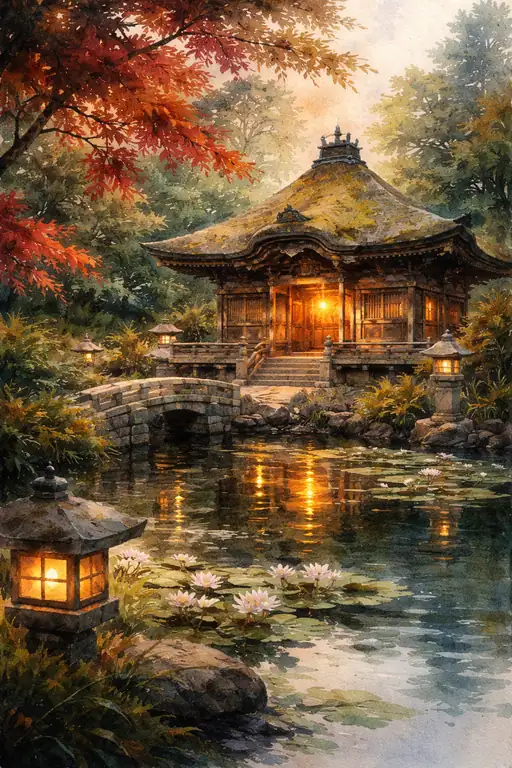 The Radiant Heart of the Twilight Sanctuary
 The Gate Between This Morning and the Next
 Silent Prayer of the Sea
 Where Prayers Reflect in Gold