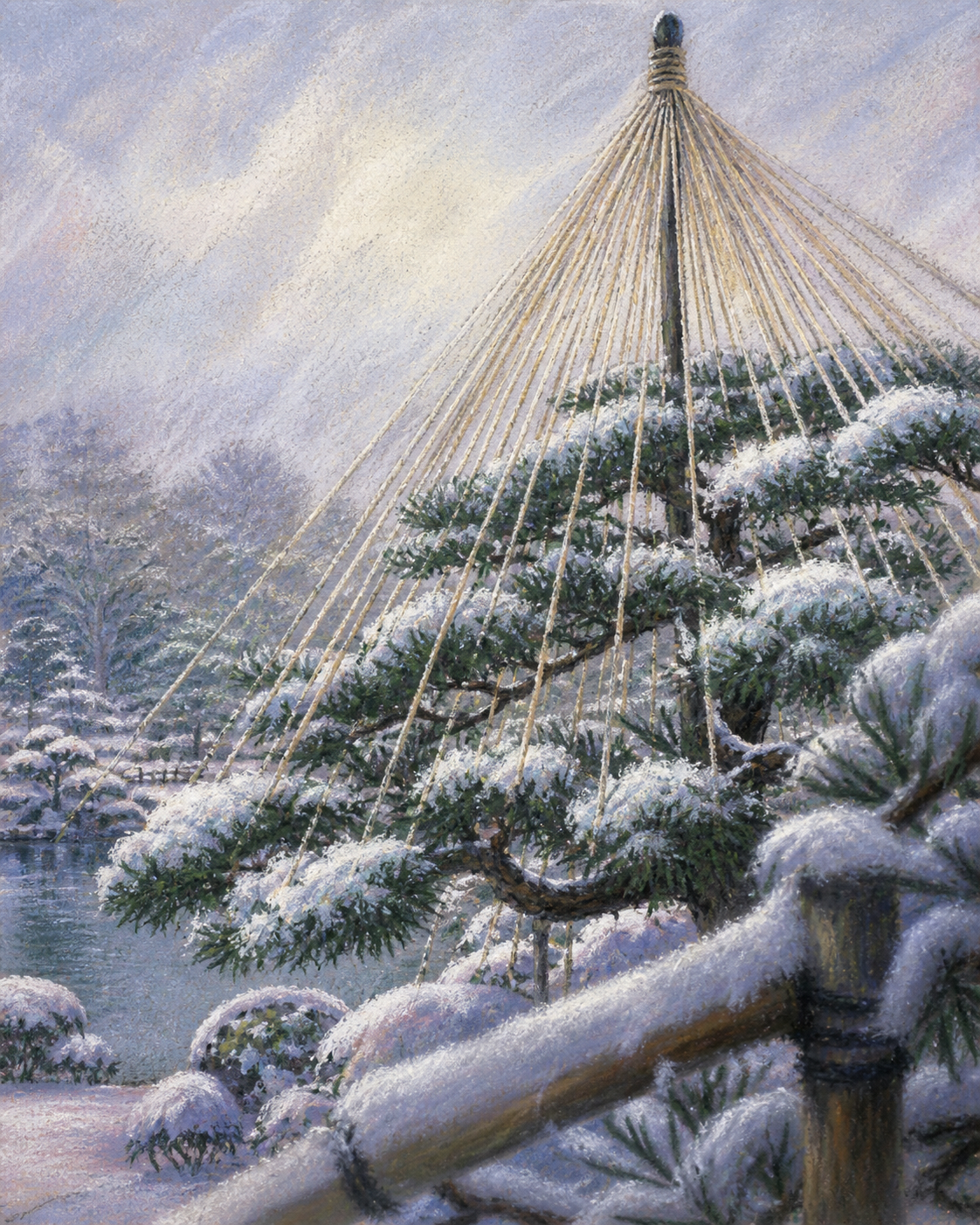
The Geometry of Winter's Vigil
Critique
1. Introduction This oil painting presents a serene and atmospheric depiction of a traditional Japanese garden in winter. The central subject is a pine tree equipped with "yukizuri," a traditional rope bracing technique designed to protect branches from heavy snow. The artist captures a quiet moment where nature and human intervention coexist in harmony. This work serves as an evocative representation of the seasonal aesthetics found in Japan, offering a standard yet deeply poetic view of the landscape's stillness. 2. Description The composition features a prominent pine tree positioned slightly to the right of the center, with ropes radiating from its top in a conical shape. These ropes create a sharp geometric pattern against the soft, snow-laden foliage. In the background, a calm pond reflects the overcast sky, surrounded by other trees shrouded in white. A snow-covered bamboo fence in the foreground runs diagonally across the bottom corner, providing a sense of physical entry into the scene and depth to the overall environment. 3. Analysis The color palette is dominated by cool tones, including whites, pale blues, and subtle lavenders, which effectively convey the crisp, cold air of winter. The dark greens of the pine needles and the warm ocher of the ropes provide necessary contrast to the high-key surroundings. The brushwork is soft and layered, creating a textured surface reminiscent of pastels. This technique enhances the appearance of the powdery snow. The interaction between the vertical ropes and the horizontal branches establishes a balanced structural rhythm within the frame. 4. Interpretation and Evaluation This artwork elevates a practical horticultural method into a significant aesthetic statement. By focusing on the structural beauty of the yukizuri, the artist highlights the cultural wisdom inherent in Japanese garden maintenance. The technical skill in rendering the subtle variations of color within the snow is commendable, avoiding a flat white surface. The composition is well-balanced, respecting traditional landscape principles while employing an impressionistic light that brings a contemporary vitality to the classical subject matter. 5. Conclusion While the initial impression is one of cold isolation, closer inspection reveals the intricate rope work as a symbol of care and order within the natural world. The fusion of natural elements and human design is perfectly captured through the artist's refined technique. Ultimately, this piece reaffirms the quiet strength found in winter and the profound beauty of seasonal transitions. It stands as a highly accomplished landscape painting that resonates with both cultural significance and artistic precision.
Same Subcategory
 Moonlit Roofs
 Glancing into Paradise
Similar Artworks
 The Silent Geometry of Winter's Embrace
 Silent Witness to the Frozen Epoch
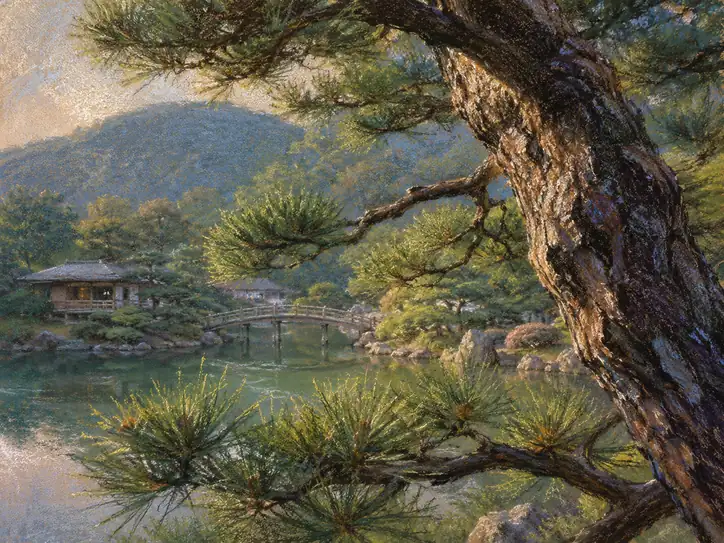 Golden Peace in the Pine-Framed Garden
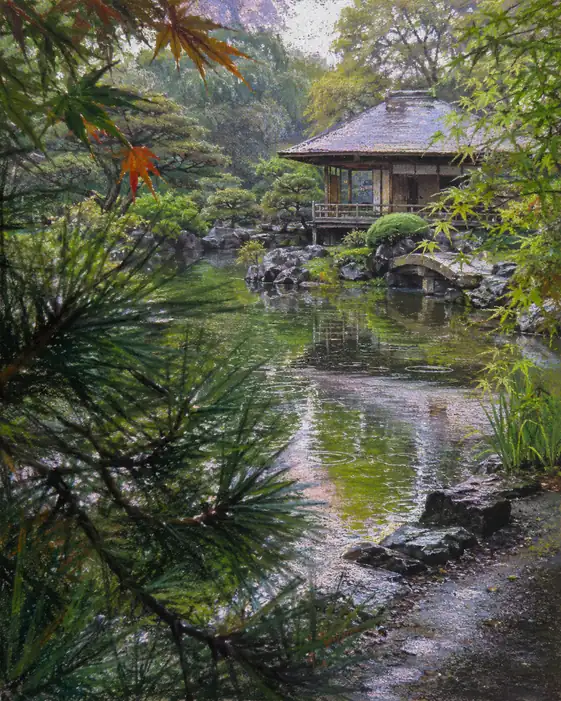 Rain-Soaked Reverie: The Garden's Silent Melody
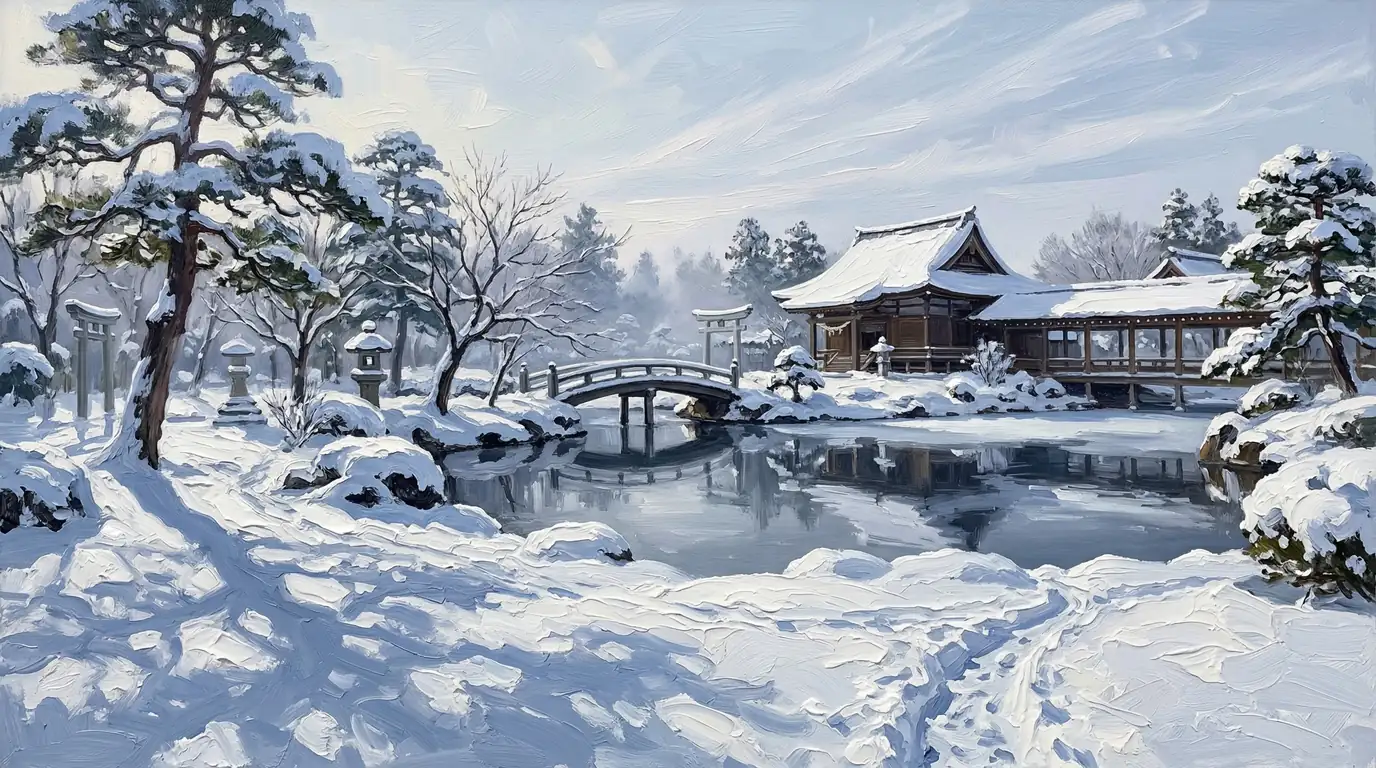 Winter's Hallowed Silence
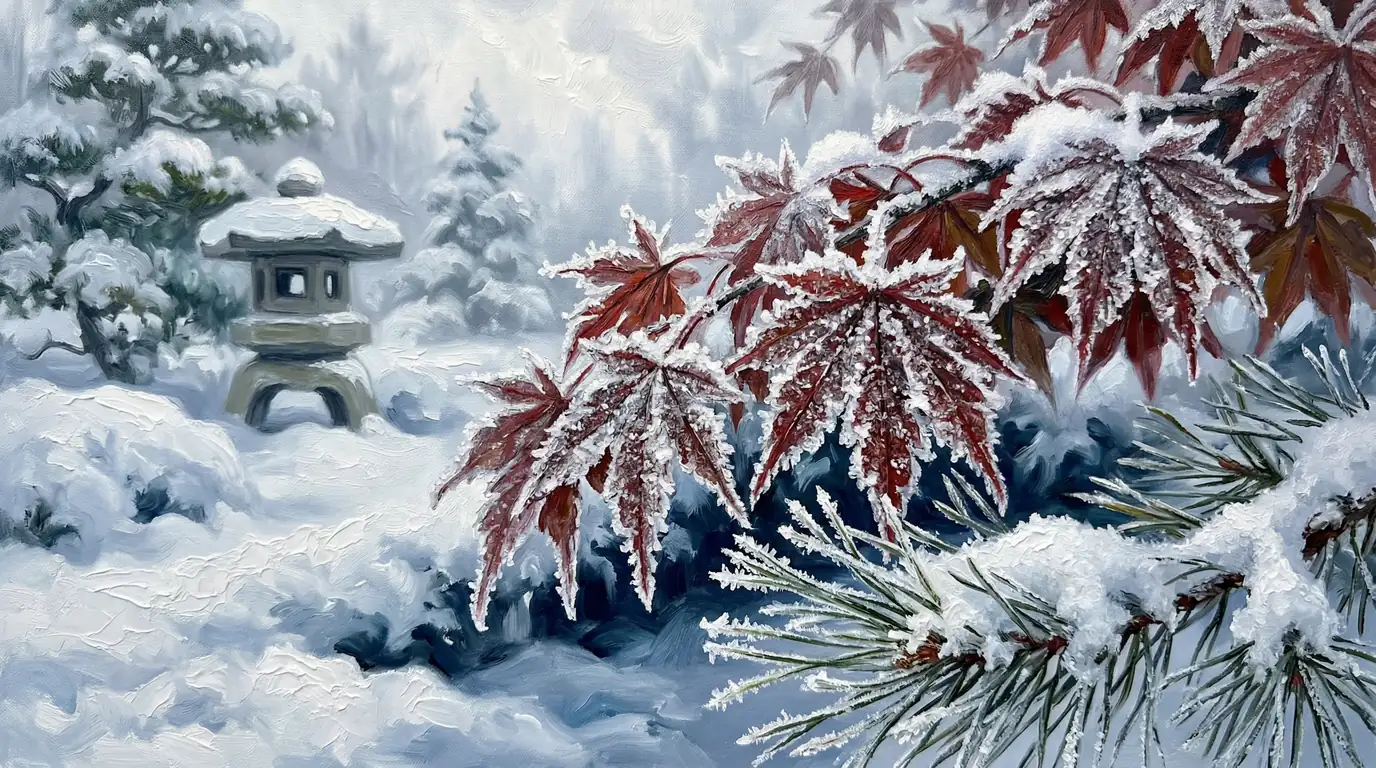 Silence Under the Winter Snow
 The Garden's Silent Breath
 The Silent Watcher of the Garden
 Reflections in the Emerald Sanctuary
 Where Time Rests in Stillness