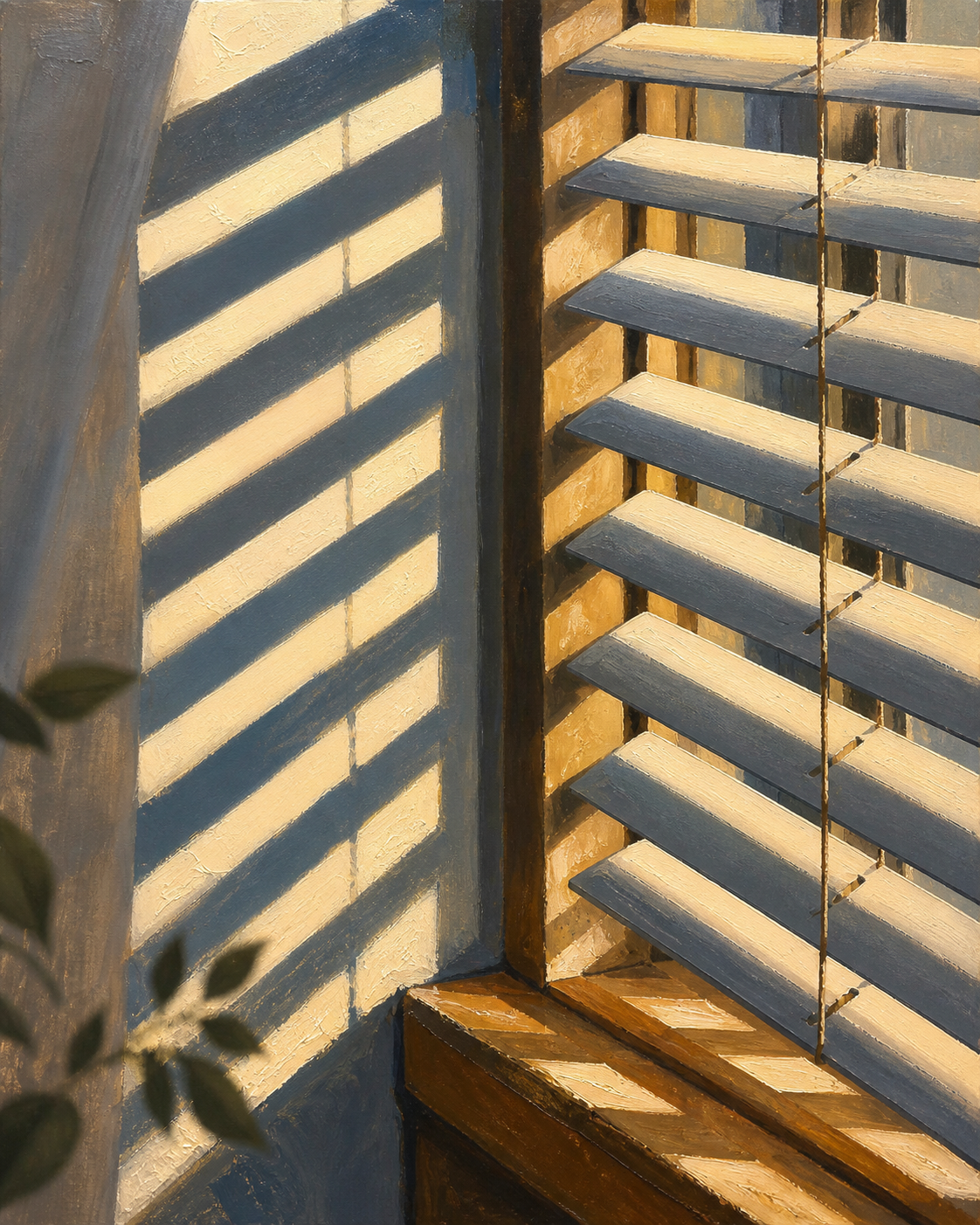
The Geometry of Afternoon Silence
Critique
1. Introduction This oil painting explores the dramatic interplay of light and geometry through the depiction of a window fitted with horizontal blinds. The composition focuses on the rhythmic patterns of shadow cast by the afternoon sun, transforming a common domestic setting into a study of contrast and atmosphere. It is a work that emphasizes the quiet, cinematic quality of light as it interacts with architectural elements and interior spaces. 2. Description The right side of the canvas is occupied by a set of Venetian blinds, their slats rendered in varying shades of grey and ochre. Sunlight filters through the openings, casting long, sharp diagonal shadows across the adjacent wall and the wooden windowsill below. A portion of a curtain is visible on the far left, while the out-of-focus leaves of a houseplant frame the bottom left corner. The color palette is dominated by the warm, golden hues of the sunlight and the cool, slate-blue tones of the shadows. 3. Analysis The artist utilizes a strong sense of chiaroscuro to define the space, creating a high-contrast environment that emphasizes the physical presence of light. The repetitive, geometric nature of the shadows provides a formal structure to the composition, leading the viewer's eye across the canvas. The brushwork is deliberate and visible, particularly on the textured wall and the wooden sill, adding a tactile quality to the light. The blurred leaves in the foreground create a sense of depth, suggesting a lived-in space beyond the immediate focal point. 4. Interpretation and Evaluation This piece successfully captures the fleeting and evocative nature of a specific time of day. The attention to the precise angle and intensity of the shadows suggests a patient and careful observation of natural light. Technically, the rendering of the different surfaces—the smooth slats of the blinds, the grain of the wood, and the matte finish of the wall—is highly effective. The work achieves a balance between realism and abstraction, where the patterns of light become as significant as the objects themselves. 5. Conclusion Through its focus on the transformative power of light, the painting invites an appreciation for the subtle beauty found in everyday environments. The initial impression of a simple interior scene evolves into a deeper meditation on the relationship between light and shadow. It is a technically proficient and atmospheric work that demonstrates a sensitive understanding of how light defines our perception of space.
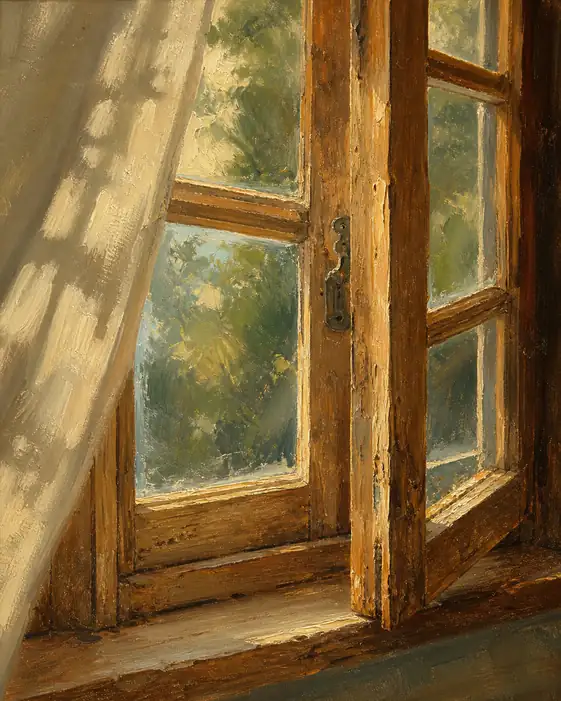 Threshold of Timeless Light
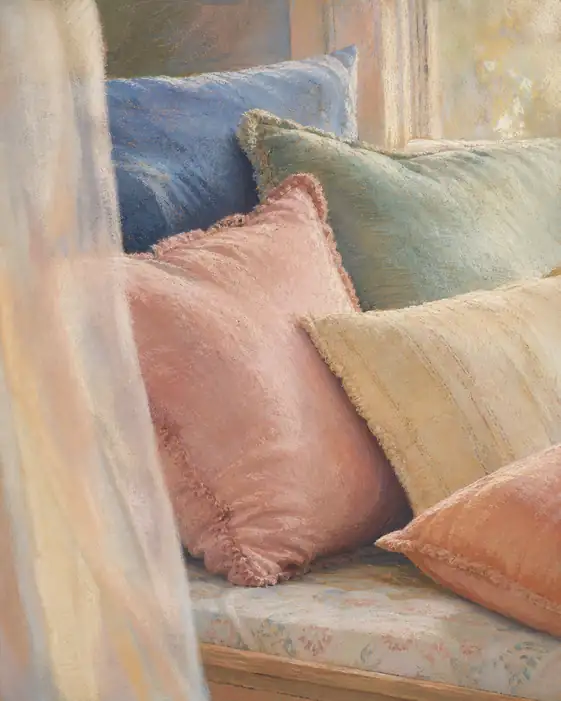 Serenade of Pastel Silence
 Inner Landscape
 Tears of the Windowpane
 Sanctuary of Morning Light
 Woven Sunshine
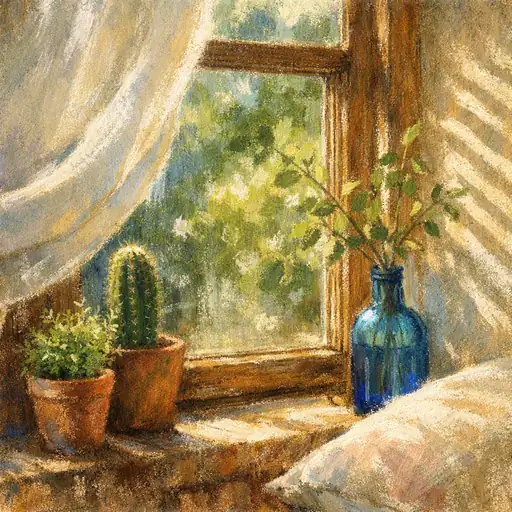 Blue Bottle by the Window
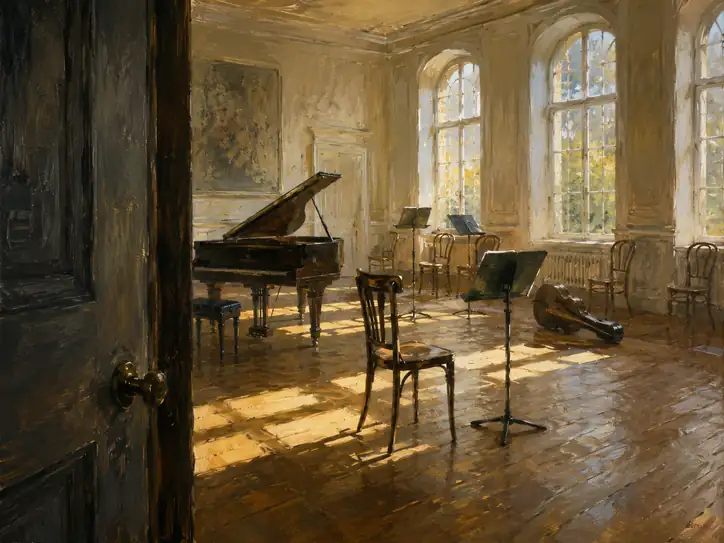 The Silence Before the Song
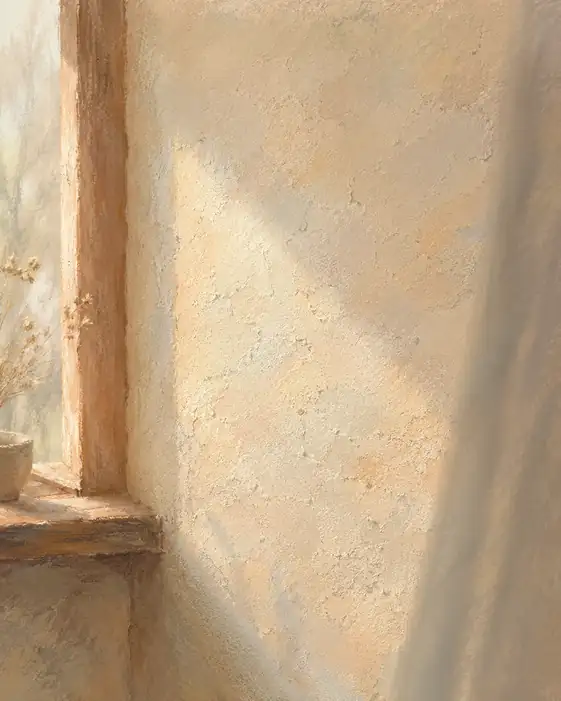 The Afternoon's Gentle Breath
 The Pearlescent Veil of Morning Radiance
 Dancing Light Through the Window