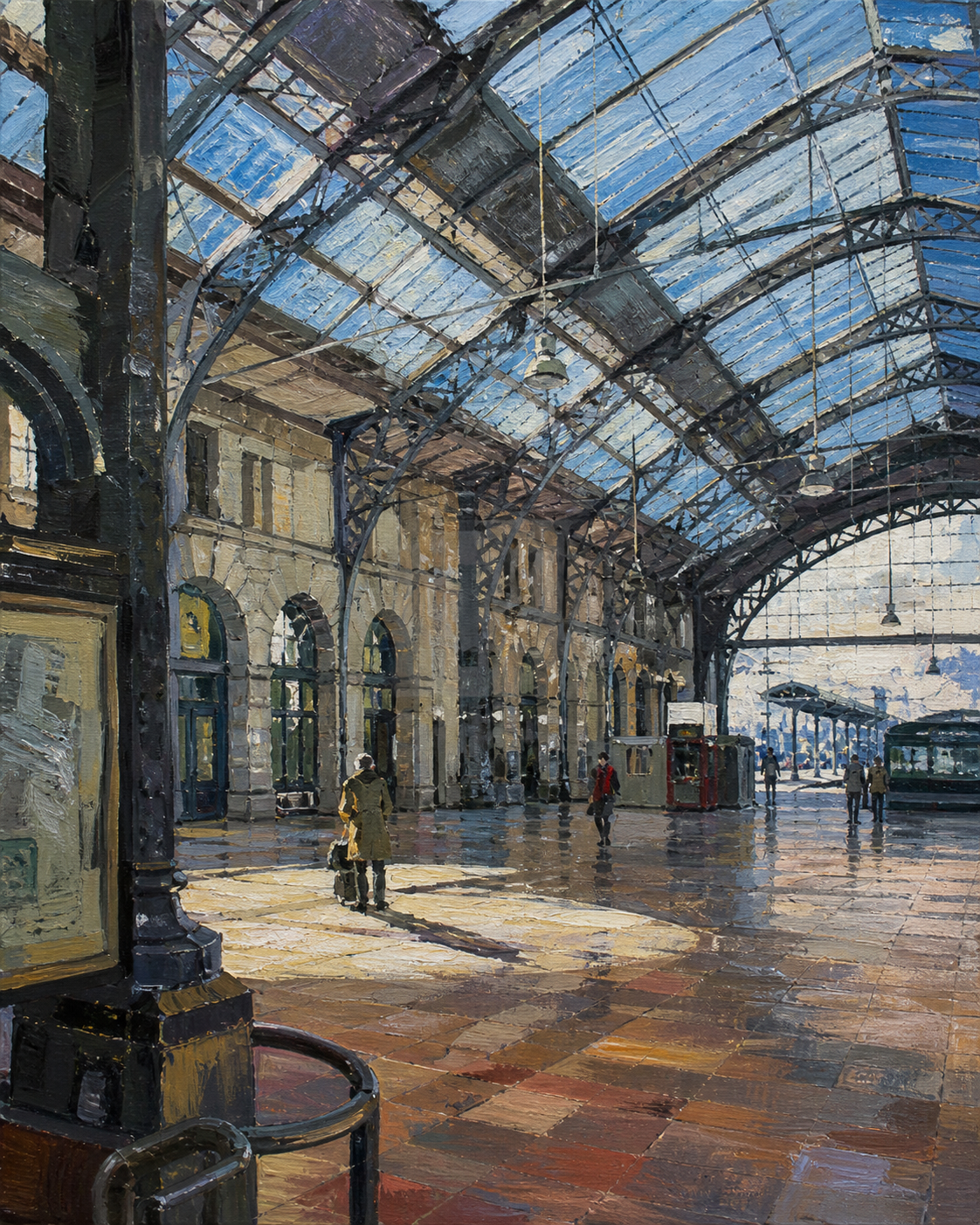
The Cathedral of Departures
Critique
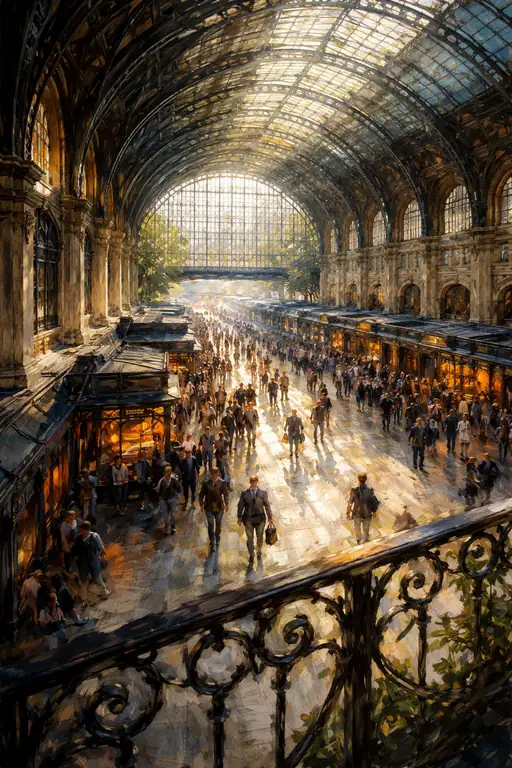
1. Introduction This oil painting depicts the interior of a grand railway station, enclosed within a vast structure of iron and glass. It captures a magnificent space reminiscent of late 19th to early 20th-century modern architecture through powerful brushwork. The entire scene exudes a unique, quiet energy where the progress of civilization meets the nostalgia of travel. Viewers find themselves witnessing a moment of daily life unfolding beneath a massive, arched ceiling. 2. Description A figure wearing a coat and holding a suitcase stands with their back turned in the center-left foreground. Other individuals are scattered throughout the space, and the silhouette of a train can be seen on the distant platform. Clear blue sky is visible through the glass roof, casting light that creates complex reflections on the polished floor. Dark columns and a notice board on the left frame the composition, emphasizing the depth of the space. 3. Analysis The composition is based on a one-point perspective, with a strong vanishing point toward the right background enhancing the sense of scale. Color-wise, the cool blue of the ceiling contrasts with the warm ochre tones of the floor, providing visual stability. The impasto technique effectively renders the metallic textures, floor gloss, and the solid quality of the incoming sunlight. The clear contrast between light and shadow highlights the structural beauty of the station building. 4. Interpretation and Evaluation This work reinterprets the railway station, a symbol of modernization, not merely as a record but as a drama of light. It demonstrates a balance between precise drawing and bold strokes, revealing the artist's sophisticated technical skills. The depiction of light reflecting off the floor is particularly original, adding a dynamic rhythm to the static environment. The anonymity of the commuters symbolically portrays both the solitude and freedom inherent in modern urban life. 5. Conclusion While the overwhelming scale of the architecture initially captures the eye, attention gradually shifts toward the subtle flickers of light and the presence of the people. This masterpiece successfully elevates a public space into an artistic work filled with lyricism and strength. The sensation of light particles filling the air leaves a deep impression on the viewer. Ultimately, the painting succeeds in transforming a modern vista into a vision of universal beauty.
Same Subcategory
Similar Artworks
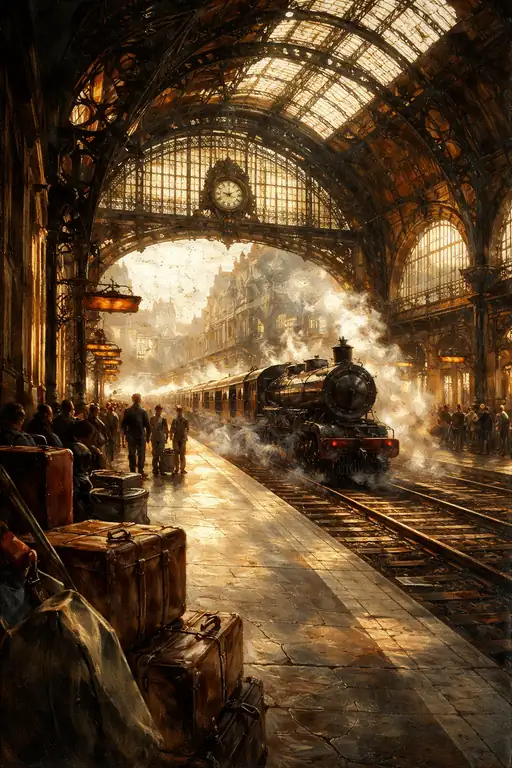 The Golden Age of Steam and Light
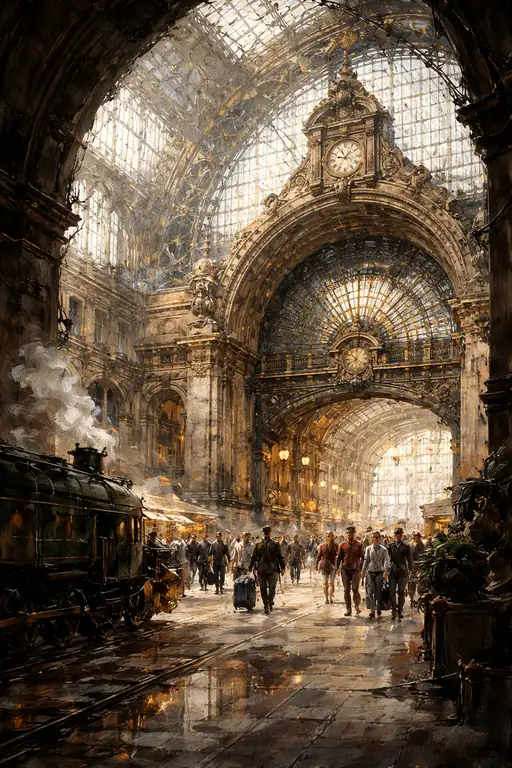 The Steam Engine's Breath: An Era of Departures
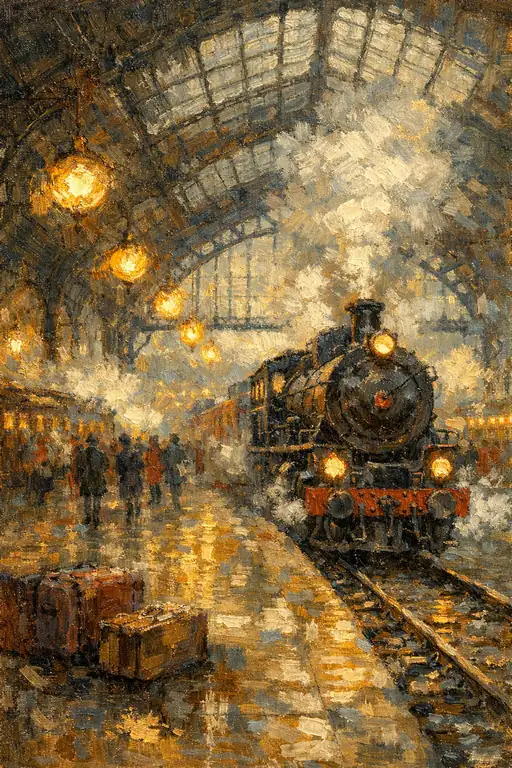 The Iron Giant's Smoky Sigh
 Summer's Slow Passage
 Eternal Departures in the Golden Light
 Memories Fading in the Winter Snow
 Golden Horizon at the Journey's End
 Terracotta Echoes of the High City
 Echoes of Nostalgia Through the Mist
 Whispers of the Wet Cobblestones