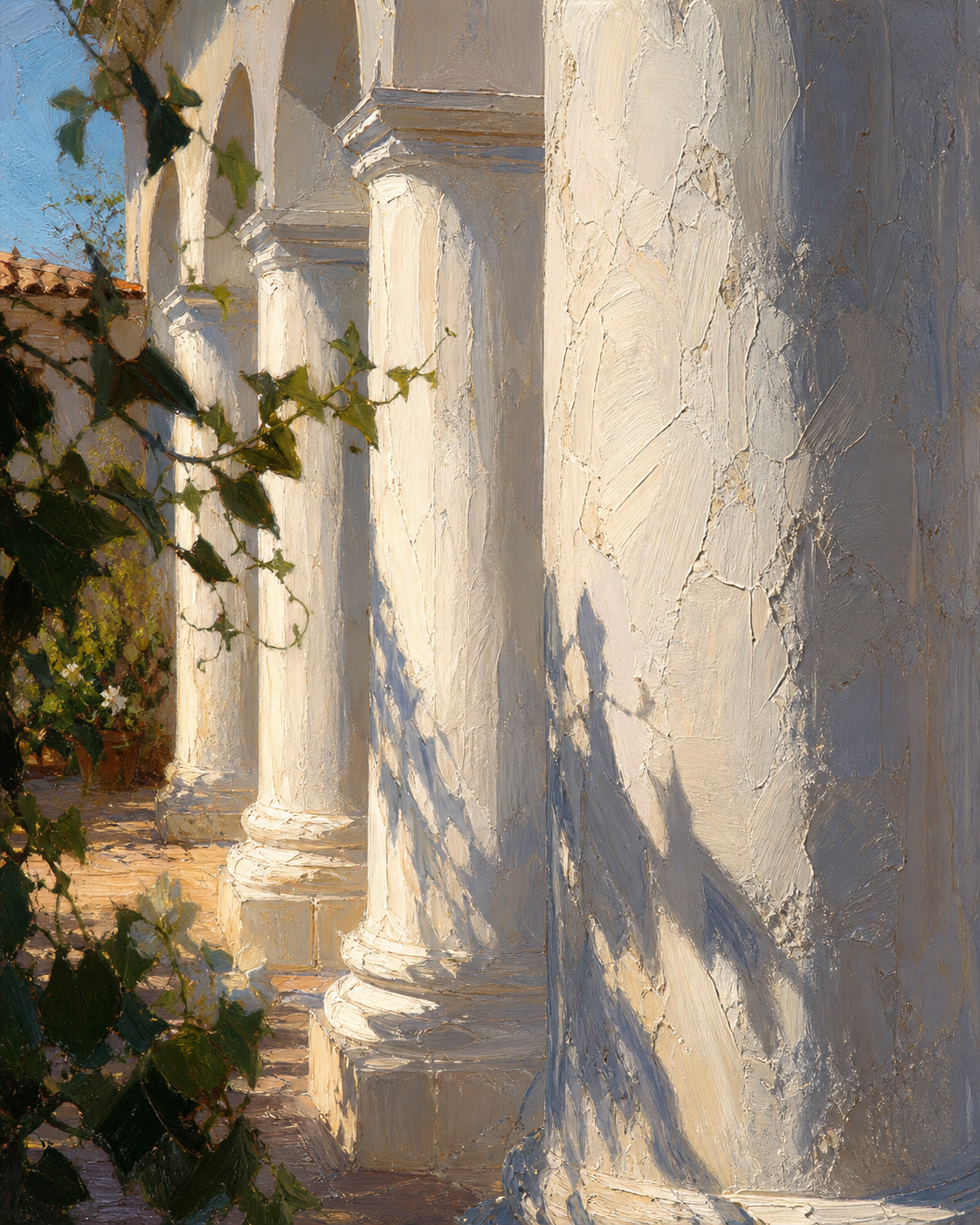
The Sunlit Soul of Stone
Critique
1. Introduction This painting presents a striking close-up of a series of classical white columns, likely part of a Mediterranean-style colonnade. The work focuses on the sculptural qualities of architectural forms as they interact with brilliant, direct sunlight. By narrowing the field of vision to the rhythmic repetition of the pillars, the artist creates a composition that celebrates the enduring elegance of classical design and its response to natural light. 2. Description The foreground is dominated by a massive white column, its surface heavily textured with visible paint application. Behind it, several more pillars recede into the upper-left background, topped by rounded arches. Sharp, blue-toned shadows from unseen foliage are cast across the curved surfaces of the stone. To the left, vibrant green leaves and white flowers add a touch of organic life, while a glimpse of clear blue sky fills the upper-left corner. 3. Analysis Technically, the artist utilizes a high-key color palette dominated by varying shades of white, cream, and pale blue. The use of impasto is particularly effective here; thick ridges of paint physically mimic the weathered, sun-bleached texture of the stone. The vertical orientation of the columns provides a strong sense of upward movement and structural stability. The interplay between the smooth, rounded forms of the pillars and the jagged, intricate shadows creates a complex visual pattern. 4. Interpretation and Evaluation The depiction of the columns evokes a sense of timelessness and the purity of classical architectural ideals. The brilliant light does not merely illuminate the scene but seems to radiate from the white stone itself, suggesting a spiritual or transcendental quality to the space. This work is highly successful in its ability to transform a simple architectural detail into a profound study of texture and atmosphere. It effectively captures the sensory experience of a warm, bright day in a coastal environment. 5. Conclusion Initially, the viewer's attention is captured by the blinding whiteness of the stone, but a closer look reveals a rich tapestry of subtle colors and textures. The painting balances the weight of the massive columns with the fleeting, ephemeral nature of the shadows cast upon them. It concludes as a masterful exercise in lighting and materiality, proving that even a fragment of a building can convey a powerful sense of place and history.
Same Subcategory
 Breeze Through the Eternal Arch
Similar Artworks
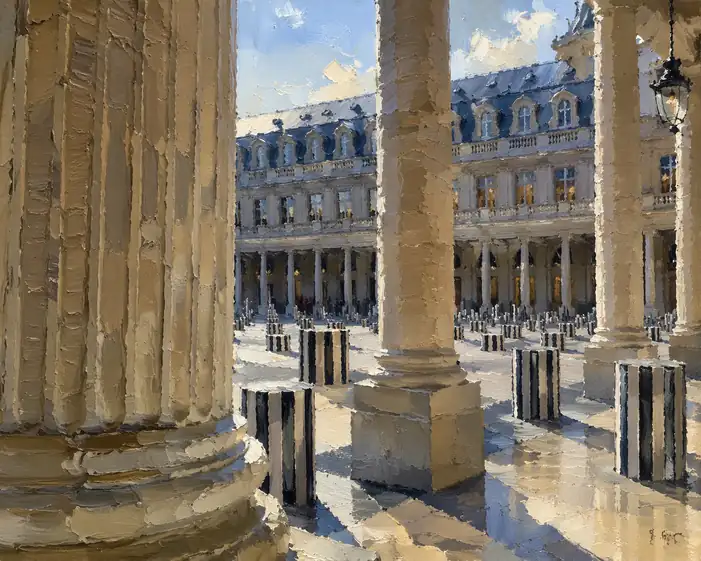 Timeless Steps: The Sunlit Alley's Descent
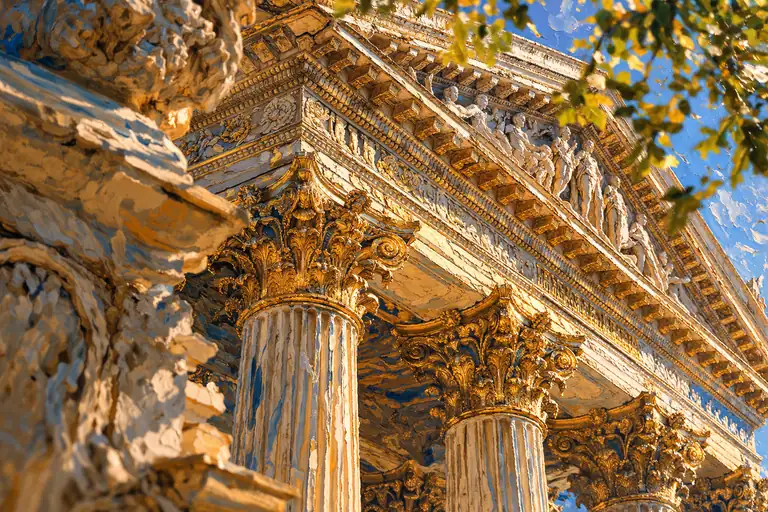 Majesty of the Corinthian Gold
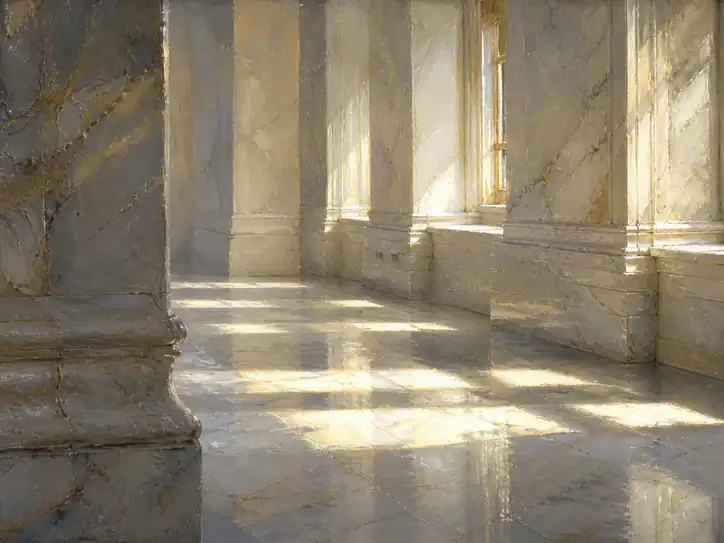 Where Light Breathes in Stone
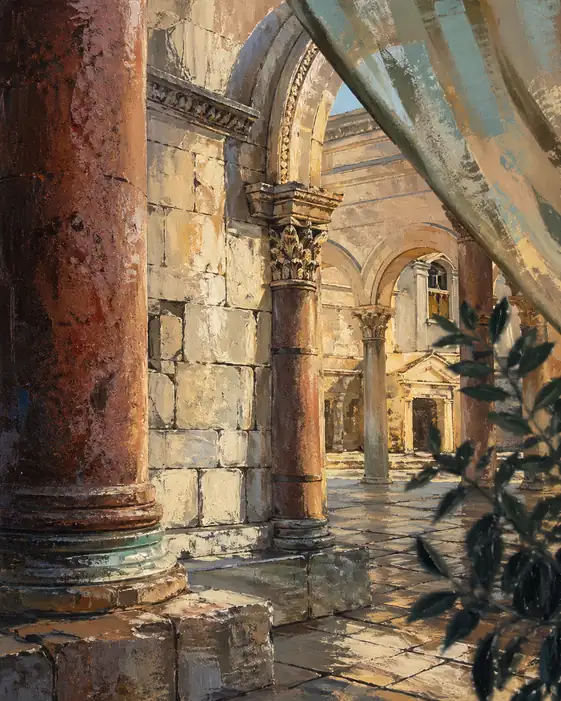 Echoes in the Sunlit Corridor
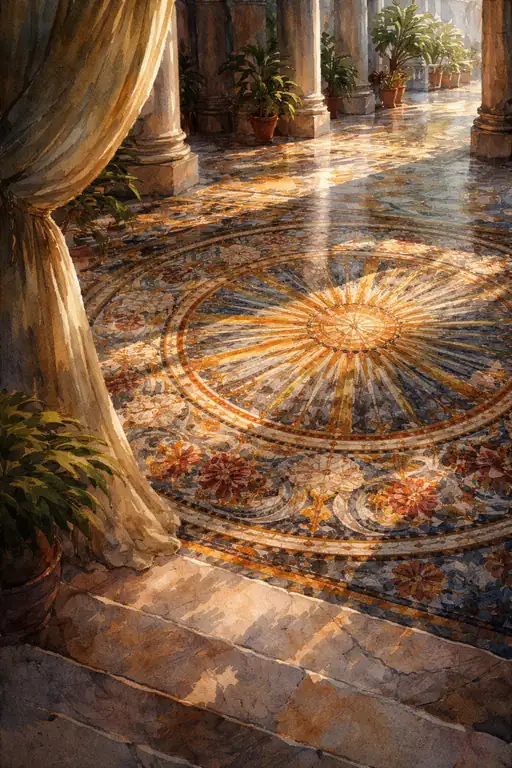 Silent Echoes in the Grand Hall
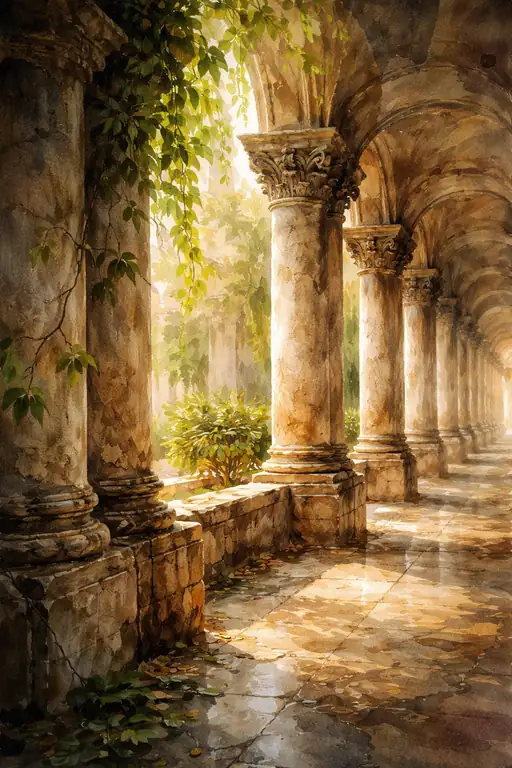 Sunlit Echoes in the Corridor
 Sunlit Silence in the Golden Arcade
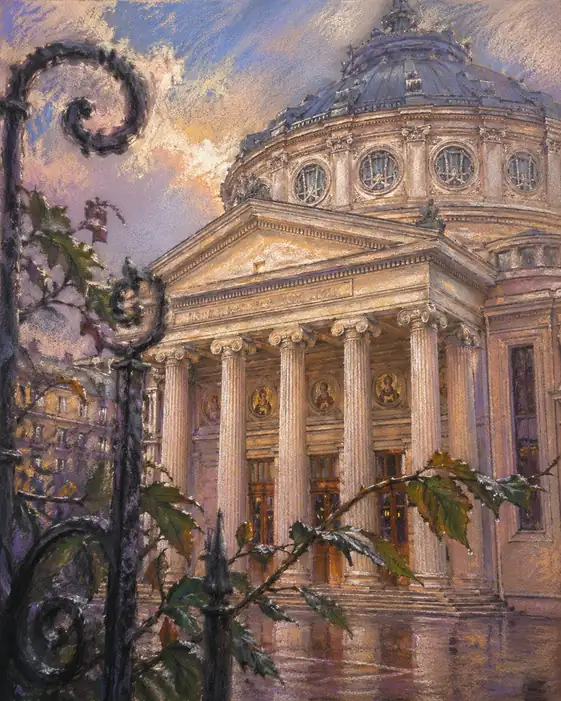 The Twilight Symphony of Stone
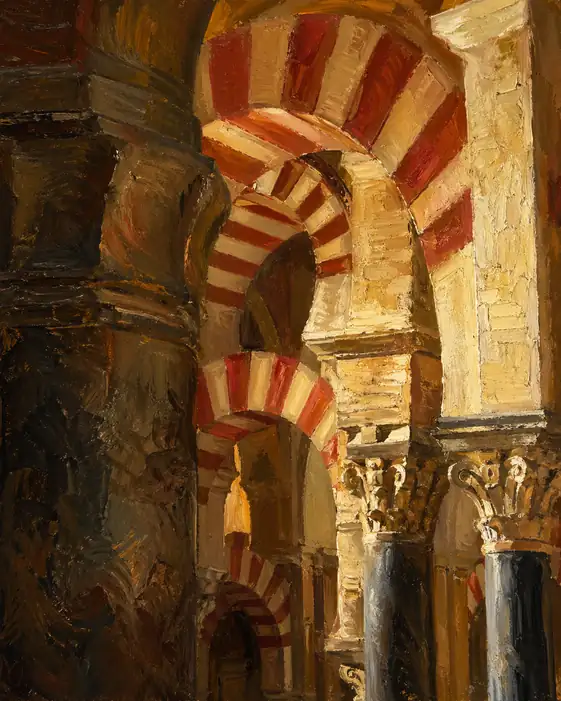 Rhythms of the Sacred Labyrinth
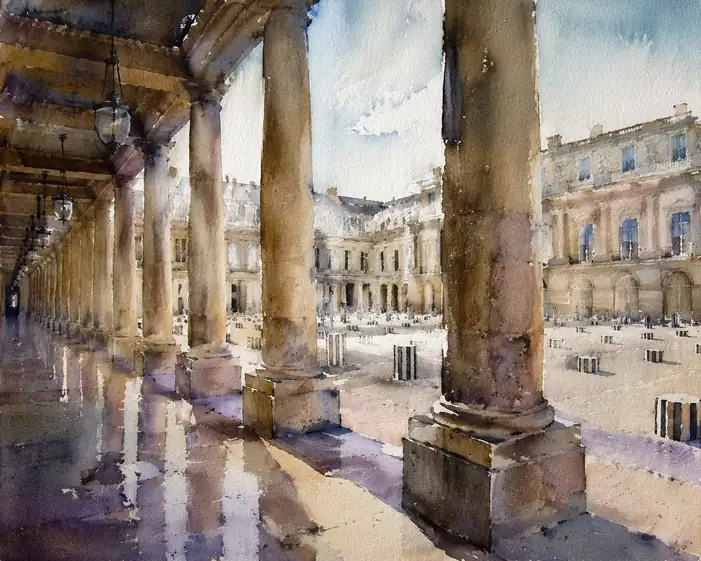 Palais-Royal: Shadows and Striped Reflections