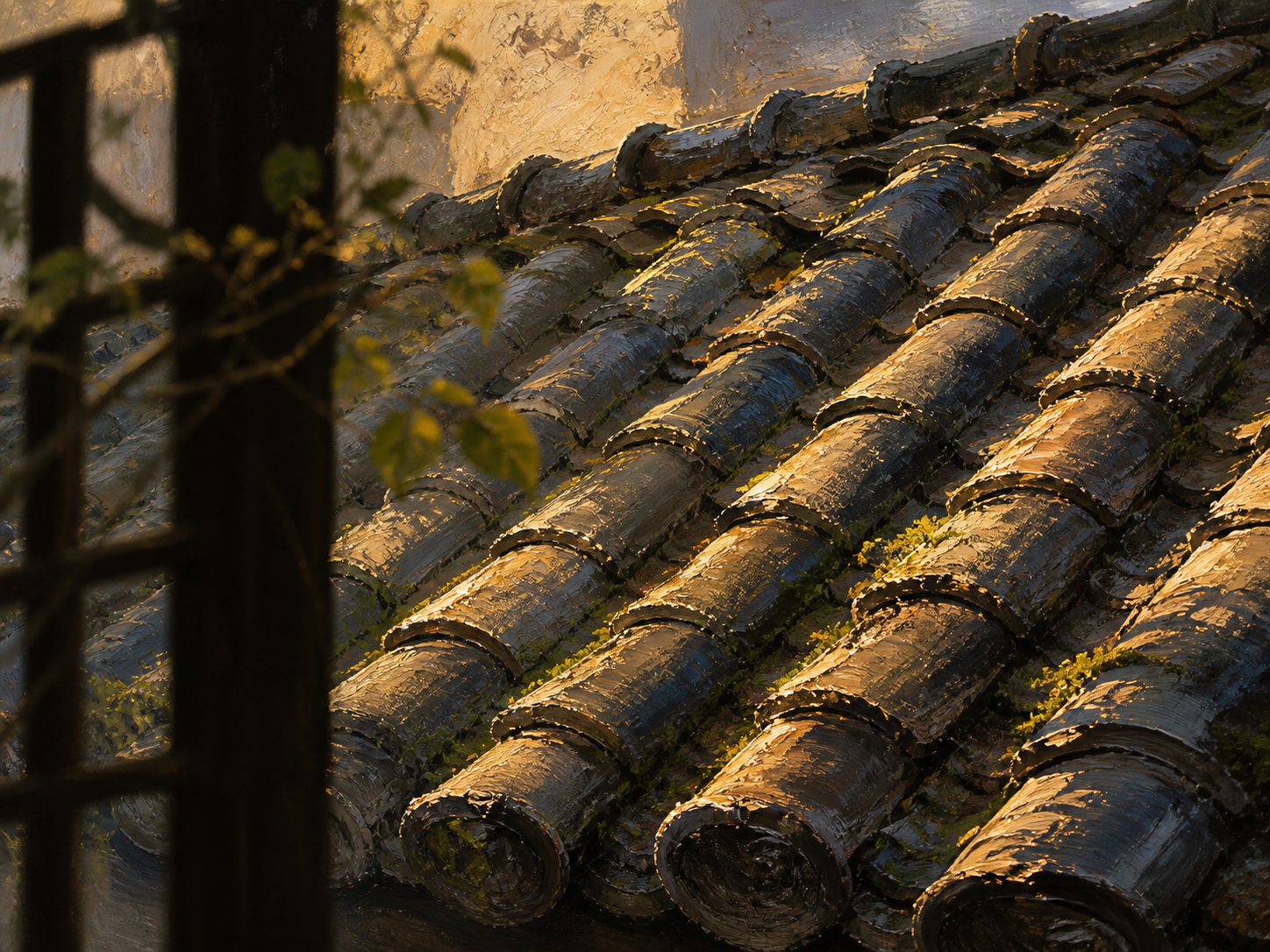
Hymn to the Worn Clay
Critique
1. Introduction This oil painting presents a close-up study of traditional Japanese roof tiles, captured under the dramatic illumination of a setting sun. Rhythmic rows of heavy tiles dominate the composition, conveying a sense of enduring strength and the quiet accumulation of time. A blurred wooden post on the left serves as a framing device, focusing attention on the intricate details of the roof's structure. 2. Description The rounded tiles, rendered in deep blues and grays, exhibit fine cracks and chipped edges that speak to their age. Vibrant green moss grows within the crevices, suggesting a quiet persistence of life. Low-angled sunlight from the upper right gilds the curved surfaces of the tiles and warmly illuminates the background. Each tile is defined by thick, textured brushstrokes that provide a three-dimensional quality. 3. Analysis Formally, the strong diagonal lines of the tiles create a sense of dynamic momentum while maintaining structural stability. The use of impasto technique emphasizes the hard, weathered texture of the ceramic and the soft feel of the moss, resulting in a rich material presence. The color palette contrasts cool-toned tiles with golden highlights, effectively evoking the specific temperature of a late afternoon. 4. Interpretation and Evaluation This work demonstrates a keen artistic vision that discovers beauty in a fragmentary view of architecture. The juxtaposition of inorganic tiles and organic moss serves as a reflection on the cycles of nature and the passage of time. The artist's handling of light transcends simple representation, imbuing the scene with spiritual stillness and highlighting the inherent dignity of traditional craftsmanship. 5. Conclusion By isolating a specific architectural detail, the painting invites viewers to appreciate the often-overlooked aesthetics of the built environment. Initially drawn to the powerful rhythm of the tiles, the focus eventually settles on the delicate interplay of light and texture. This successful fusion of materiality and atmosphere reaffirms the beauty of traditional forms, leaving the viewer with a profound sense of peace.
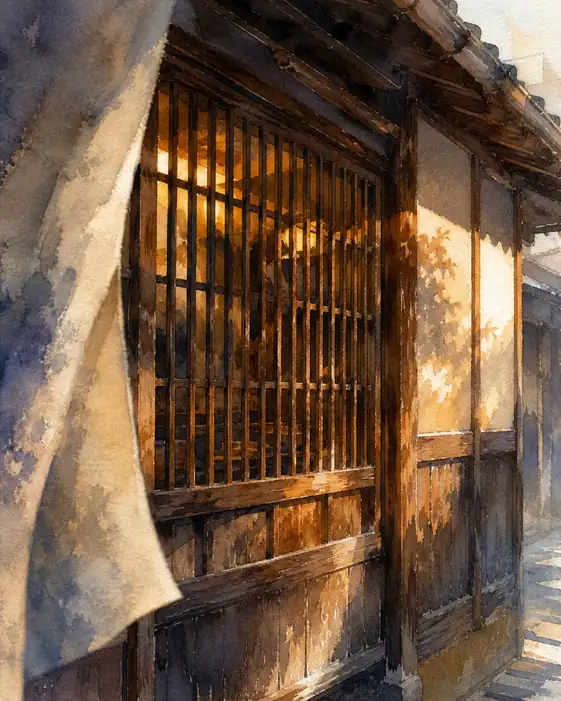 Shadows Dancing on the Lattice
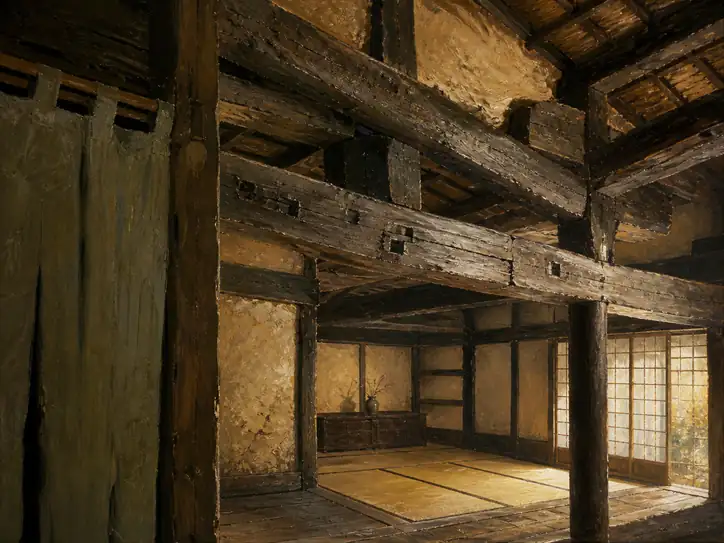 The Breath of Ancient Beams
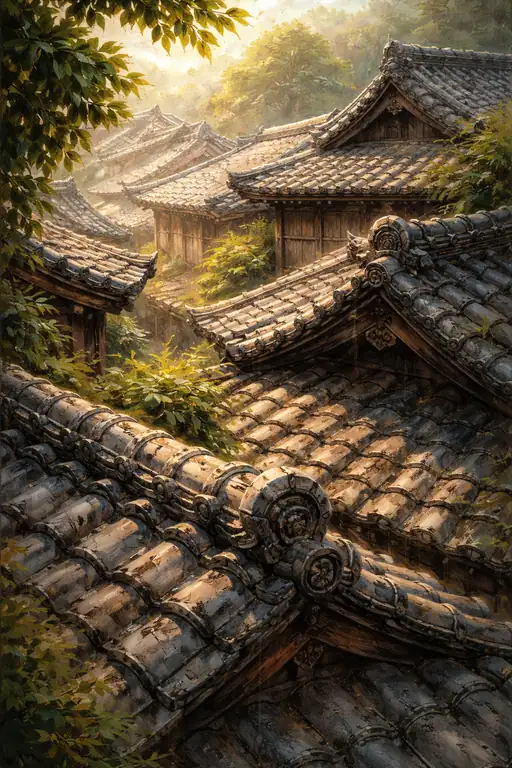 Gentle Time Woven by Tiled Roofs
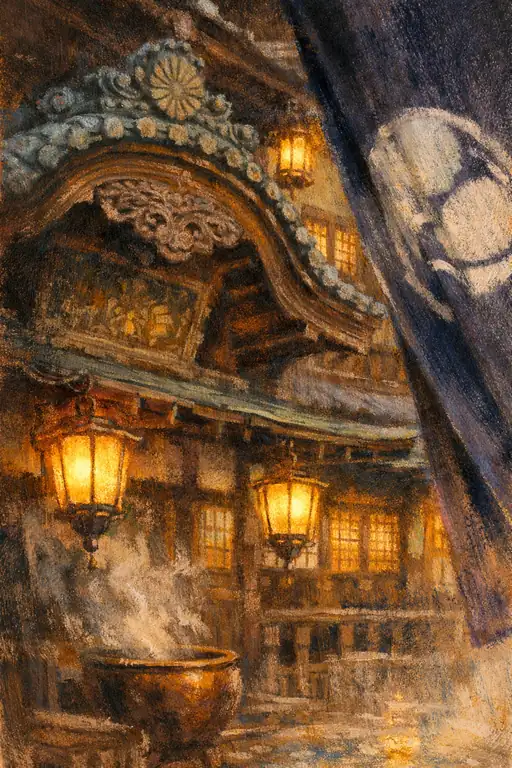 Lanterns' Glow in the Nocturnal Bath
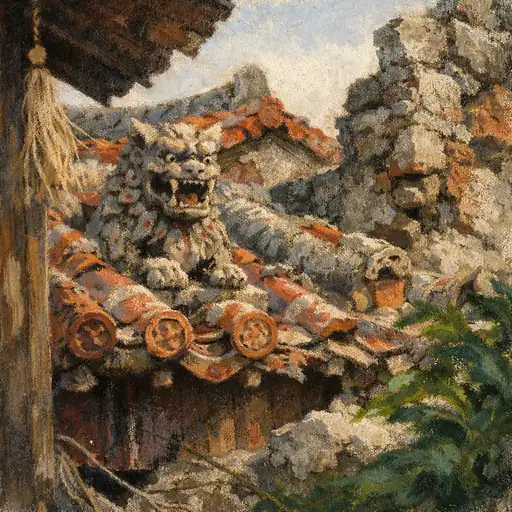 Shisa on the Red Tiles
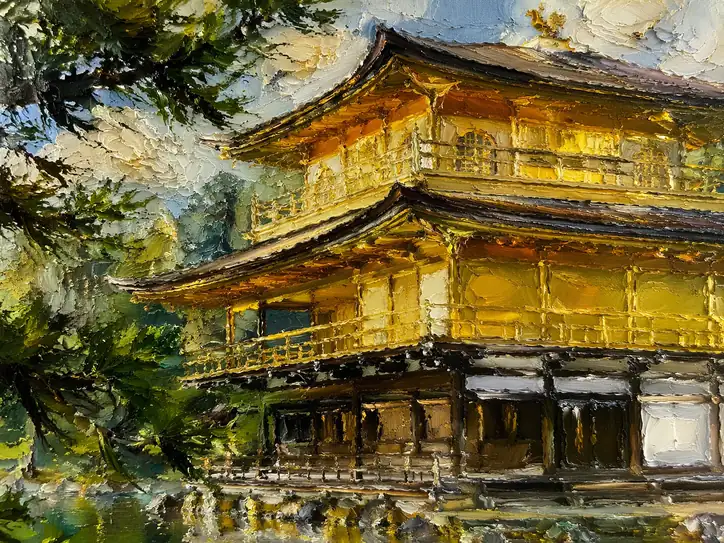 A Touch of Gold
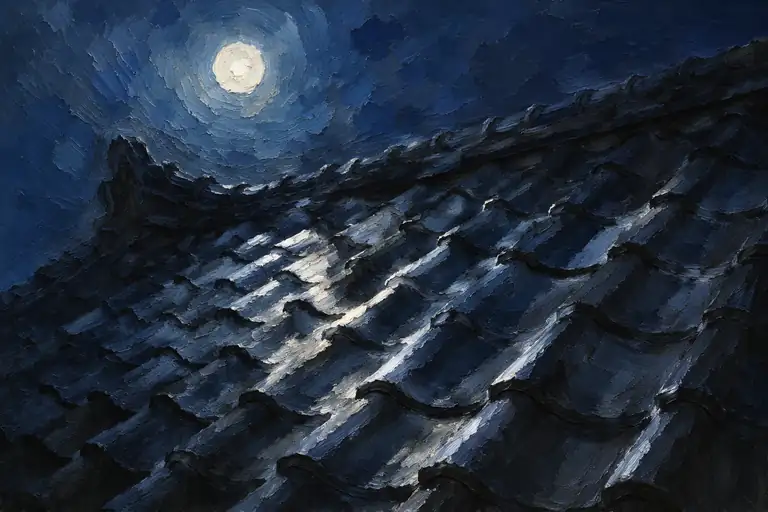 Moonlit Roofs
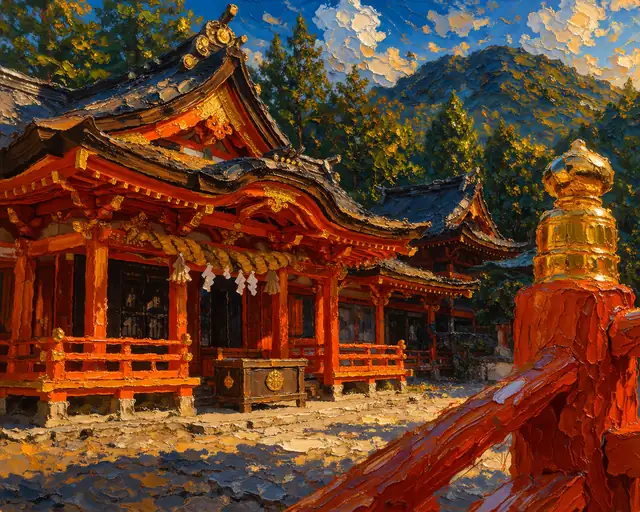 Vermilion Splendor in the Sacred Woods
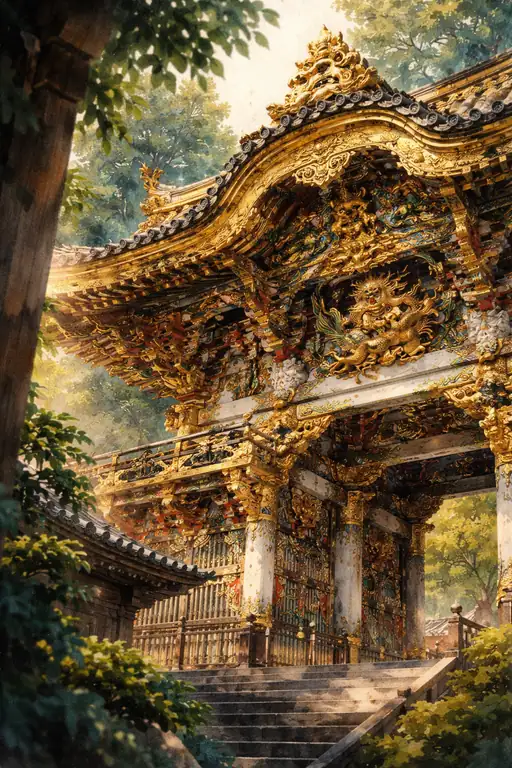 The Golden Gate of the Forest Guardian
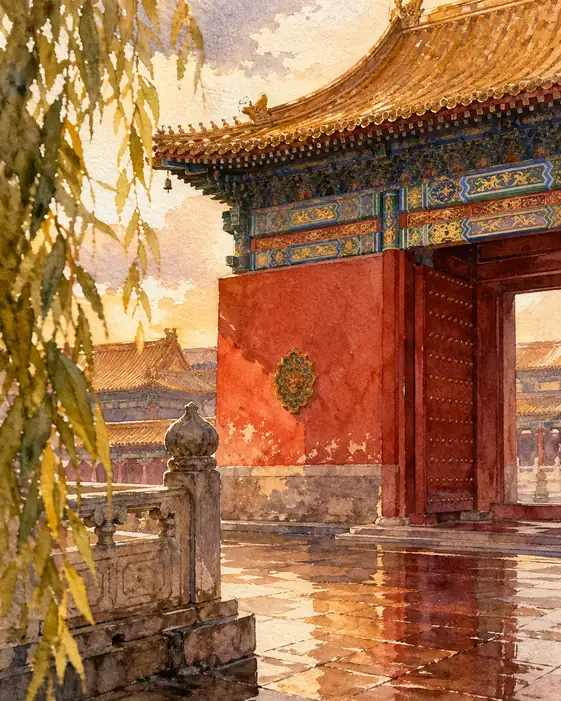 Echoes of Crimson After the Rain