The Sentinel of Secrets
Critique
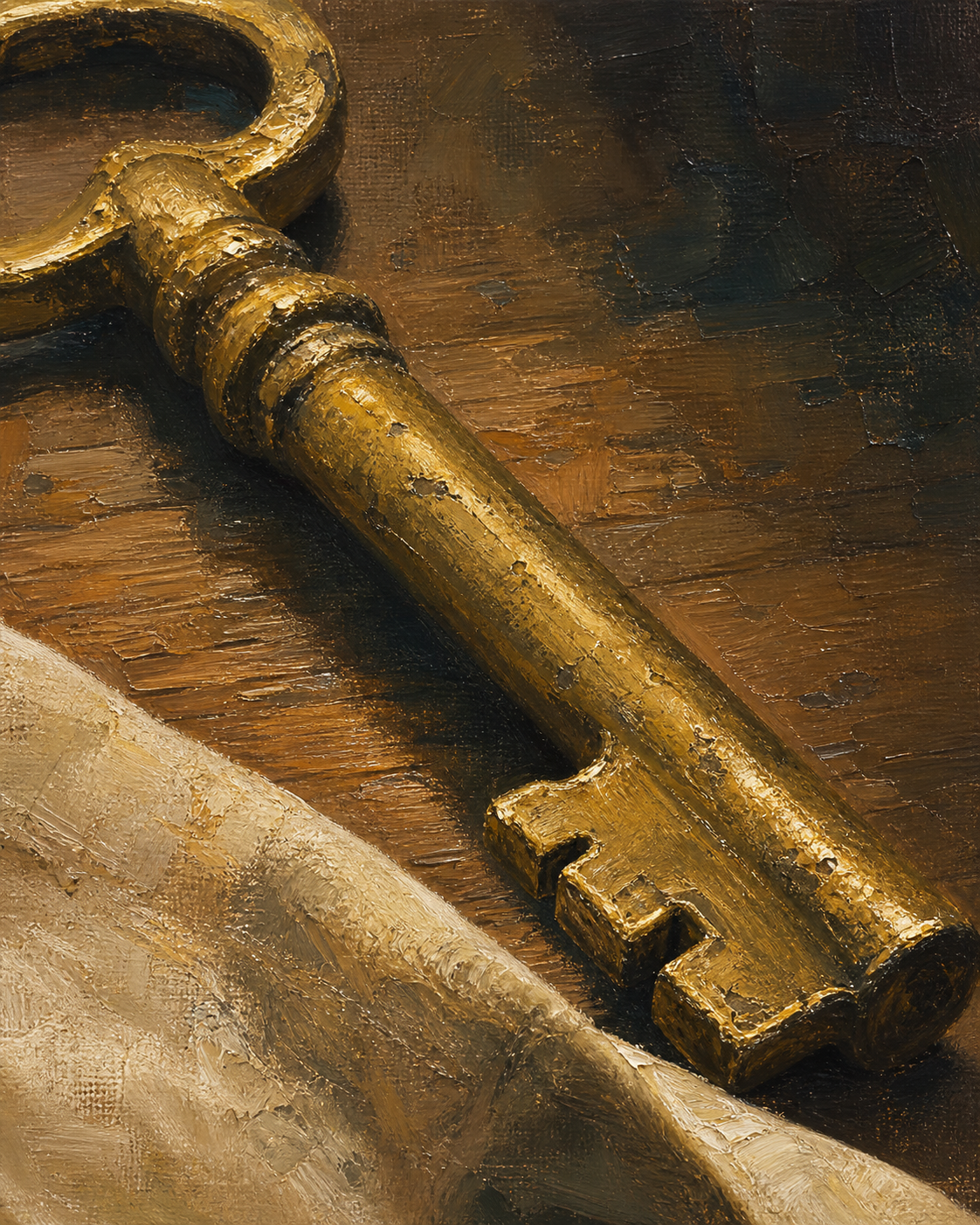
1. Introduction This powerful oil painting presents a dramatic close-up of a large, ornate golden key resting upon a dark, weathered wooden surface. The composition utilizes a tight focus and a steep diagonal orientation to elevate a single object to a subject of immense symbolic weight and physical presence. Through its heavy impasto technique and masterful manipulation of light, the artwork explores the tactile qualities of metal and wood, inviting the viewer to consider the themes of security, mystery, and the passage of time inherent in such a classic artifact. 2. Description The central subject is a substantial brass or golden key, its shaft and bow rendered with intricate detail that suggests an antique origin. The key lies diagonally across the frame, its metallic surface showing signs of wear and pitting that catch the light in brilliant, textured highlights. In the lower left corner, a piece of heavy, cream-colored cloth with a visible weave is draped over the wood, partially obscuring the base of the key. The background consists of a dark wooden table or chest, its surface characterized by deep, expressive brushstrokes that reveal a rich history of use. 3. Analysis The artist employs a high-contrast color palette dominated by deep umbers, burnt siennas, and brilliant golds, creating a chiaroscuro effect that emphasizes the key's three-dimensional form. The application of paint is exceptionally thick and textural; the impasto technique is used to physicalize the weight of the key and the ruggedness of the wooden grain. Light enters from the upper left, casting a sharp glow on the key's metallic edges and creating deep, brooding shadows that recede into the dark background. This focus on surface quality creates a heightened sense of realism through abstraction. 4. Interpretation and Evaluation The work successfully transforms a utilitarian object into a compelling narrative element, suggesting stories of locked doors, hidden treasures, or forgotten legacies. The technical execution is remarkable, particularly in the artist's ability to convey the varying textures of cold metal, soft fabric, and hard wood using a consistent and expressive painterly style. By focusing on the microscopic details and the physical substance of the objects, the artist achieves a balance between representative accuracy and emotional depth. The painting is a sophisticated study in materiality and the evocative power of light. 5. Conclusion Ultimately, the painting serves as a silent meditation on the physical weight of history and the enduring presence of symbolic objects in our lives. While the initial impression is one of simple, dramatic realism, the complexity of the textured surfaces and the intensity of the light reveal a profound exploration of physical substance. The harmonious integration of a single, powerful subject with a bold, tactile technique creates a lasting visual impact. It is an evocative piece that captures the inherent dignity and mystery of an object designed for both protection and revelation.
 A Vessel of Time and Travel
 Whispers of the Hammered Copper
 Beacon of the Twilight
 The Weight of Forgotten Doors
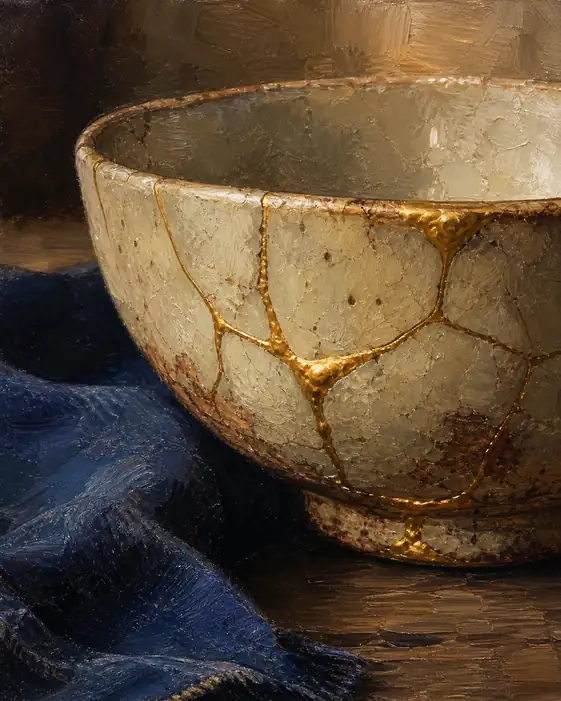 The Beauty of Becoming Whole Again
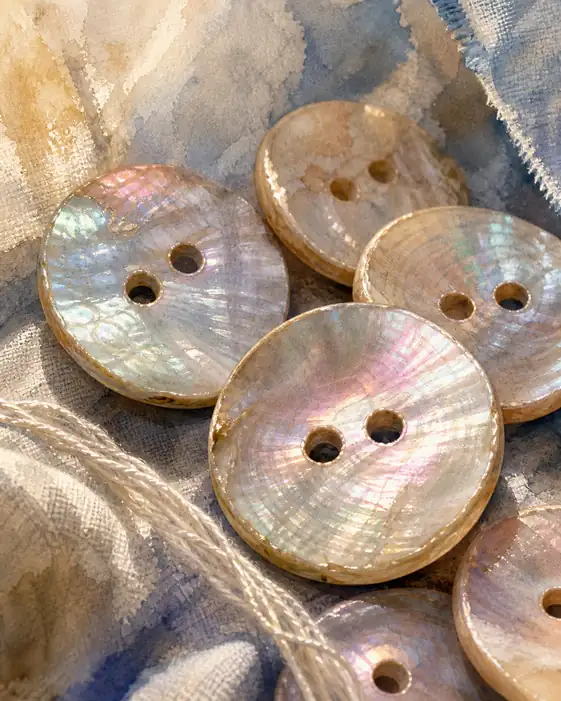 Gleams of a Gentle Past
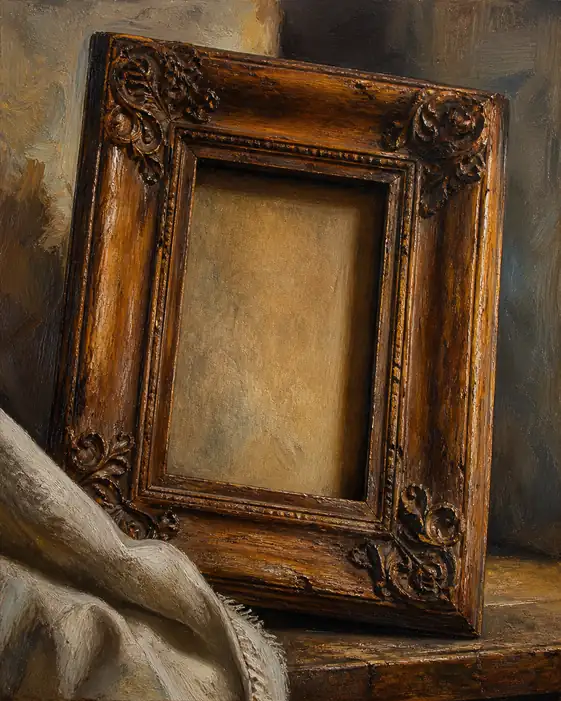 A Silence Waiting to be Painted
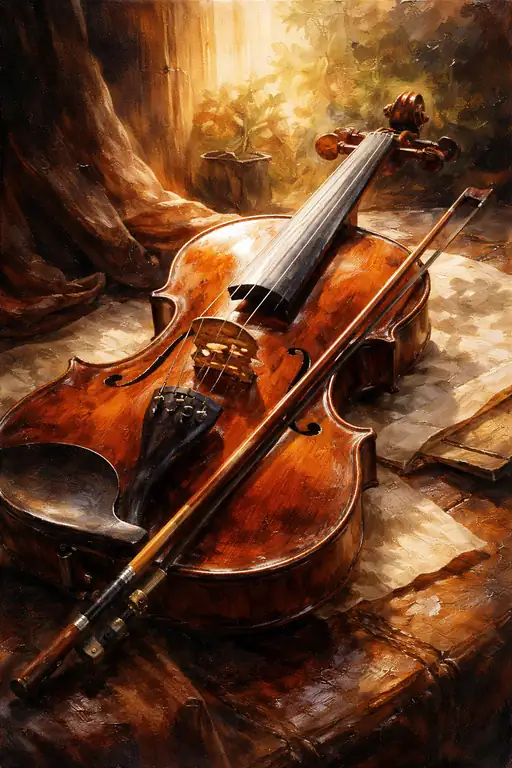 The Silent Potential of Strings
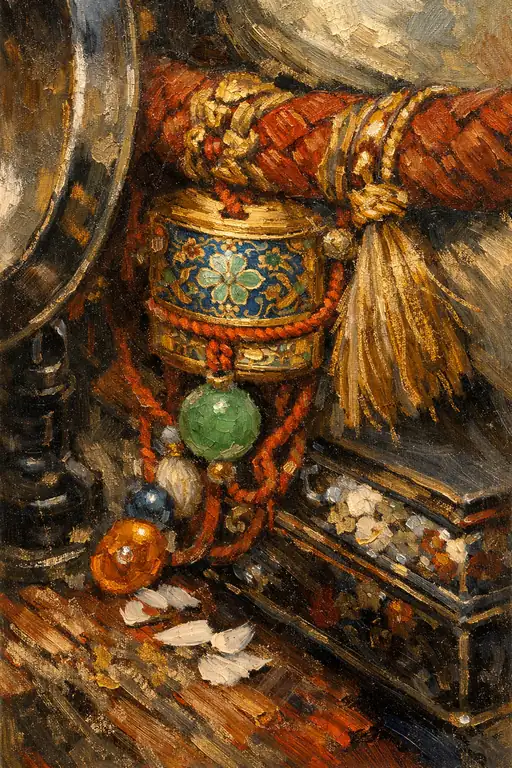 Echoes of a Forgotten Dynasty
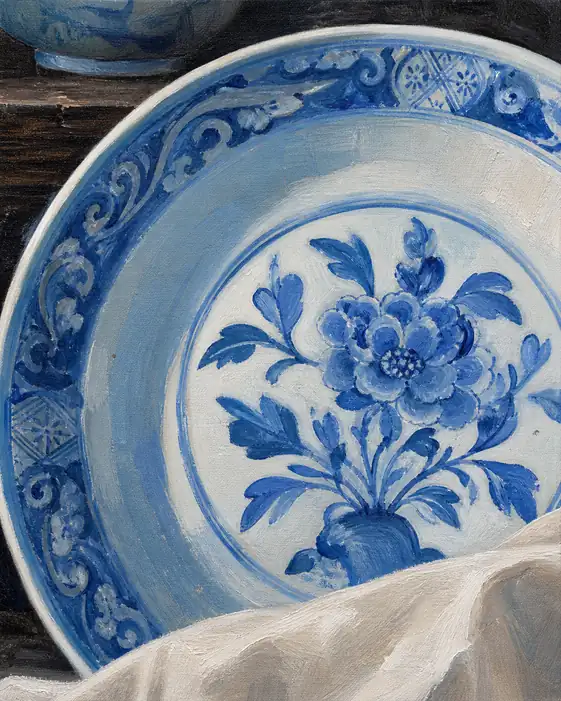 Resonance of the Blue Flower