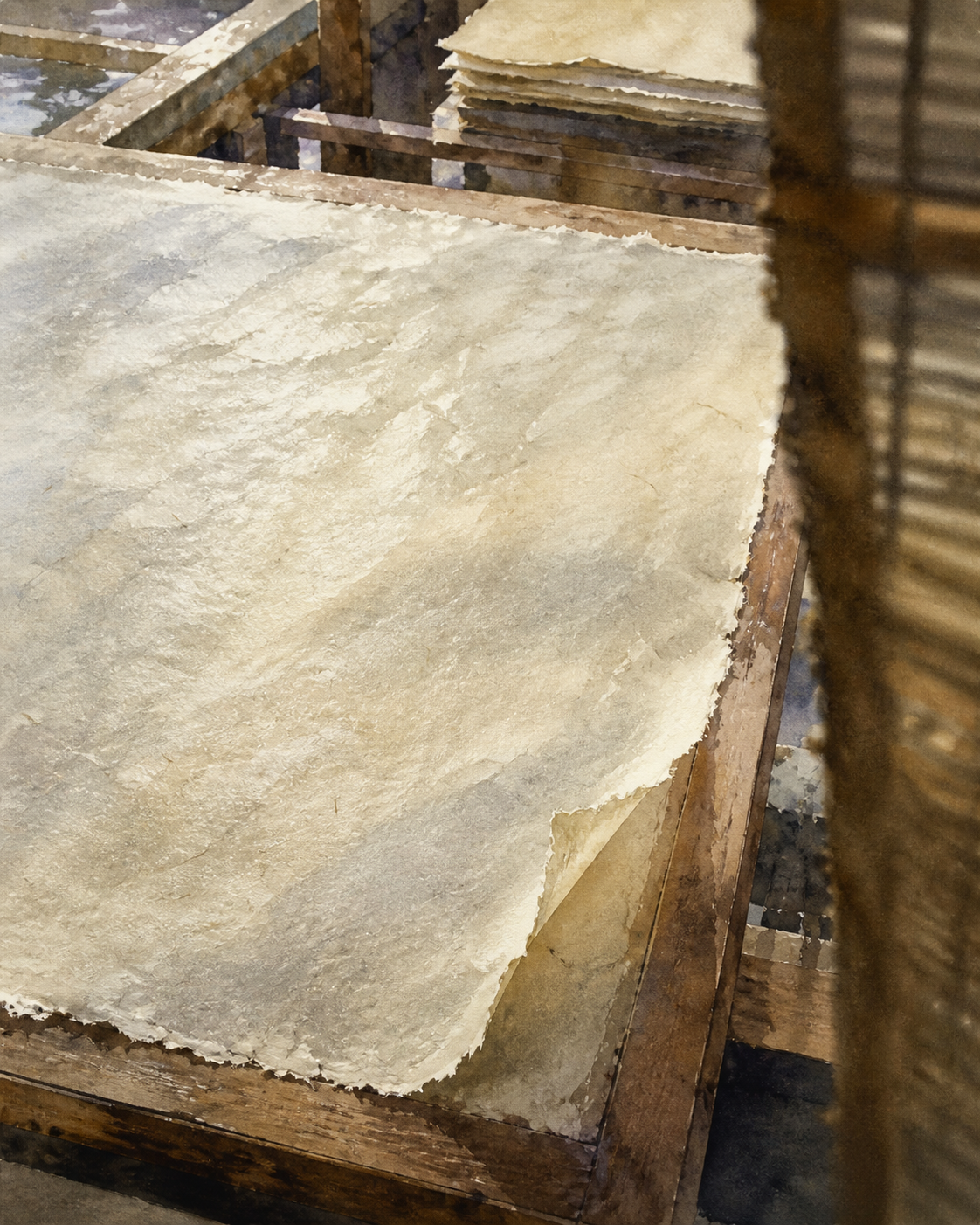
The Soul of the Silent Page
Critique
1. Introduction This watercolor painting offers a quiet, observational study of handmade paper sheets in the process of drying on wooden frames. The composition captures a moment of stasis within a traditional craft workshop, where the raw materials of literacy and art are being prepared. Through its subtle tonal shifts and emphasis on organic textures, the artwork invites the viewer to reflect on the tactile beauty of manual production and the slow, rhythmic pace of artisanal labor. 2. Description The primary focus is a large, translucent sheet of paper resting on a sturdy wooden rack, its surface characterized by an uneven, rippled texture and delicate, irregular edges. Beneath this sheet, the dark, weathered wood of the frame is visible, providing a strong structural contrast. In the background, additional sheets are stacked or laid out, creating a sense of repetitive, ongoing work. A blurred, dark vertical element on the right foreground adds a layer of depth, suggesting the viewer is looking through the infrastructure of the workspace. 3. Analysis The artist employs a restrained, earthy color palette of creams, beiges, and muted browns, which accurately reflects the natural fibers of the paper and the aged wood. The use of watercolor is particularly effective here, with diluted washes creating the varied opacity and subtle color staining typical of handmade materials. Light appears diffused and even, minimizing harsh shadows and instead highlighting the microscopic topography of the paper's surface. The diagonal orientation of the frames gives the composition a dynamic yet balanced feel. 4. Interpretation and Evaluation The work succeeds in elevating a stage of a technical process to a subject of aesthetic contemplation, emphasizing the inherent beauty in the unfinished and the utilitarian. The technical execution is refined, particularly in the rendering of the paper's deckle edges and the soft, bleeding transitions of the watercolor washes. By focusing on the material itself rather than the artisans, the artist creates a sense of timelessness and a deep appreciation for the physical properties of the medium. The painting is a sophisticated exploration of texture and subtle tonality. 5. Conclusion Ultimately, the painting serves as a silent tribute to the enduring relevance of traditional crafts in an increasingly digital world. While the initial impression is one of simple documentation, the careful attention to the nuances of texture and light reveals a profound sensitivity to the material world. The harmonious integration of the subject and the medium of watercolor reinforces the theme of artisanal creation. It is an evocative piece that captures the quiet dignity of a workspace dedicated to the slow craft of papermaking.
Same Subcategory
Similar Artworks
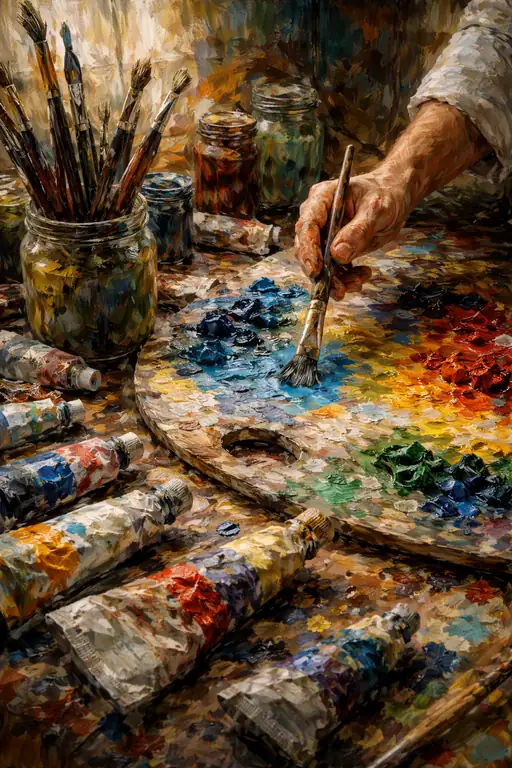 The Chaos of Radiant Hues
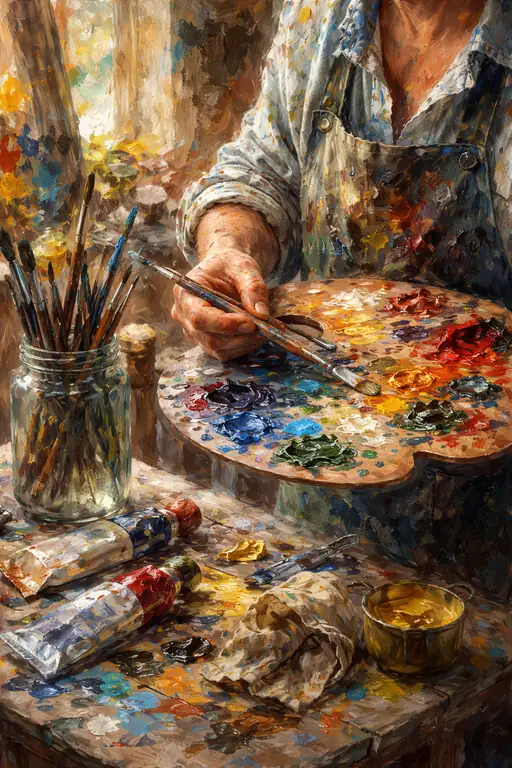 Birth of Colors on the Master's Palette
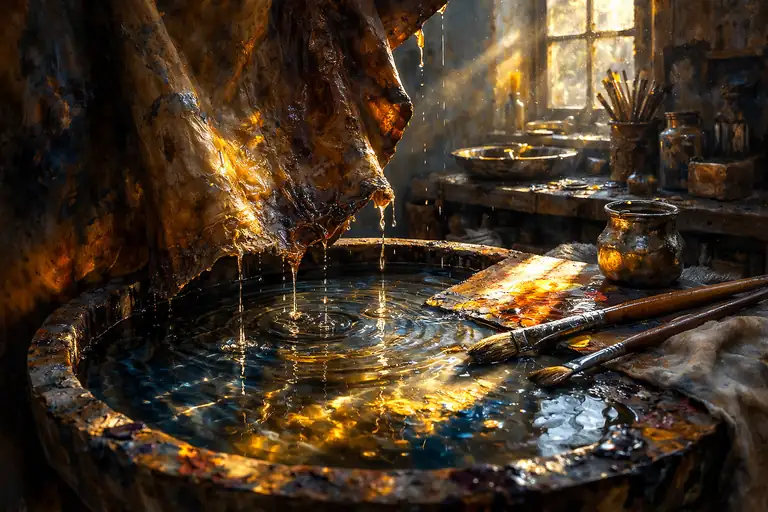 The Quiet Symphony of Shadows and Sunlight in the Artisan's Sanctuary
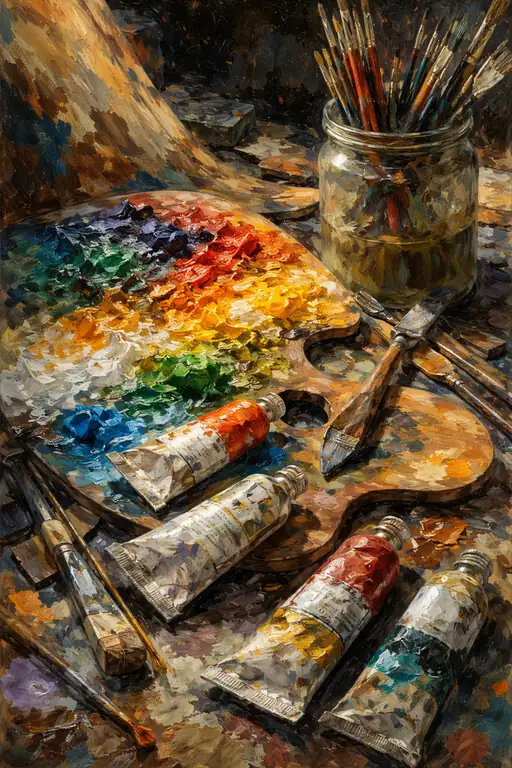 Genesis of the Chromatic Dream
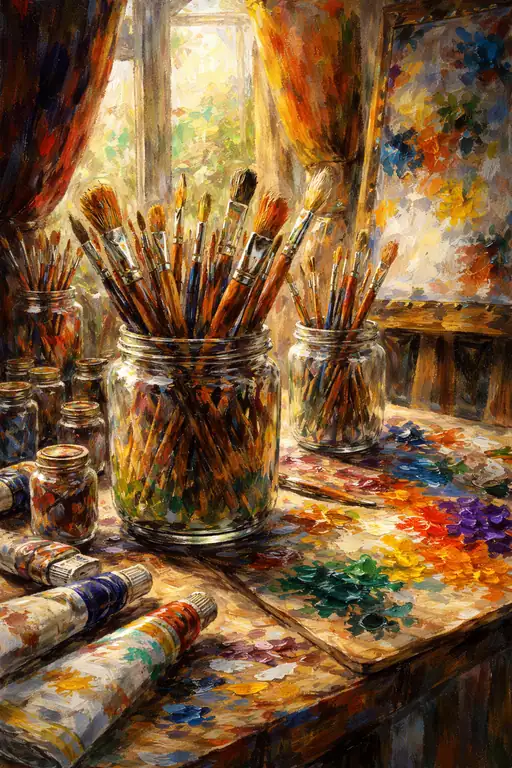 Sanctuary of the Chromatic Soul
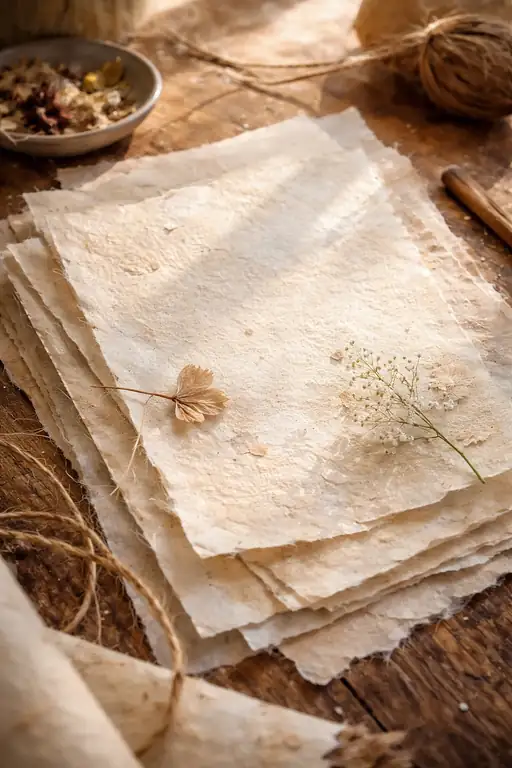 The Silent Poetry of Unwritten Pages
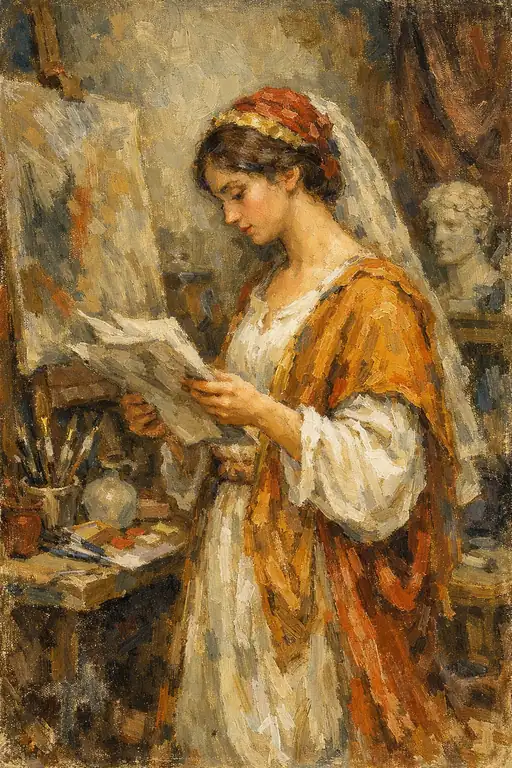 Where Inspiration Finds Its Stillness
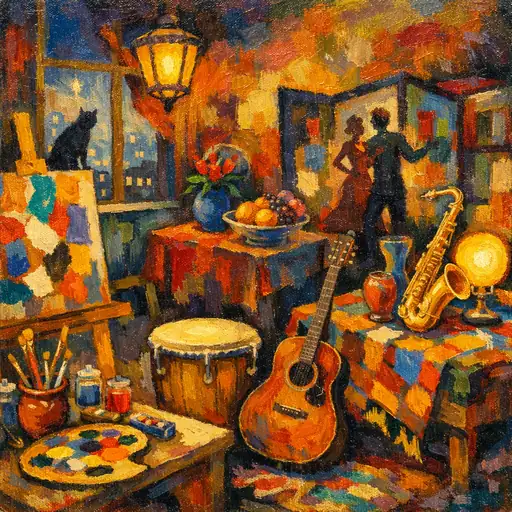 The Studio's Midnight Rhapsody
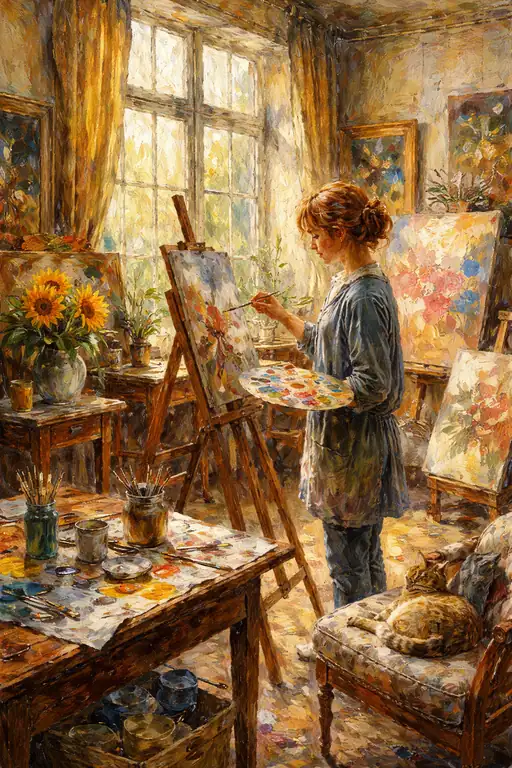 Bathed in the Light of Creation
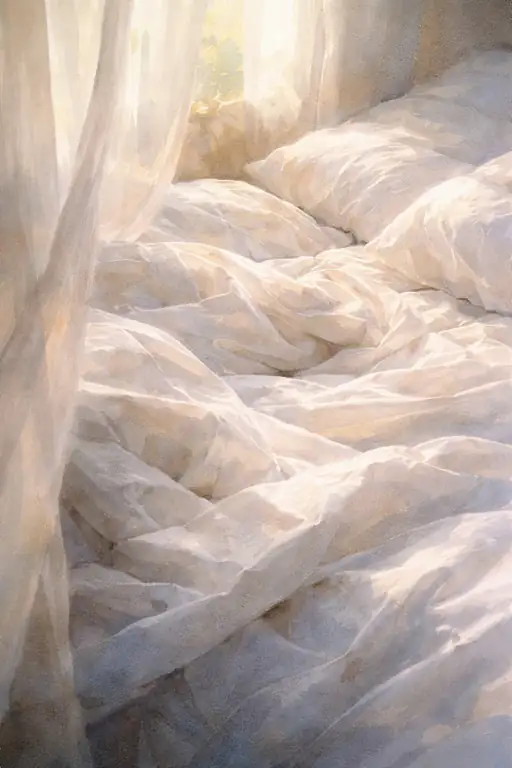 The Serenity of Awakening