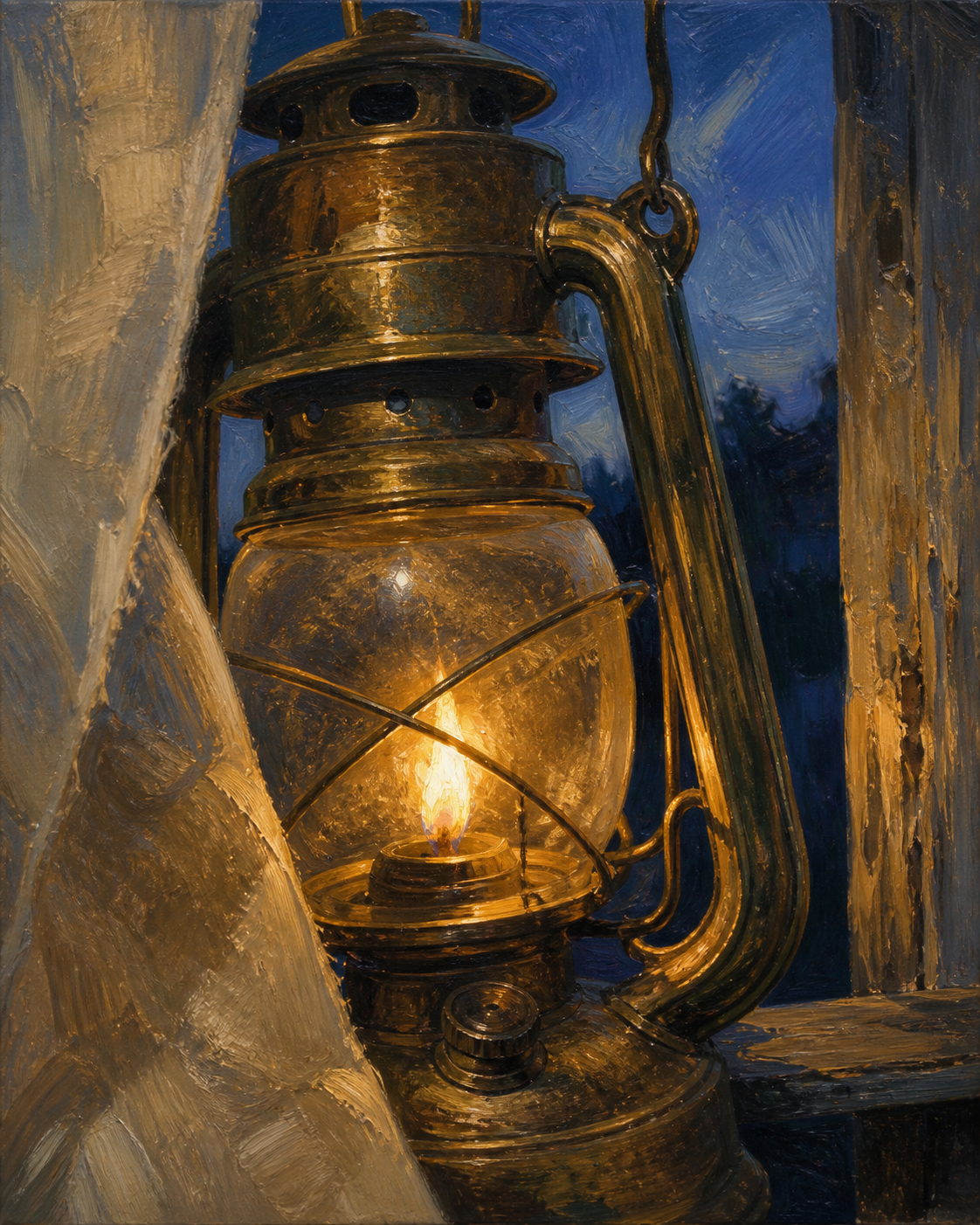
Beacon of the Twilight
Critique
1. Introduction This artwork is a still life painting featuring a traditional brass lantern as its primary subject. The piece utilizes a thick, textured impasto technique, typical of oil painting, to build a highly tactile surface. The interplay between the warm artificial light of the lantern and the cool natural light of the background establishes a strong visual atmosphere. 2. Description The composition is dominated by a lit brass lantern situated in the foreground, partially framed by a textured white curtain on the left and a weathered wooden window frame on the right. Inside the lantern's glass globe, a distinct tear-shaped flame burns steadily. The background, visible through the window, reveals a deep blue evening sky and the dark, indistinct silhouettes of trees, suggesting a twilight setting. 3. Analysis The artist effectively employs color contrast to anchor the composition. The vibrant, golden yellows and rich oranges of the lantern's glow stand in direct opposition to the cool, muted blues of the approaching night. The thick brushwork adds a tangible dimension to the materials, making the brass appear heavy and metallic, while the curtain feels heavy with fabric. The light is carefully directed, catching the metallic edges and the folds of the cloth. 4. Interpretation and Evaluation The painting conveys a sense of quiet solitude and comfort against the encroaching darkness. The lantern serves as a symbol of resilience and warmth in a cold environment. The heavy application of paint not only demonstrates the artist's technical proficiency with texture but also enhances the emotional weight of the scene. The focused composition draws the viewer inward, emphasizing the intimacy of the illuminated space. 5. Conclusion Ultimately, this work successfully marries strong technical execution with evocative atmospheric effects. The initial impression of a simple objects deepens into a contemplation of light and shelter. The artist's confident handling of the medium elevates the familiar subject into a compelling visual study of contrast.
Same Subcategory
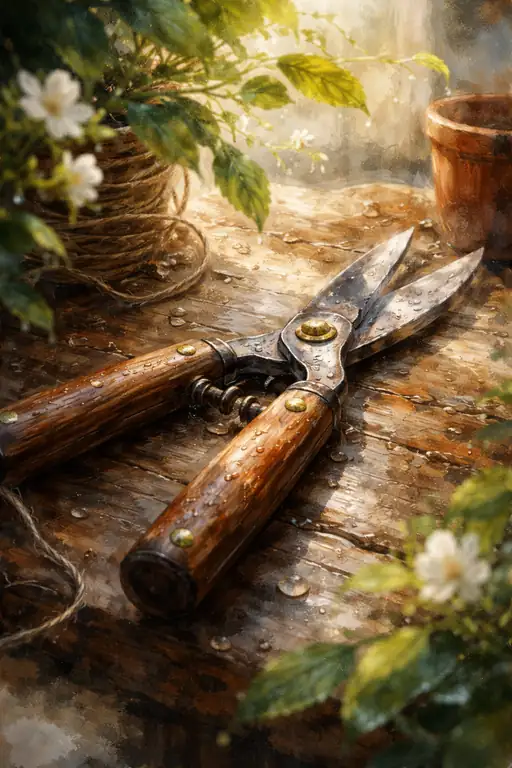 Rest After the Bloom
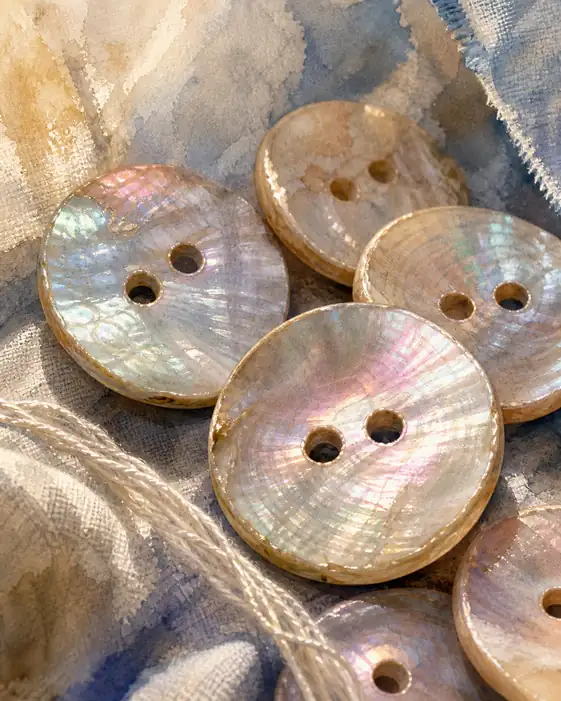 Gleams of a Gentle Past
Similar Artworks
 A Warmth in the Depth of Silence
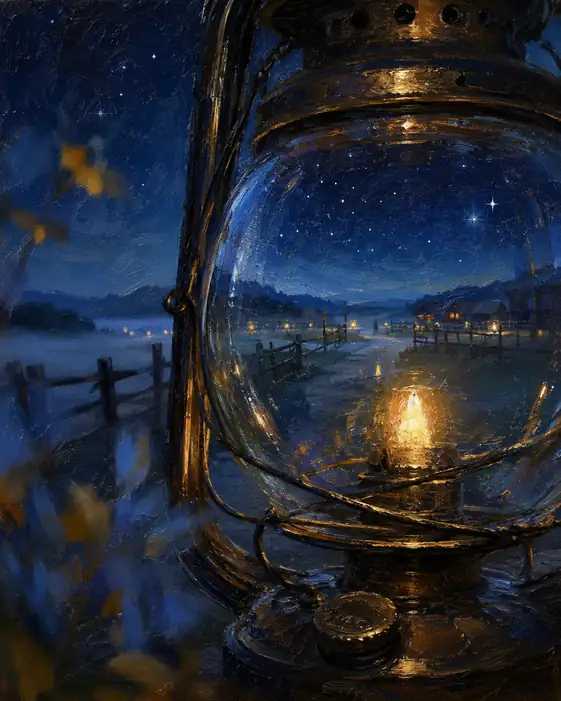 A Village of Stars Inside the Lantern Glass
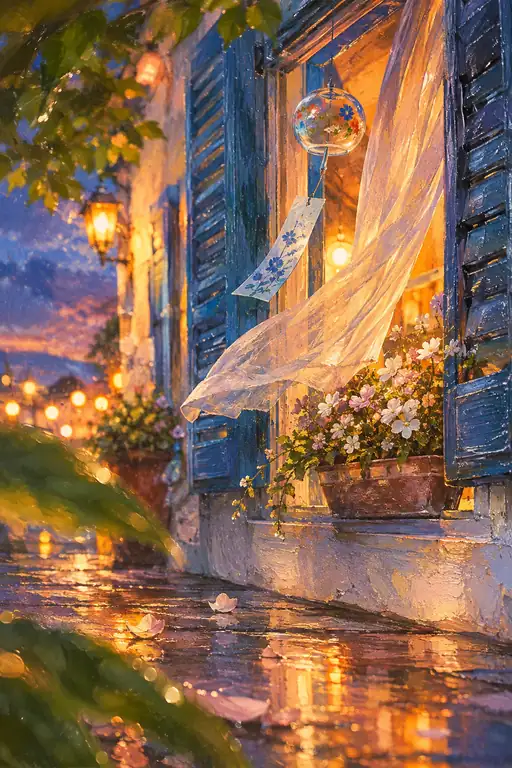 Evening Air Carried on Chimes
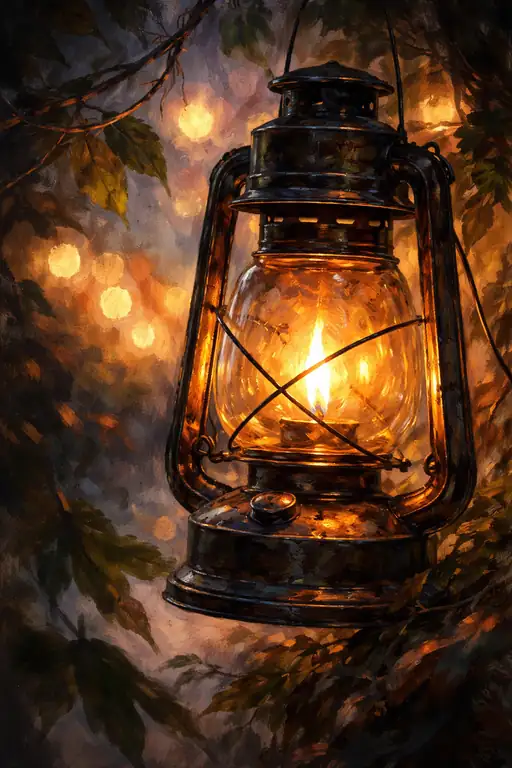 A Solitary Spark in the Whispering Woods
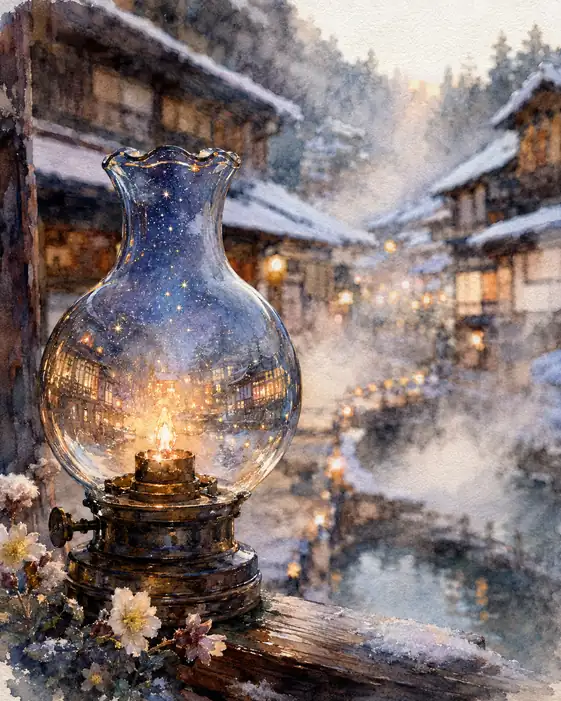 The Lamp Keeps a Snowy Village in Its Glass
 Echoes in the Golden Horn
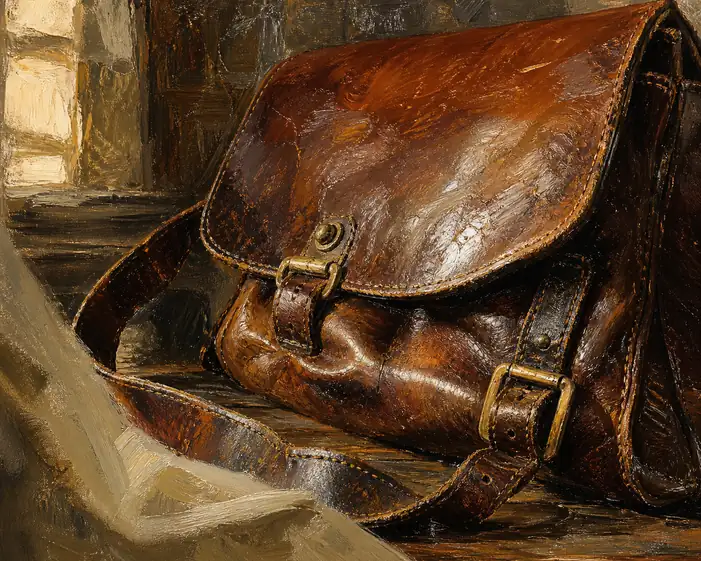 A Vessel of Time and Travel
 Cartographer of the Infinite Soul
 Canola Flower by the Brass Lamp
 Brass Lamp and Spring Blossom