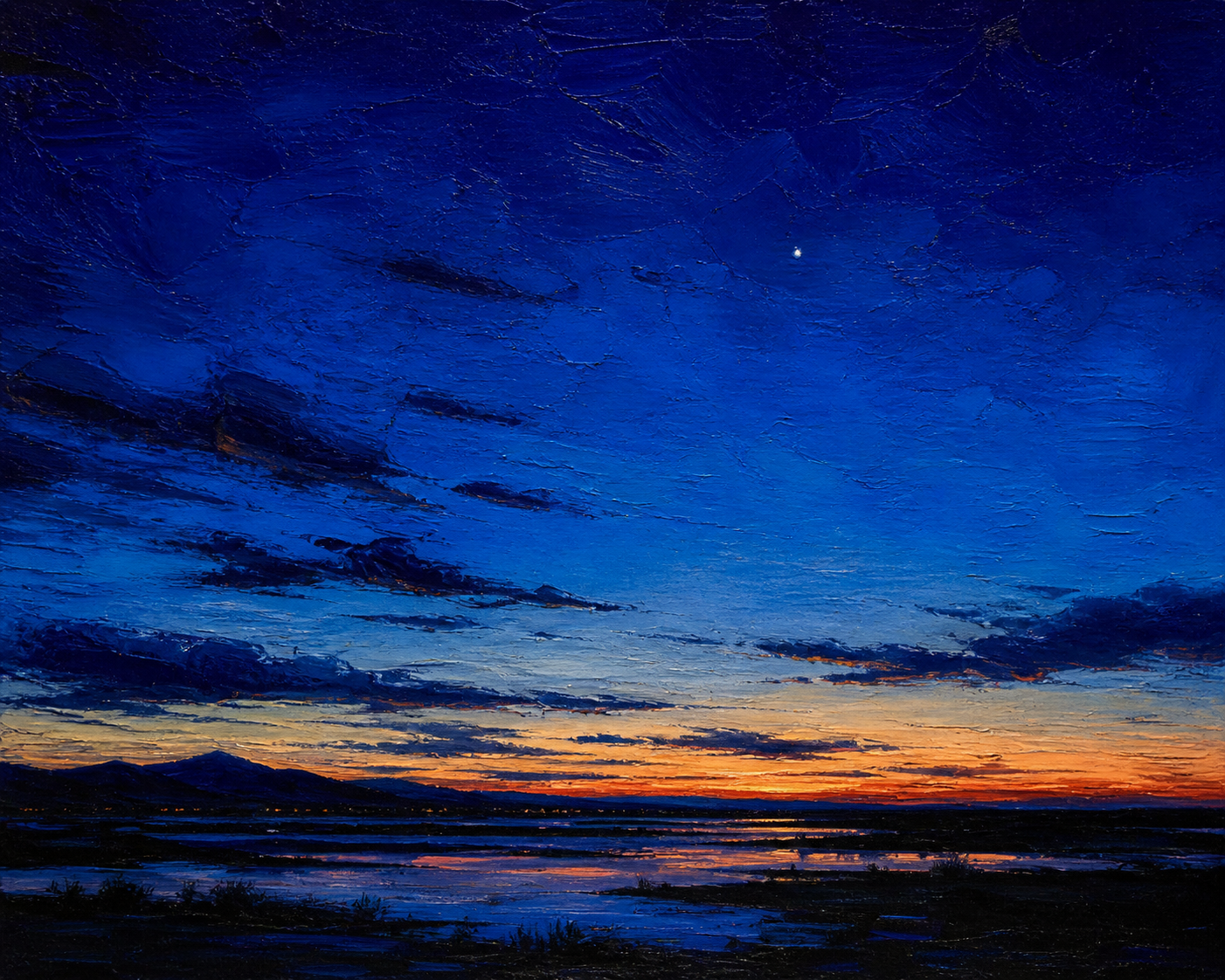
Celestial Intersection
Critique
1. Introduction This evocative oil painting captures the transitional beauty of a twilight landscape, where the sky meets the earth in a dramatic display of color. The artwork is characterized by its expansive celestial dome and a profound sense of solitude. It immediately draws the viewer into a world of deep blues and vibrant oranges, suggesting either a quiet dawn or a fading sunset. 2. Description The composition is dominated by a vast sky that occupies the upper two-thirds of the canvas. Below the horizon, a series of dark, silhouetted mountain ranges stretch across the middle ground. The foreground features a calm body of water, possibly a marsh or a lake, which mirrors the intense colors of the sky and the faint glimmer of a single celestial body. 3. Analysis The artist utilizes an aggressive impasto technique, creating a rugged and swirling texture throughout the sky. This tactile quality gives the air a sense of weight and motion, as if the clouds are physically emerging from the surface. The sharp contrast between the cool ultramarine of the upper atmosphere and the fiery warmth at the horizon creates a powerful focal point. 4. Interpretation and Evaluation This work can be seen as an exploration of the sublime, emphasizing the immense scale of nature compared to the terrestrial realm. The placement of the lone star in the upper right adds a touch of cosmic wonder to the scene. Technically, the artist successfully manages the transition between heavily textured areas and the smoother reflections in the water below. 5. Conclusion In summary, the painting is a striking representation of the atmospheric shifts that occur at the boundaries of day and night. While the initial impression is one of dramatic color, the physical depth of the paint eventually reveals a more complex emotional landscape. It is a compelling example of how texture can be used to enhance the expressive power of a landscape.
Same Subcategory
Similar Artworks
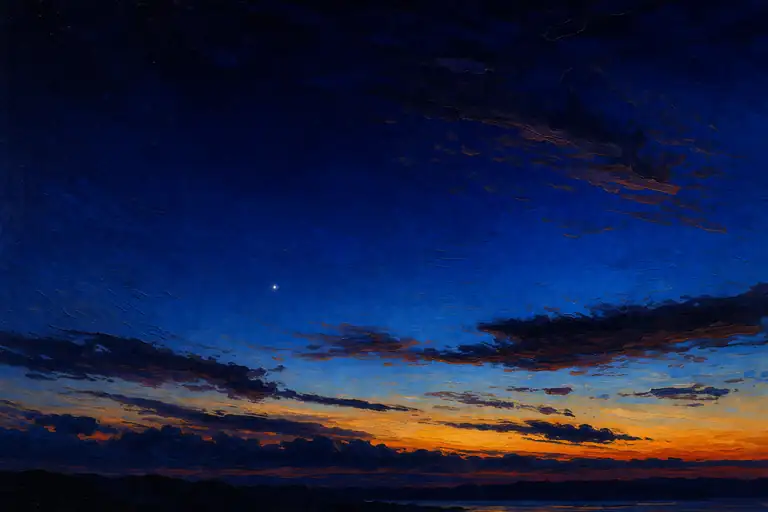 Whispers of the Infinite Sky
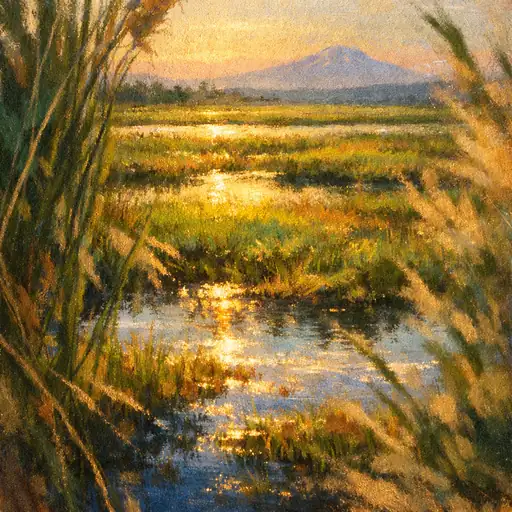 Golden Marshland Sunrise
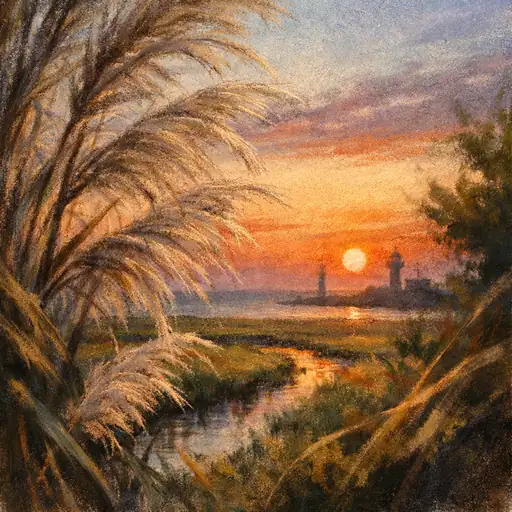 Autumn Sunset over the Coastal Marsh
 Golden Hour Over the Tranquil Marsh
 Whispers of the Twilight Lake
 Flight Into the Amber Horizon
 The Golden Echo of Day's End
 Celestial Dance over Frozen Silence
 A Glowing Respite in the Rain
 Golden Hour Reverie