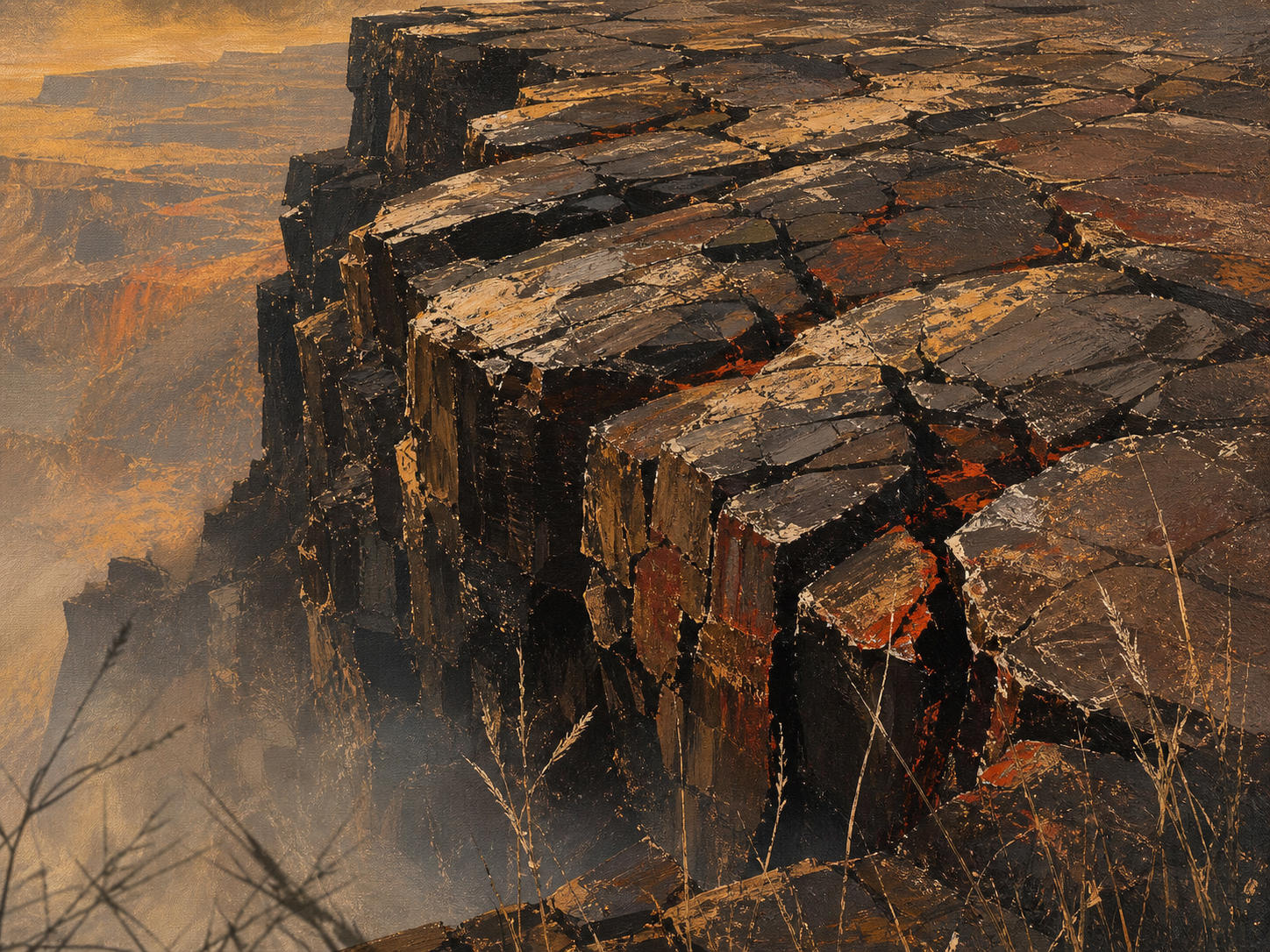
Threshold of the Eternal Abyss
Critique
1. Introduction This painting presents a formidable study of geological architecture, centering on the rugged edge of a precipitous cliffside. The composition emphasizes the raw power and structural complexity of rock formations, set against a vast, misty expanse that suggests a deep canyon or valley. By focusing on the material presence of the stone, the work establishes a dialogue between the permanence of the earth and the atmospheric volatility of the surrounding environment. 2. Description The foreground is dominated by massive, blocky sections of rock that appear fractured and weathered by time. These dark, basalt-like formations are rendered with sharp edges and flat planes, exhibiting a variety of tones from deep charcoal to rusty ochre. To the left, the land falls away into a hazy abyss, where the distant canyon walls are suggested through muted, golden-grey washes. A few sparse, withered grasses cling to the lower right edge, adding a touch of fragile life to the desolate scene. 3. Analysis The artist employs a sophisticated combination of broad palette knife strokes and precise brushwork to define the rock's multifaceted surfaces. This technique creates a tactile quality that mimics the actual texture of stone, with light catching the prominent ridges and receding into deep, shadowed crevices. The composition utilizes a strong diagonal line created by the cliff’s edge, which effectively divides the solid mass of the foreground from the ephemeral, light-filled void of the background. 4. Interpretation and Evaluation The work can be interpreted as a meditation on the sublime and the immense scale of the natural world. There is a sense of ancient endurance in the blocky forms, which contrast sharply with the fleeting nature of the mist below. Technically, the painting is highly successful in its use of a restricted, earth-toned palette to achieve a high degree of realism and atmospheric depth. The artist's ability to balance heavy, physical texture with delicate environmental effects is particularly noteworthy. 5. Conclusion Ultimately, the painting leaves a lasting impression of weight and verticality, compelling the viewer to confront the sheer magnitude of the landscape. The initial perception of a static rock face gives way to an appreciation for the intricate details of erosion and light play. Through its masterful execution and thoughtful composition, the artwork captures the silent, majestic essence of the earth's most rugged terrains.
Same Subcategory
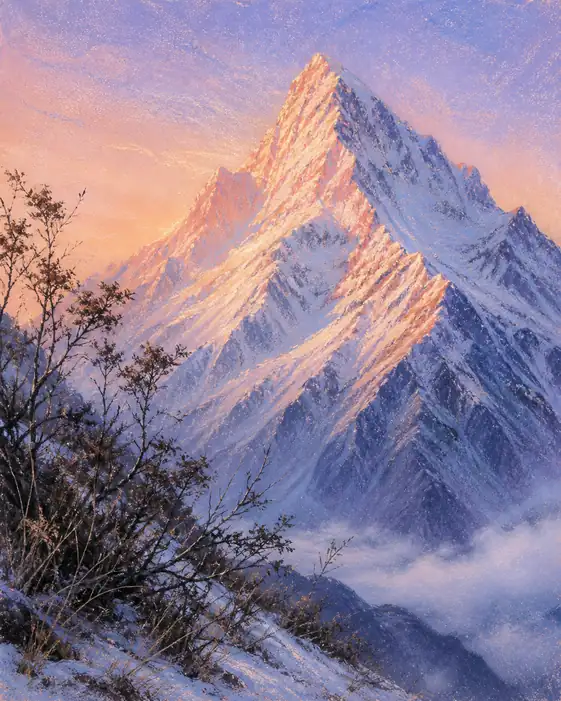 Crowned in Eternal Radiance
Similar Artworks
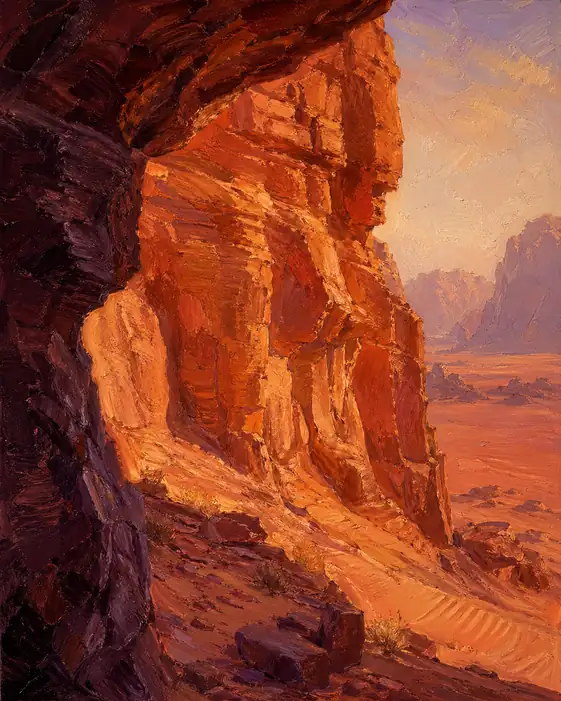 Soliloquy of the Desert: A Dialogue in Light and Shadow
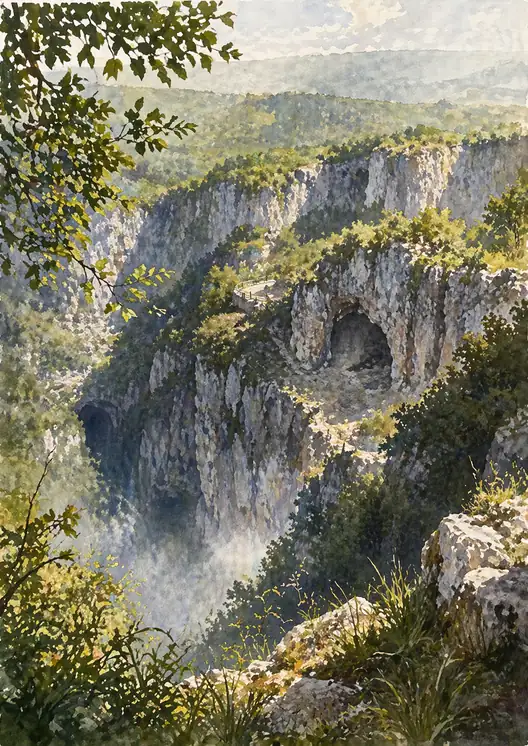 Gorge Cave
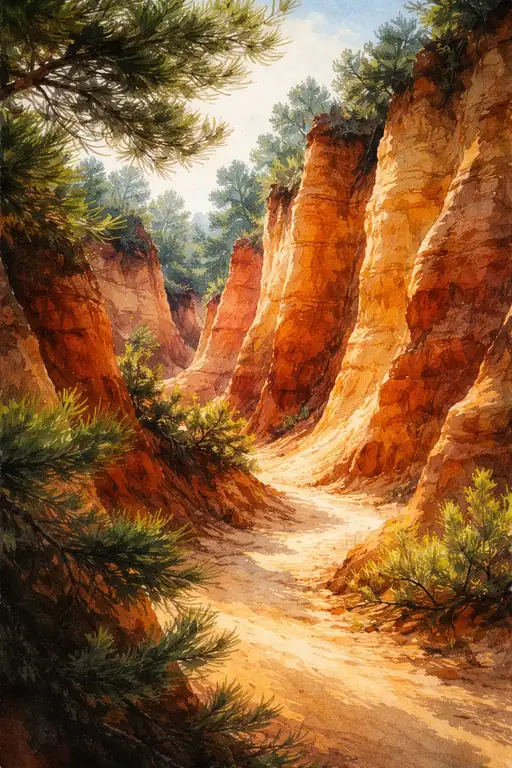 Vibrant Blooms Against Weathered Stone
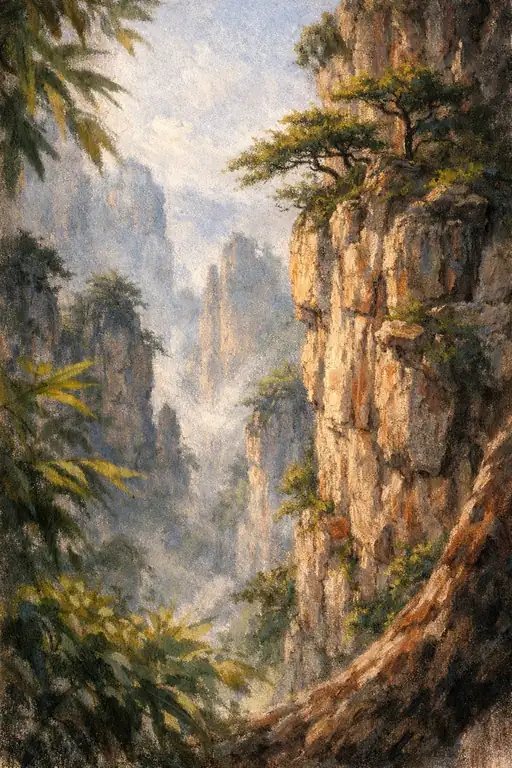 Forest of Stone: The Foggy Sentinels
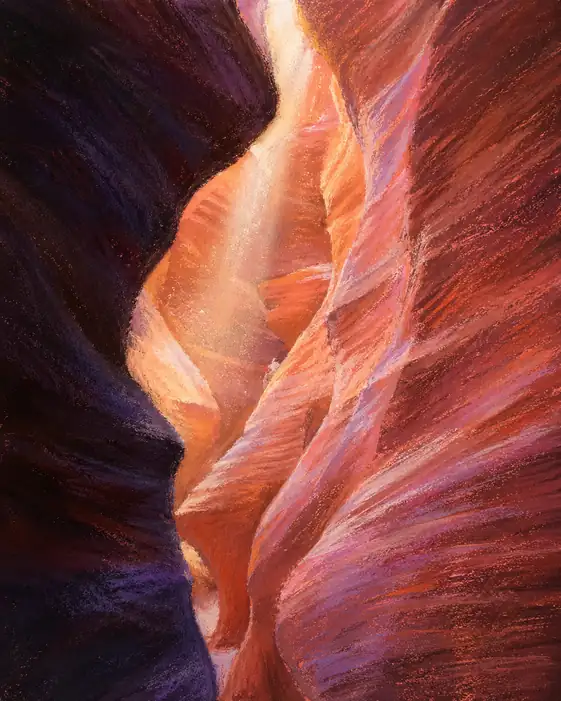 A Prayer Carved in Silence
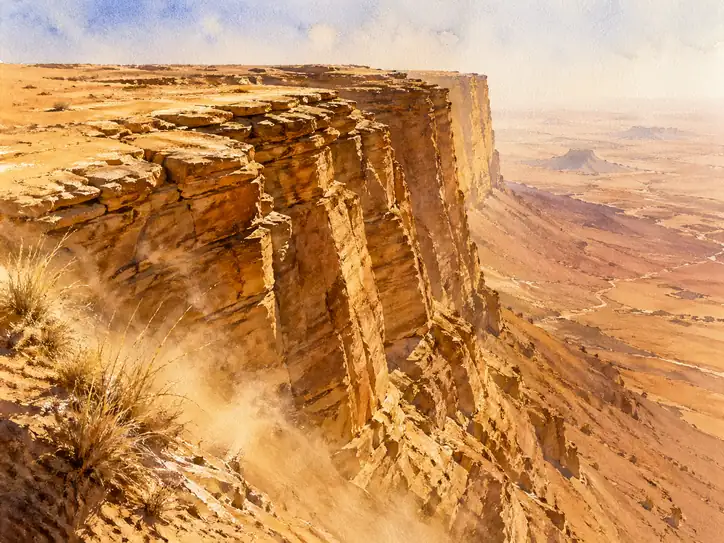 The Wind's Whisper: Dust over the Expanse
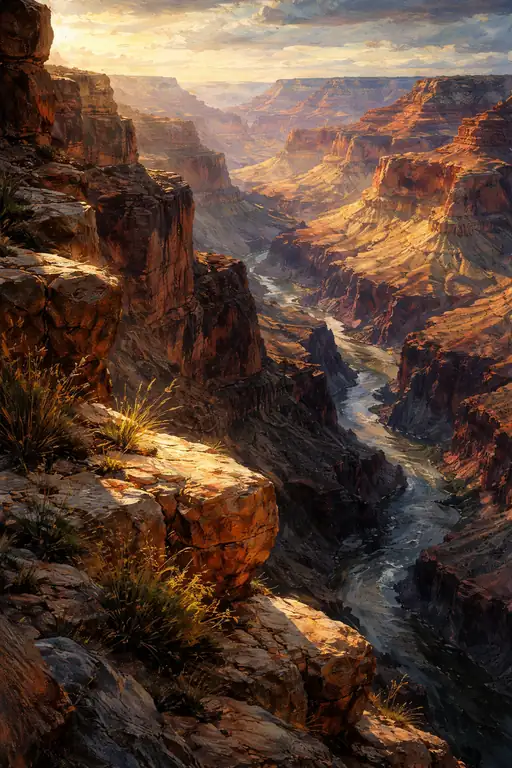 Whispers of the Sunlit Abyss
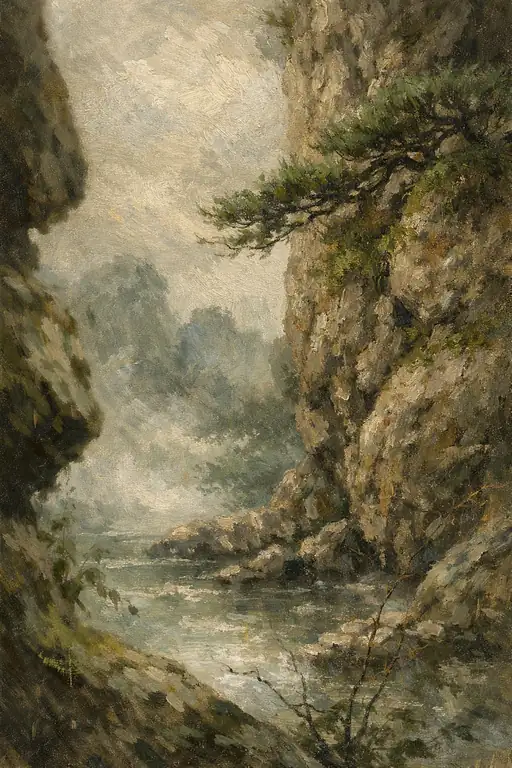 Resilience Carved in the Deep Gorge
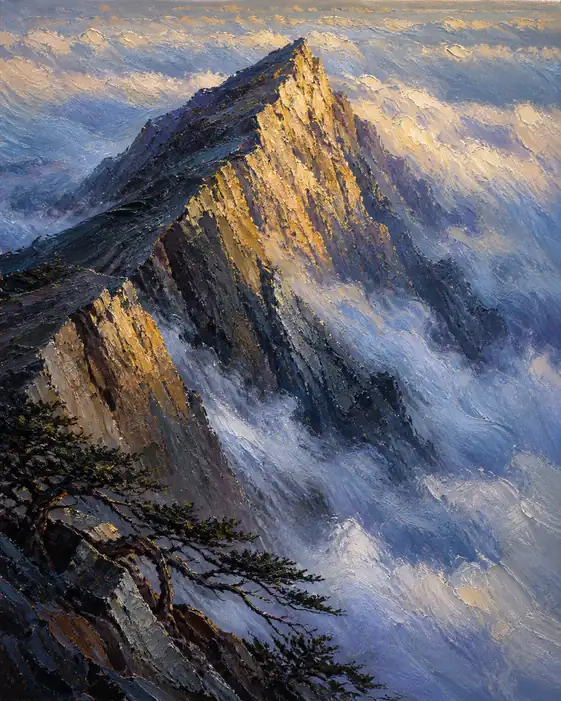 Sovereign of the Sea of Clouds
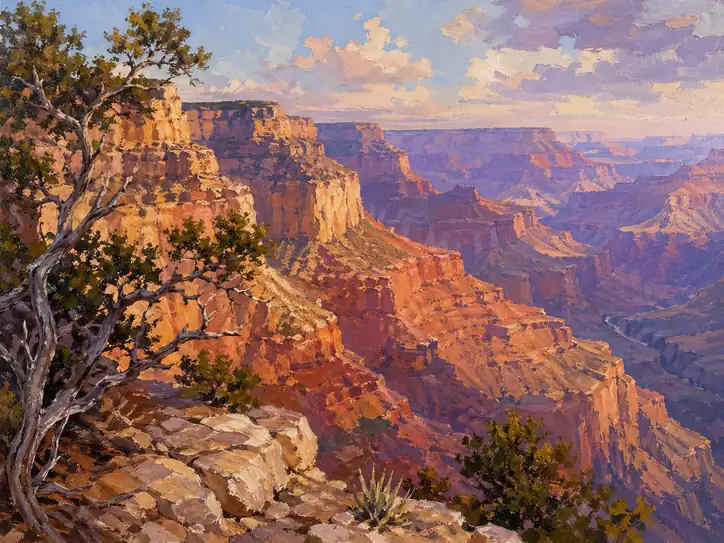 Echoes of the Ancient Sun