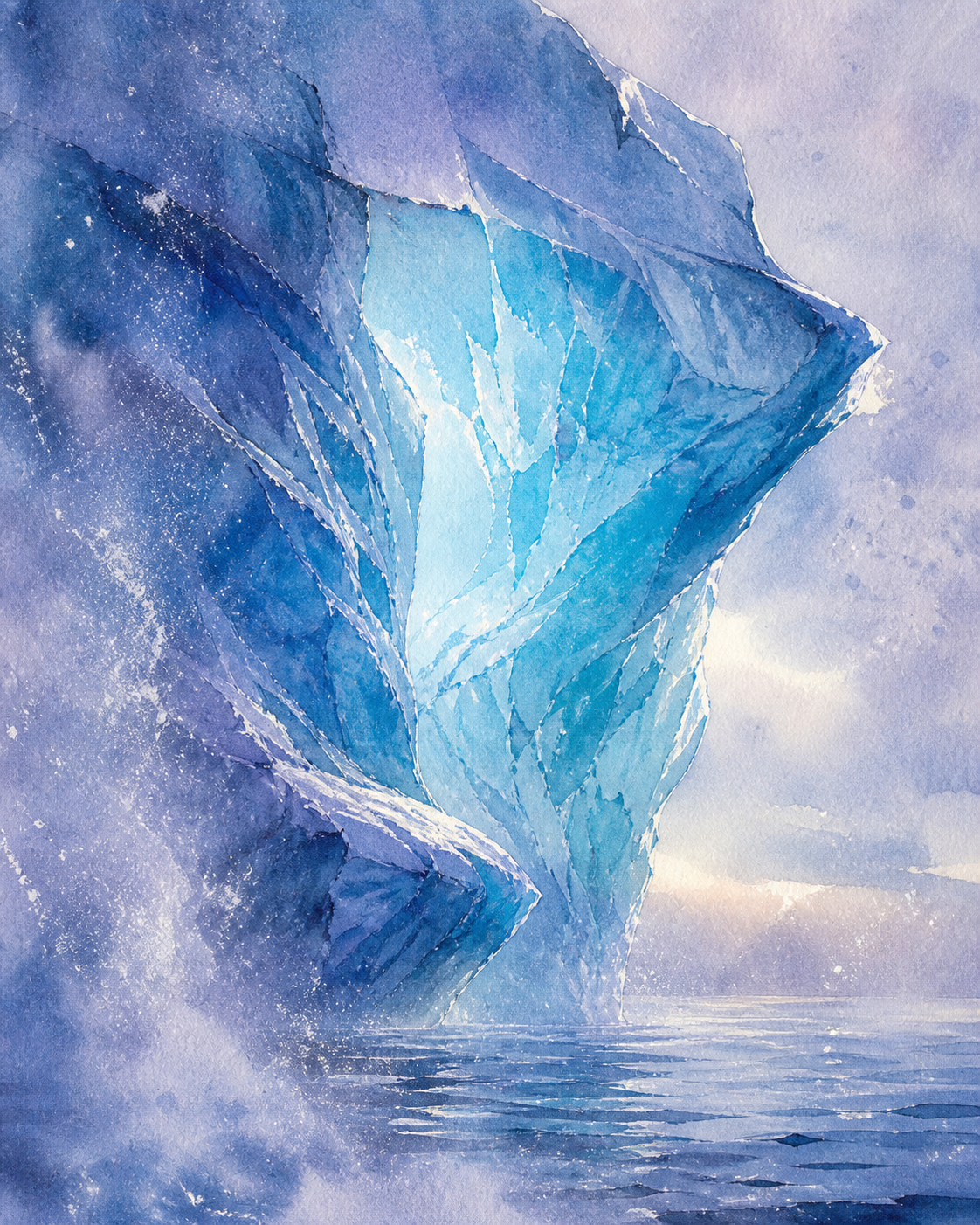
The Sacred Core of Eternal Blue
Critique
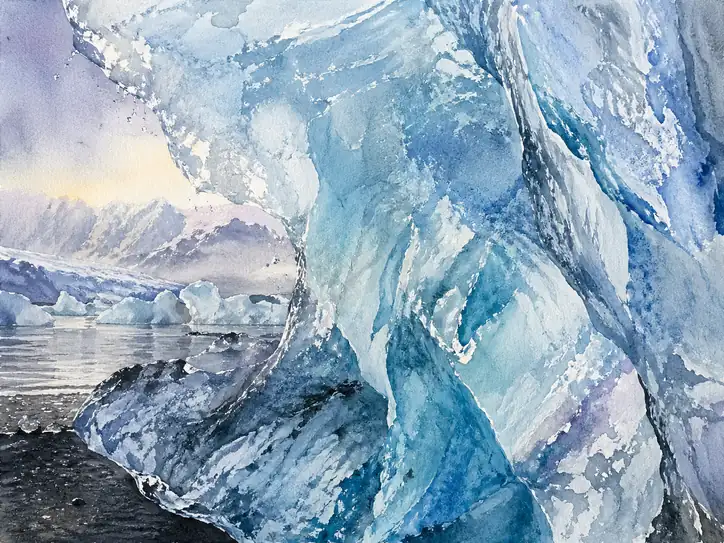
1. Introduction This vertical watercolor painting captures the imposing presence of a massive iceberg rising from a calm sea. The composition is dominated by a central crystalline structure that stretches toward the top of the frame, creating a sense of monumental scale and verticality. The palette is carefully restricted to varying shades of cerulean, violet, and pale indigo, which effectively conveys a cold and ethereal atmosphere. The work exemplifies a sophisticated use of watercolor techniques to balance sharp geological forms with the fluid nature of the medium. 2. Description The central iceberg features a complex network of jagged, angular planes that suggest a dense, crystalline interior. A vibrant, translucent turquoise glow emanates from the center of the ice, contrasting with the deeper blue shadows along its edges. At the base, the ice meets a dark, reflective sea characterized by horizontal brushstrokes that suggest gentle ripples. To the left, a mist of white spray or falling snow is rendered through expressive splattering and dry brush techniques, adding a sense of movement to the otherwise static scene. The background consists of soft lavender washes and a faint golden glow near the horizon, suggesting the first light of dawn. 3. Analysis The visual impact of the piece relies heavily on the stark contrast between the sharp, defined edges of the ice and the soft, bleeding washes of the surrounding sky and sea. The artist uses a wide range of values, from the brilliant white of the ice's highlights to the deep navy of the oceanic depths, to create a strong sense of three-dimensional form. The internal luminescence of the iceberg serves as a focal point, drawing the viewer's eye into the depths of the structure. The vertical orientation reinforces the height of the iceberg, while the horizontal lines of the water provide a stable foundation that grounds the composition. 4. Interpretation and Evaluation This work can be interpreted as an exploration of the sublime, illustrating both the beauty and the formidable power of nature. The internal light within the ice suggests a hidden vitality or a spiritual quality residing within the cold, inanimate material. Technically, the painting demonstrates a masterful command of the watercolor medium, particularly in the way the artist manages transparency and texture. The integration of various techniques, including wet-on-wet and splattering, results in a rich tactile quality that effectively represents different states of water, from solid ice to liquid sea and gaseous mist. 5. Conclusion Upon initial viewing, the painting appears as a simple landscape, but closer observation reveals a complex interplay of light and texture that elevates the subject matter. The artist successfully captures the ephemeral and fragile beauty of ice while emphasizing its monumental physical presence. The final result is a harmonious and evocative study that invites quiet contemplation of the natural world’s grandeur.
Same Subcategory
Similar Artworks
 The Ice Giant's Silence
 The Awakening of the Ancient Blue
 The Frozen Majesty of the Deep
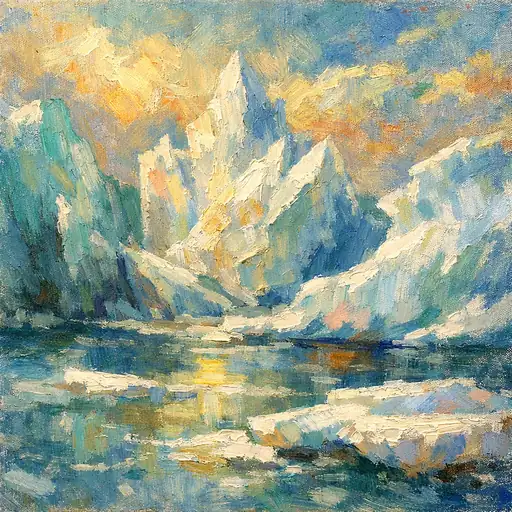 Echoes of the Glacier: The Golden Ice
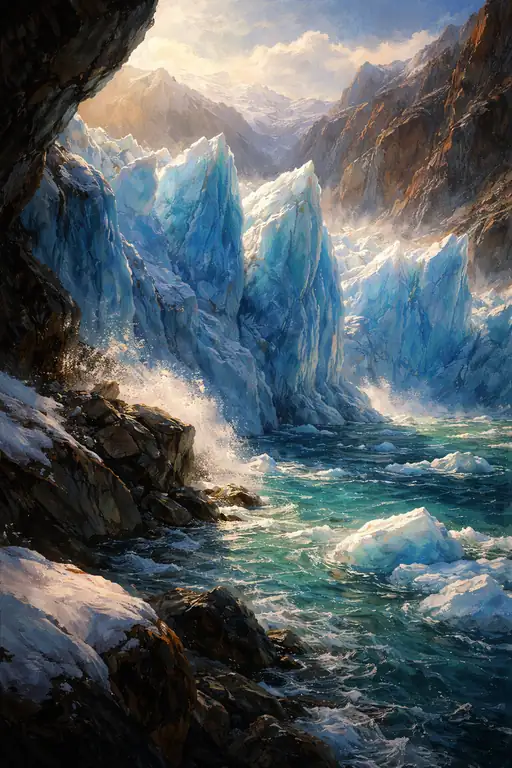 Dramatic Iceberg Waves
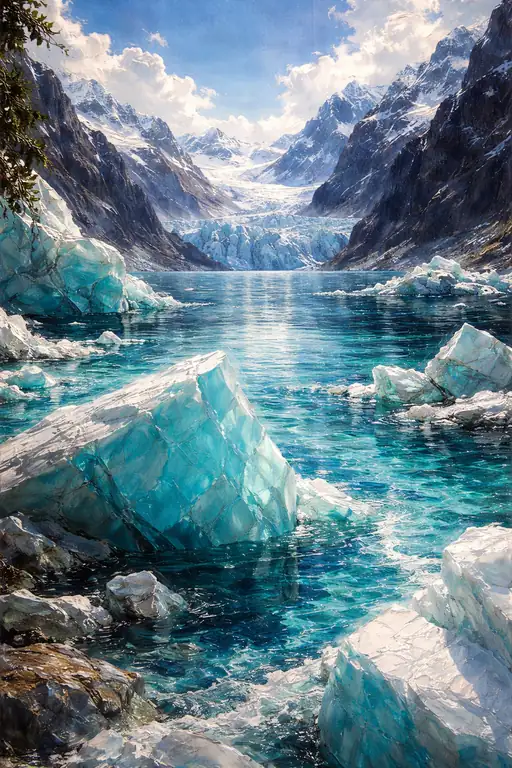 The Solitude of Frozen Wonders
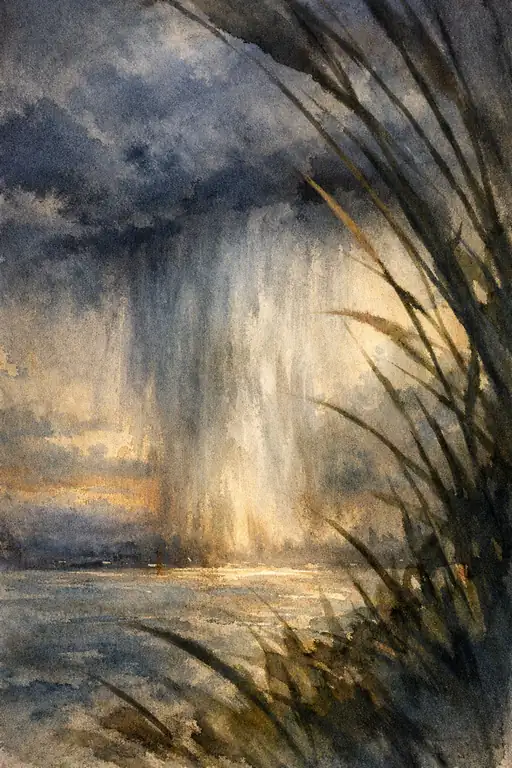 Shared Light in the Gathering Storm
 Crystalline Soul of the Arctic
 Silence of the Sleeping Glaciers
 Golden Light on the Silent Ice