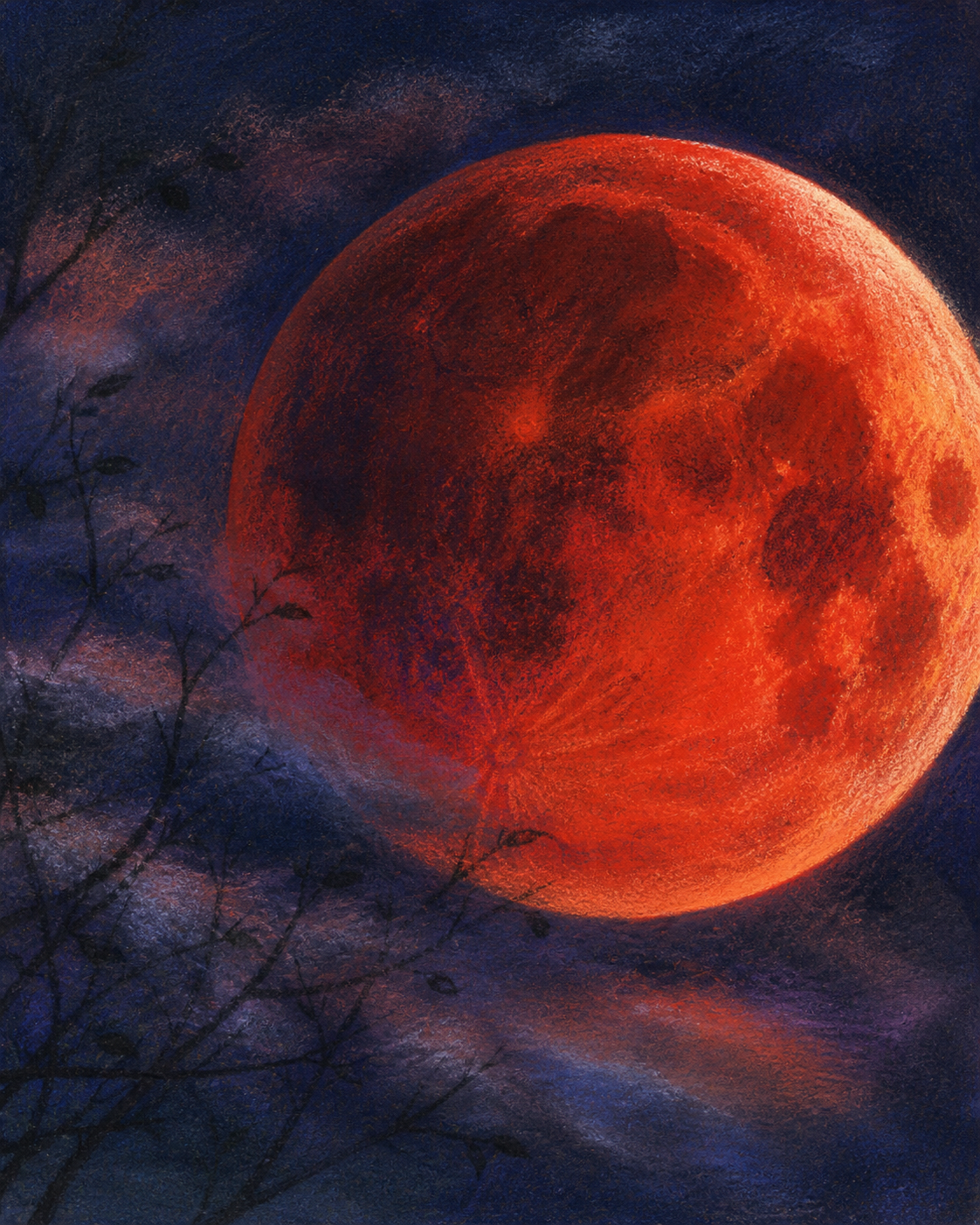
Whisper of the Crimson Moon
Critique
1. Introduction This artwork depicts a nocturnal scene dominated by an exceptionally large celestial body. The composition focuses on a giant moon that occupies a significant portion of the frame, set against a dark, textured sky. The overall atmosphere is mysterious and somewhat surreal due to the intense coloration of the moon and the dramatic lighting. It invites the viewer to contemplate a celestial event that transcends the ordinary experience of the night sky. 2. Description A massive moon, rendered in deep oranges and reds, is positioned slightly off-center to the right. Its surface is textured with darker, mottled patches suggesting craters and lunar seas, providing a sense of physical weight. To the left and across the lower portion of the image, dark, thin branches of a tree are silhouetted against the sky. The background consists of dark blue and purple tones, with swirling, cloud-like textures that appear to catch the red light. 3. Analysis The composition is dominated by the large circular form of the moon, which creates a powerful focal point. The use of complementary colors, such as reddish-orange and dark blue-purple, enhances the visual impact and creates a sense of depth. The diagonal arrangement of the branches in the lower-left corner effectively balances the moon's weight. The visible brushstrokes and scumbled textures contribute to a tactile quality that enriches the visual experience. 4. Interpretation and Evaluation The artwork conveys a sense of wonder and perhaps a touch of celestial foreboding. The "blood moon" aesthetic evokes mythological themes, while the technical execution demonstrates a strong command of color theory. The silhouetted branches add a delicate, organic element that contrasts with the geometric simplicity of the lunar disk. The lighting is consistent, grounding the surreal subject in a believable physical space through subtle illumination of the clouds. 5. Conclusion In summary, this piece successfully captures a dramatic nocturnal landscape through its bold use of color and texture. The initial impression of a celestial study evolves into a profound exploration of light and atmosphere. The work stands as a compelling example of how traditional subjects can be revitalized through expressive stylistic choices.
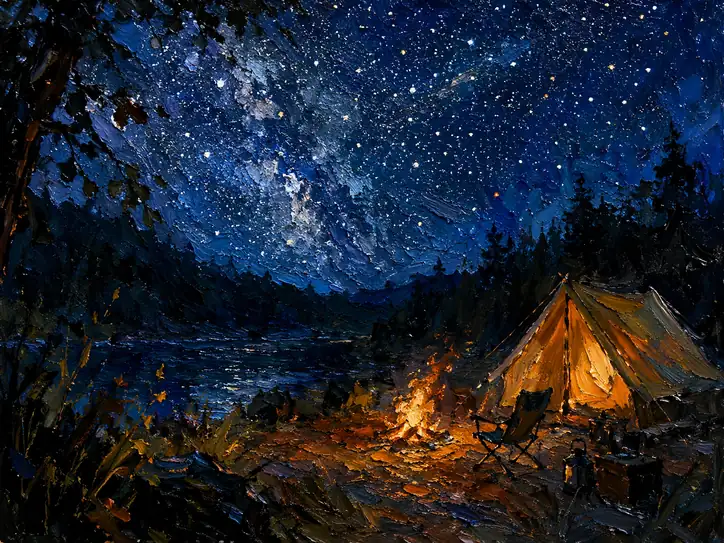 Campfire Beneath the Cosmic Veil
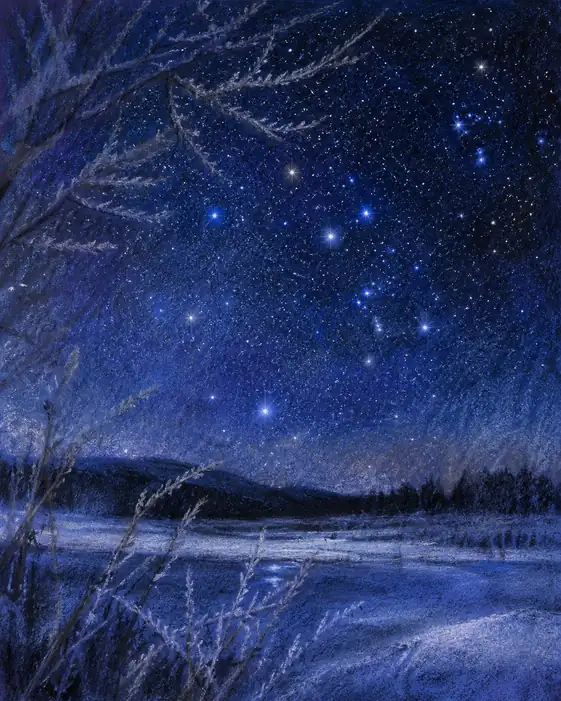 A Symphony Written in Starlight and Snow
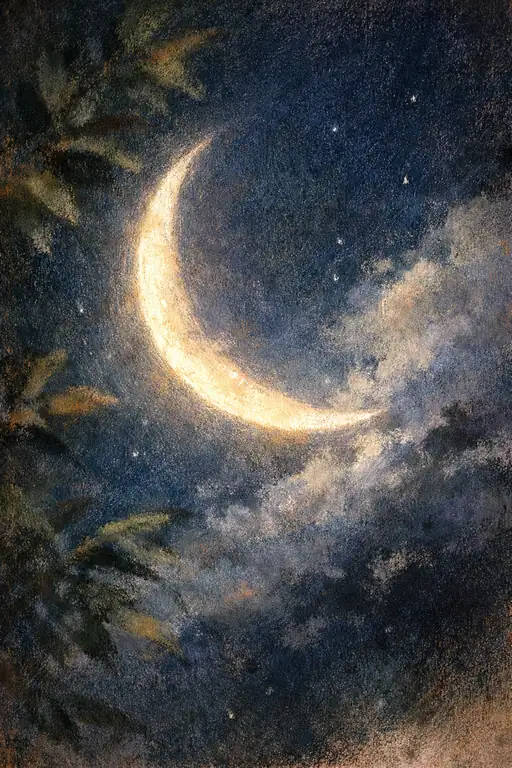 Golden Crescent Serenade
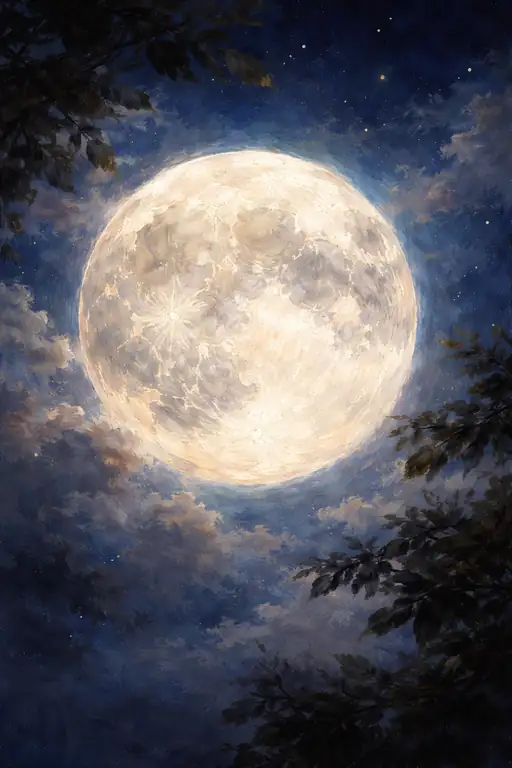 The Silent Watcher of the Cosmos
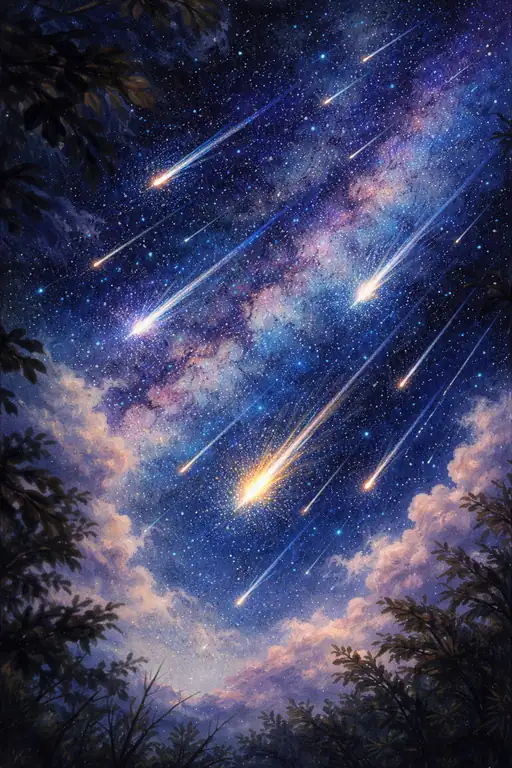 Tears of the Starry Expanse
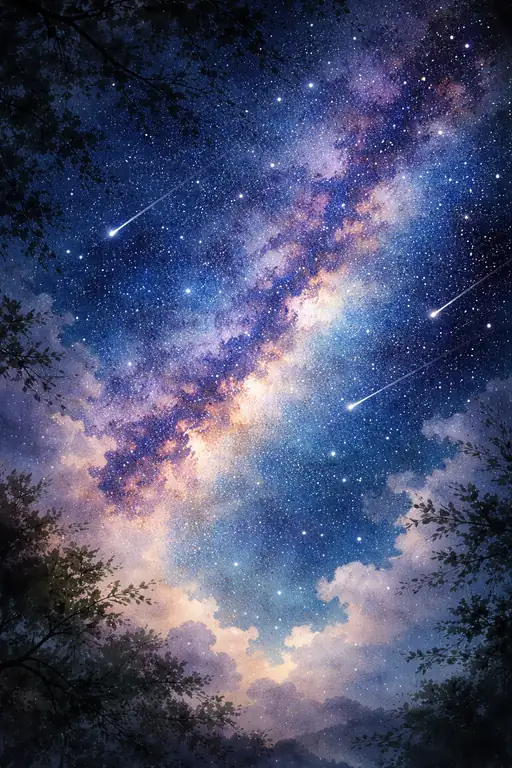 Whispers of the Cosmic Veil
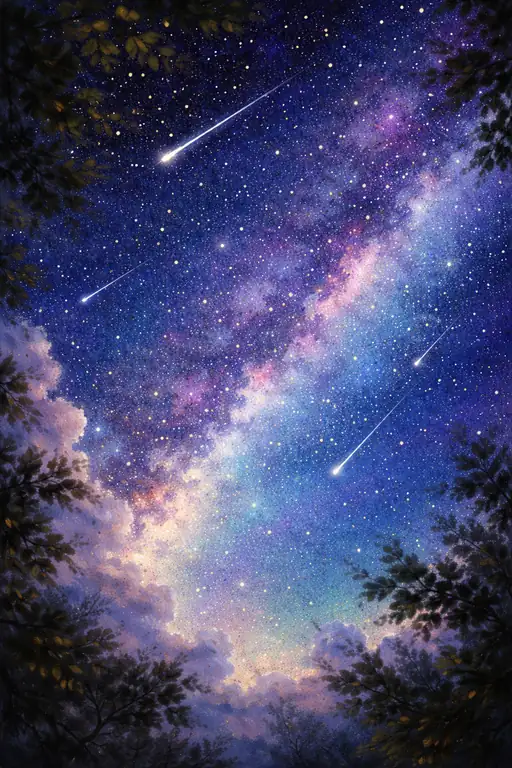 Meteor's Dance Through the Violet Veil
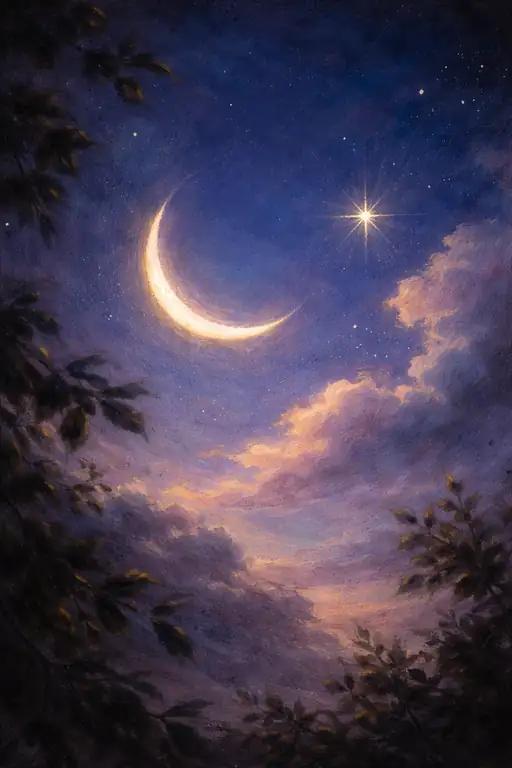 Embrace of the Night Sky
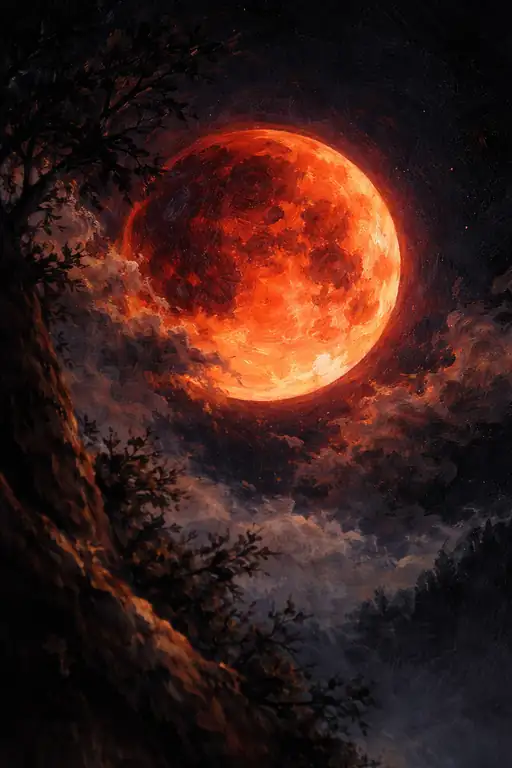 The Crimson Eye of the Night
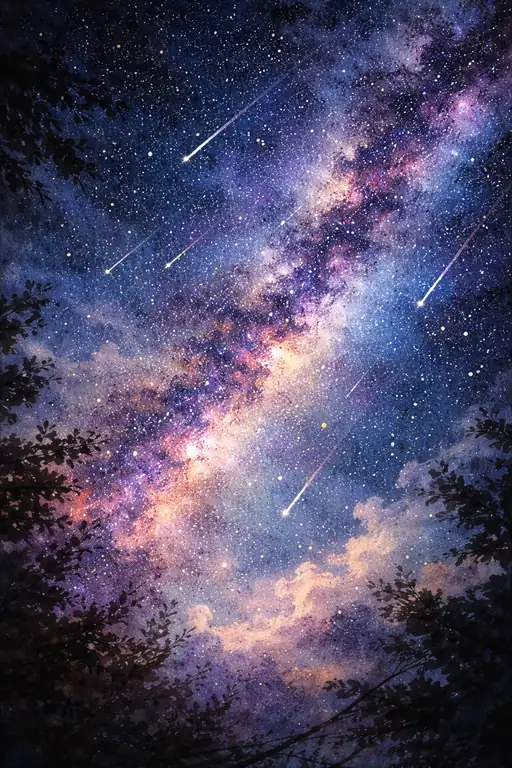 Galaxy Beyond the Clouds
 Night Garden Golden Lantern
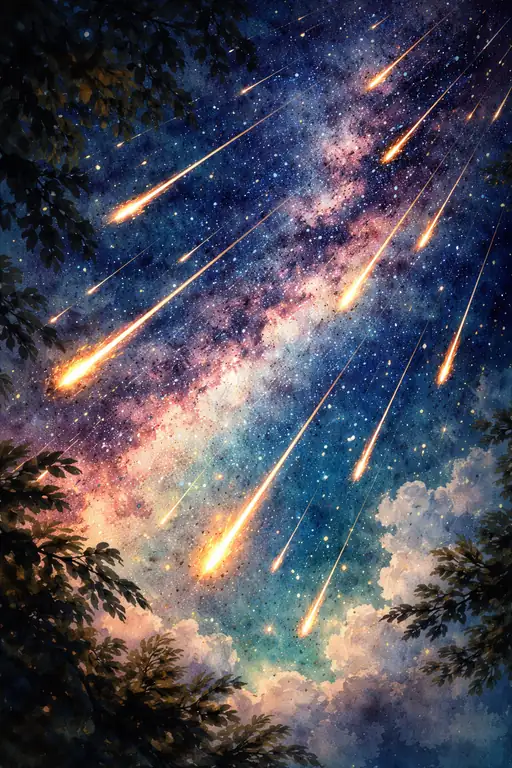 Meteor Shower in the Cosmic Sky