
Rhythms of the Rio Shoreline
Critique
1. Introduction This vibrant oil painting captures the energetic atmosphere of a beach in Rio de Janeiro, likely Ipanema or Copacabana, during a brilliant sunset. The artist uses a thick, textured impasto technique to bring the coastal scene to life, emphasizing the interplay of light and shadow. It successfully depicts the unique blend of urban architecture and natural beauty that defines the city's coastline. 2. Description The composition is framed by a colorful beach umbrella in the upper right foreground, which overlooks the iconic wavy mosaic pattern of the sidewalk. A wide expanse of golden sand stretches toward the ocean, where gentle waves are shown breaking along the shore. In the distance, high-rise buildings line the coast, and the distinctive peaks of the Dois Irmãos mountains rise against a glowing sky. 3. Analysis The work is characterized by a warm and saturated color palette, with vivid oranges and yellows of the sun reflecting off the sand and water. Bold, expressive brushstrokes create a sense of movement in the clouds and the surf, giving the painting a tactile and dynamic quality. The diagonal line of the shoreline leads the viewer’s eye from the busy foreground toward the serene mountains in the background. 4. Interpretation and Evaluation The painting effectively conveys the lively and leisure-oriented spirit of Rio's beach culture through its choice of subject and technique. The contrast between the structured patterns of the mosaic walkway and the organic forms of the mountains demonstrates a sophisticated understanding of compositional balance. The artist’s ability to capture the specific quality of tropical sunlight is highly commendable and adds a sense of warmth and optimism. 5. Conclusion This artwork is a successful celebration of a world-famous urban landscape that balances architectural detail with natural splendor. The initial impression of a bright summer day is deepened by the artist's skillful use of texture and light, which invites a closer examination of the scene. It remains a powerful and evocative representation of the coastal identity of Brazil’s most famous city.
Same Subcategory
 Soliloquy of the Coastal Breeze
Similar Artworks
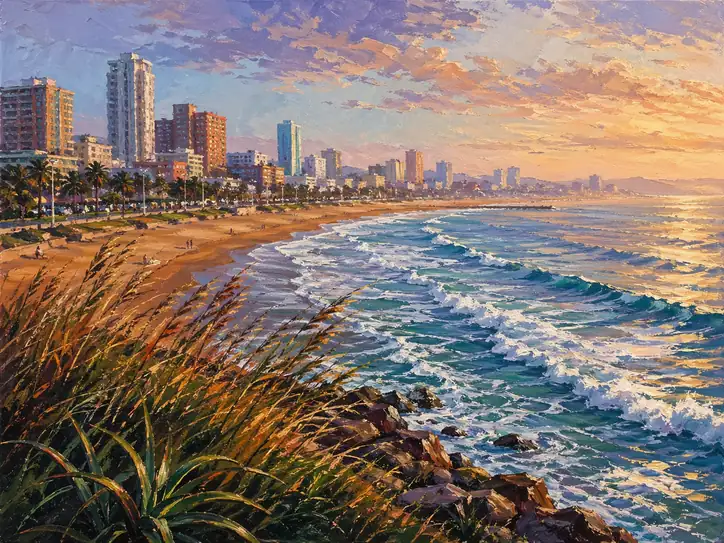 Where the Urban Soul Meets the Tide
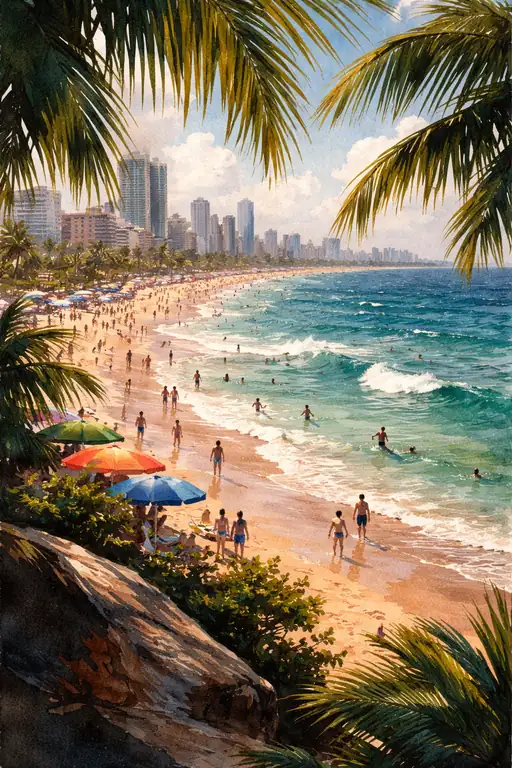 Symphony of Sand and Steel
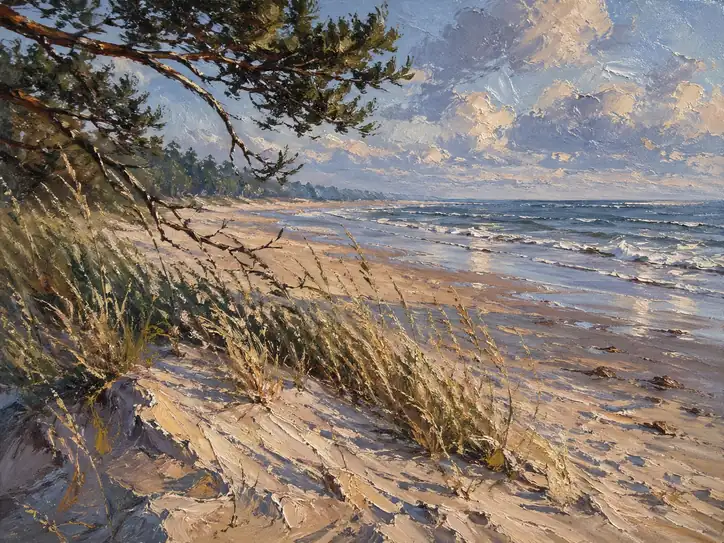 Tranquil Footprints in the Sand Dunes
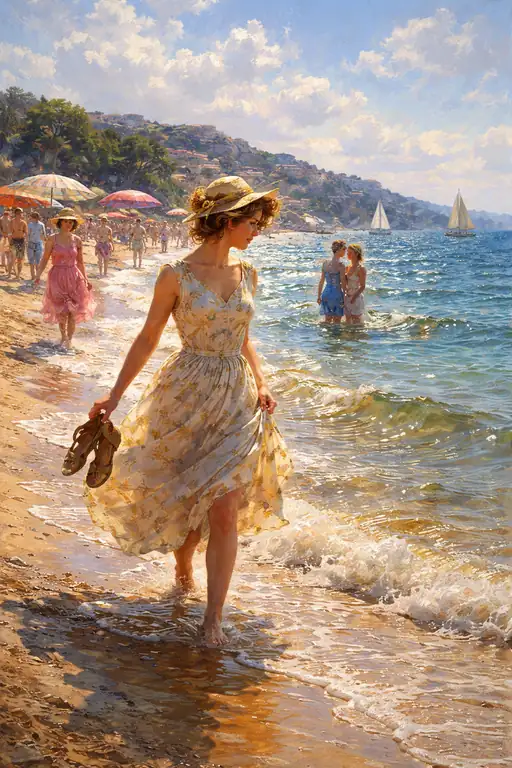 Footprints Left on the Summer Shore
 Whispers of the Shallow Tide
 A Moment of Seaside Solitude
 The Silent Flow of Tides
 Whispers of the Sunlit Sands
 A Breathtaking Symphony of Gold Over the Twilight Mudflats
 Shadows of a Sapphire Paradise