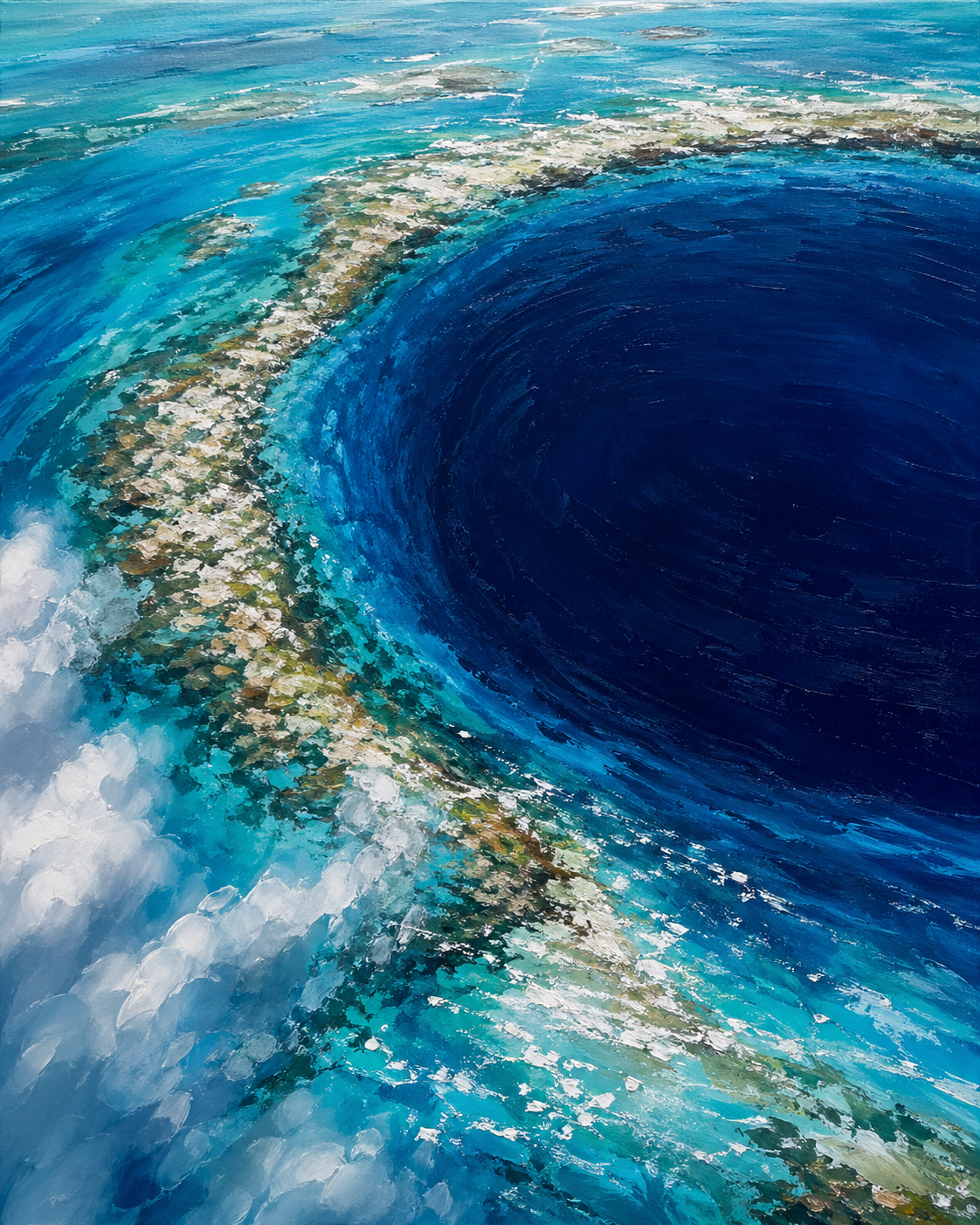
Eye of the Infinite Deep
Critique
1. Introduction This oil painting depicts a vast, deep blue oceanic sinkhole from an aerial perspective. The composition centers on a dark circular void that draws the viewer's eye into its depths. This work captures the immense scale and mysterious beauty of a marine phenomenon, emphasizing the contrast between the dark abyss and the surrounding vibrant reef systems. 2. Description The right side of the canvas is occupied by a swirling mass of deep indigo, representing a profound underwater chasm. Surrounding this central feature is a curved reef rendered with textured strokes of turquoise, white, and earthy browns. In the lower-left corner, white, frothy forms suggest either breaking waves or low-lying clouds, adding a sense of movement and atmosphere to the scene. 3. Analysis The artist employs a heavy impasto technique, creating a tangible surface texture that mirrors the chaotic energy of the sea. The brushstrokes follow the circular flow of the central sinkhole, reinforcing the sense of a powerful vortex. A high-contrast color palette effectively separates the deep, cool navy of the abyss from the bright, sun-lit tones of the shallow waters and the reef. 4. Interpretation and Evaluation The painting can be interpreted as an exploration of the sublime power found in nature's hidden depths. The visual tension between the solid reef and the bottomless blue void creates a feeling of both awe and slight unease. Technically, the skillful use of value transitions and expressive mark-making gives the flat canvas a remarkable sense of three-dimensional depth and fluid motion. 5. Conclusion This work successfully translates a grand natural spectacle into a tactile and emotionally resonant visual experience. The viewer's initial perception of a simple landscape evolves into a deeper appreciation for the complex interplay of light and water. Ultimately, the painting stands as a powerful testament to the overwhelming scale and enigmatic character of the world's oceans.
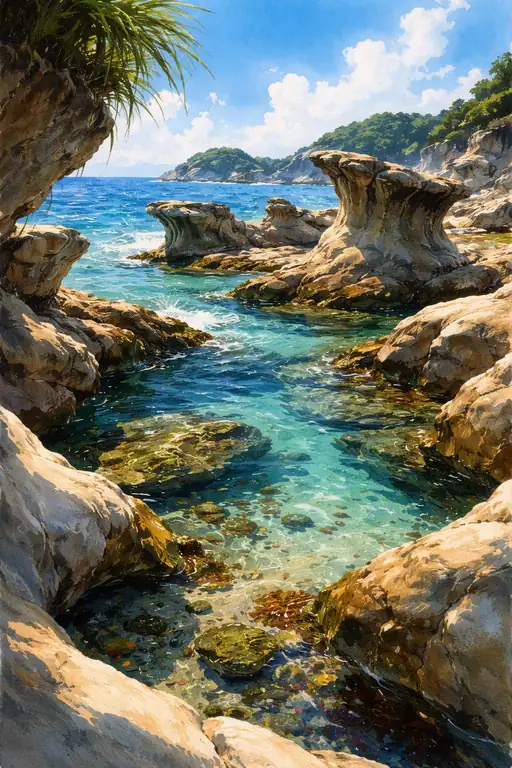 Pillars of the Crystalline Shallow
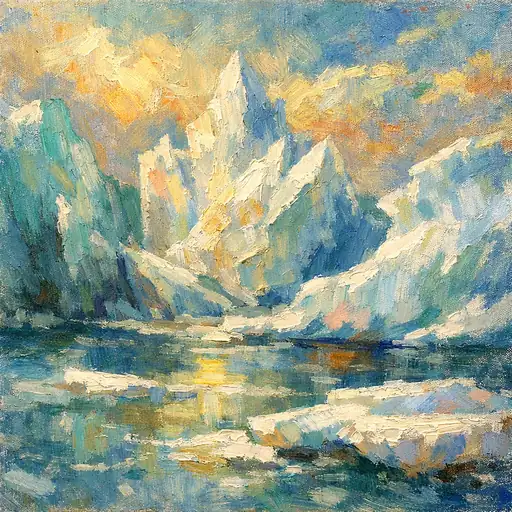 Echoes of the Glacier: The Golden Ice
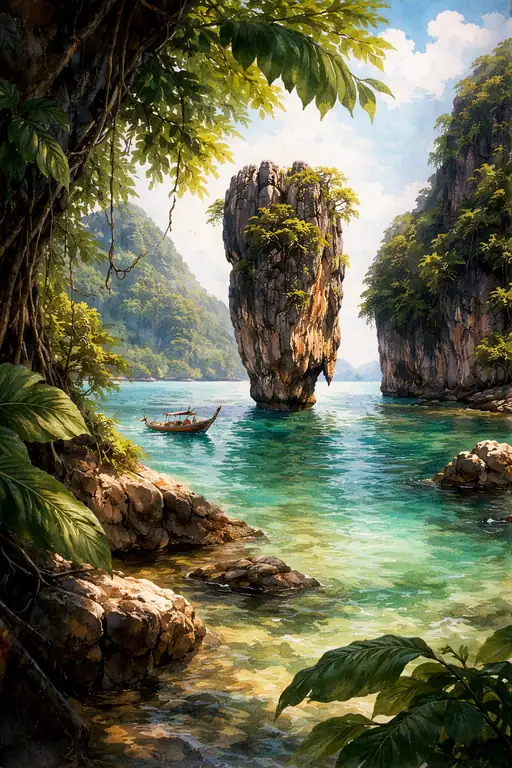 Majestic Solitude in the Turquoise Bay
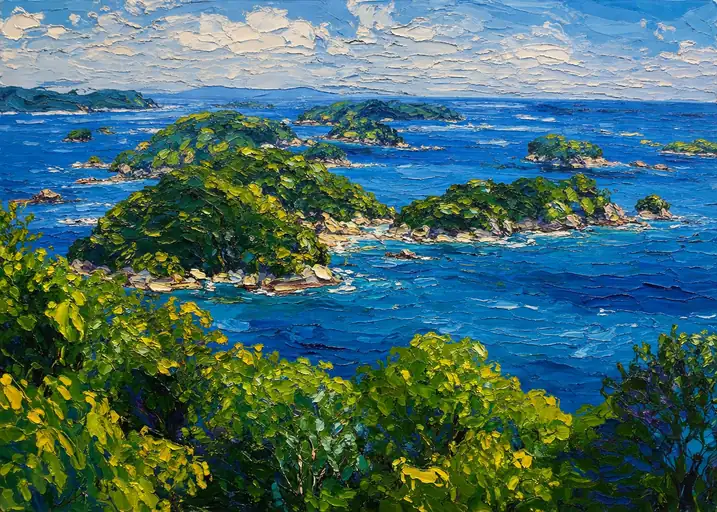 Enduring Pulses of the Azure Labyrinth
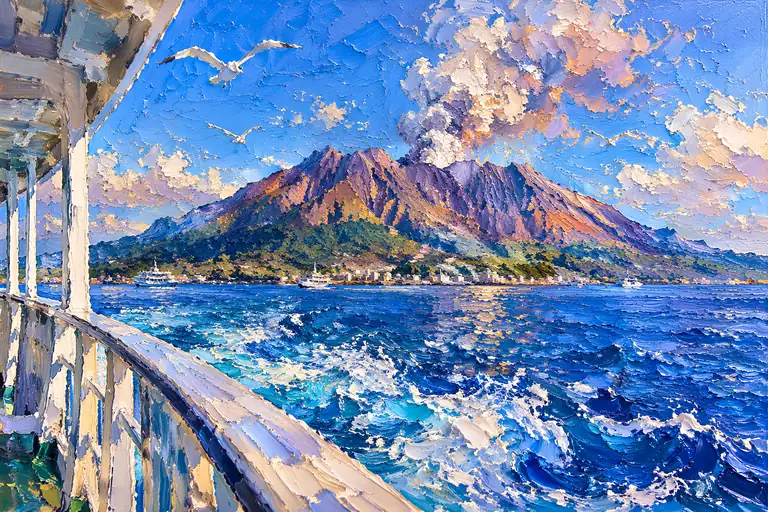 Pulse of the Azure Roar
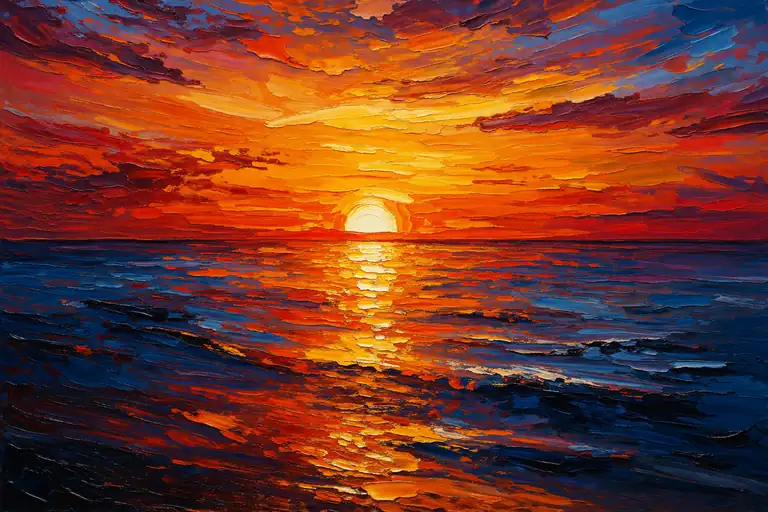 Fire on the Horizon
 Crimson Dawn Over the Tranquil Sea
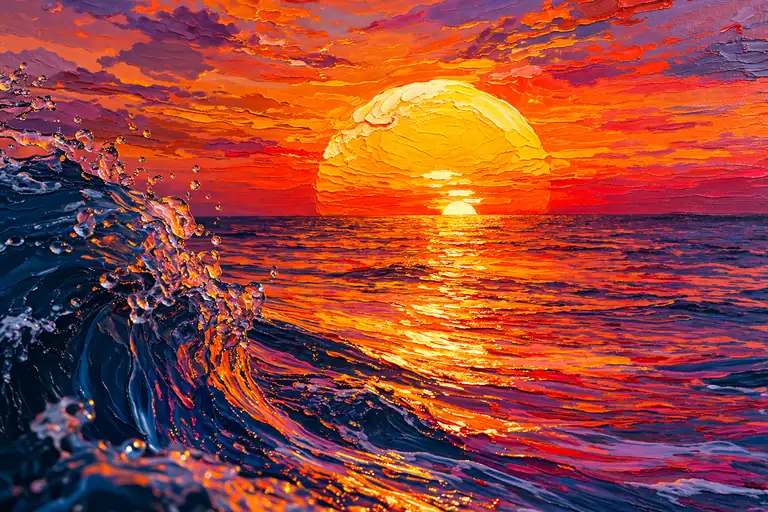 Radiant Crescendo
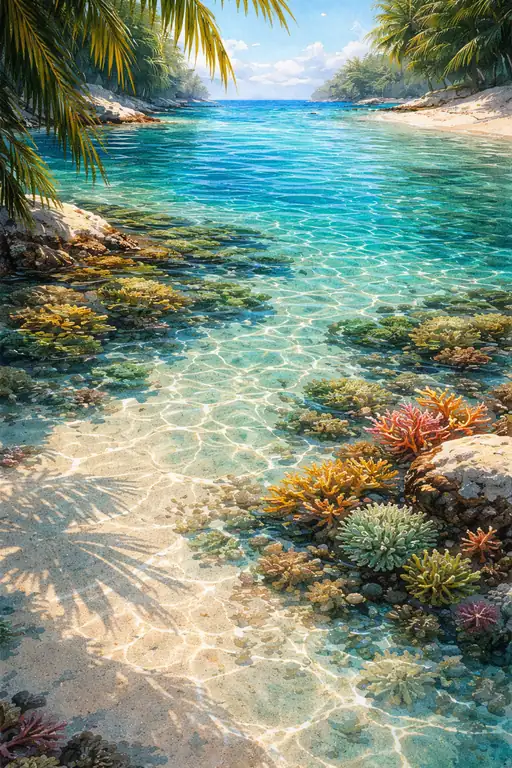 Vibrant Sanctuary of the Shallows
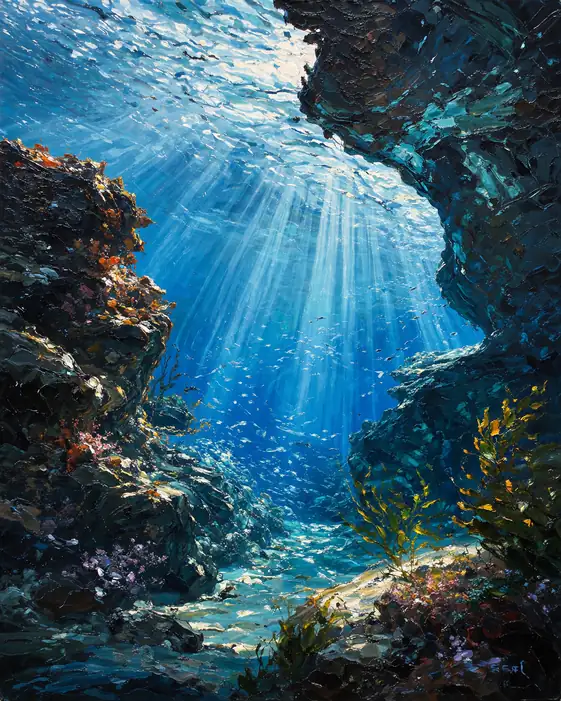 Sunlit Depths