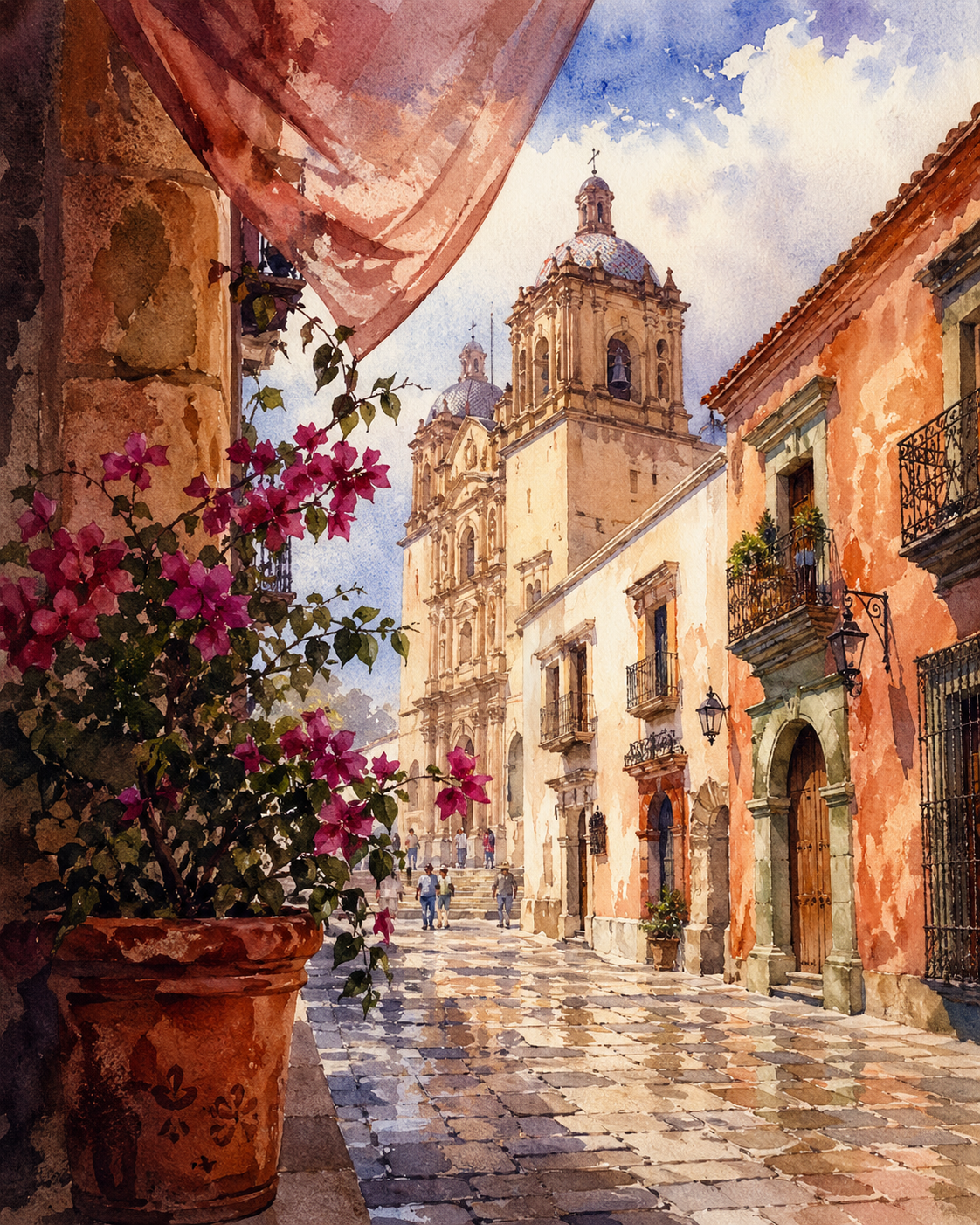
The Radiant Path to the Blue Dome
Critique
1. Introduction This watercolor painting captures a radiant, sun-drenched street scene in a historic colonial town, leading the eye toward a majestic church. The composition is framed by an oversized terracotta pot of bougainvillea and a draped fabric awning, creating a sense of being present within the space. It is a masterful exploration of light, shadow, and architectural grandeur. 2. Description In the immediate foreground, a large clay pot overflows with vibrant magenta flowers, set against the cool shadow of a stone wall. The cobblestone street, reflecting the bright midday sun, recedes toward a multi-tiered church facade characterized by its ornate bell towers and a blue-tiled dome. Small figures of pedestrians add a human element to the scene, emphasizing the scale of the buildings. 3. Analysis The artist employs high-contrast lighting to define the three-dimensional forms of the colonial architecture. The long shadows cast by the buildings on the right create a rhythmic pattern across the reflective cobblestones. The watercolor technique is evident in the layered washes that suggest the weathered texture of the stone walls and the atmospheric clarity of the sky. 4. Interpretation and Evaluation This work serves as a celebration of the enduring beauty of colonial heritage and the vibrancy of public life. The juxtaposition of the delicate flowers with the solid stone architecture suggests a harmony between the ephemeral and the permanent. The technical skill in capturing the complex reflections on the wet or polished street surface is particularly noteworthy. 5. Conclusion In conclusion, the painting succeeds in elevating a common street view into a profound study of light and form. The initial impression of warmth and color matures into an appreciation for the artist's ability to balance detail with expressive brushwork. It is a compelling tribute to the architectural spirit and cultural atmosphere of a historic community.
Same Subcategory
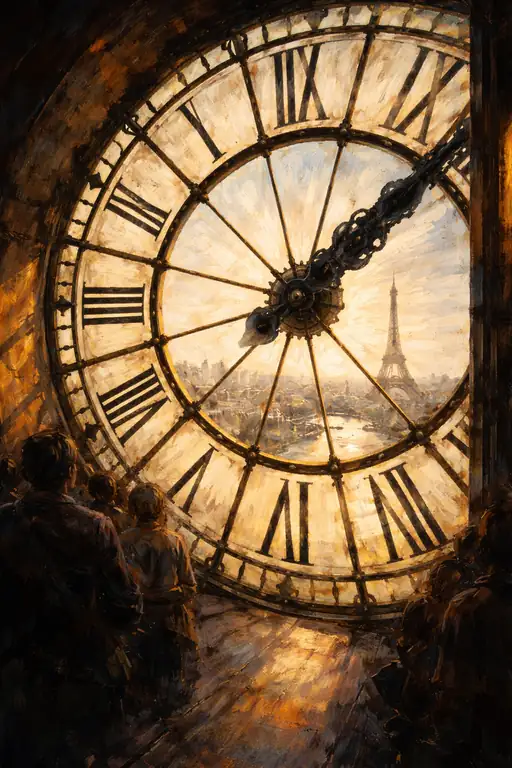 Time's Embrace: Paris Through the Giant Clock
Similar Artworks
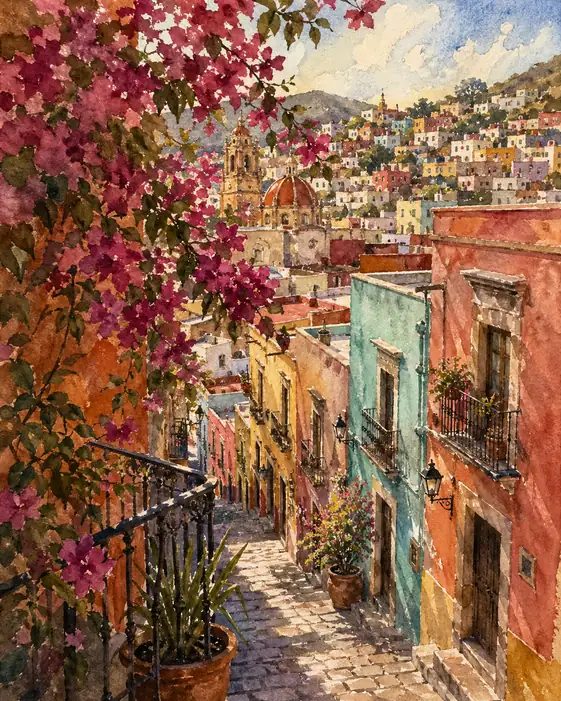 Morning Song in the Pink Alleyway
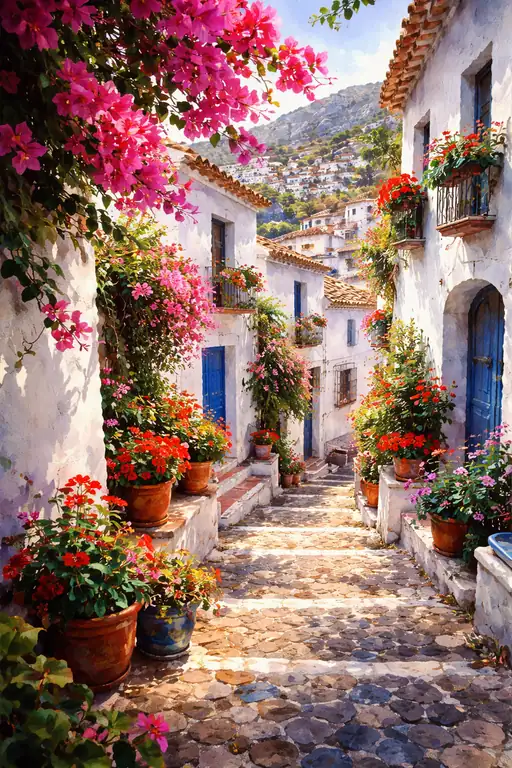 A Vibrant Descent into a Sunlit Haven
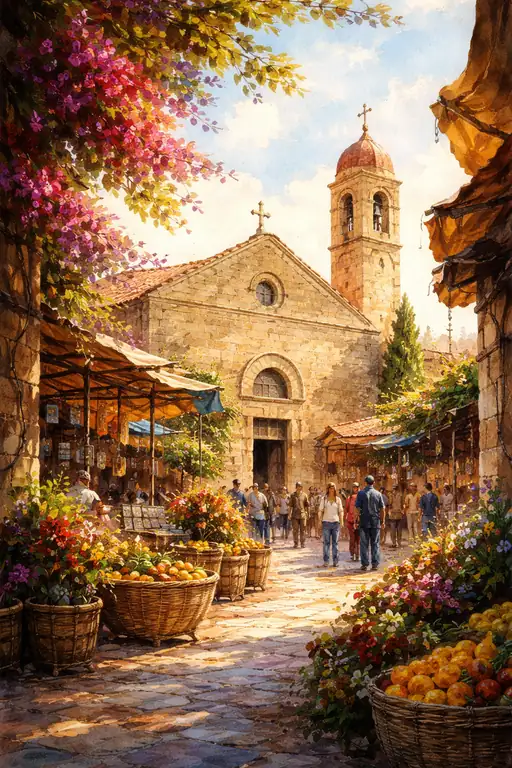 Bustling Marketplace Beside an Old Stone Church
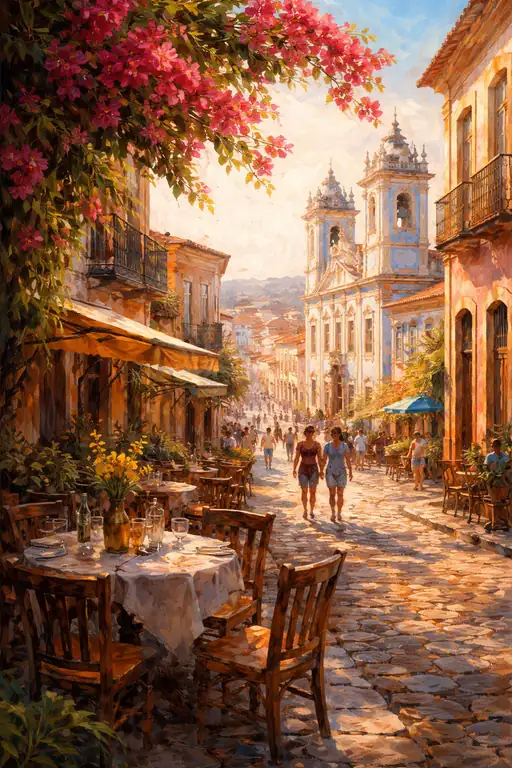 The Warmth of the Sun
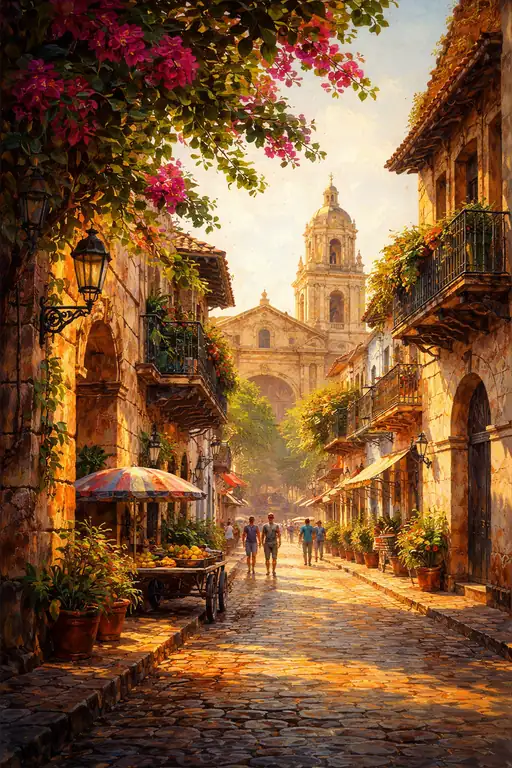 Golden Afternoon: The Flowing Street
 Where Bougainvillea Whispers
 Under the Jacaranda Canopy
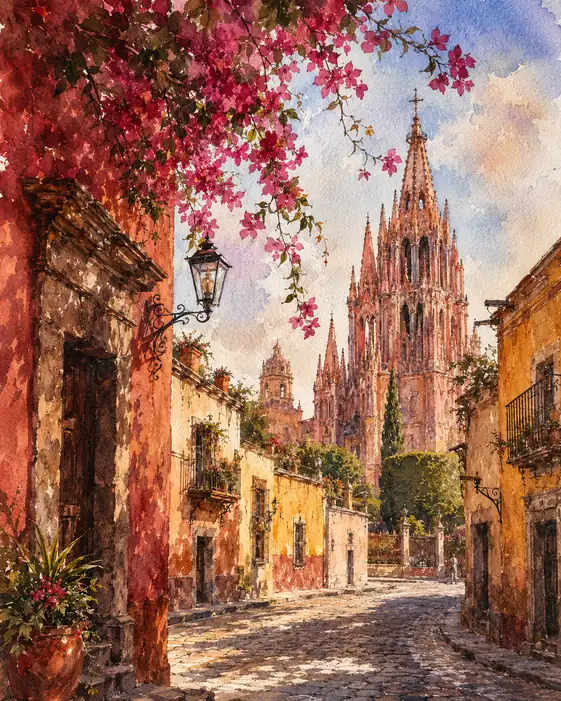 Under the Pink Spires
 Sunset Serenade Over the Spires
 After the Rain: The Glistening Path of Memory