The Earth's Silent Prayer
Critique
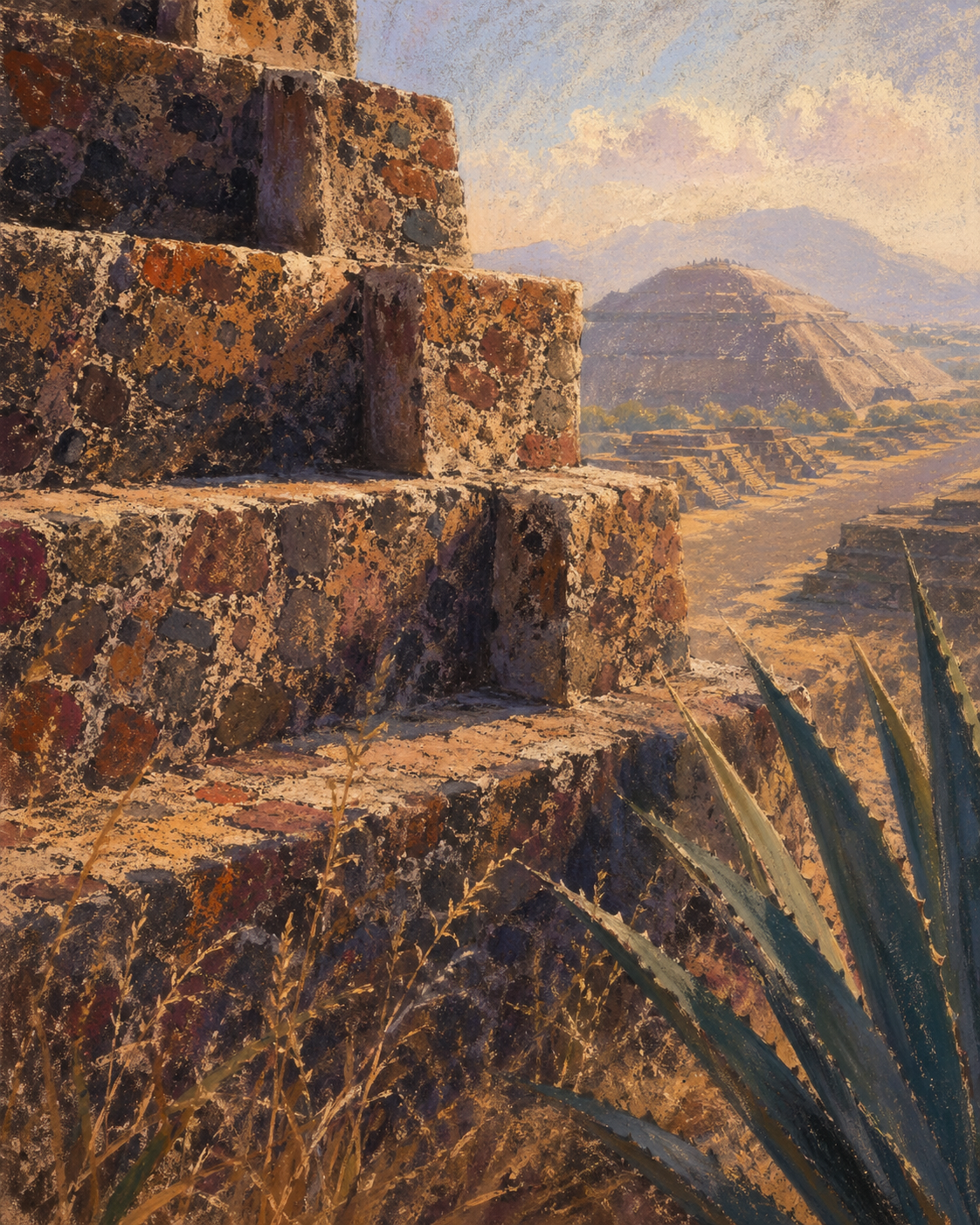
1. Introduction This painting offers an intimate perspective on a sprawling archaeological site, likely inspired by the ancient city of Teotihuacan. By placing the viewer atop one of the stepped structures, the artist emphasizes the tactile reality of the stone remains. The composition bridges the gap between the immediate present and the distant past. 2. Description The foreground is dominated by the rough, multicolored stones of a tiered wall, showcasing shades of rust, charcoal, and ochre. In the mid-ground, the "Avenue of the Dead" stretches toward a massive pyramid silhouetted against a soft, hazy sky. An agave plant in the lower right adds a sharp, organic contrast to the weathered, geometric masonry. 3. Analysis The artist effectively uses atmospheric perspective to create depth, with the foreground stones rendered in sharp detail while the distant monuments dissolve into pale purples and blues. The lighting is diffuse, suggesting early morning or a dusty afternoon. The contrast between the rugged, speckled texture of the volcanic rock and the smooth sky enhances the composition’s balance. 4. Interpretation and Evaluation The work serves as a meditation on the permanence of stone and the transience of human life. The juxtaposition of the enduring pyramids with the seasonal grasses and agave plant highlights the intersection of cultural heritage and the natural environment. The technical skill in rendering the complex stone textures is impressive, providing a grounded sense of place. 5. Conclusion In conclusion, the painting succeeds in capturing the quiet majesty of a historic site without relying on dramatic spectacle. The initial focus on the gritty stone texture eventually leads to a broader appreciation for the site’s layout and historical significance. It is a thoughtful tribute to the architectural ingenuity and legacy of ancient civilizations.
Same Subcategory
 Light Piercing the Ancient Green
Similar Artworks
 Echoes of the Golden Empire
 Echoes of the Sun: Steps of the Ancients
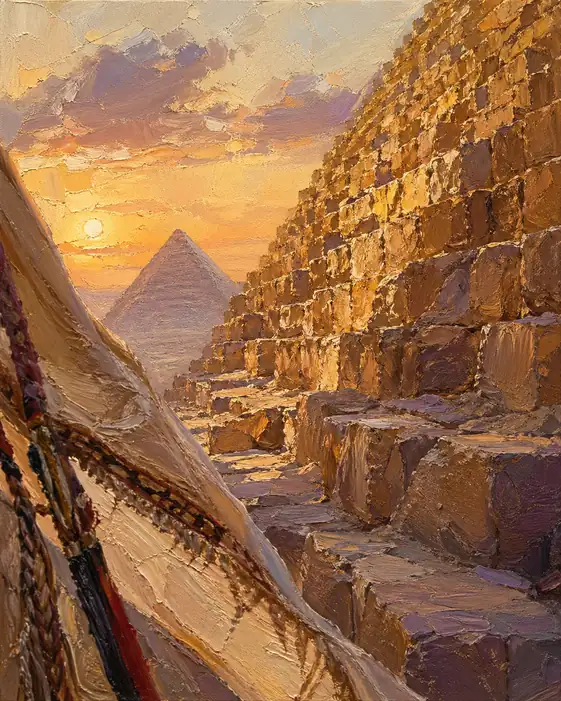 A Prayer Carved in the Sands of Time
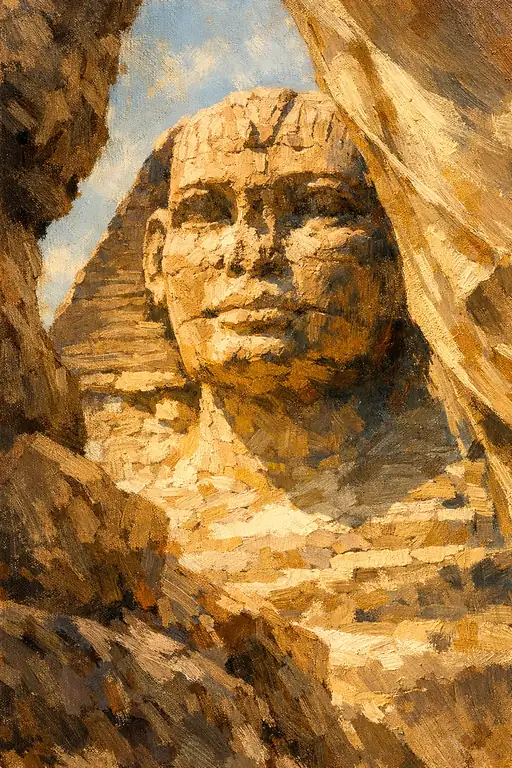 The Weathered Gaze of the Great Sphinx
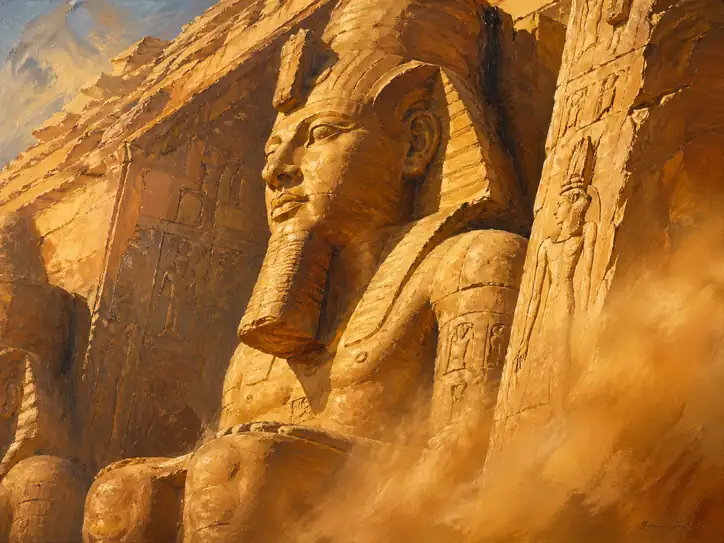 The Pharaoh's Eternal Vigil in the Storm
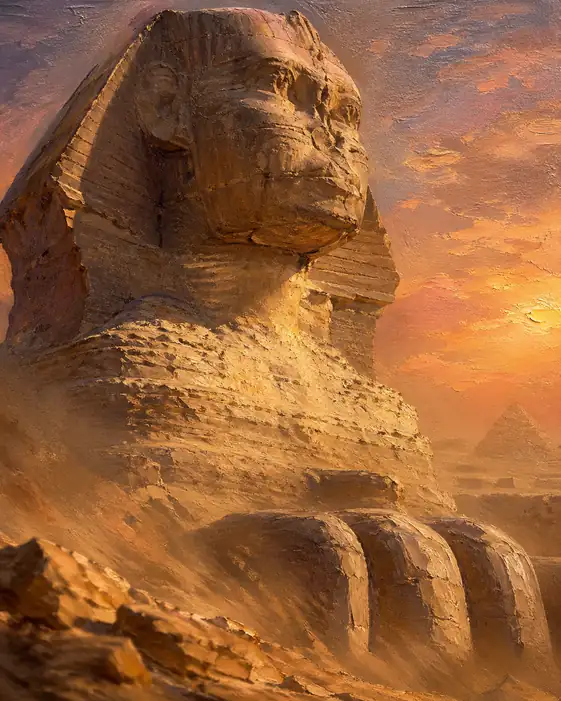 The Sun-Kissed Gaze of Infinity
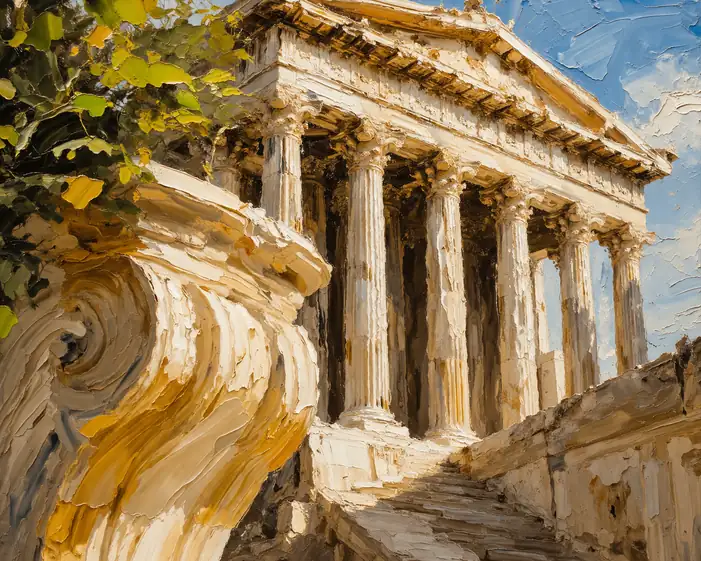 Echoes of the Ancient Sun
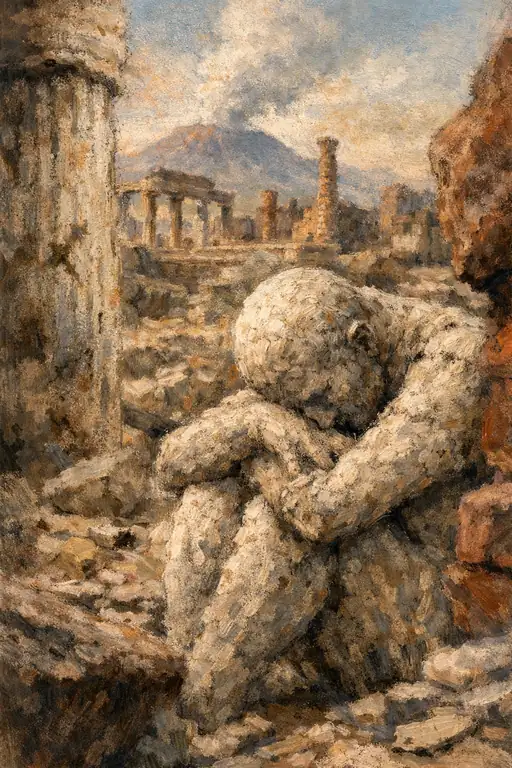 Velvet and Diamonds
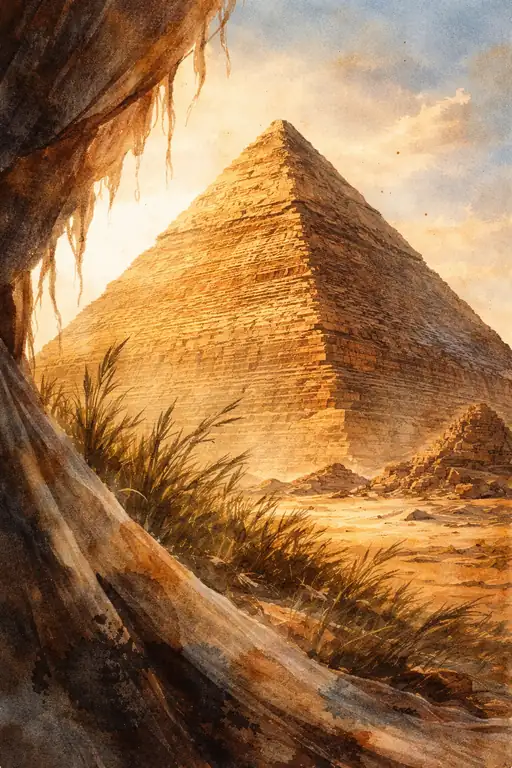 Eternal Sentinel of the Golden Sands
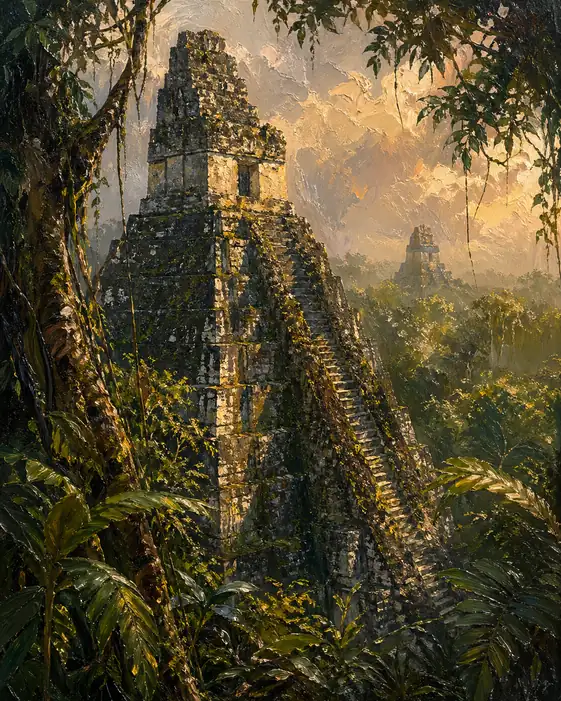 Guardians of the Sunlit Empire