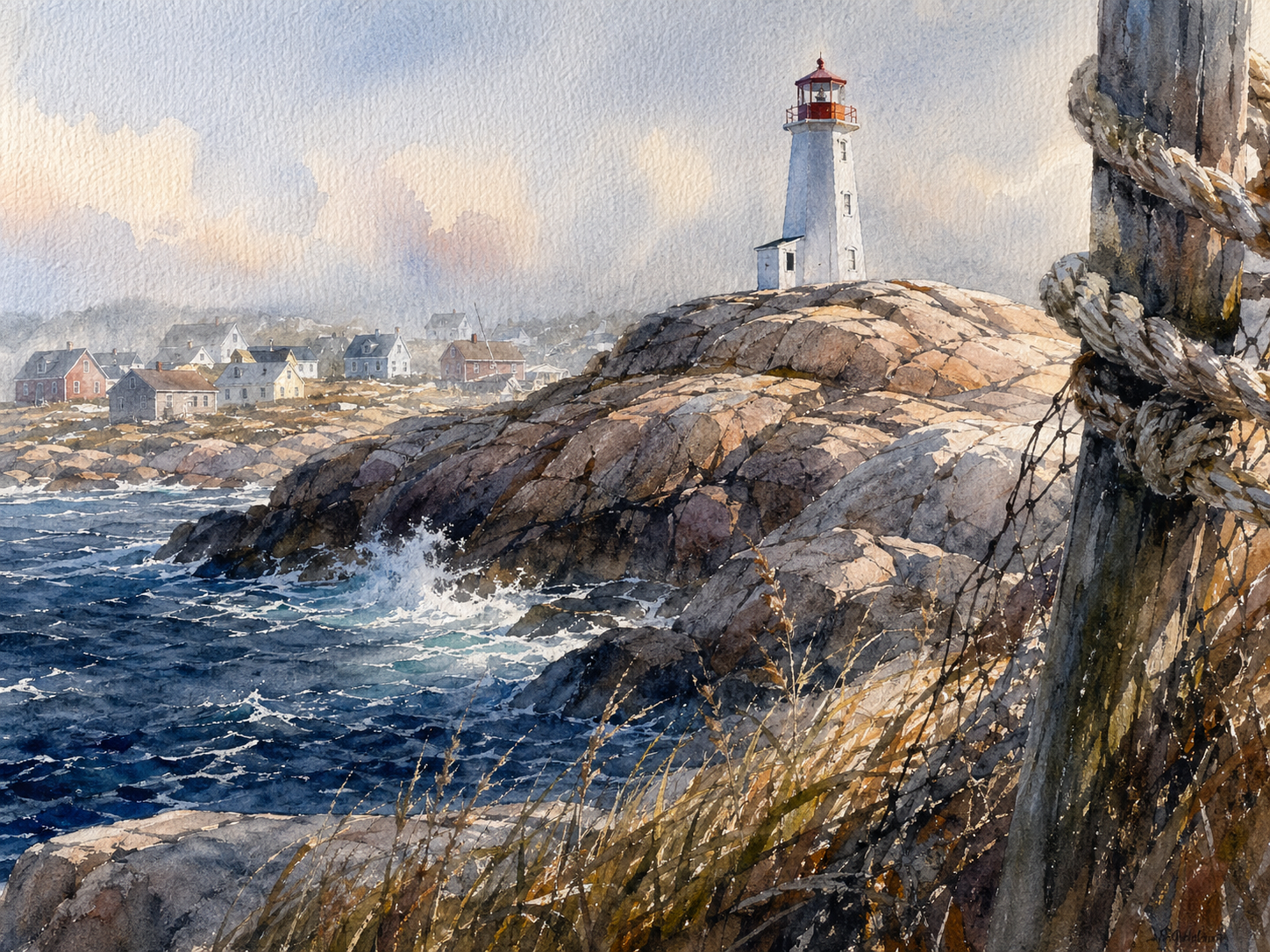
The Shore Where Time Stands Still
Critique
1. Introduction This watercolor painting depicts a serene coastal landscape dominated by a lighthouse atop a rocky bluff. The artwork utilizes a traditional representational style to capture the atmosphere of a maritime environment. Through careful observation of light and texture, the composition invites viewers into a quiet, evocative scene of sea and shore. 2. Description The focal point is a white lighthouse with a red lantern room, situated on a large, layered rock formation. Waves crash against the dark base of the rocks, creating white spray that contrasts with the deep blue water. In the mid-ground, a cluster of small houses with gabled roofs sits along the coastline under a soft, clouded sky. The foreground is framed by a vertical wooden post wrapped in thick rope, with dry grass swaying in the lower section. 3. Analysis The artist employs a diagonal composition that leads the eye from the foreground post up toward the lighthouse. Watercolor washes create a sense of atmospheric depth in the sky and distant village, while dry brush techniques highlight the rough texture of the stones. The color palette is harmoniously balanced between the cool blues of the ocean and the warm, earthy browns of the boulders. 4. Interpretation and Evaluation The work succeeds in conveying the enduring strength of the lighthouse against the constant movement of the tides. The technical execution of the watercolor medium is excellent, particularly in the handling of the transparent layers in the sea. The inclusion of the foreground post adds a sense of human presence and scale to the vast landscape. 5. Conclusion Ultimately, the painting is a refined study of the interaction between natural elements and architectural stability. The initial impression of a simple seascape evolves into an appreciation for the intricate textures and light effects throughout the work. It stands as a compelling example of classical maritime art.
Same Subcategory
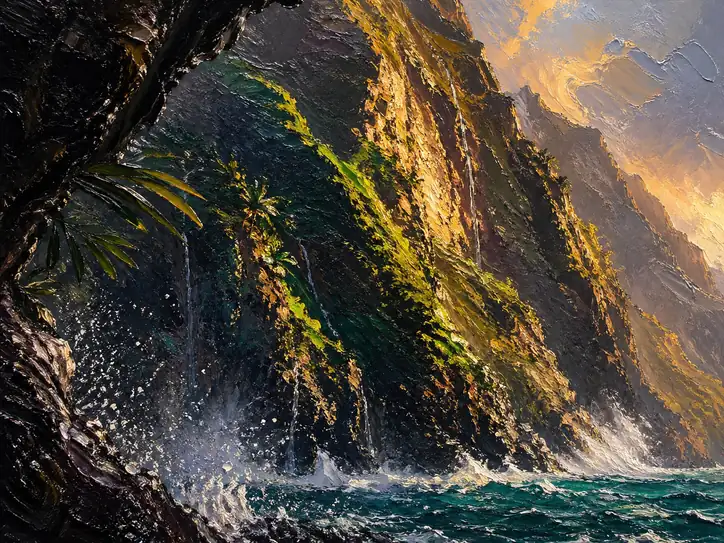 Where the Earth Meets the Infinite
Similar Artworks
 Solitary Vigil on the Edge of the World
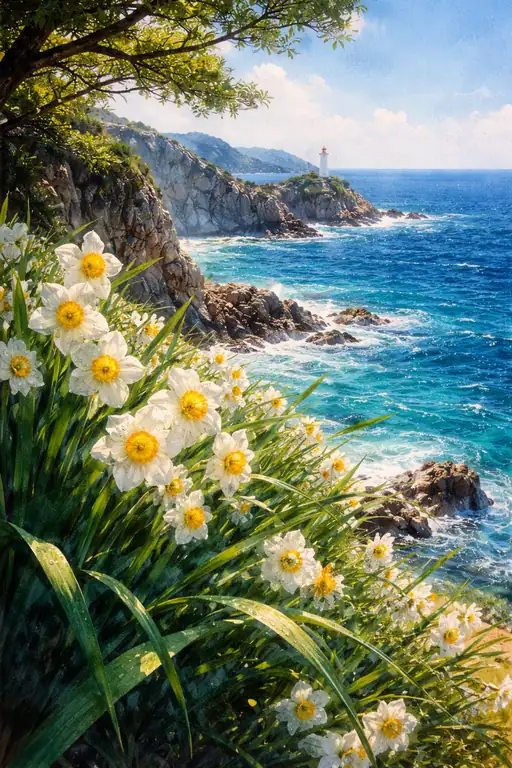 Blossoms on the Edge of Eternity
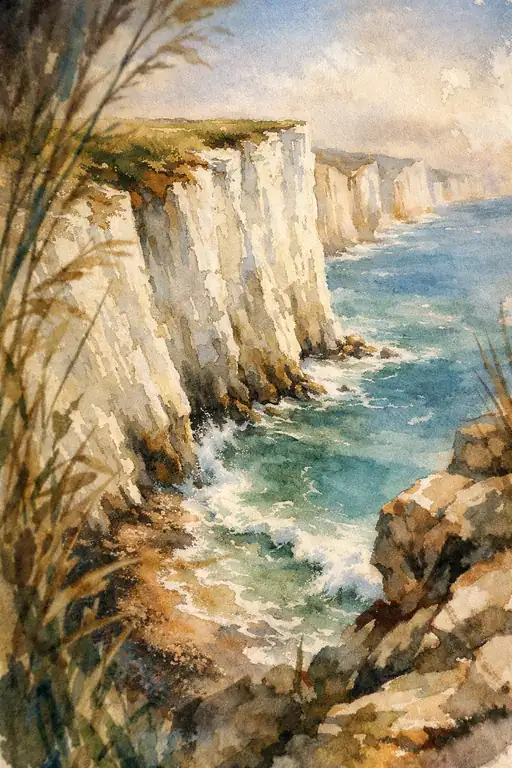 Misty Majesty of the Chalk Cliffs
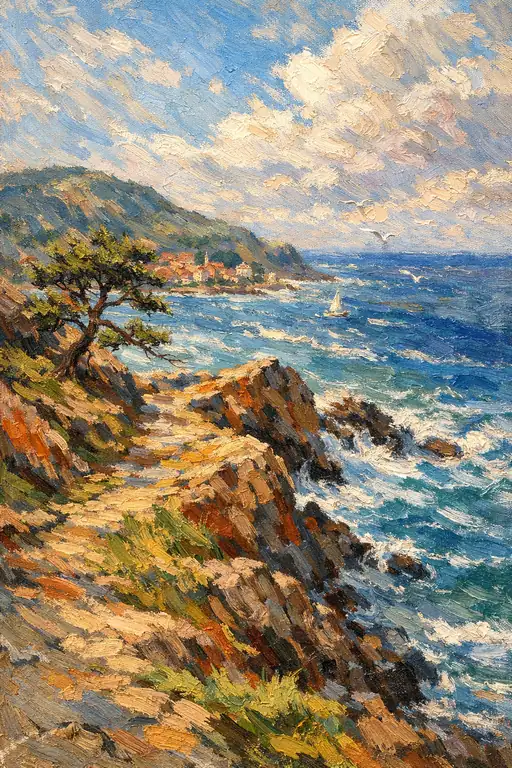 Symphony of the Restless Sea
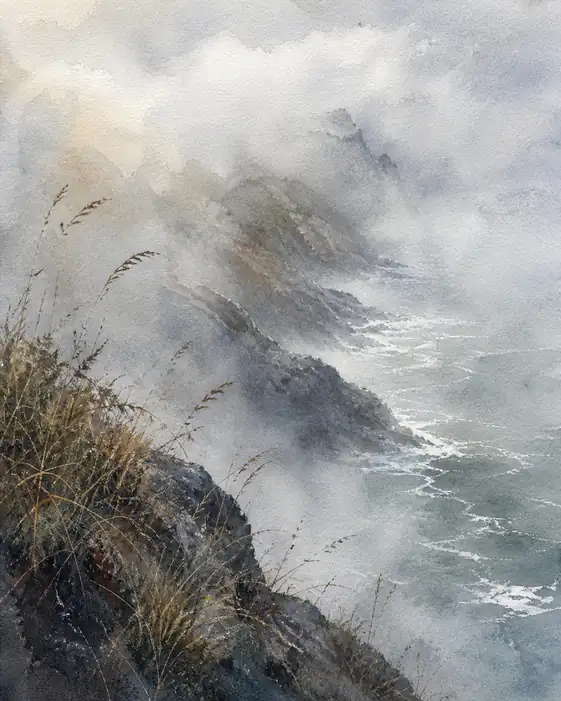 Solitude Beyond the White Veil
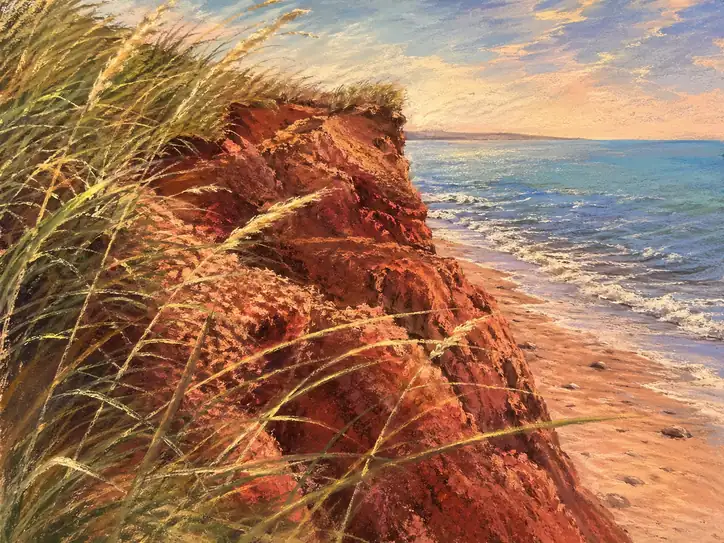 Edge of the World: The Red Earth's Song
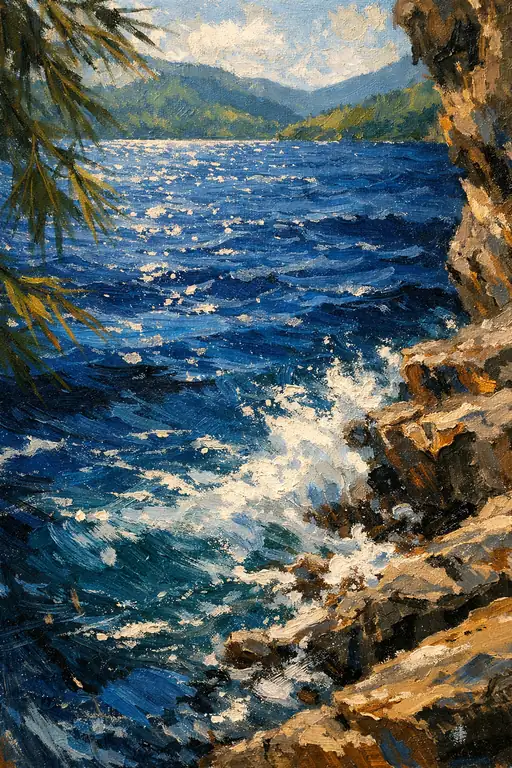 Sparkle on the Cobalt Cliffs
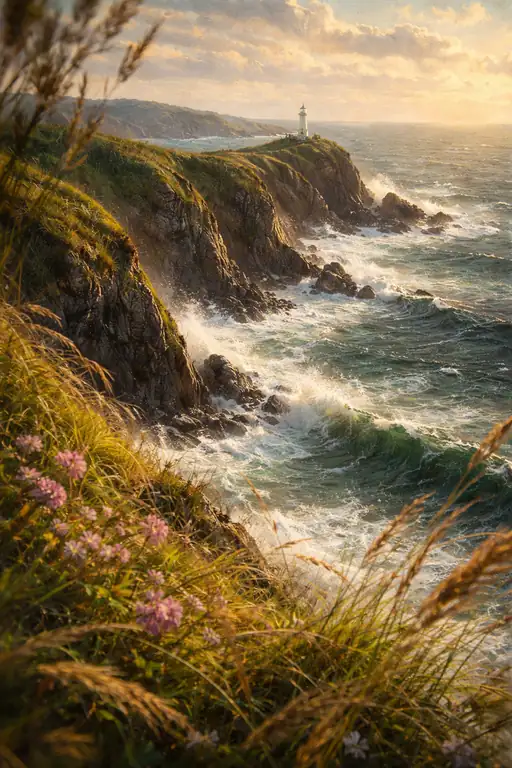 Majesty of the Restless Sea
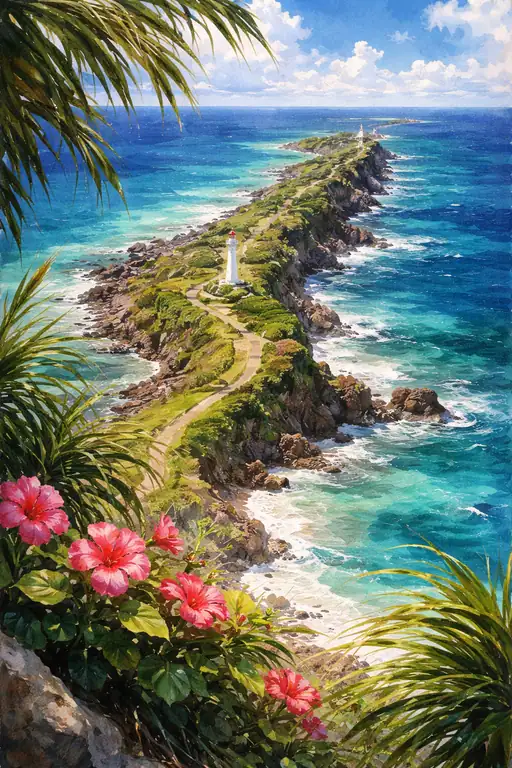 A Lighthouse Bathed in Tropical Dreams
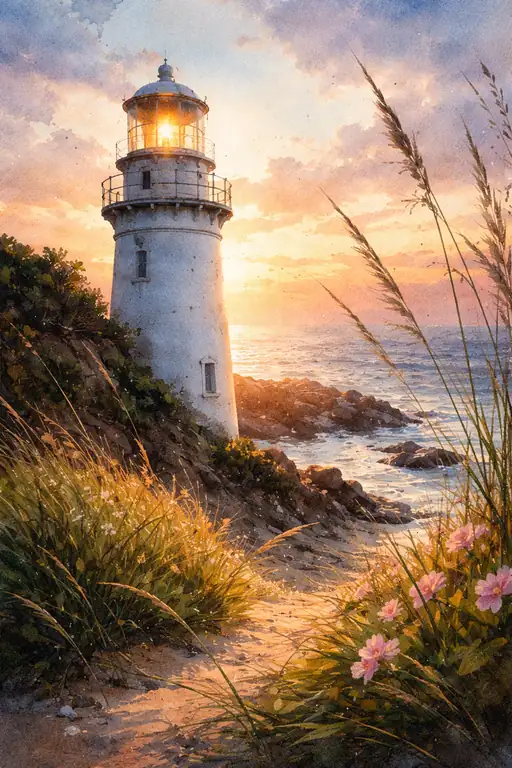 Guiding Light at the End of the World