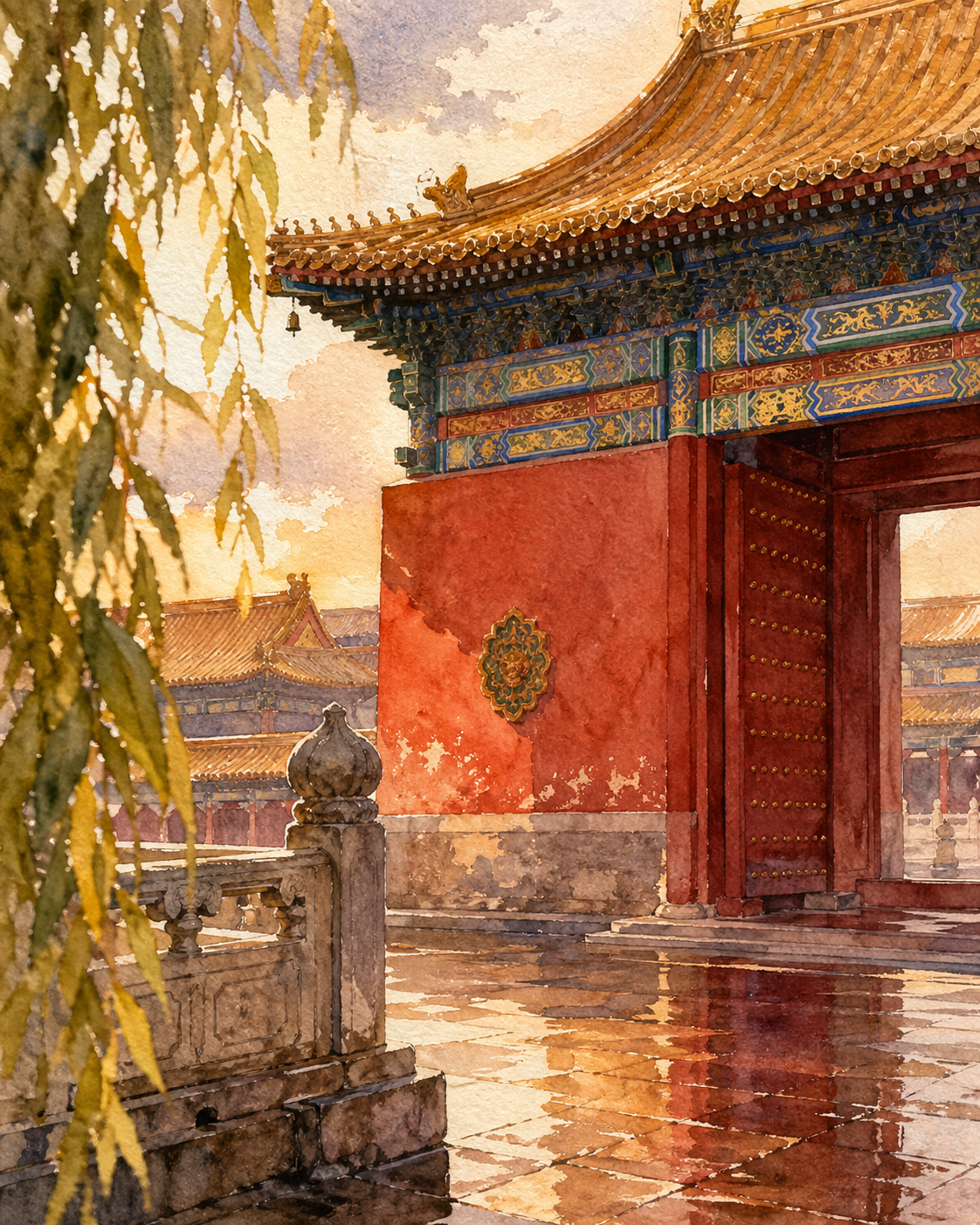
Echoes of Crimson After the Rain
Critique
1. Introduction This vertical watercolor painting captures the majestic entrance of a traditional East Asian palace, likely inspired by the architecture of the Forbidden City. The scene is set in the tranquil aftermath of a rain shower, with the low sun casting a warm, golden light across the ancient structures. The artist presents the view from behind a weeping willow, creating a sense of layered depth and quiet observation. 2. Description The focal point is a massive red gate building characterized by its intricate eaves and ornate blue and gold brackets. To the left, a carved stone balustrade stands in the foreground, partially obscured by the delicate, drooping branches of a willow tree. The ground is composed of large stone tiles that are wet and highly reflective, mirroring the deep crimson of the walls and the bright sky. In the background, additional palace roofs emerge through a soft, atmospheric haze. 3. Analysis The artist masterfully utilizes the transparent qualities of watercolor to depict the play of light on various surfaces. The use of negative space in the sky and the subtle paper texture contribute to a sense of airiness and historical age. A strong vertical and horizontal grid formed by the architecture is softened by the organic, flowing lines of the willow leaves on the left. The reflections on the wet pavement are handled with expressive washes that effectively convey the moisture and the luminosity of the environment. 4. Interpretation and Evaluation This artwork serves as a contemplative study of the intersection between human artifice and natural elements. The juxtaposition of the enduring stone and timber structures with the ephemeral willow and transient rain reflections highlights a theme of temporal harmony. Technically, the painting excels in its ability to balance intricate architectural detail with broad, atmospheric washes. The choice of a warm color palette evokes a sense of nostalgia and reverence for the cultural heritage represented by the palace. 5. Conclusion Initially, the viewer's attention is drawn to the vibrant red of the palace walls, but the subtle details of the reflections and foliage provide a deeper emotional resonance. The painting successfully conveys a moment of serene grandeur that feels both timeless and fleeting. It is a highly accomplished work that honors traditional aesthetics through a modern watercolor lens.
Same Subcategory
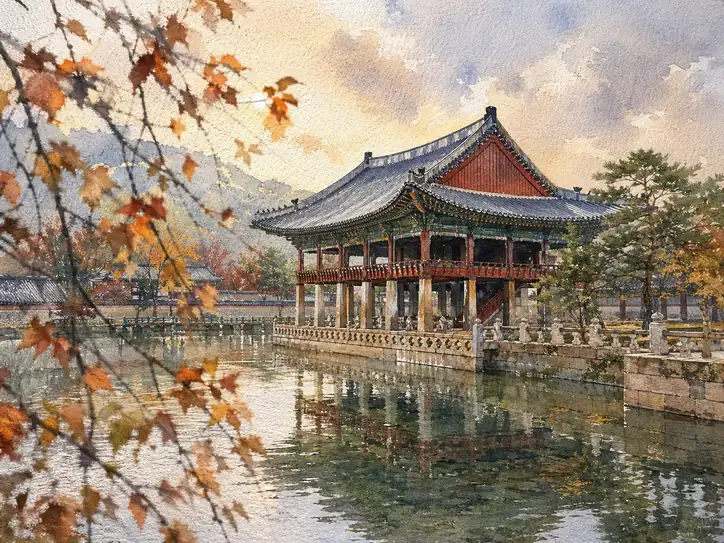 Golden Leaves, Timeless Waters
Similar Artworks
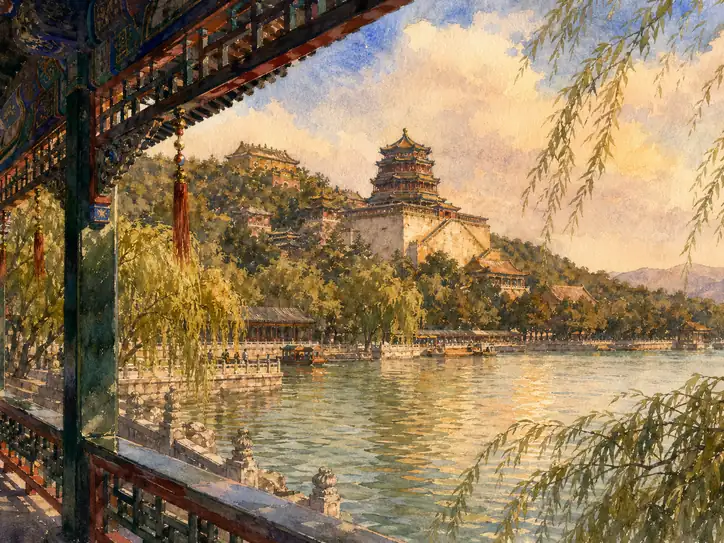 Golden Reflections of a Timeless Garden
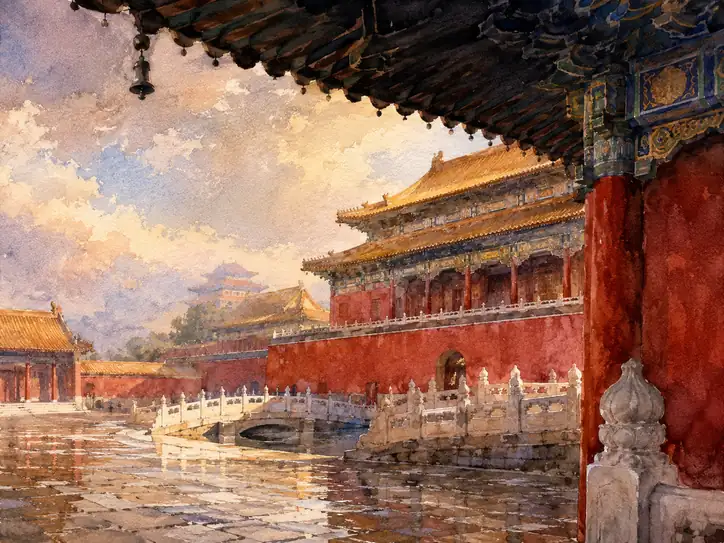 Where the Rain Whispered Gold
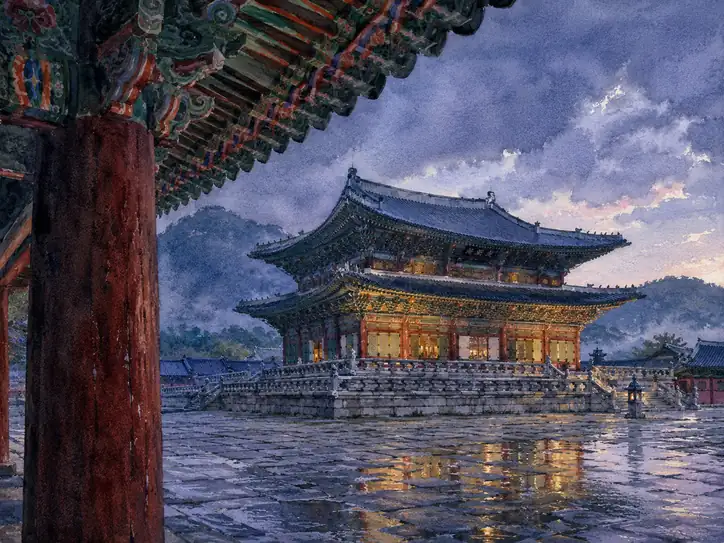 Whispers of a Thousand Years in the Rain
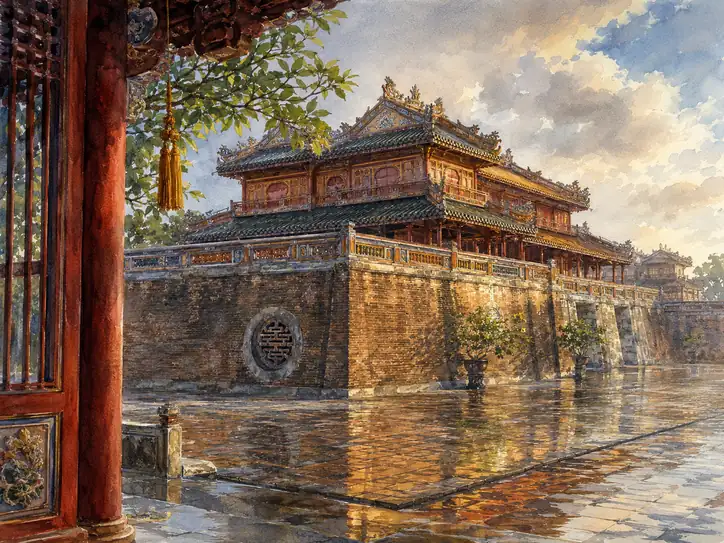 Reflections of an Imperial Dream
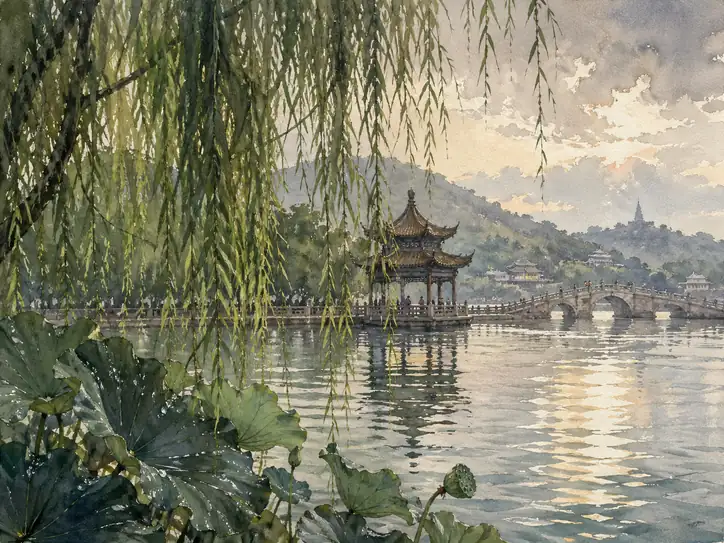 Golden Harmony at West Lake
 Whispers of the Rain-Washed Stone
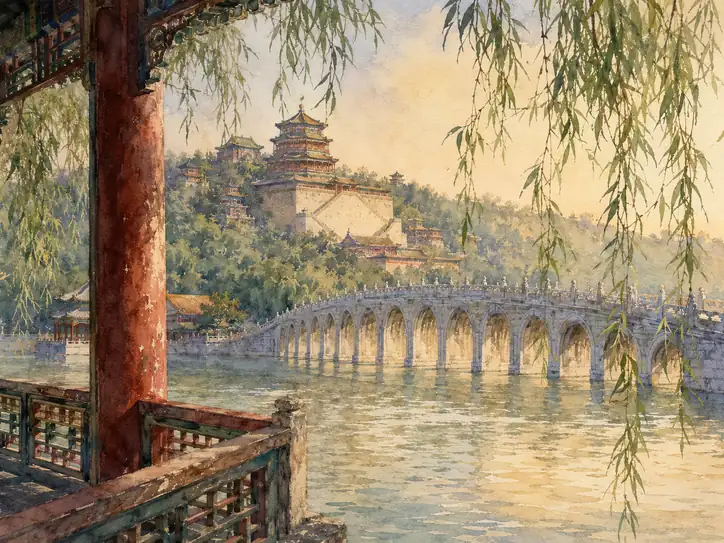 Where the Willow Whispers to the Bridge
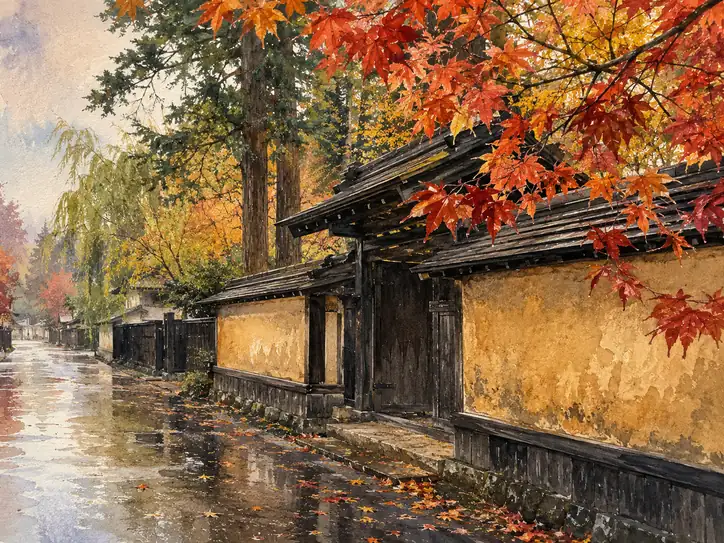 The Rain's Quiet Reflection
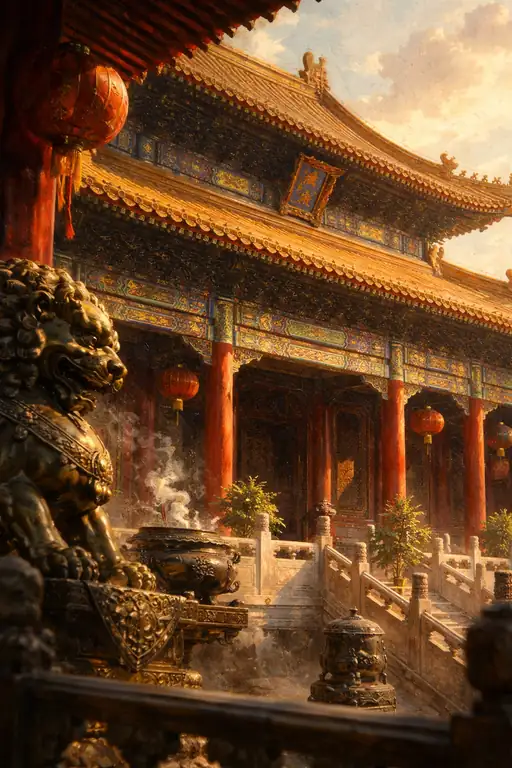 The Sentinel of the Golden Palace
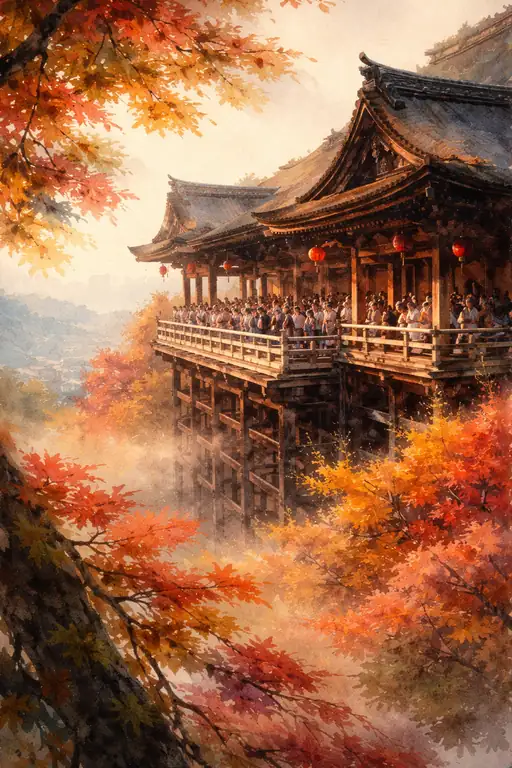 Echoes in the Autumn Mist