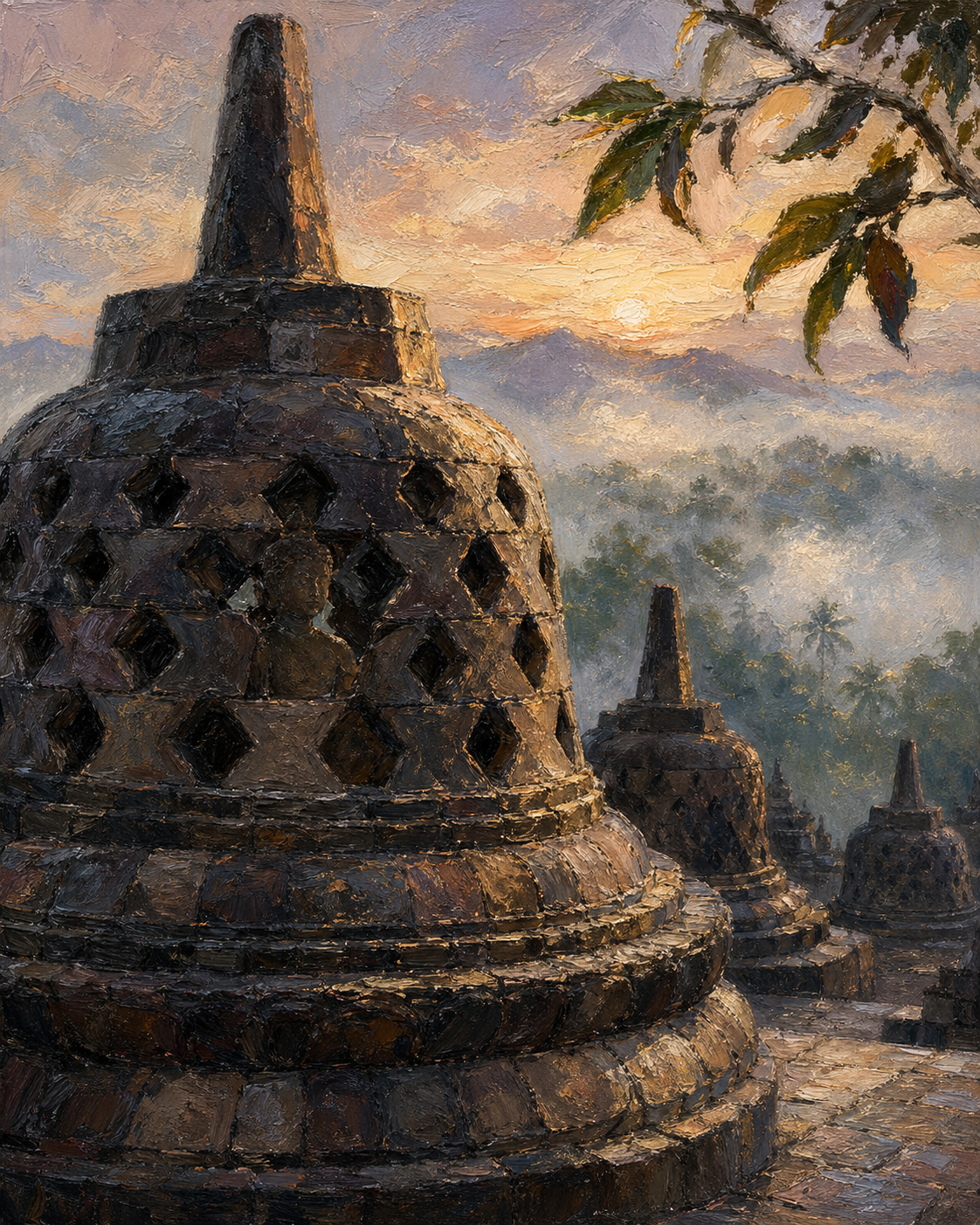
The Silent Awakening of Ancient Stone
Critique
Introduction This evocative oil painting depicts the Borobudur Temple in Central Java during the sublime moment of sunrise. Rendered in a rich, impressionistic style with heavy impasto, the artwork focuses on the spiritual and atmospheric qualities of the site. The interplay of ancient stone and morning mist creates a scene of profound tranquility, capturing the unique aura of this landmark. Description In the foreground, a large stupa dominates the frame, its weathered stone surface created through thick strokes of brown and ochre. Through the diamond-shaped perforations, the faint silhouette of a Buddha statue is visible, partially illuminated by the sun. Beyond the stone platforms, a misty valley unfolds with palm trees. The background features the golden sun emerging. Analysis The artist’s use of the impasto technique is effective in conveying the rugged texture of volcanic stone. These thick layers of paint add a physical presence to the stupas, making them appear weighted. Light is handled with sensitivity; rays filtering through the mist catch the edges of the structures, creating an atmosphere. The palette contrasts earthy tones against hazy blues. Interpretation and Evaluation This work successfully translates the spiritual essence of Borobudur into a visual experience. Including the obscured Buddha adds a layer of mystery, echoing Buddhist concepts of hidden wisdom. Technically, the painting balances heavy materiality with the transient quality of mist and light. It is a powerful observation of man-made monuments existing in harmony with the natural environment. Conclusion The painting is a masterful tribute to the majesty of Borobudur. The initial impression of the monumental structures is enhanced by the beauty of the morning light and the surrounding landscape. The artist’s bold use of texture ensures that the work is a poetic meditation on history and spirituality. It captures the quiet, awe-inspiring energy of a sacred site.
Same Subcategory
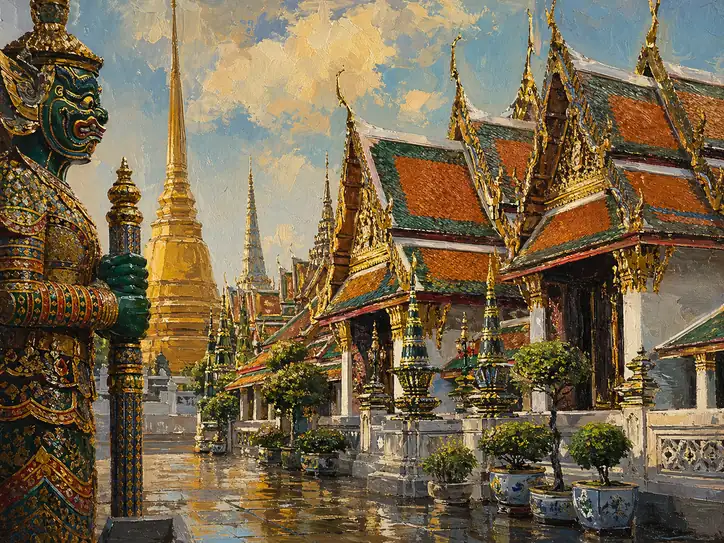 Guardian of the Golden Soul
Similar Artworks
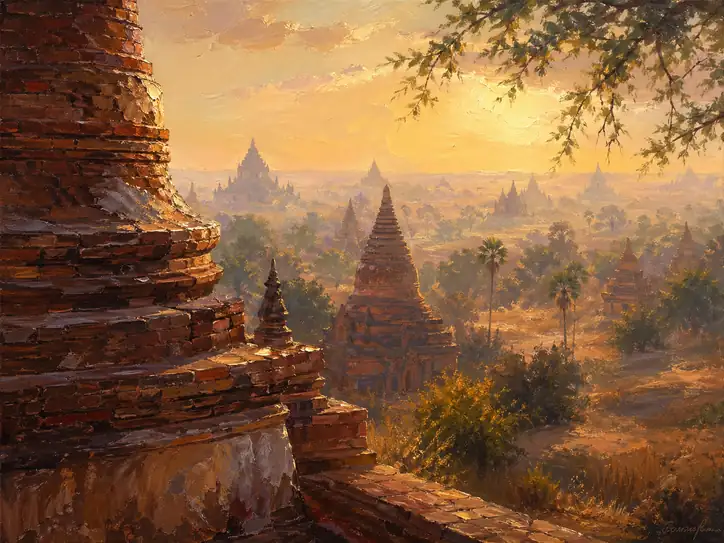 Silence of the Thousand Pagodas in the Golden Mist
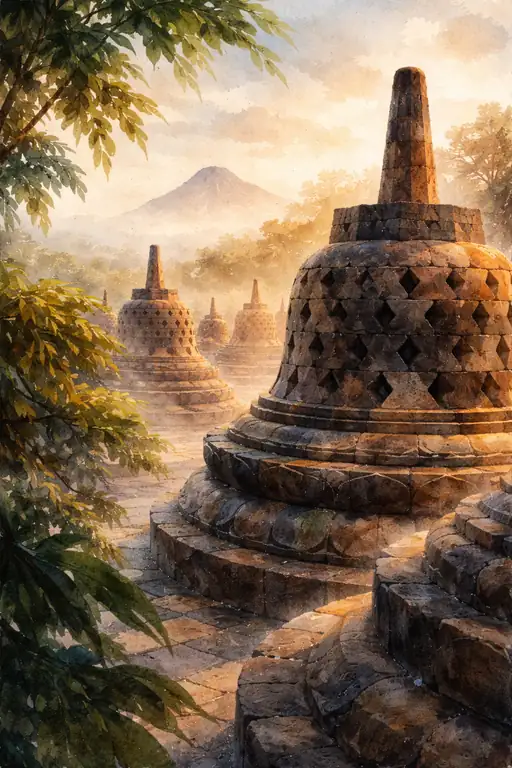 Whispers Through the Morning Veil
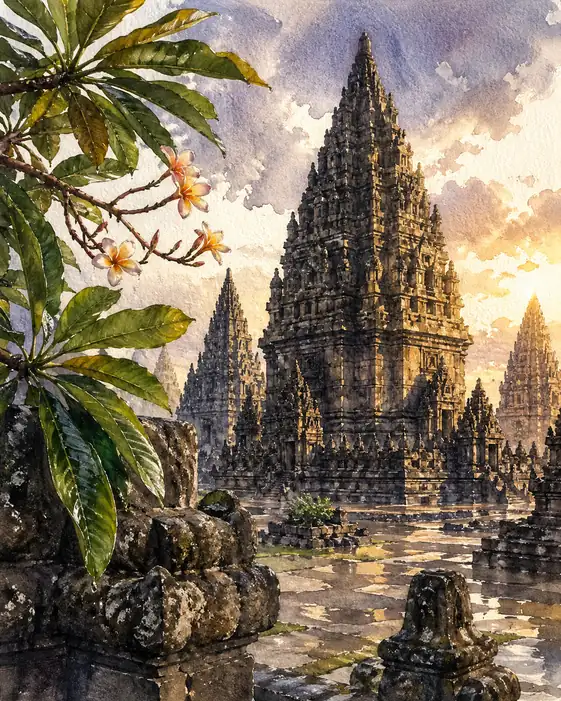 Divine Reflections: Sunset Over the Sacred Spires
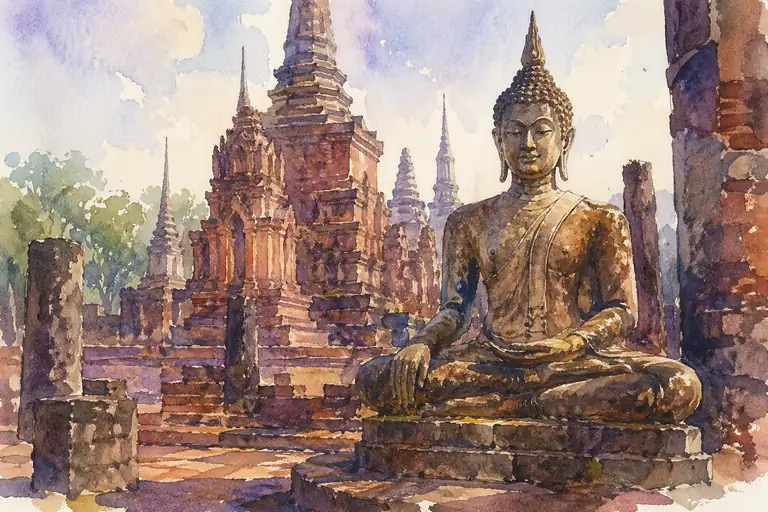 Stillness Across the Ages
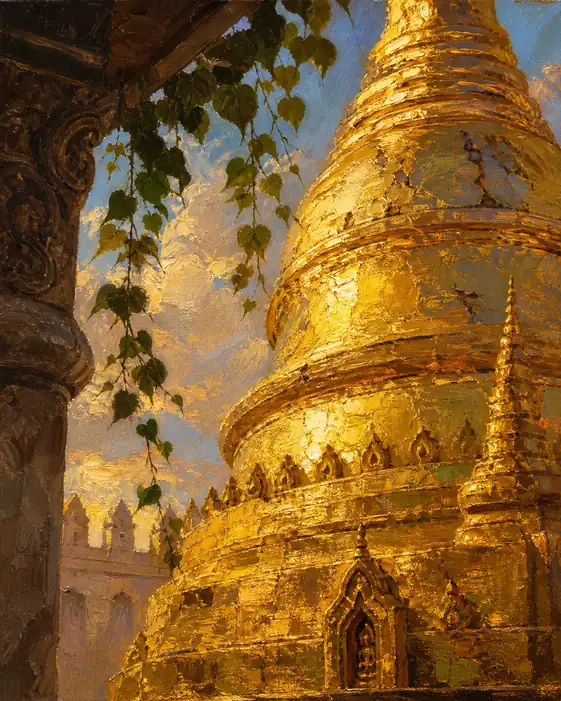 Golden Echoes of Devotion
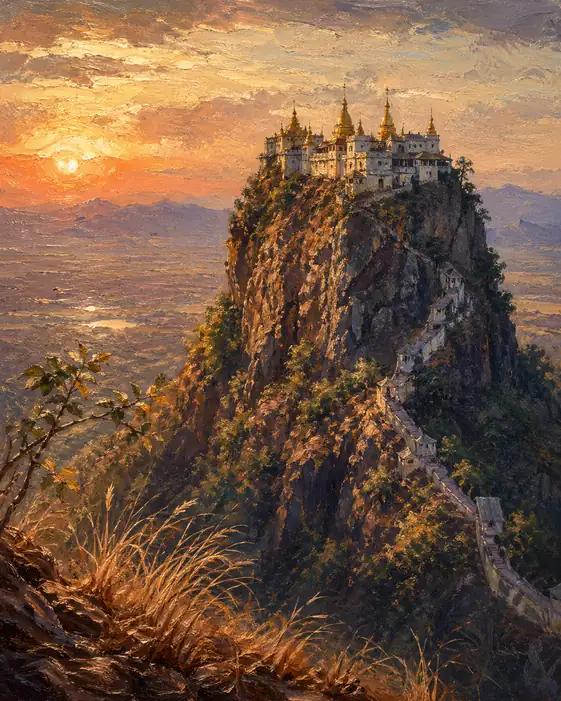 Where Silence Touches the Sky
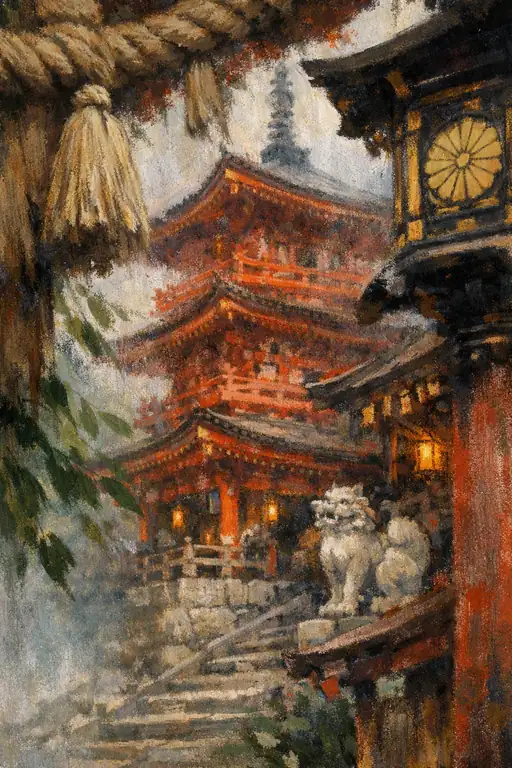 Vermilion Reverence
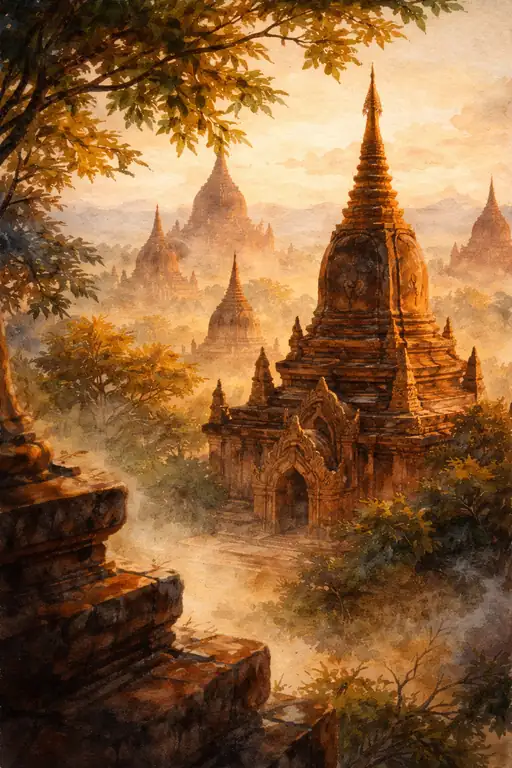 Golden Echoes of Bagan's Heritage
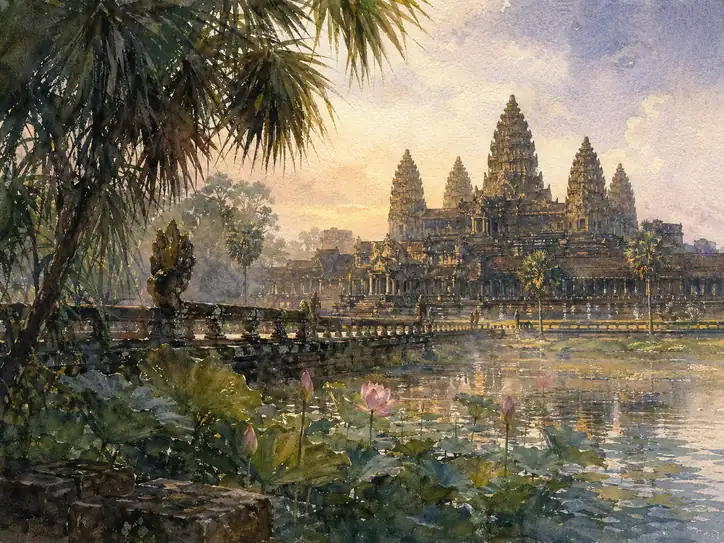 Sacred Reflection: Morning Serenity at Angkor Wat
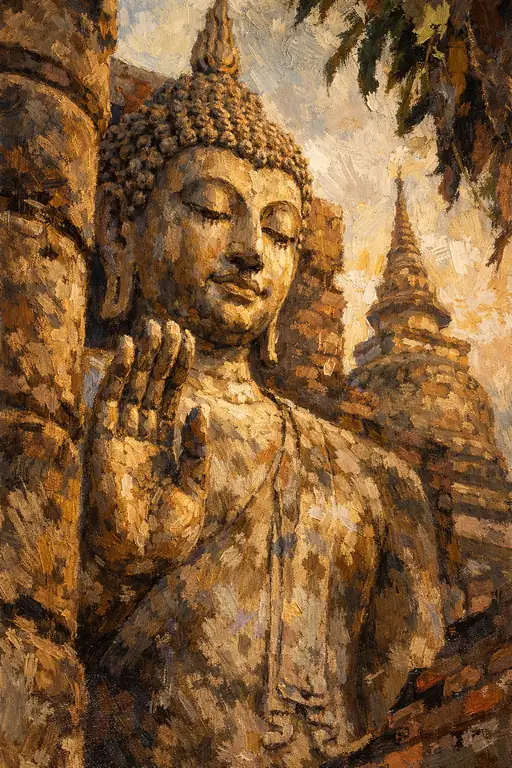 The Serene Gaze of Ancient Enlightenment