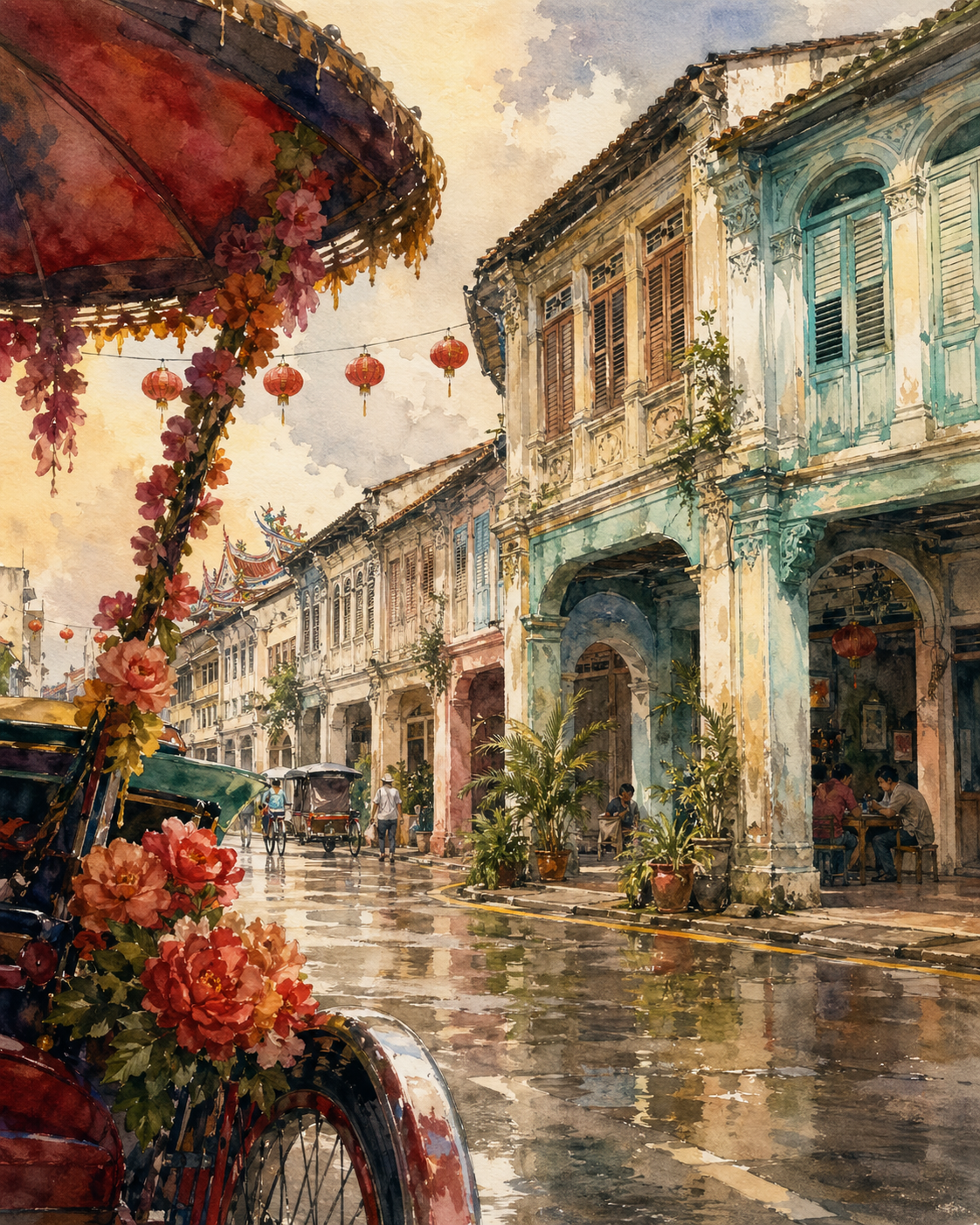
The Red Parasol's Silent Invitation
Critique
1. Introduction This watercolor painting depicts a nostalgic street scene in a historic Southeast Asian neighborhood, capturing the atmospheric glow after rainfall. The artwork blends traditional cultural elements with the quiet charm of urban life. The composition is grounded by a decorated trishaw in the foreground, leading toward colonial-era shophouses. 2. Description A trishaw adorned with flowers adds organic color in the lower left. A red parasol shades the frame, echoing red lanterns strung across the street. The road surface is wet, reflecting sunlight and the muted colors of the buildings. Shophouses with wooden shutters line the right side, where people dine. 3. Analysis The artist uses fluid watercolor washes to achieve the luminous quality of the wet pavement and soft sky. There is a contrast between the saturated reds of the lanterns and the weathered teals of the architecture. Perspective is effective, with the diagonal street creating depth. The blurred details enhance the impressionistic quality. 4. Interpretation and Evaluation This work evokes nostalgia and cultural pride by highlighting architectural heritage. The choice of watercolor suits the subject, as its transparency mimics the shifting light of a tropical afternoon. The trishaw serves as a reminder of the past intersecting with the present. The piece is successful in its atmospheric execution. 5. Conclusion The painting offers a serene portal into a world where history and modernity coexist. The focus on the trishaw expands to the wider community, reflecting the multifaceted nature of heritage. Interplay of warm and cool tones creates an enduring image of tranquility. This artwork stands as a testament to traditional landscapes.
Same Subcategory
 Morning Song in the Pink Alleyway
Similar Artworks
 A Nostalgic Journey Through the Arch
 Gilded Pathways Under Arches
 Memories Reflected on Wet Cobblestones
 Echoes of Time on the Golden Pavement
 Reflections of Bygone Days
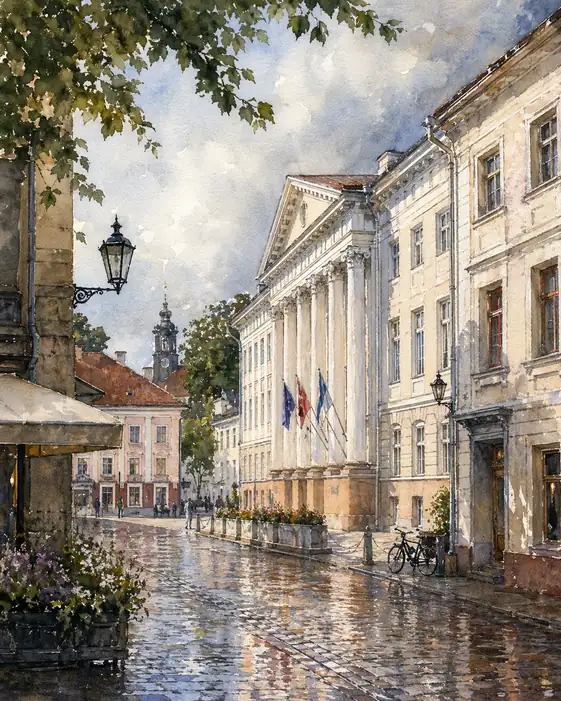 Echoes on the Wet Pavement
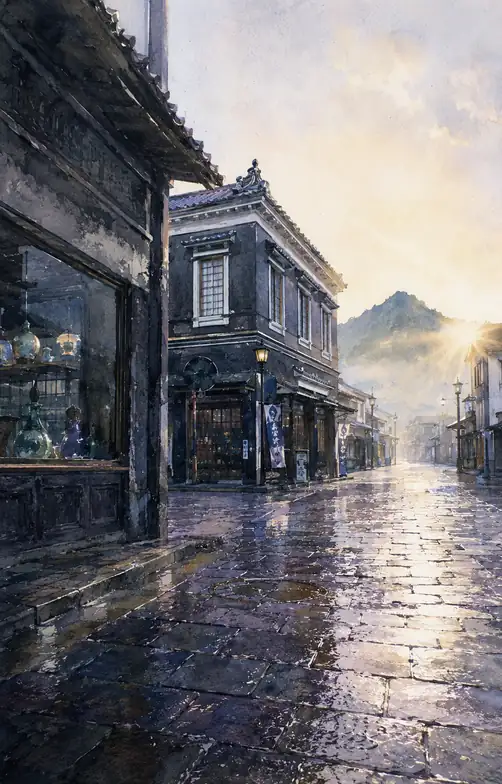 Morning Polishes the Old Town
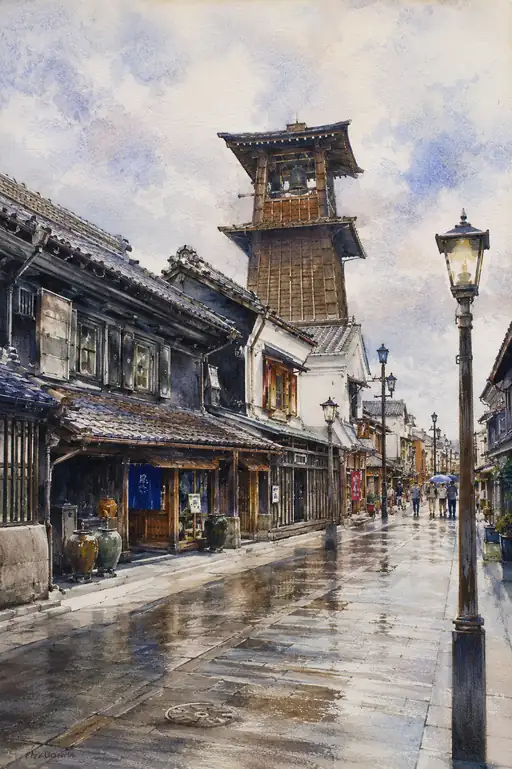 Echoes of Time on Wet Cobblestones
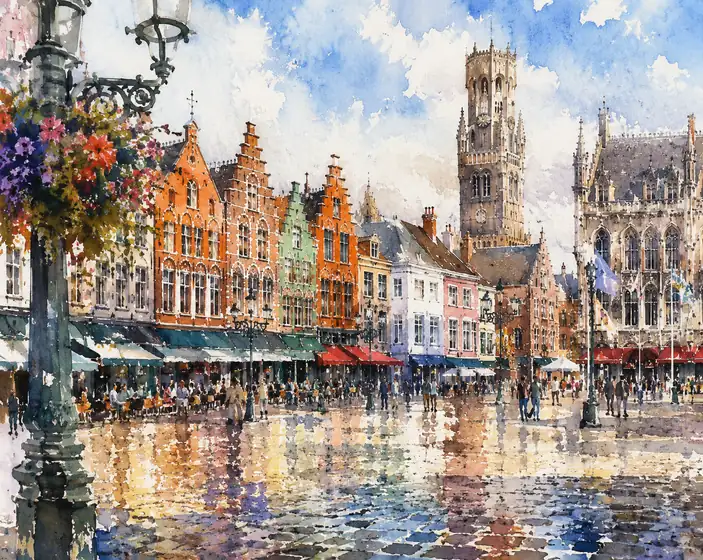 After the Rain, a Canvas of Light
 The Day the Rain Left the Sky