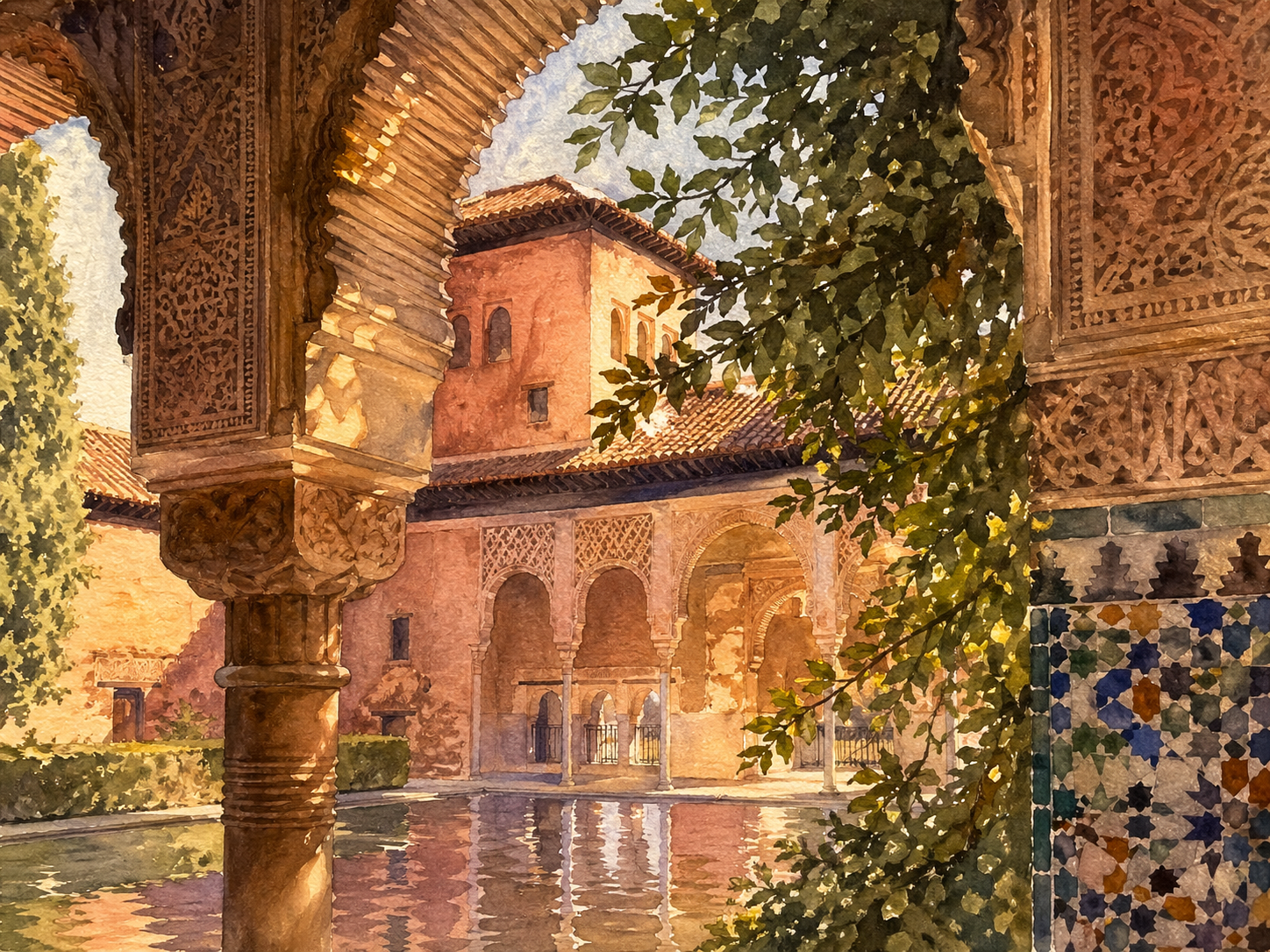
Whispers of the Alhambra Pool
Critique
1. Introduction This watercolor painting captures the breathtaking courtyard of the Alhambra Palace, located in Granada, Spain. The translucent qualities of the medium beautifully convey the serene light and peaceful atmosphere of Islamic architecture. The artist renders the historical details precisely while introducing natural elements to create a living space. Viewers are invited to experience the exotic beauty and history of this palace. 2. Description A heavily carved arch and thick column on the left frame the entire scene, acting as a visual gateway. Beyond them, a tranquil pool reflects the terracotta-colored palace on the far side like a perfect mirror. On the right, geometric mosaic tiles and intricate arabesque patterns are meticulously detailed. Lush green leaves cascade from the upper right, adding a vibrant natural touch. 3. Analysis The composition utilizes a framing effect through the foreground arch, guiding the viewer's eye toward the inner courtyard. Watercolor washes and soft blending techniques effectively distinguish the hard stone surfaces from the fluid quality of the water. The warm terracotta tones contrast harmoniously with the cool blues of the tiles and the greens of the foliage. 4. Interpretation and Evaluation This artwork transcends simple documentation, illustrating a drama of light, shadow, and water. The reflection in the pool blurs the line between reality and illusion, echoing the Islamic concept of an earthly paradise. Combining detailed decorative patterns with the fluid nature of watercolor demonstrates exceptional originality. The thoughtful composition instills a deep sense of calm. 5. Conclusion While the magnificent architecture initially captivates, extended viewing reveals the sophisticated techniques employed in the smaller details. The understanding shifts from superficial aesthetic appreciation to recognizing the profound tranquility of the space. The painting successfully immortalizes a harmonious moment where history and nature converge. It stands as a modern testament to classical landscape subjects.
Same Subcategory
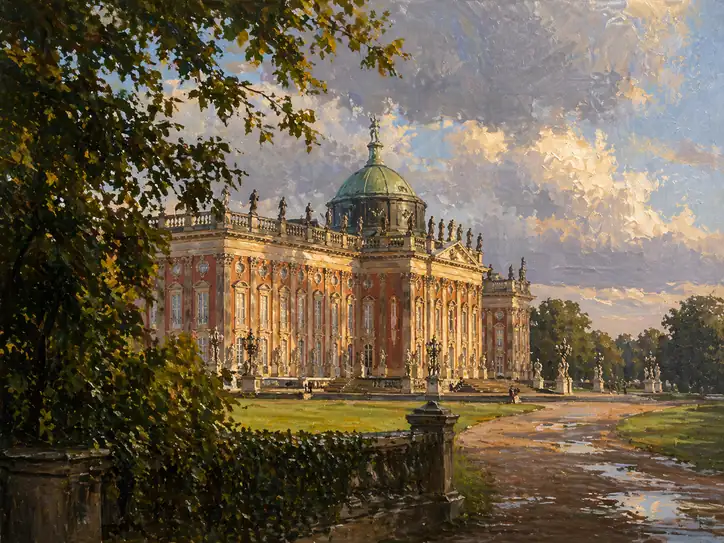 Sublime Pillars of the Misty Dawn
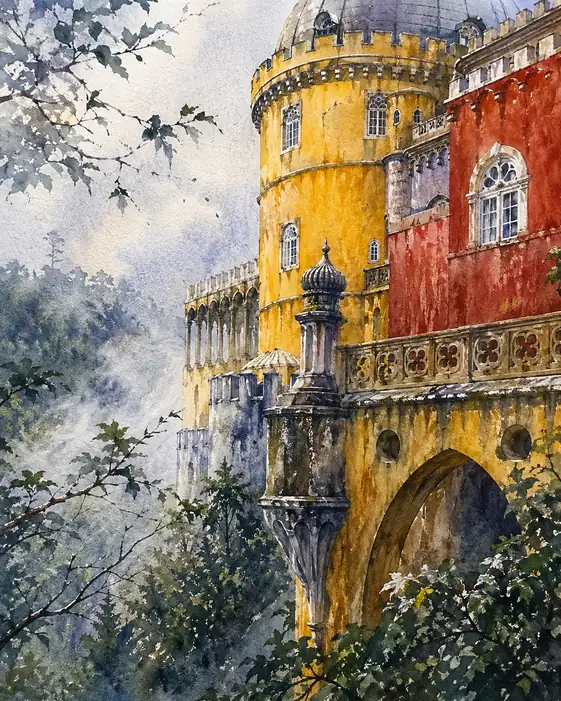 The Crimson and Gold Dream in the Mist
Similar Artworks
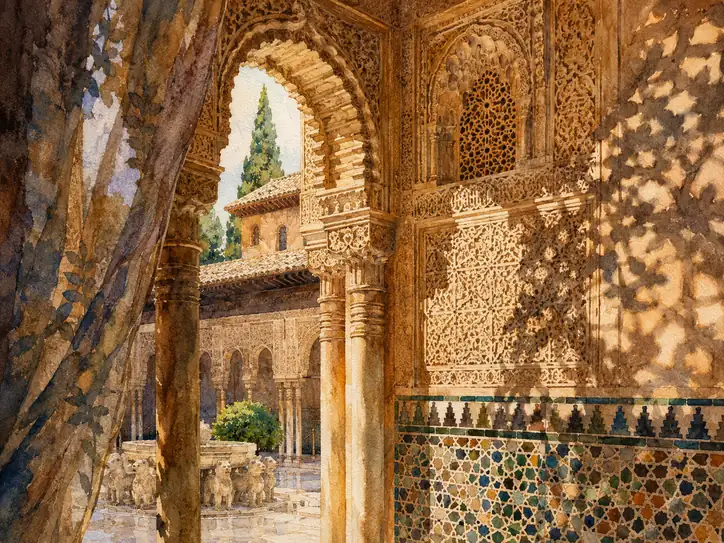 The Light That Carves Eternity
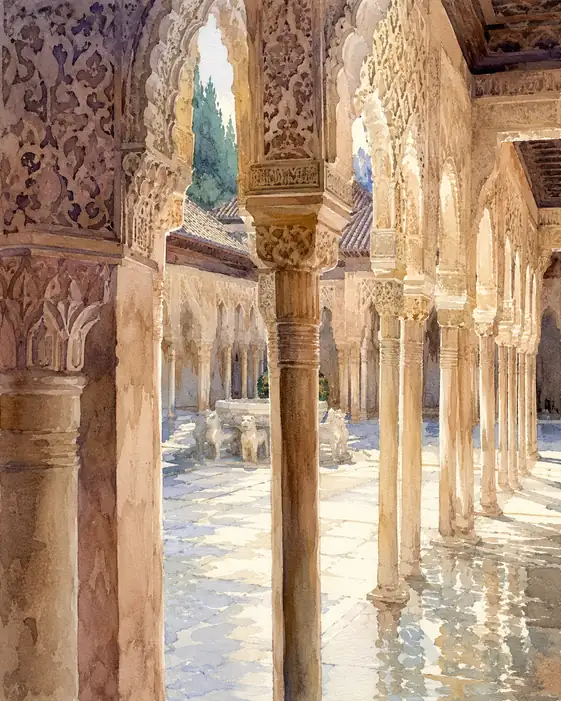 The Colonnade Woven by Light and Shadow
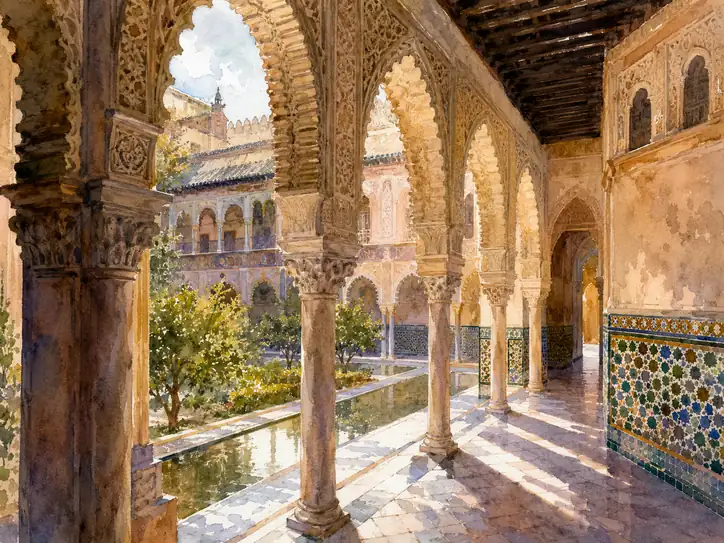 The Garden Poem of Light and Shadow
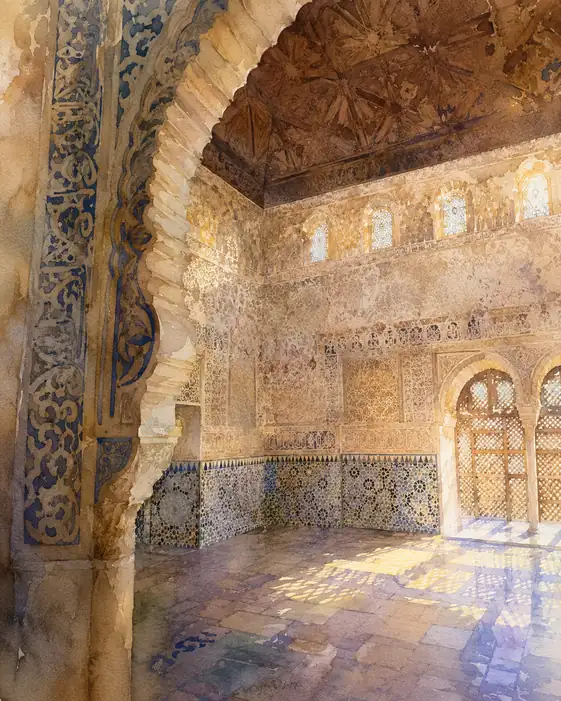 Silence Filtering through the Lattice
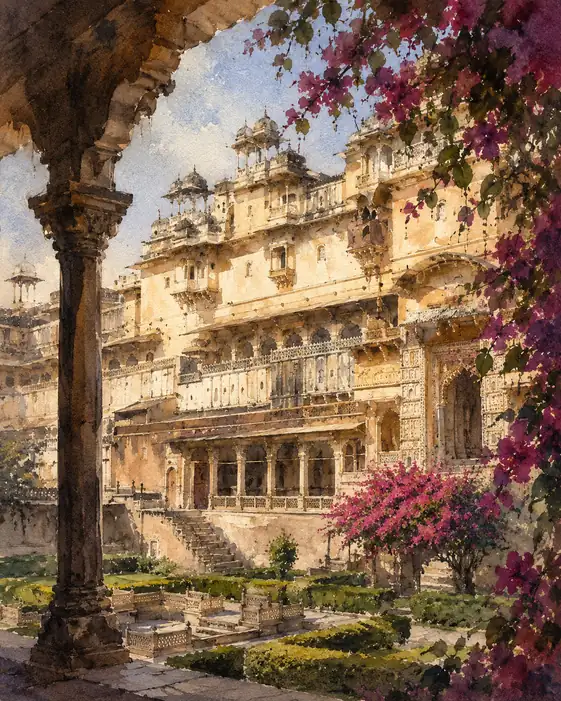 Echoes of a Royal Spring
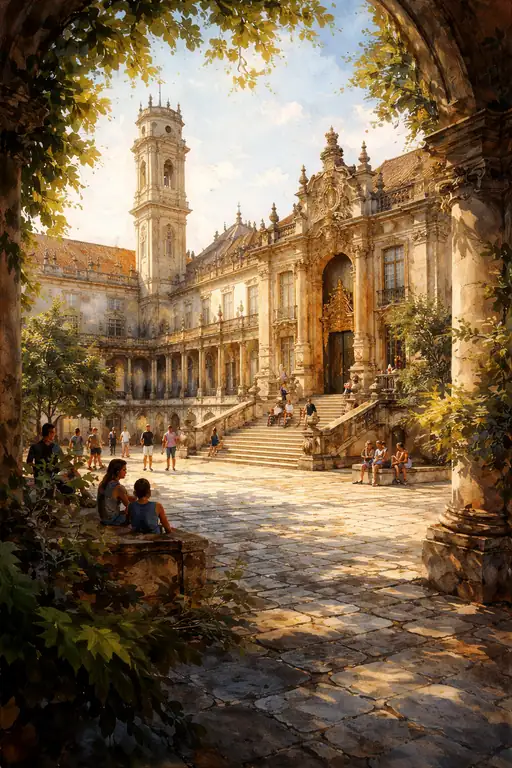 A Gathering of Souls in the Sun's Embrace
 Otium in the Marble Court
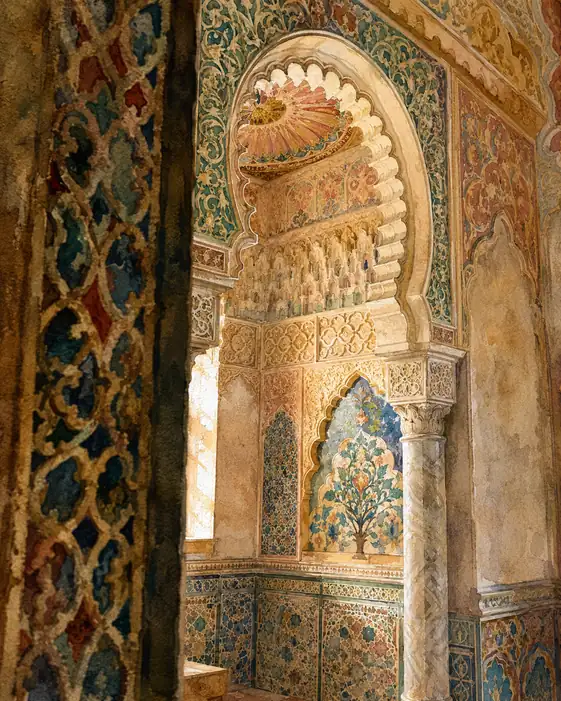 Whispers of the Arabesque
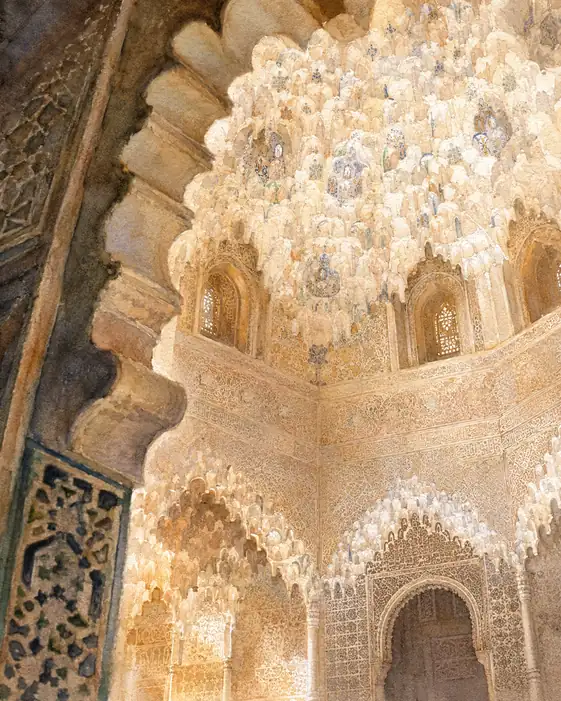 The Sacred Canopy of Light
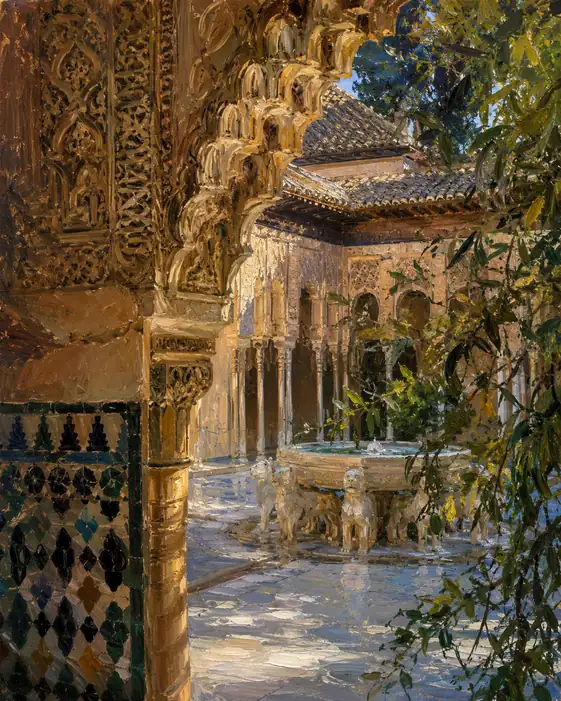 Carved in Golden Light