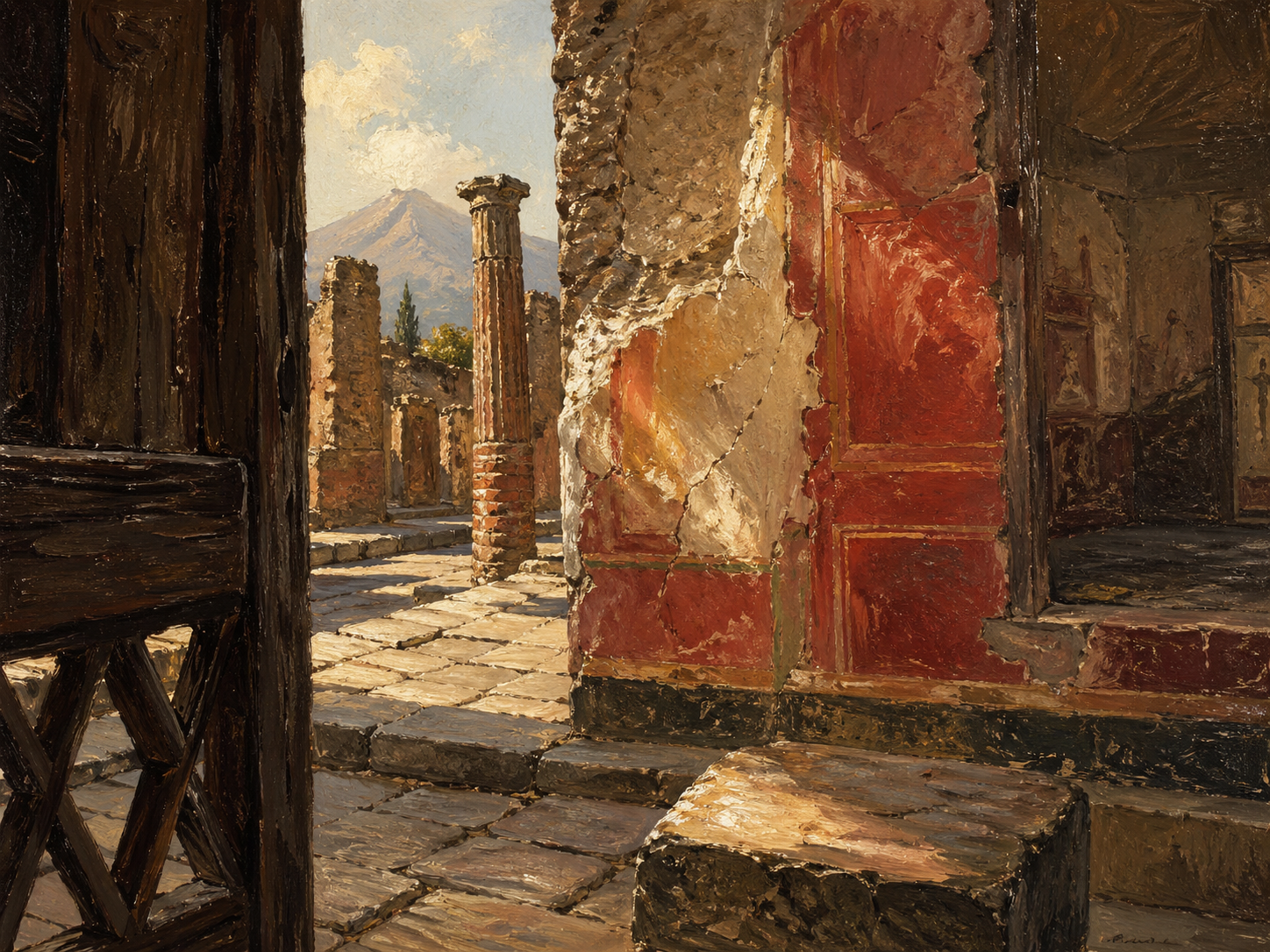
Threshold to a Vanished Sun
Critique
1. Introduction This oil painting captures a sun-drenched view of ancient ruins, reminiscent of the historical sites of Pompeii. Through the weathered frame of a wooden doorway, the viewer is invited into a silent dialogue with the past, where architecture and nature coexist in a state of poignant decay. The scene balances a sense of historical weight with the fleeting beauty of a clear, bright day. 2. Description In the foreground, a dark, sturdy wooden structure frames the left side of the composition, creating a strong sense of depth. To the right, a crumbling wall painted in a vibrant Roman red dominates the middle ground, its cracked plaster revealing the underlying masonry. Beyond the doorway, a stone-paved path leads the eye past a solitary Corinthian column toward a distant mountain peak under a soft blue sky dotted with cumulus clouds. 3. Analysis The composition utilizes a strong linear perspective, guided by the stone pavers and the vertical lines of the architecture. The contrast between the cool, dark tones of the wooden frame and the warm, intense sunlight hitting the red wall creates a dramatic chiaroscuro effect. The brushwork is thick and textured, particularly visible in the impasto application on the stone surfaces, which enhances the tactile quality of the ruins. 4. Interpretation and Evaluation This artwork effectively conveys the passage of time and the enduring spirit of human creation. The juxtaposition of the sturdy but ruined structures against the timeless mountain suggests the transience of civilization compared to the permanence of nature. The artist's skillful handling of light and shadow breathes life into the silent stones, transforming a simple landscape into a profound meditation on history. 5. Conclusion Ultimately, the painting succeeds in bridging the gap between the present observer and the distant past. The initial impression of a bright, scenic view gives way to a deeper understanding of the melancholic beauty inherent in ruins. It stands as a testament to the power of landscape painting to evoke both aesthetic pleasure and philosophical reflection.
Same Subcategory
Similar Artworks
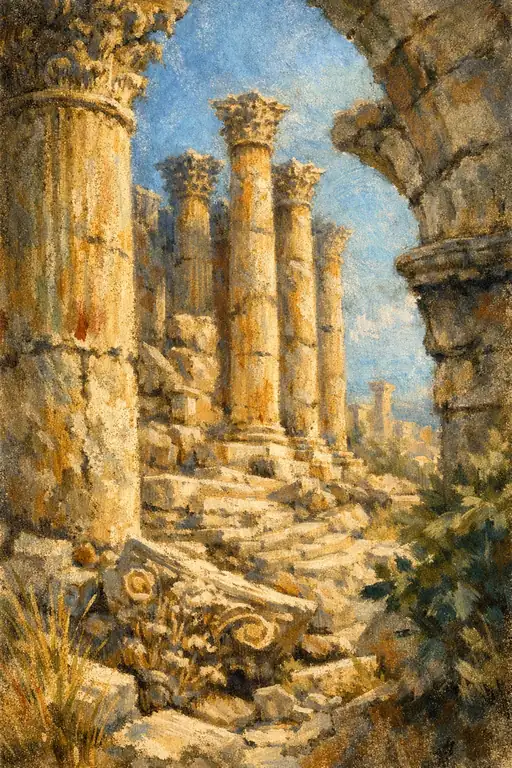 Timeless Grandeur: Weathered Corinthian Columns
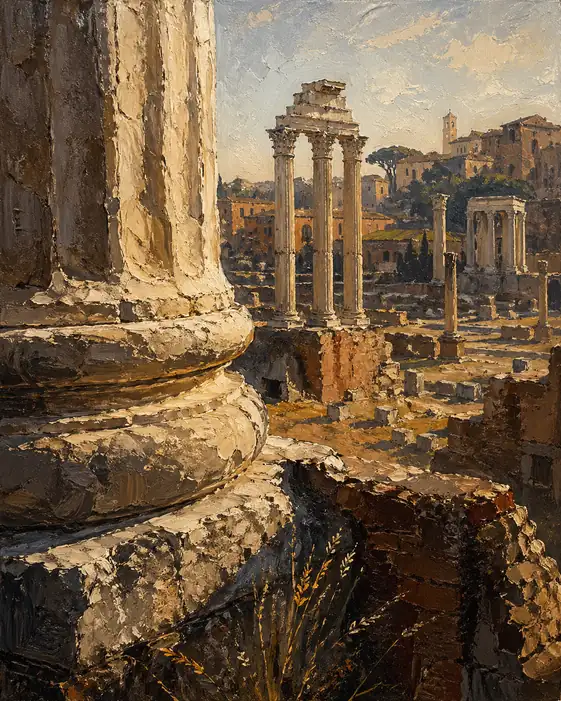 Whispers of the Gilded Forum
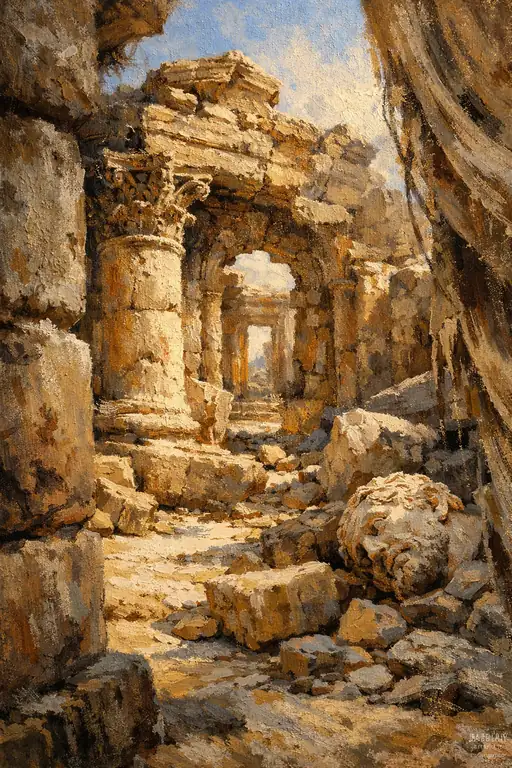 Echoes in Stone: The Sunlit Majesty of Forgotten Arches
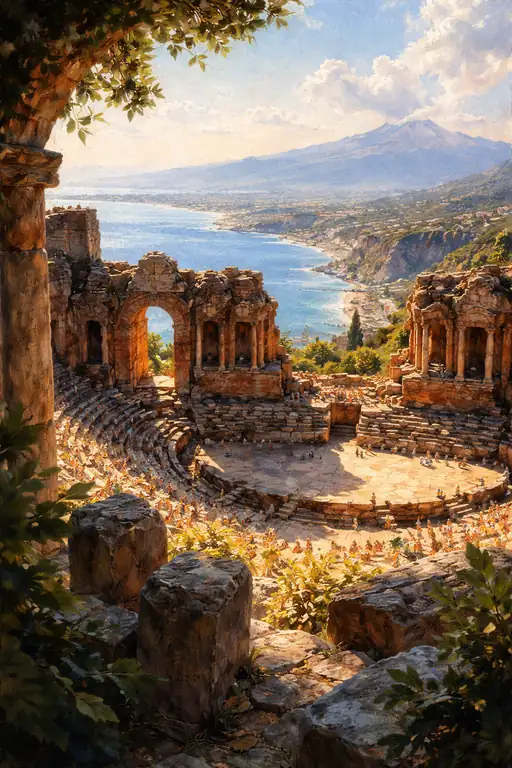 The Ancient Stage's Whisper: A Timeless Romance Overlooking the Sea
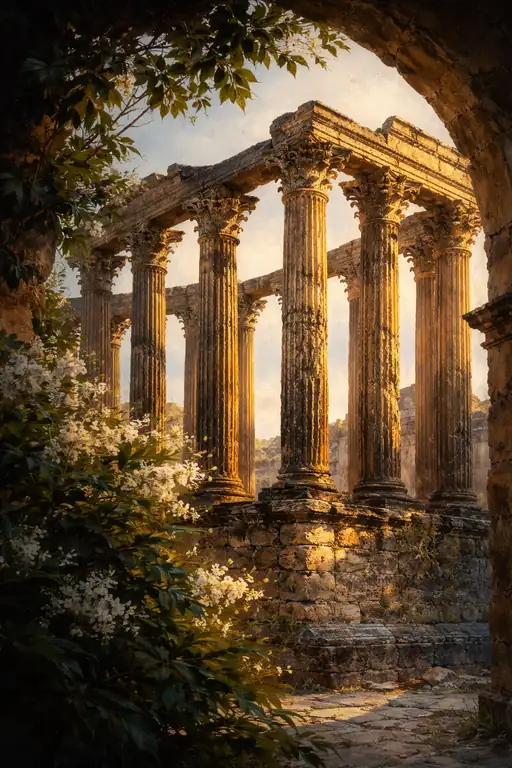 Echoes of Antiquity
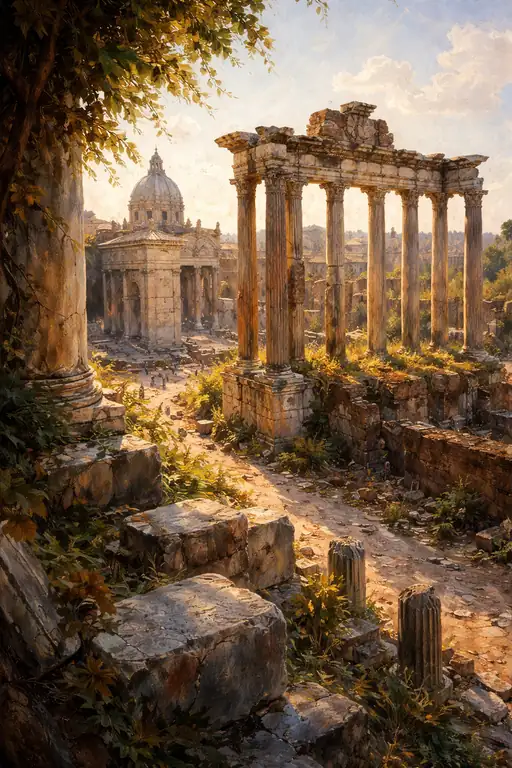 Whispers of the Eternal City's Dawn
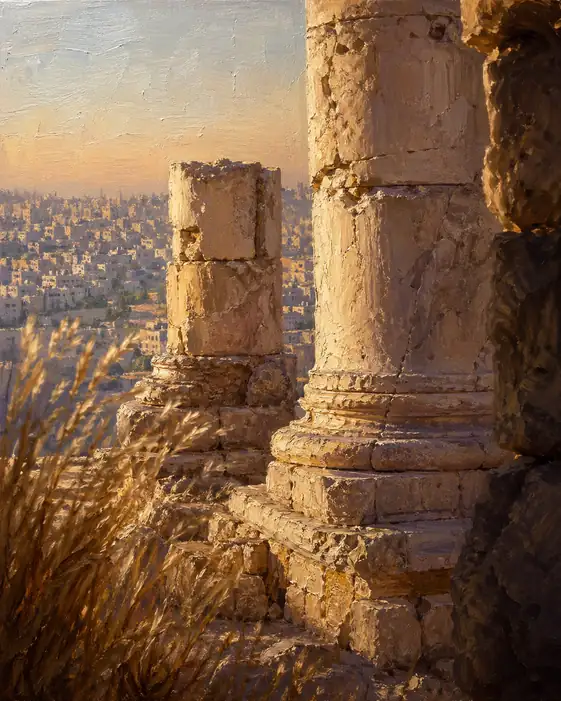 Amman's Golden Memory
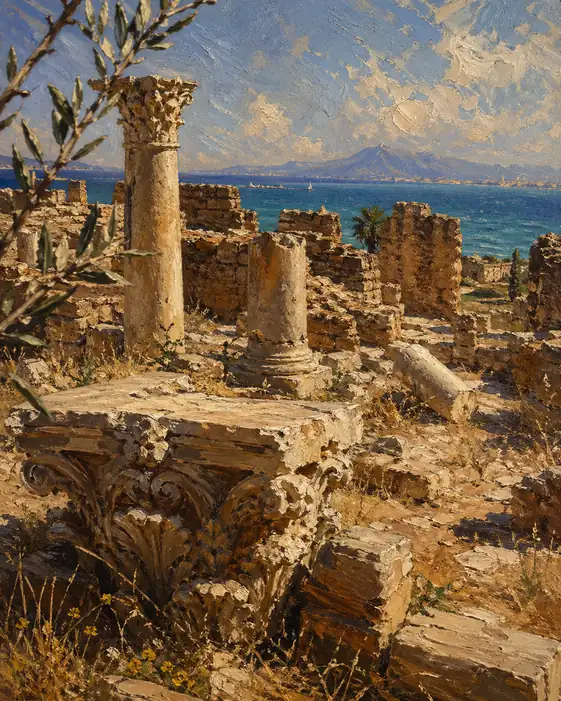 Echoes of Eternity: Where Stone and Sea Unfold
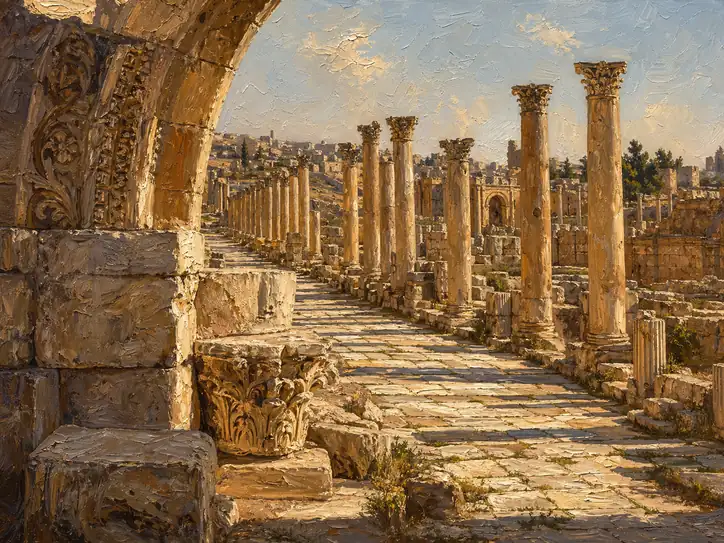 Echoes of the Corinthian Path
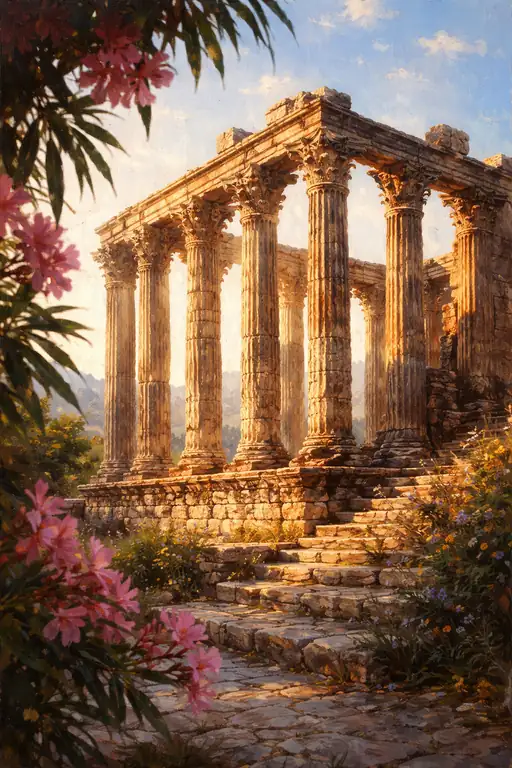 Pillars of Antiquity Awash in Gold