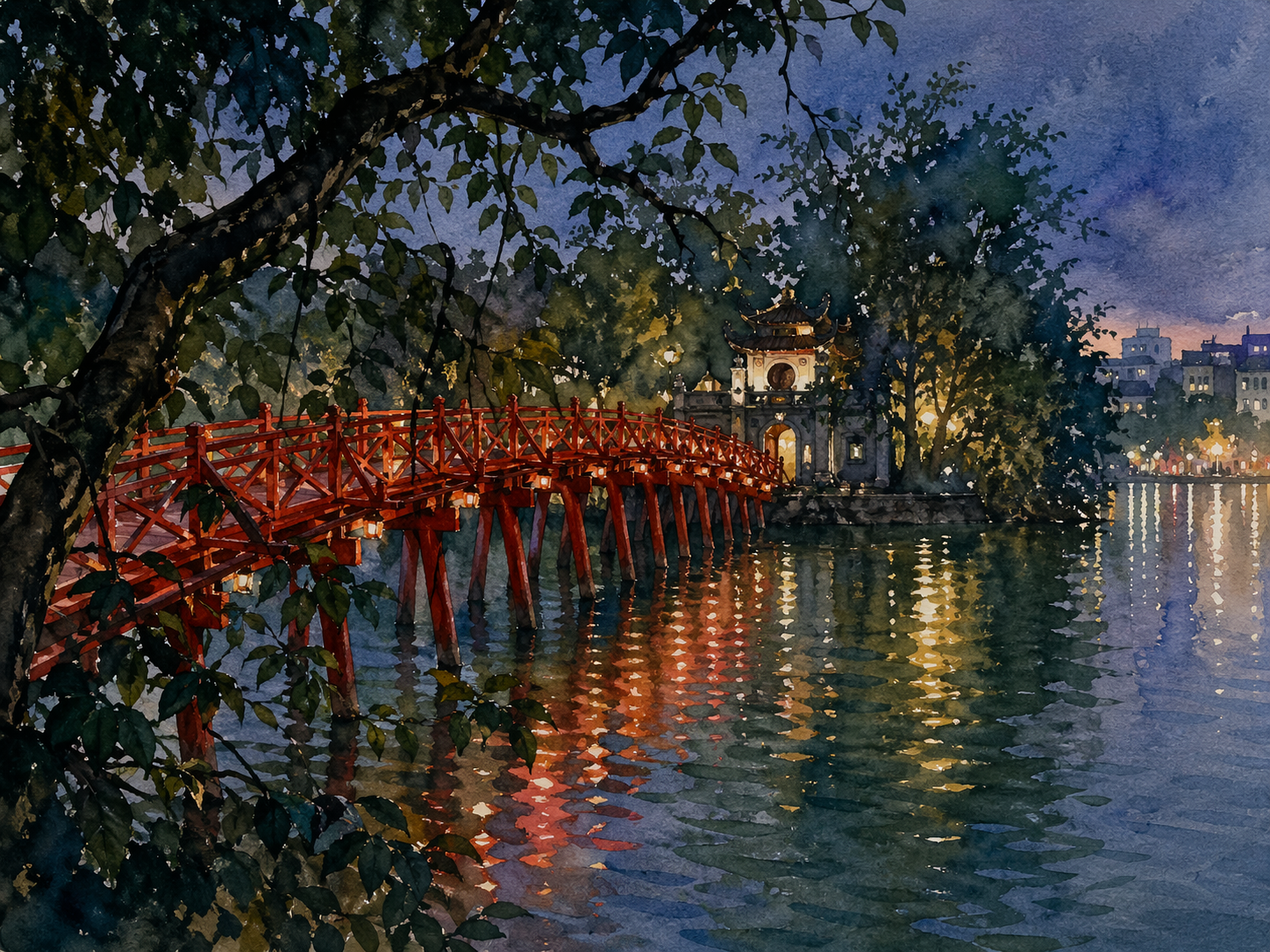
Crossing the Indigo Dream
Critique
1. Introduction This watercolor painting depicts a vibrant nocturnal scene of a traditional arched bridge and an island temple situated on a serene lake. The artwork captures the enchanting atmosphere of a city at night, where historical architecture is brilliantly illuminated against the deepening sky. Through a skillful use of color and reflection, the scene presents a harmonious blend of cultural tradition and urban life. 2. Description The focal point of the composition is a bright red, multi-span wooden bridge that curves gracefully across the water toward a small, ornate temple gate nestled among lush trees. The bridge is lit by small lanterns, casting long, shimmering red and golden reflections onto the rippling surface of the dark lake. In the background, the silhouettes of city buildings and distant streetlights are visible under a deep indigo sky. A large, dark tree in the foreground frames the left side of the scene, its leaves adding a sense of intimacy and depth. 3. Analysis The artist demonstrates a mastery of watercolor techniques, particularly in the handling of light and water. The contrast between the saturated red of the bridge and the cool blues and purples of the night sky creates a powerful visual impact. The reflections on the water are rendered with loose, horizontal strokes that suggest movement and the play of light on the surface. The detailed rendering of the bridge's structure and the temple gate contrasts effectively with the more impressionistic treatment of the surrounding foliage and distant cityscape. 4. Interpretation and Evaluation This work is highly successful in conveying a specific sense of place and time. The technical execution of the complex reflections and the subtle gradations in the night sky show a deep understanding of the medium. The composition is dynamic, with the diagonal line of the bridge leading the viewer's eye into the heart of the painting. By choosing a night scene, the artist emphasizes the transformative power of light, turning a well-known architectural landmark into a dreamlike and poetic vision of cultural identity. 5. Conclusion The painting is a captivating exploration of light, color, and reflection within an urban landscape. The initial impression of vivid color is supported by a sophisticated technical foundation that rewards careful observation. Ultimately, the artist achieves a balanced and evocative portrayal that celebrates the enduring beauty of traditional architecture within the context of a modern, living city.
Same Subcategory
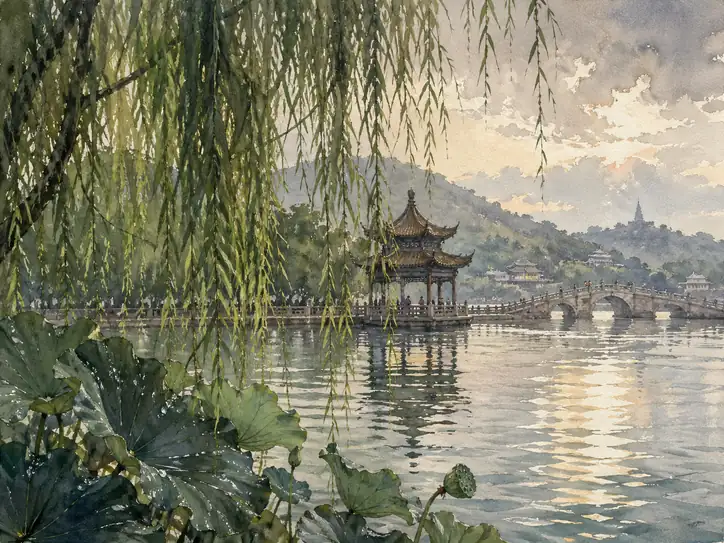 Golden Harmony at West Lake
Similar Artworks
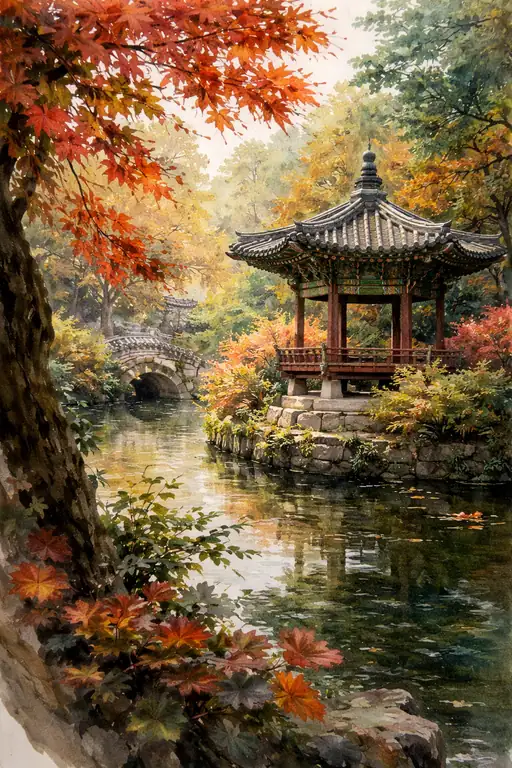 Crimson Leaves Reflected in Autumn's Mirror
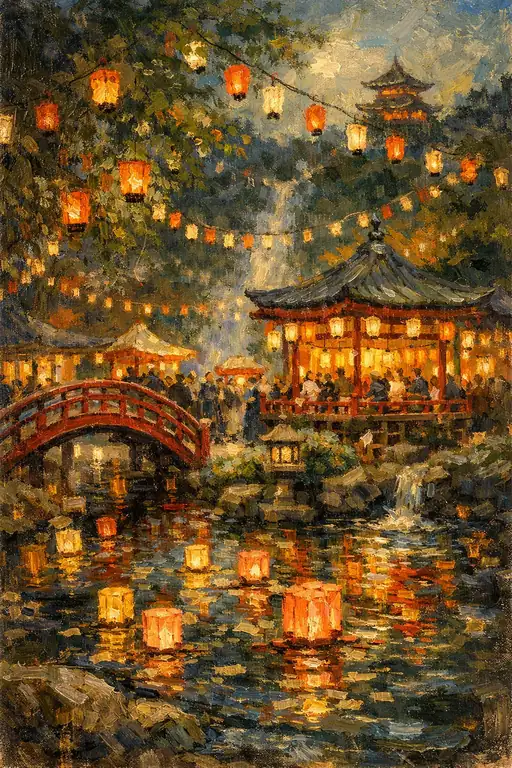 Whispers of the Glowing Tide: A Lantern Festival's Luminous Embrace
 Through the Moon Gate: A Whisper of Serenity
 Serenade of the Summer Garden's Reflection
 Golden Lotus in the Imperial Garden
 Harmony in Red and Pink: The Eternal Spring Garden
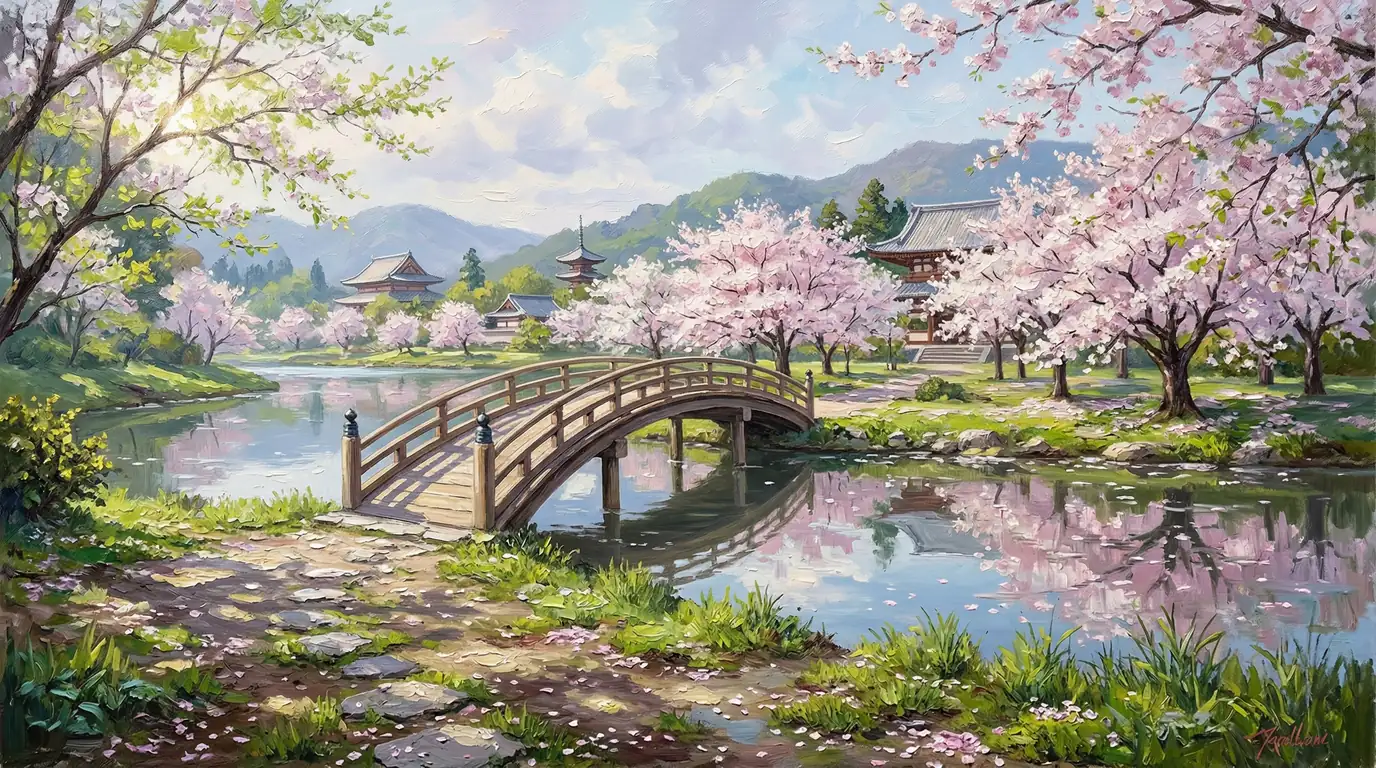 The Bridge of Spring's Awakening
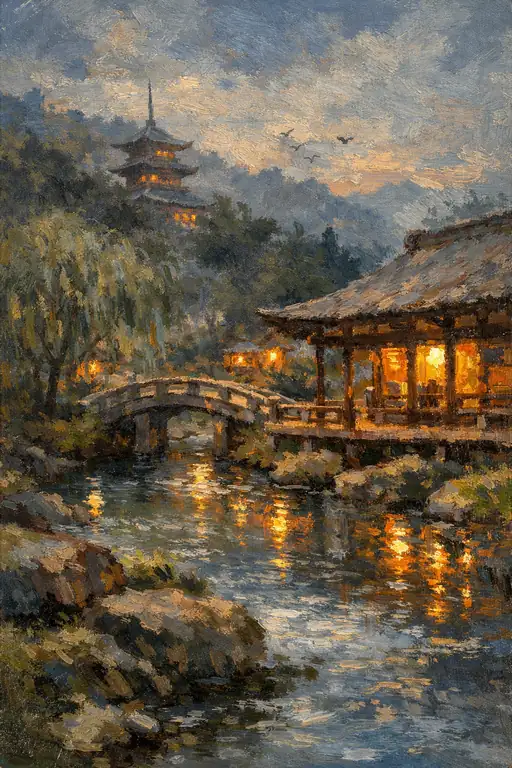 Echoes of the Gilded Twilight: A Serene Voyage Through Time's Painted River
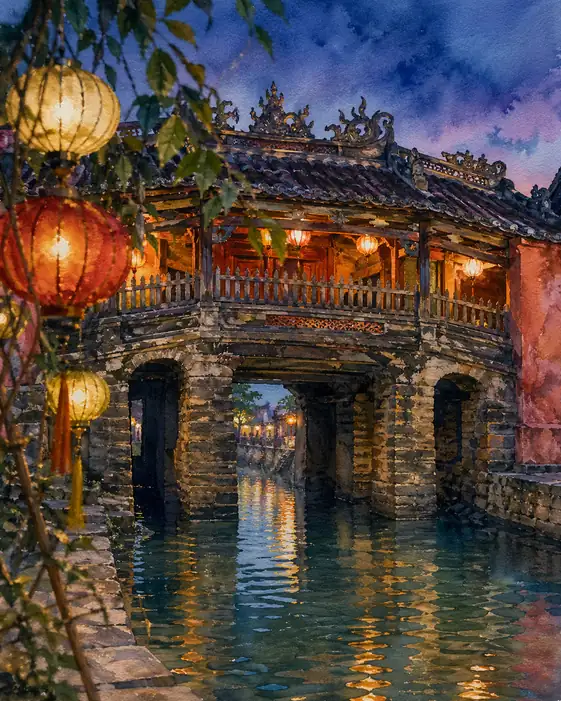 Nostalgia Wrapped in Amber Light
 Whispers of the Golden Pond