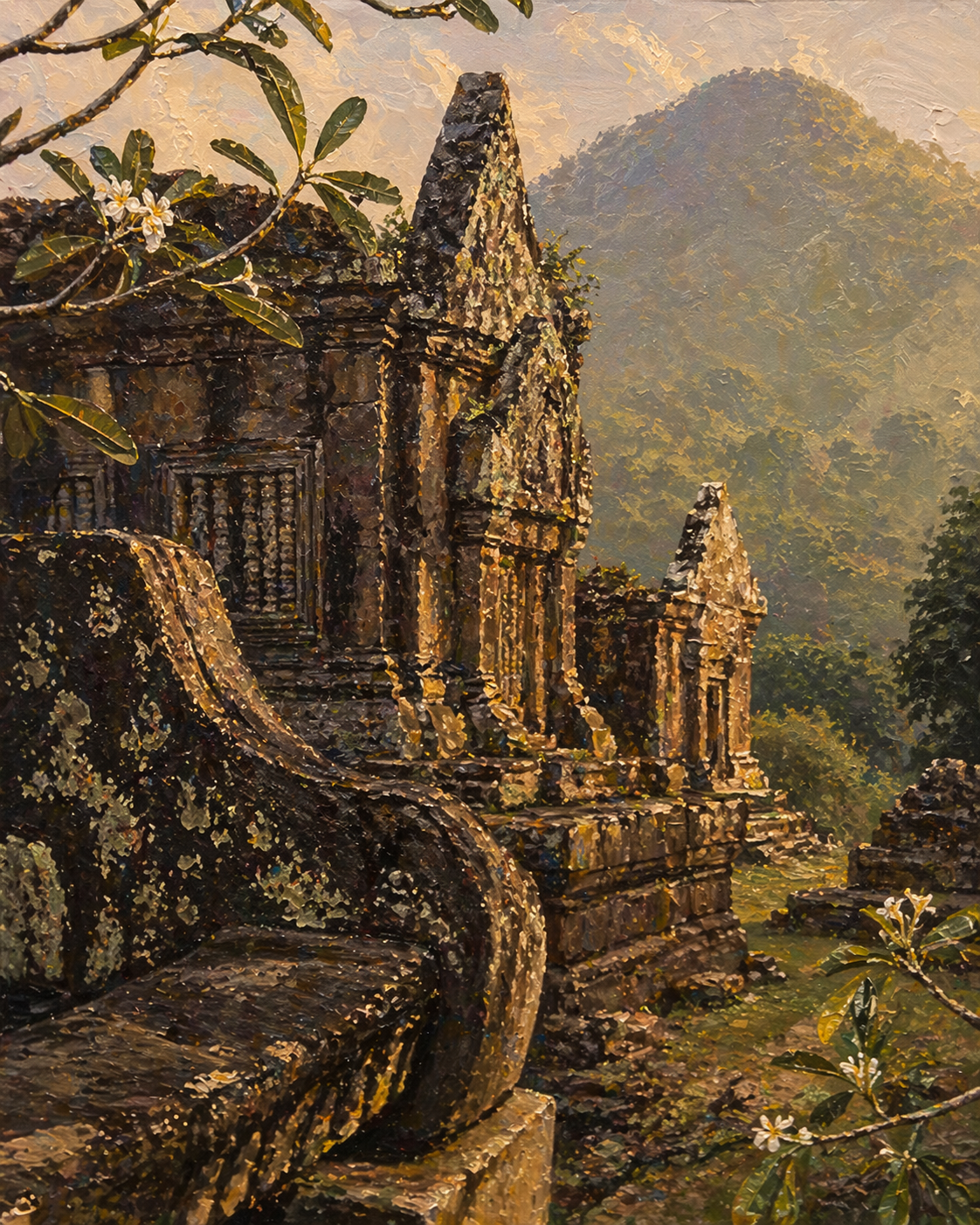
Silent Whispers of the Mossy Stones
Critique
1. Introduction This oil painting depicts the weathered remains of an ancient stone temple, situated at the foot of a majestic, mist-shrouded mountain. The artwork captures the profound sense of history and the silent dialogue between human architecture and the reclaiming power of nature. Through a rich, textured application of paint, the scene evokes a contemplative mood that invites the viewer to reflect on the passage of time. 2. Description The composition is dominated by several stone structures with intricate carvings and tiered rooflines, partially covered in green moss and lichen. In the foreground, a massive stone block with a curved edge anchors the scene, while white plumeria blossoms on dark branches frame the top left and bottom right corners. The background features a large, hazy mountain covered in dense forest, illuminated by a soft, golden light that filters through the humid atmosphere. The color palette consists of earthy browns, deep greens, and warm yellows, creating a unified and atmospheric effect. 3. Analysis The artist utilizes a heavy impasto technique, where thick layers of paint are applied to create a tangible, three-dimensional surface that mimics the rugged texture of aged stone. The play of light and shadow is masterfully handled, with bright highlights on the temple facades contrasting against the cool, dark recesses of the ruins. A low-angle perspective enhances the monumentality of the structures, while the atmospheric perspective in the distant mountain adds a significant sense of scale and depth. The rhythmic placement of the ruins leads the viewer's eye into the misty landscape. 4. Interpretation and Evaluation This work displays a high level of technical proficiency and a strong sense of artistic vision. The choice of the impasto technique is particularly effective in conveying the physical weight and enduring presence of the ruins. The composition is well-balanced, using the floral elements to soften the hard edges of the stone and create a sense of life within the site of decay. The warm, golden lighting elevates the scene from a mere record of ruins to a more spiritual and poetic interpretation of cultural heritage and the inevitable cycle of nature. 5. Conclusion The painting is a powerful and evocative tribute to the endurance of ancient civilizations and the timeless beauty of the natural world. The initial feeling of solemnity evolves into a deeper appreciation for the intricate details and the masterful use of texture as one spends more time with the work. Ultimately, the artist successfully creates an immersive experience that resonates with a sense of wonder and respect for the mysteries of the past.
Same Subcategory
 Echoes in the Stone: The Eternal Monument
 Whispers in the Sacred Depths
Similar Artworks
 Breath of the Forgotten Sanctuary
 The Enduring Pillars of Time
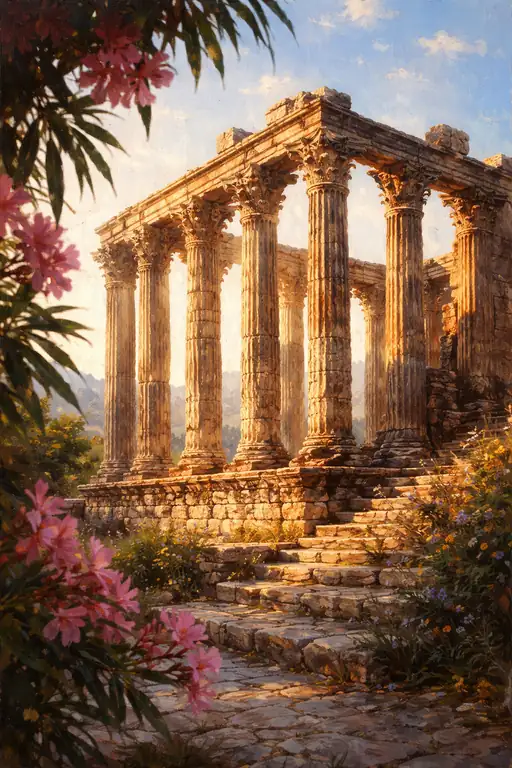 Pillars of Antiquity Awash in Gold
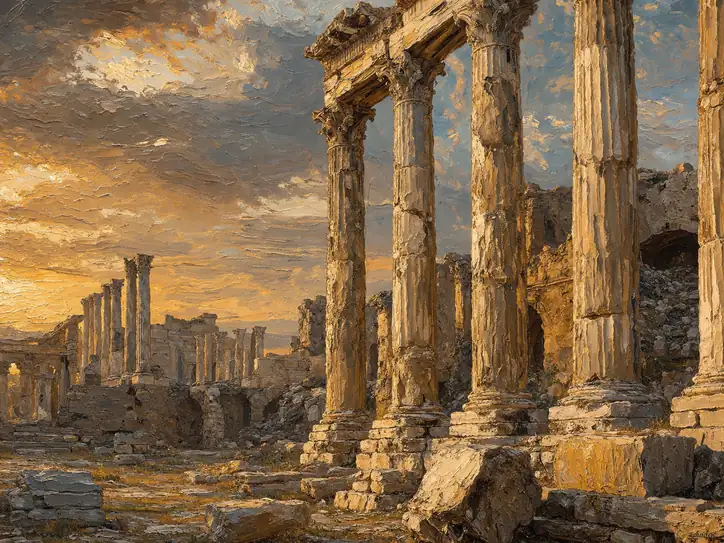 Echoes of the Golden Columns
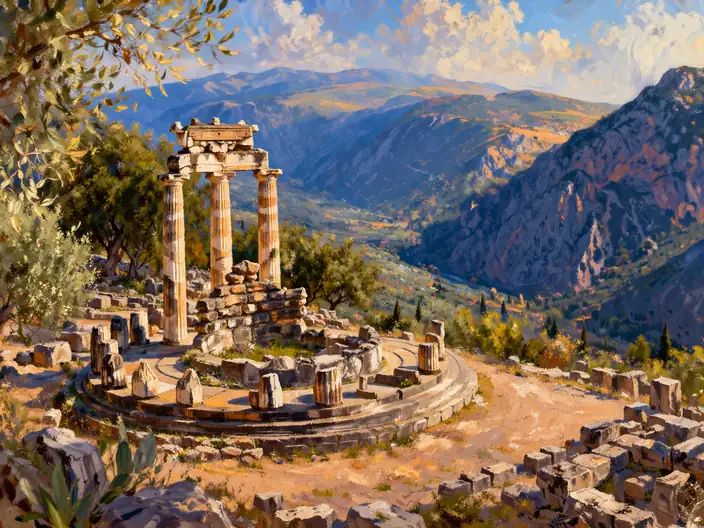 Timeless Pillars of the Mountain Sanctuary
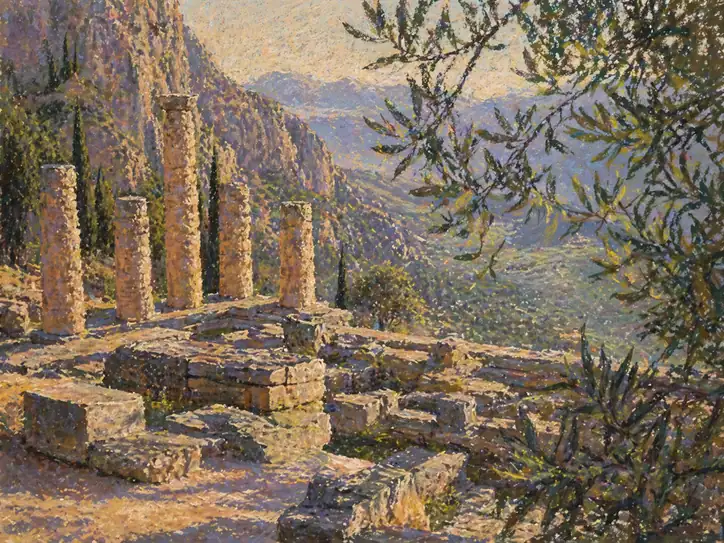 Where Time Dissolves in Morning Gold
 Whispers of Eternal Stone
 Whispers of the Golden Stone
 Echoes of a Forgotten Kingdom
 Eternal Embrace of the Jungle Root