The Prayer of the Mist-Clad Peaks
Critique
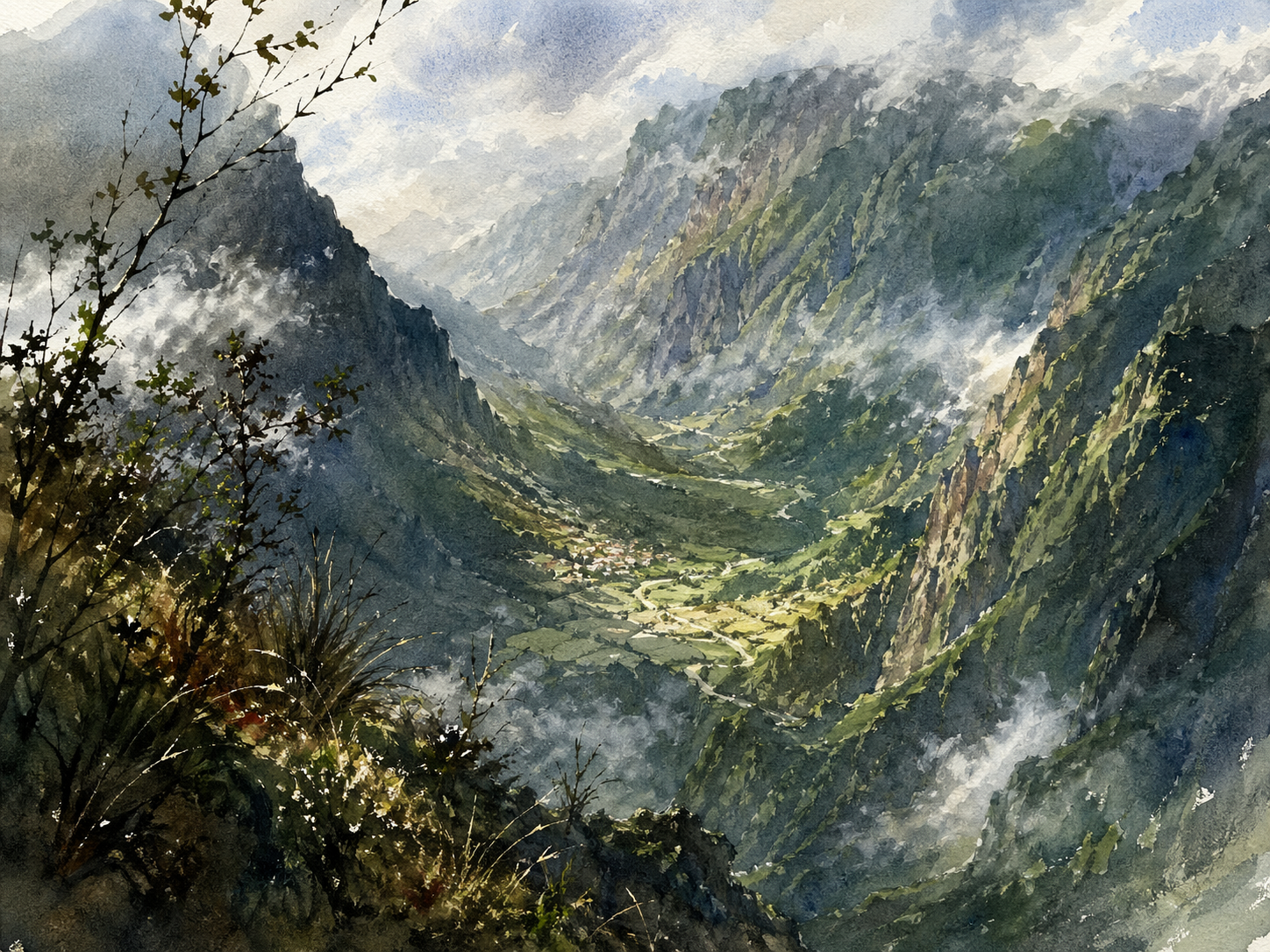
1. Introduction This watercolor painting depicts a breathtaking mountain valley, where steep cliffs and lush greenery are intertwined with shifting mists. The work captures the dramatic scale and atmospheric complexity of a highland landscape, likely inspired by the rugged terrain of East Africa. By contrasting the solid, enduring forms of the mountains with the ephemeral nature of the clouds, the composition evokes a sense of sublime beauty and natural grandeur. The overall mood is one of majestic isolation, inviting the viewer to contemplate the power of geological forces. 2. Description The scene features a deep V-shaped valley flanked by towering, verdant cliffs that disappear into a dense layer of white mist. In the valley floor, a cluster of small dwellings and cultivated fields are visible, suggesting a remote human settlement. The foreground on the left is occupied by dark, rugged rocks and sparse vegetation, which serve to frame the expansive view beyond. The sky is filled with heavy, greyish-white clouds that blend seamlessly with the fog clinging to the mountain slopes. 3. Analysis The artist employs a variety of watercolor techniques, using wet-on-wet applications to create the soft, diffused appearance of the clouds and sharper, dry-brush strokes to define the jagged ridges. A cool color palette of deep greens, slate greys, and earthy browns is punctuated by the brilliant white of the mist, creating a strong sense of atmospheric depth. The steep diagonal lines of the mountain slopes lead the eye toward the center of the valley, providing a clear sense of perspective and scale. 4. Interpretation and Evaluation The painting successfully translates the overwhelming presence of the mountains into a cohesive and visually engaging experience. The juxtaposition of the minute human settlement against the massive geological formations highlights the fragility of human existence within a vast natural world. The artist’s mastery of the medium is evident in the handling of the mist, which feels both heavy and translucent. The composition is expertly balanced, with the dark foreground elements providing a necessary anchor for the lighter, more ethereal qualities of the distant mountains. 5. Conclusion Initial awe at the sheer scale of the valley soon transforms into a deeper appreciation for the delicate interplay between light, air, and earth. This work stands as a powerful testament to the evocative potential of watercolor in capturing the spirit of a landscape. Through its harmonious integration of color and texture, the painting offers a respectful and dignified portrayal of the natural world’s grandeur. Ultimately, it leaves a lasting impression of a place where the earth meets the sky in a constant, silent dialogue of form and mist.
 Veiled Valley's Quiet Majesty
 Sovereign of the Golden Clouds
 Beyond the Misty Veil
 Where the Mist Whispers
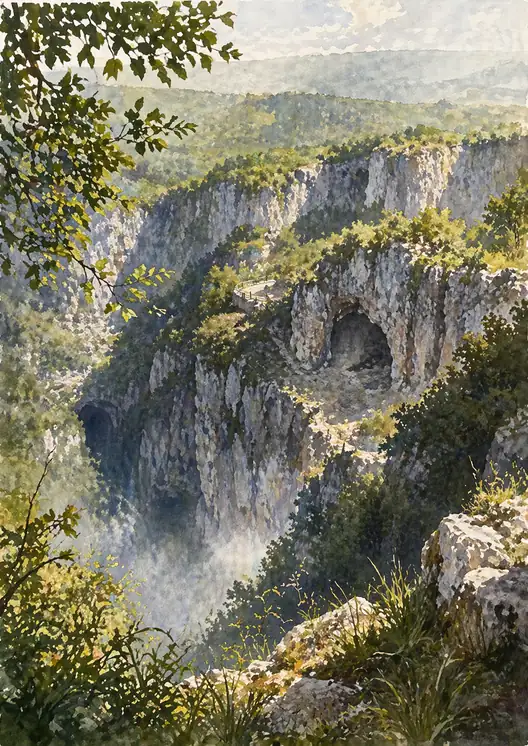 Gorge Cave
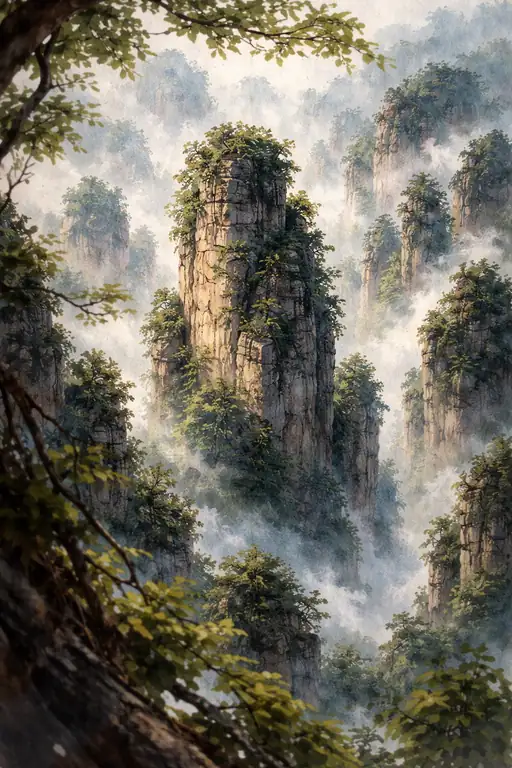 Ascension of the Stone Giants
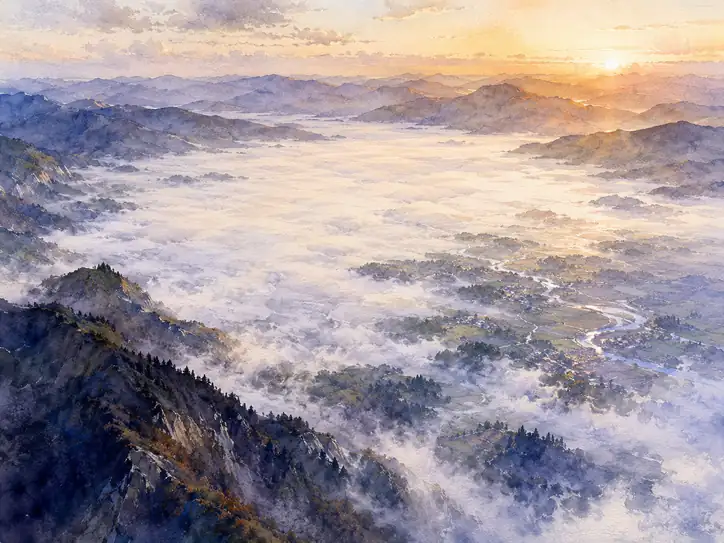 A Glimpse of the Mortal Shore
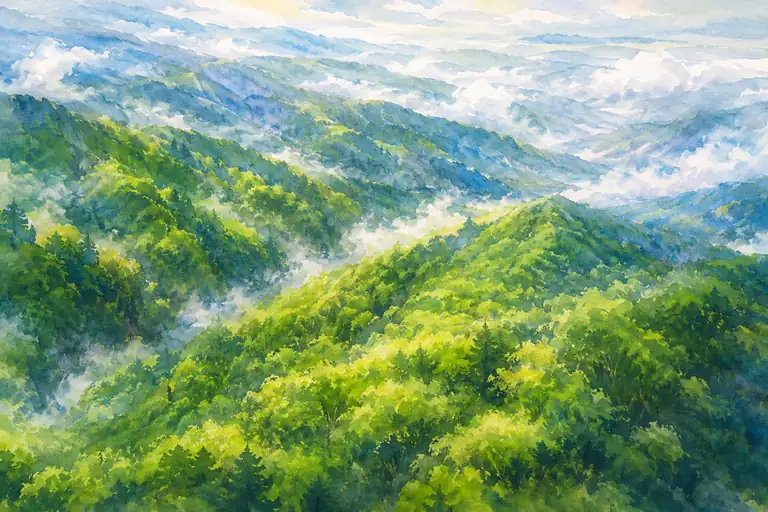 Breath of Life on the Emerald Peaks
 A Tiny Vessel on the Stream of Time
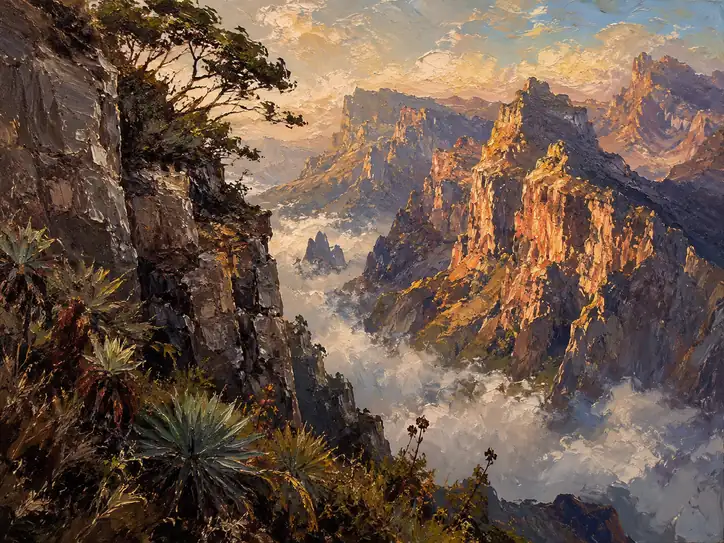 Breath of the Eternal Peaks
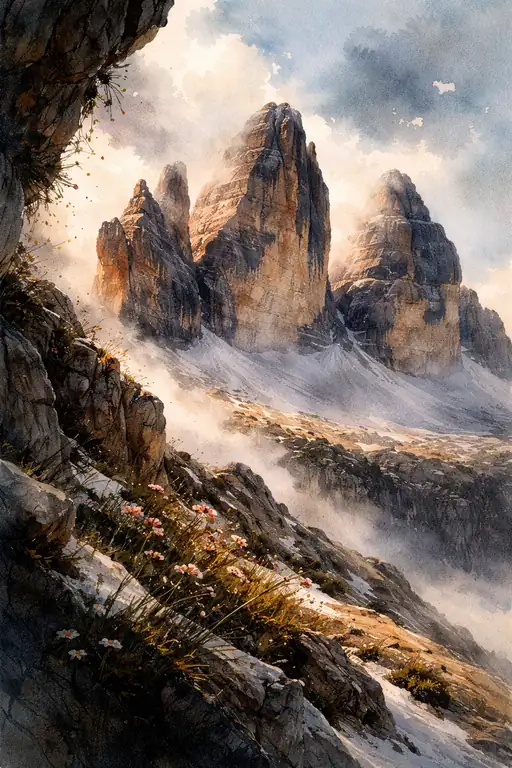 Majesty in Mist: The Awakening of the Crags