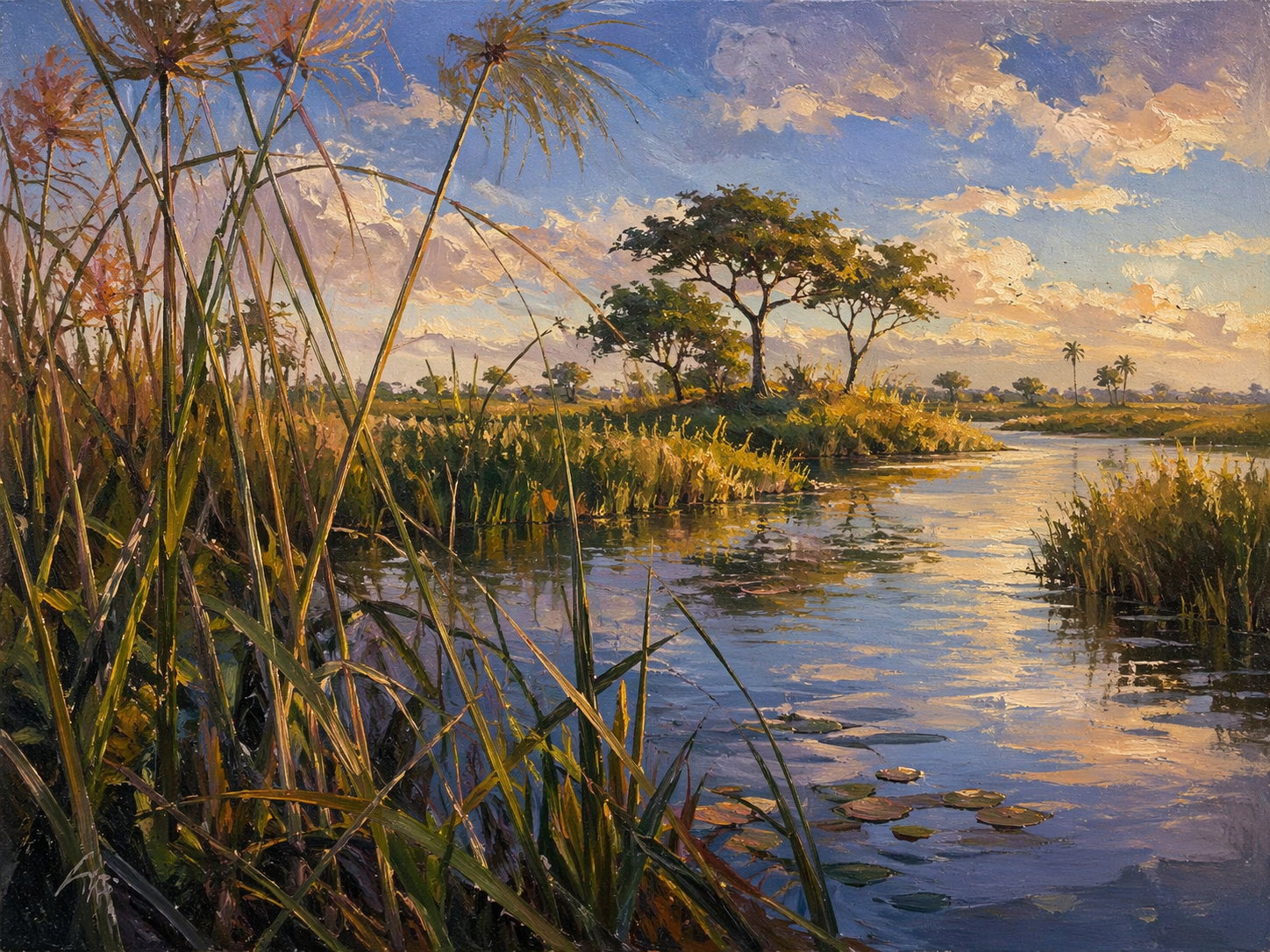
Golden Reverie in the Reeds
Critique
1. Introduction This evocative oil painting depicts a tranquil wetland landscape, likely inspired by the African savannah, as it is bathed in the soft, golden light of early morning or late afternoon. The artist focuses on a narrow waterway that meanders through lush vegetation, creating a scene of profound stillness and natural harmony. The work explores the delicate textures of aquatic plants and the atmospheric effects of light reflecting on water, offering a serene window into a pristine ecosystem where time seems to slow down. 2. Description In the immediate foreground, tall, slender papyrus stalks and reeds rise vertically, their fan-like heads and green blades rendered with precise yet expressive strokes that capture their organic complexity. To the right, the calm surface of the river reflects the brilliant colors of the sky, dotted with a few floating lily pads. In the middle ground, a small island or raised bank features several distinctive acacia-like trees with wide, flat canopies that stand silhouetted against a dynamic sky filled with soft, luminous clouds and distant, hazy palm trees. 3. Analysis The composition is built on a careful balance between the vertical lines of the foreground reeds and the horizontal recession of the river and horizon. The artist uses a warm, luminous palette, emphasizing the golden yellows and ochres of the sunlit plants against the deep blues and purples of the shadows. The brushwork is particularly effective in the water, where horizontal, layered strokes create a sense of shimmering reflection. The sky is rendered with broader, more blended applications of paint, providing a soft, atmospheric backdrop that enhances the overall depth of the scene. 4. Interpretation and Evaluation This painting successfully captures the unique mood of a wetland environment, conveying a sense of peace and biological richness. The artist demonstrates a high level of skill in depicting the play of light on different surfaces, from the translucent leaves of the reeds to the glassy reflection of the water. The choice of viewpoint, looking through the tall plants toward the open water, creates an intimate and immersive experience for the viewer. This work is not only a beautiful landscape but also a sensitive study of the interdependence between water, plants, and light in a specific ecological setting. 5. Conclusion This wetland study is a masterly example of landscape art that celebrates the subtle beauty of the natural world. The initial impact of the warm, inviting light leads to a deeper appreciation for the intricate details of the vegetation and the masterful rendering of the water's surface. Ultimately, the painting stands as a powerful reminder of the importance of preserving these delicate environments, offering a vision of nature that is both majestic and incredibly fragile. It is a sophisticated piece that provides both visual pleasure and a moment for quiet reflection on the wonders of the earth.
Same Subcategory
 Jungle River: The Silent Flow of Paradise
Similar Artworks
 Sunset's Warm Embrace on the Winter Stream
 The Crystal Veins of the Mountain
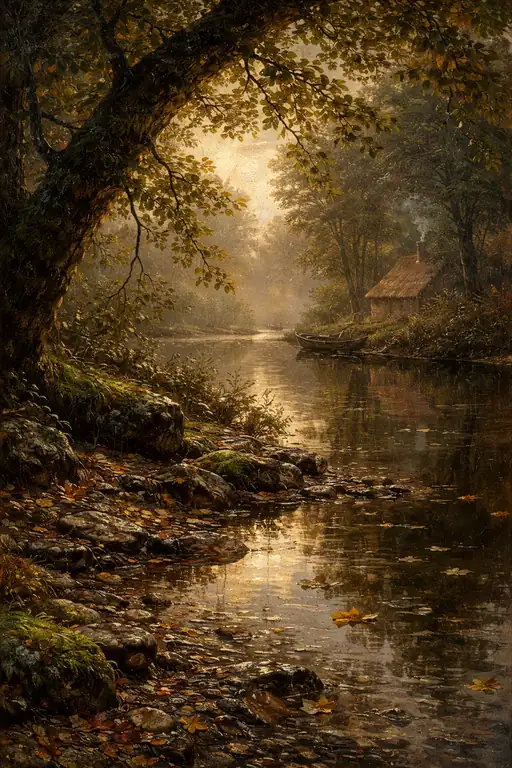 The Peaceful Slumber of the River
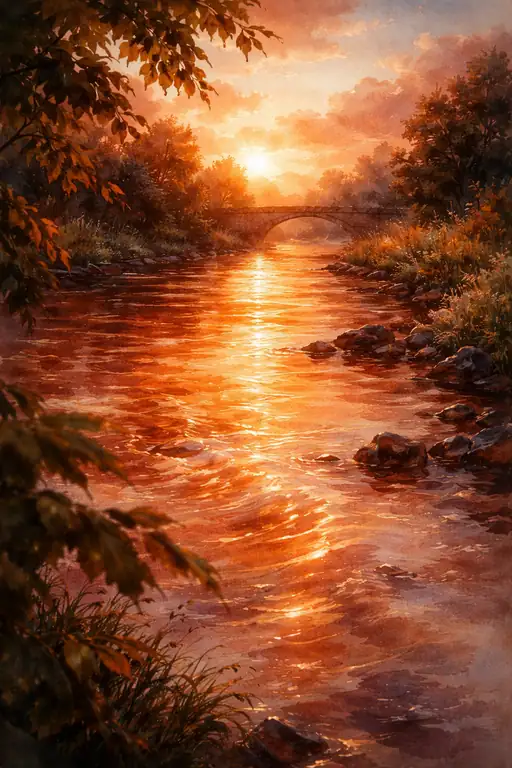 A Serene Farewell in Sunset's Embrace
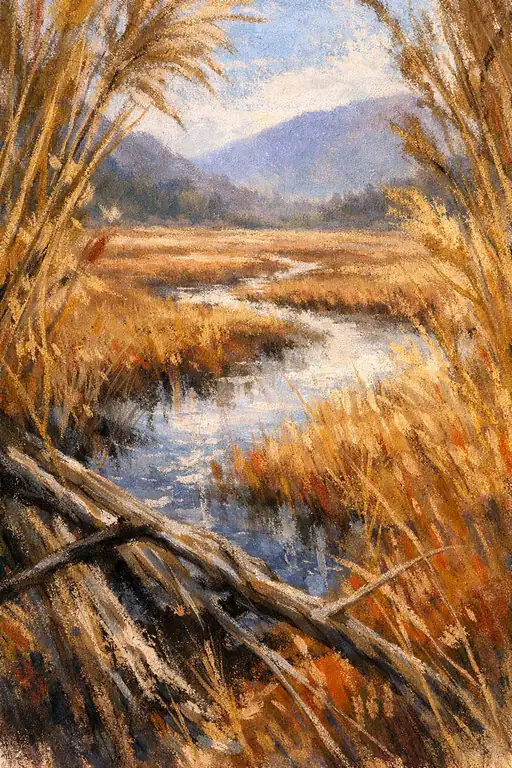 Whispers of the Golden Reeds
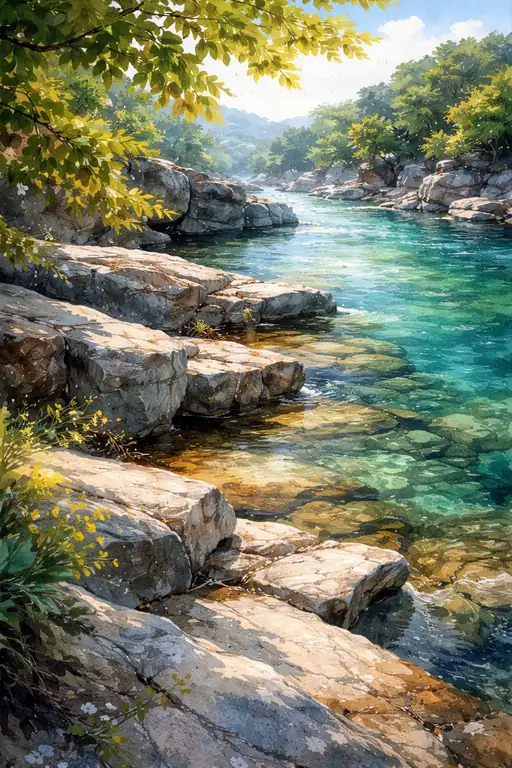 Whispers of the Crystal Current
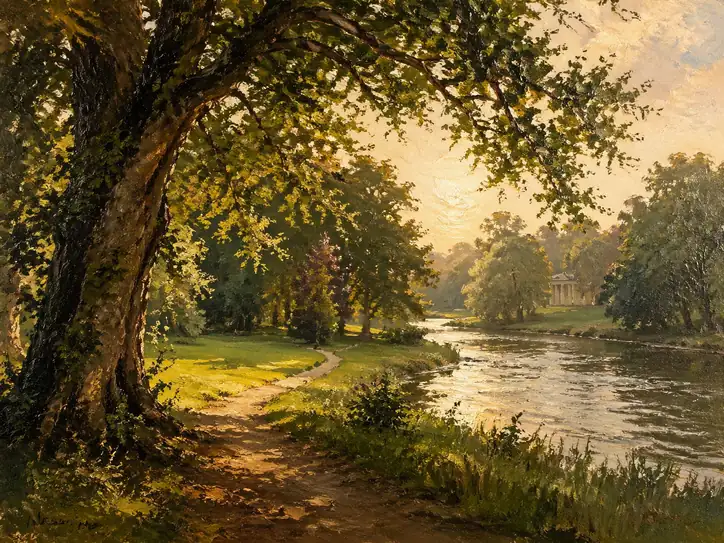 The Neoclassical Echo at Sunset
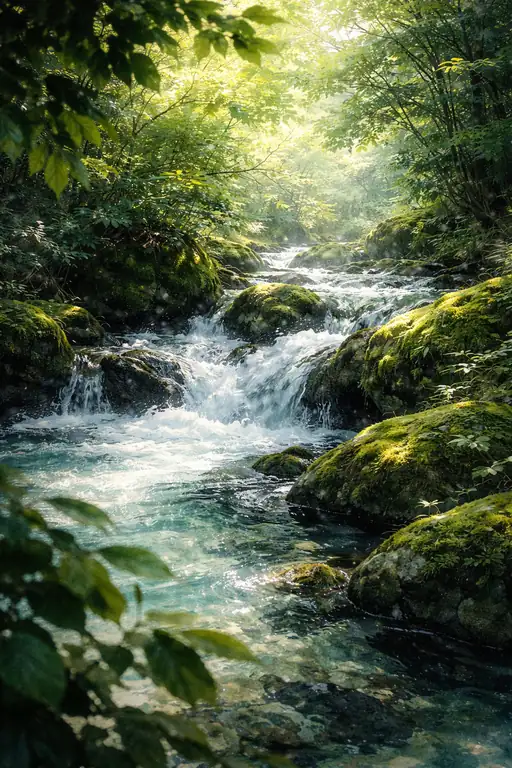 Sanctuary of the Emerald Stream
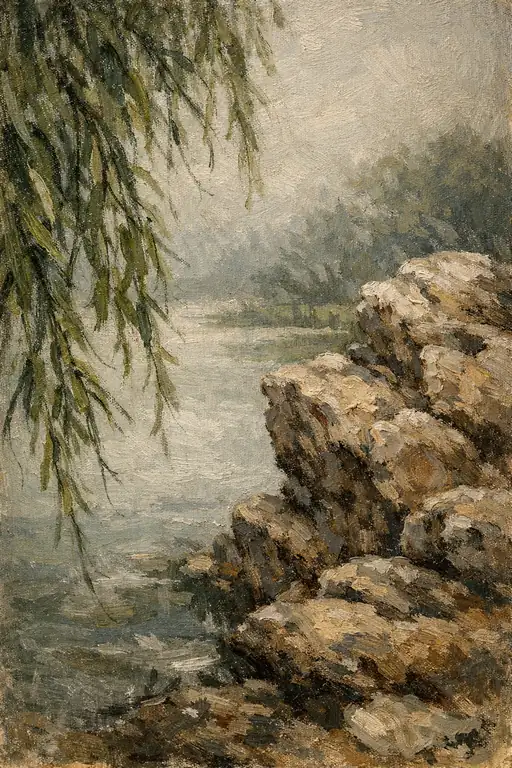 Whispers of the Weeping Willow in the Mist
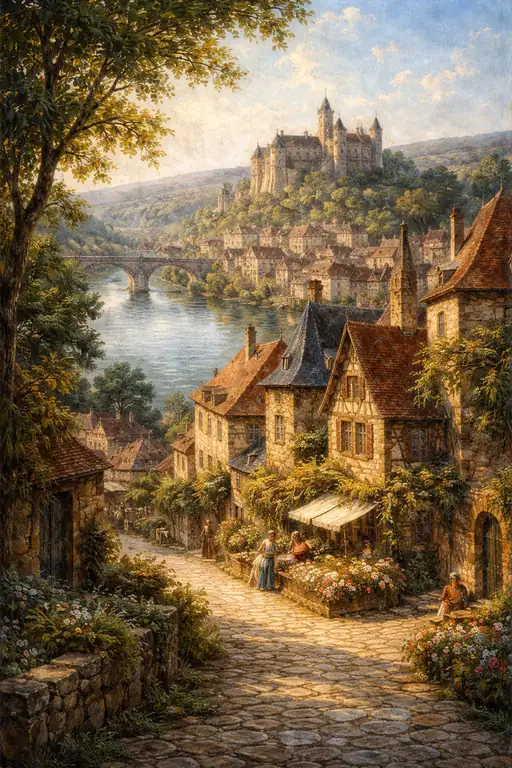 Fragments of a Fleeting Dream