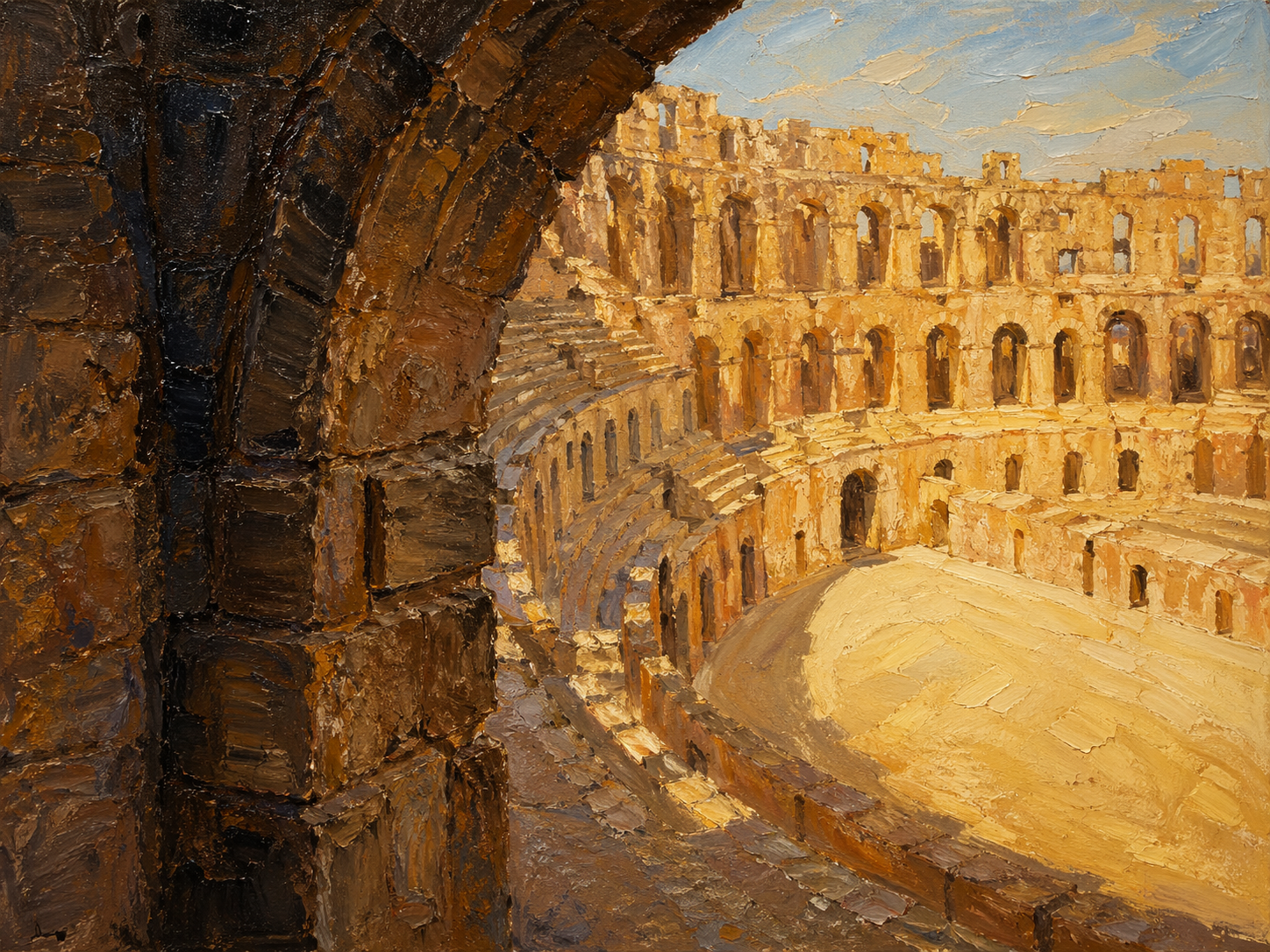
A Requiem of Light for Eternal Stone
Critique
1. Introduction This oil painting captures the evocative ruins of an ancient amphitheater, depicted through a dramatic play of light and shadow. The composition uses a foreground framing device to draw the viewer into a sun-drenched historical space, emphasizing the enduring nature of classical architecture. Through a robust application of paint, the work explores the physical presence of stone and the transformative power of natural light on aged surfaces. 2. Description The view is framed from the left by a dark, massive stone arch, whose rough blocks are rendered with deep browns and shadowed indigos. Beyond this portal, the arena opens up into a sweeping curve of tiered seating and multi-storied arched galleries. The central arena floor is bathed in intense, golden sunlight, which also illuminates the interior walls of the structure, revealing rows of rhythmic arched openings. The sky above is a pale, textured blue with wisps of light clouds, providing a cool contrast to the warm, sun-baked stones of the amphitheater. 3. Analysis The artist employs a heavy impasto technique, where thick layers of paint create a tactile, three-dimensional quality on the canvas. This is particularly evident in the foreground arch, where the blocks of stone appear physically heavy and weathered. The color palette is dominated by ochres, ambers, and earth tones in the sunlit areas, while the shadows are composed of complex greys and deep violets. The perspective is masterfully handled, with the curve of the arena and the diminishing size of the distant arches creating a strong sense of circular depth and monumental scale. 4. Interpretation and Evaluation The painting serves as a meditation on time, ruin, and the persistence of human achievement. The juxtaposition of the dark, immediate foreground with the bright, distant arena creates a sense of discovery and reverence for the past. The technical skill is demonstrated in the way light is captured not just as a color, but as a force that defines form and volume. The composition is highly effective, as the foreground arch acts as a temporal gateway, inviting the viewer to contemplate the silent grandeur of the ancient world. 5. Conclusion This work successfully translates the architectural majesty of a classical ruin into a vibrant, painterly experience. The combination of structural precision and expressive brushwork results in a piece that feels both historically grounded and emotionally resonant. In the final analysis, the painting offers a powerful tribute to the monumental legacy of ancient civilizations, captured in a moment of enduring light.
Same Subcategory
Similar Artworks
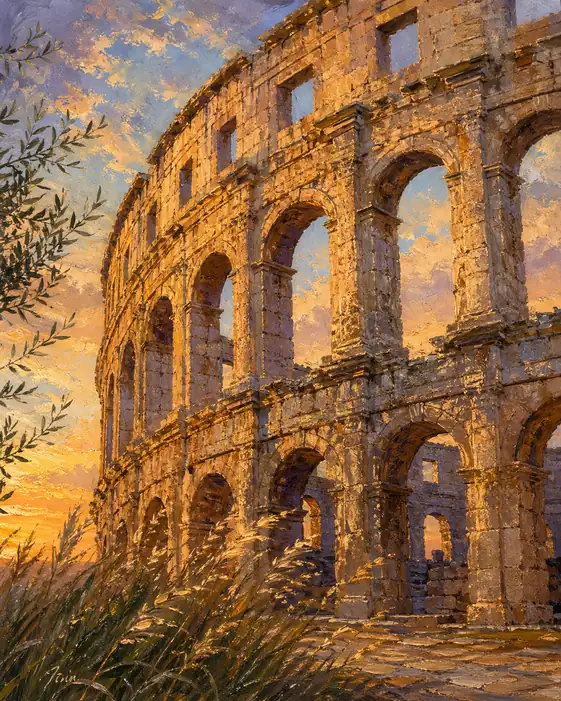 Echoes of Empire in the Golden Hour
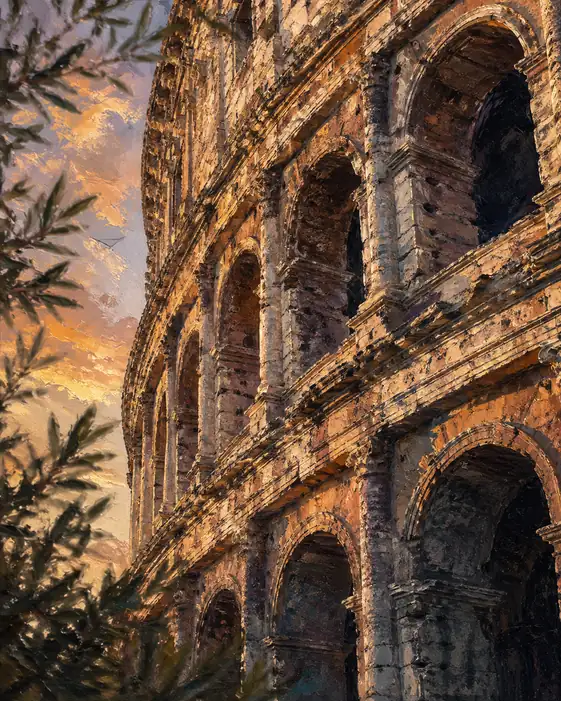 Stone of the Ages, Light of the Moment
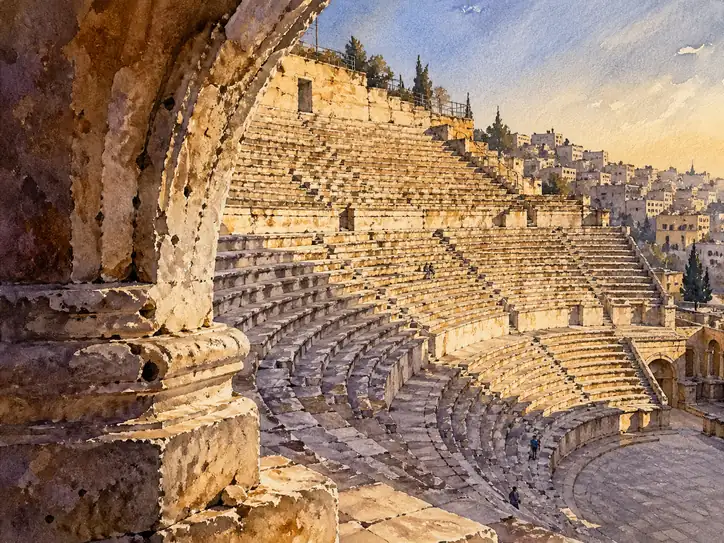 Echoes of the Arena: Where Silence Meets Past Glory
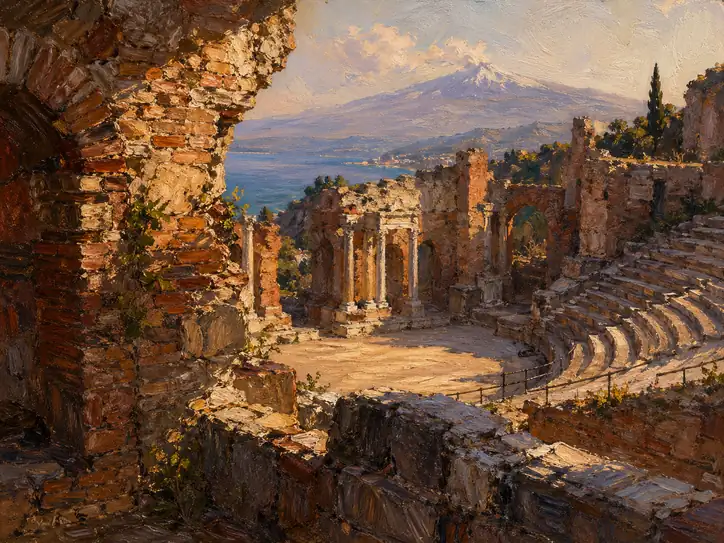 Twilight Over the Eternal Stage
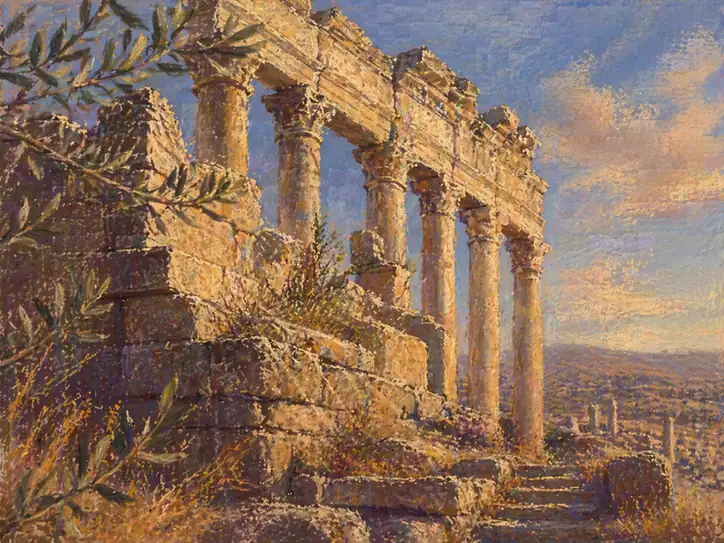 The Last Light on Sacred Pillars
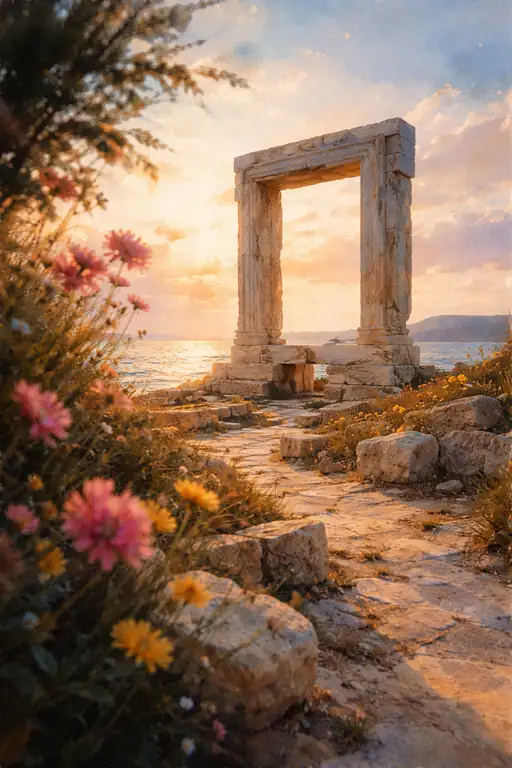 Golden Gaze Through the Ancient Portal
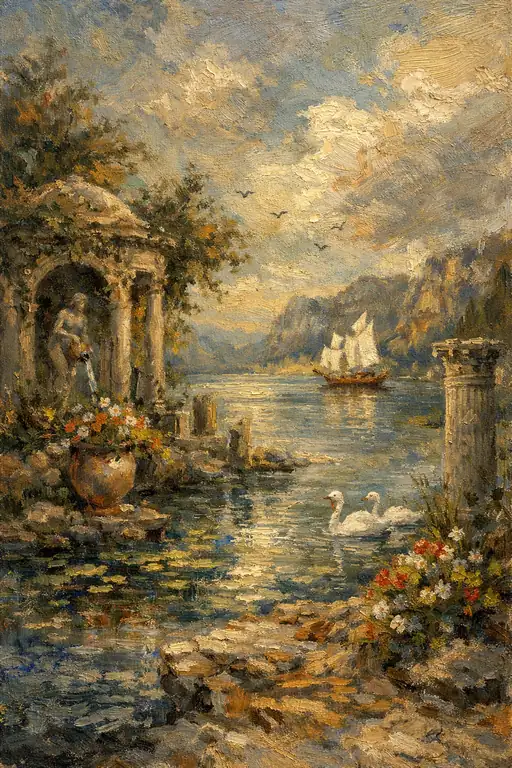 Whispers from a Gilded Antiquity
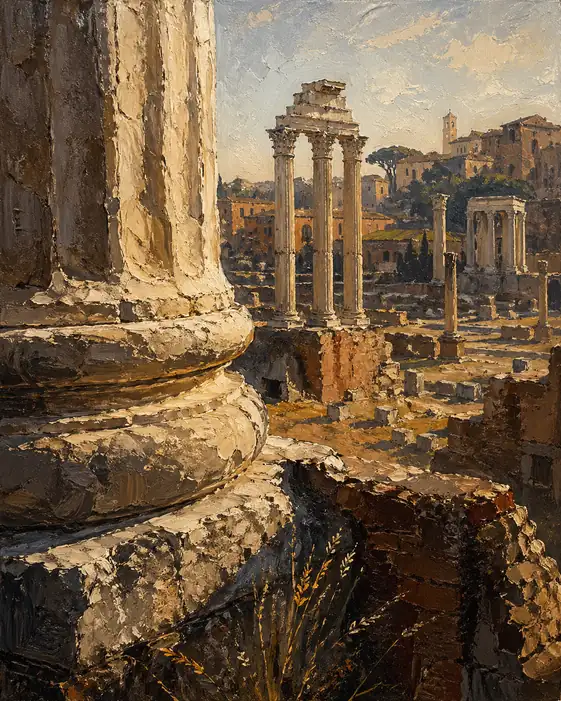 Whispers of the Gilded Forum
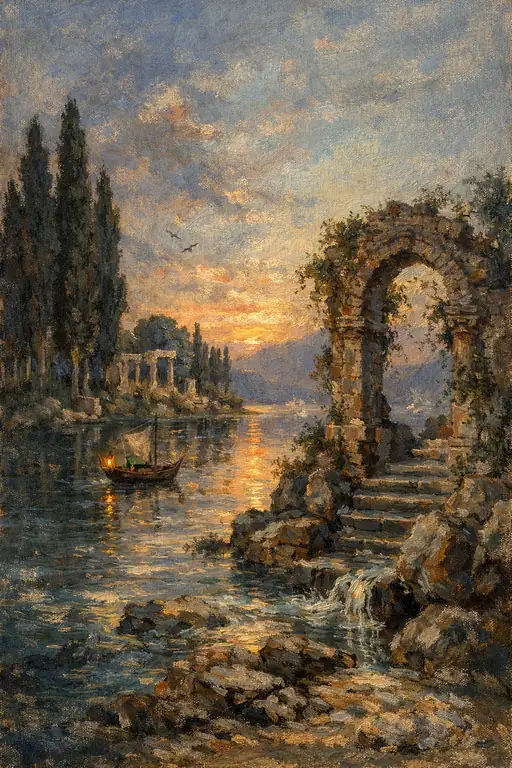 The Lantern's Solitary Journey
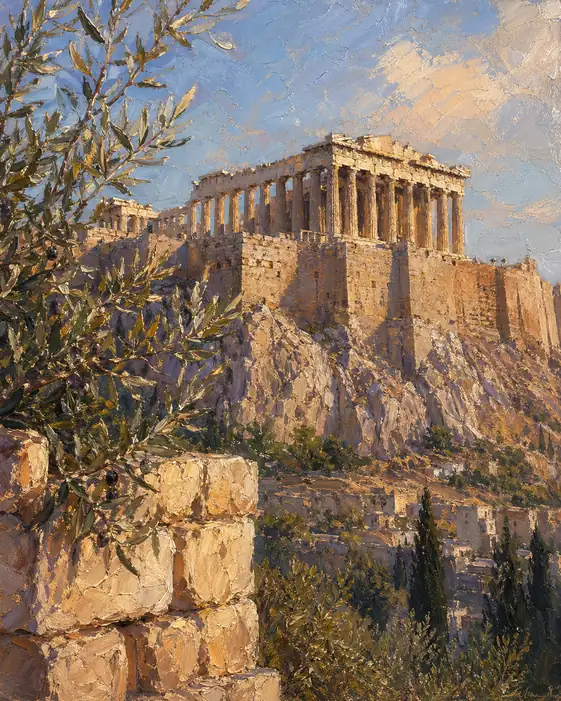 Whispers of Eternal Stone