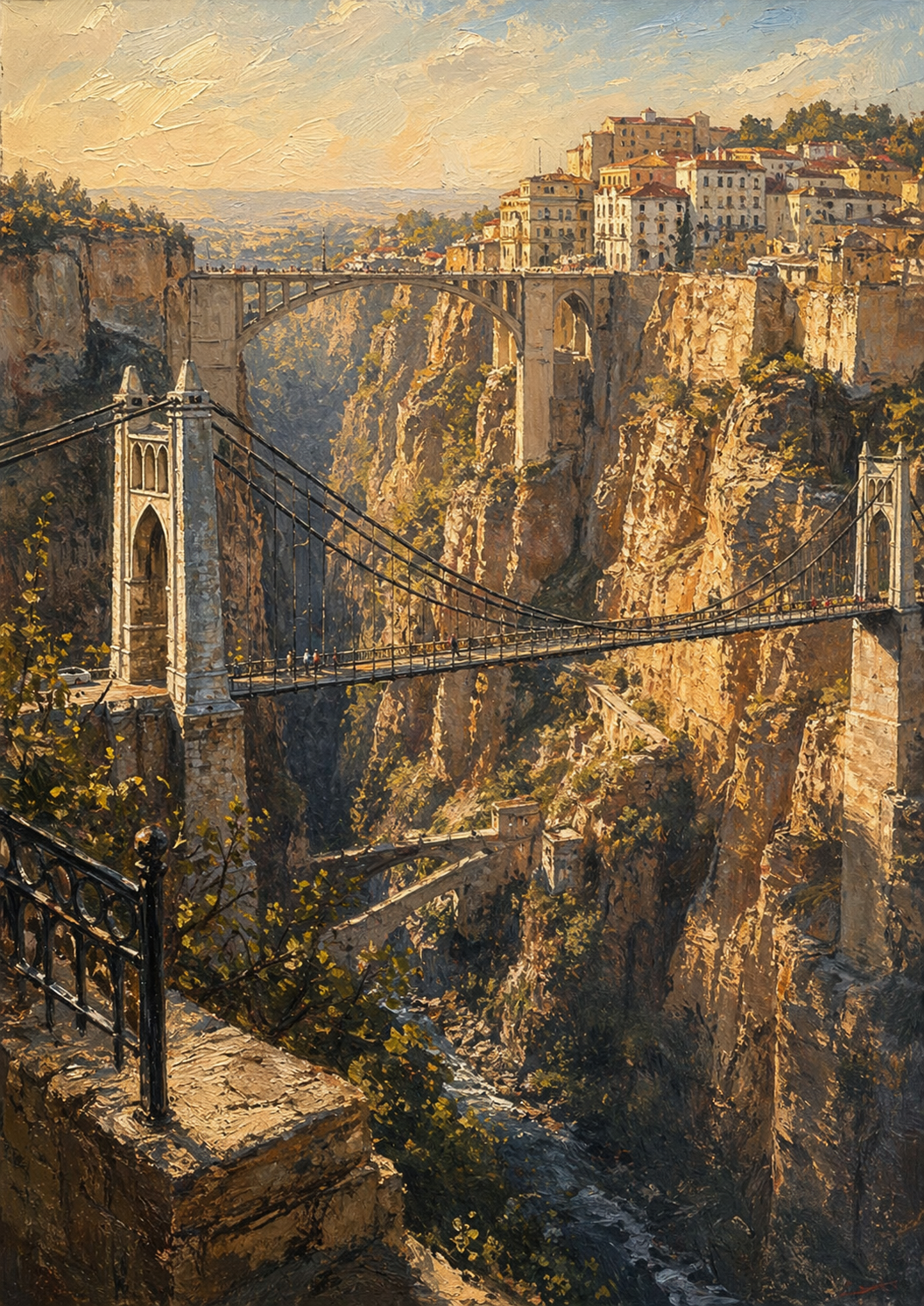
One Heart, Two Worlds, One Bridge
Critique
1. Introduction This oil painting presents a dramatic view of a mountainous landscape featuring architectural structures that bridge deep ravines. The composition captures a sense of immense scale and historical permanence through the depiction of multiple bridges and a village perched atop rugged cliffs. The work emphasizes the interaction between human engineering and the formidable beauty of the natural environment. 2. Description The foreground is dominated by a detailed suspension bridge, where several small figures of people are visible traversing the span. Beyond this, a massive stone arched bridge connects two high cliffs, leading to a cluster of white buildings with orange-tiled roofs that form a compact town. The verticality of the scene is reinforced by the steep, rocky walls of the gorge, which descend into a shadowed valley where a thin river flows. The sky is filled with soft, textured clouds, illuminated by a warm, late-afternoon light that casts long shadows across the stone surfaces. 3. Analysis The artist uses a rich, painterly technique characterized by prominent brushstrokes that build texture on the rocky surfaces and architectural elements. A warm color palette of ochre, sienna, and gold dominates the sunlit areas, contrasting with the cool blues and greys of the shadows within the canyon. The perspective is handled through a series of overlapping planes, leading the eye from the immediate foreground railing into the depth of the gorge and up toward the distant town. The rhythmic repetition of bridge arches and towers creates a sense of structural stability amidst the chaotic forms of the natural rock. 4. Interpretation and Evaluation The painting successfully conveys the majesty of a landscape where human civilization has adapted to extreme geography. The juxtaposition of the delicate suspension bridge and the heavy stone arches suggests a progression of time and technology within this secluded setting. The technical execution is highly effective, as the impasto application of paint adds a physical dimension to the ruggedness of the cliffs. The composition is well-balanced, using the diagonal lines of the bridges to guide the viewer's gaze through the complex spatial layers of the scene. 5. Conclusion This work offers a compelling vision of architectural grandeur integrated into a sublime natural setting. The careful management of light and texture evokes a specific moment in time, suggesting both the transience of light and the enduring nature of the stone structures. Ultimately, the painting provides a profound reflection on the human desire to connect across seemingly impassable physical barriers.
Same Subcategory
Similar Artworks
 Courage Reaching Across the Great Divide
 Ronda: The Bridge Between Earth and Sky
 Eternal Gateway to the Golden City
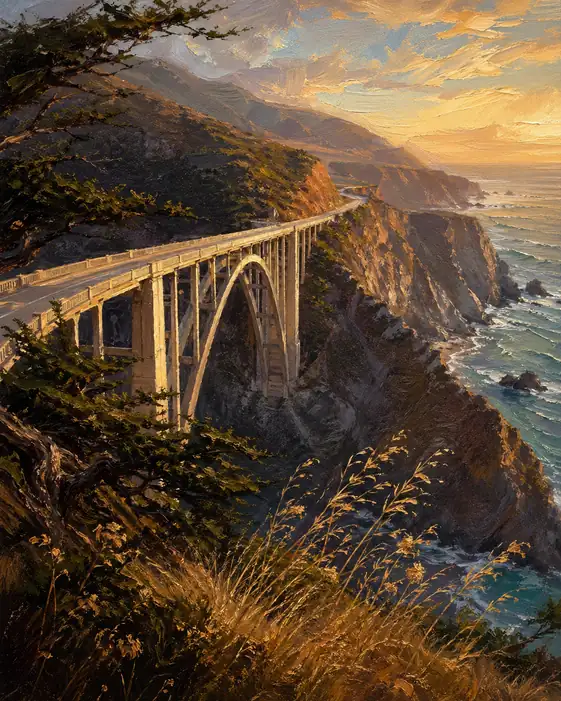 Bridge Between Light and Stone
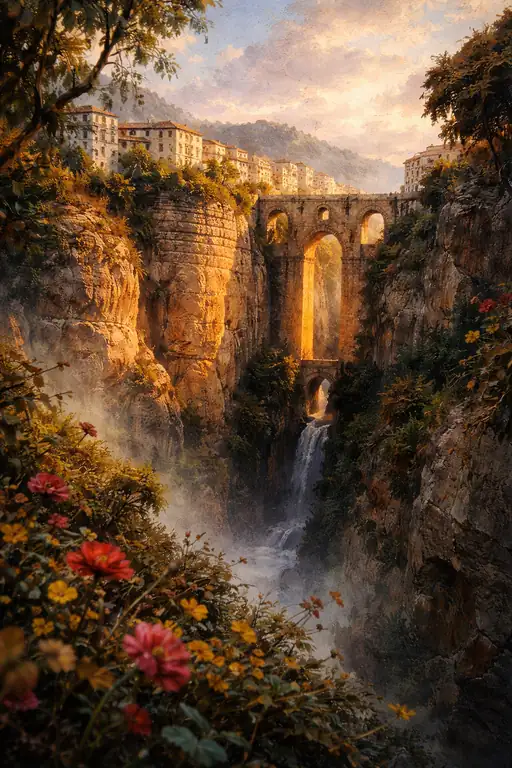 Between the Abyss and the Blossoms
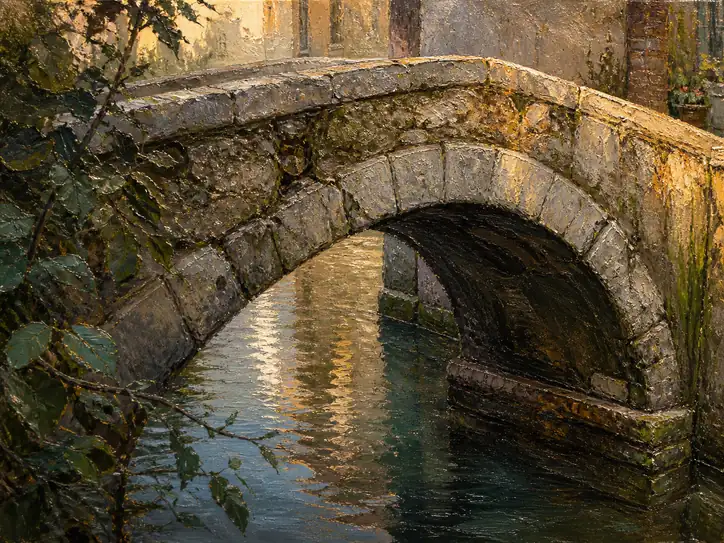 Golden Reflections under the Stone Arch
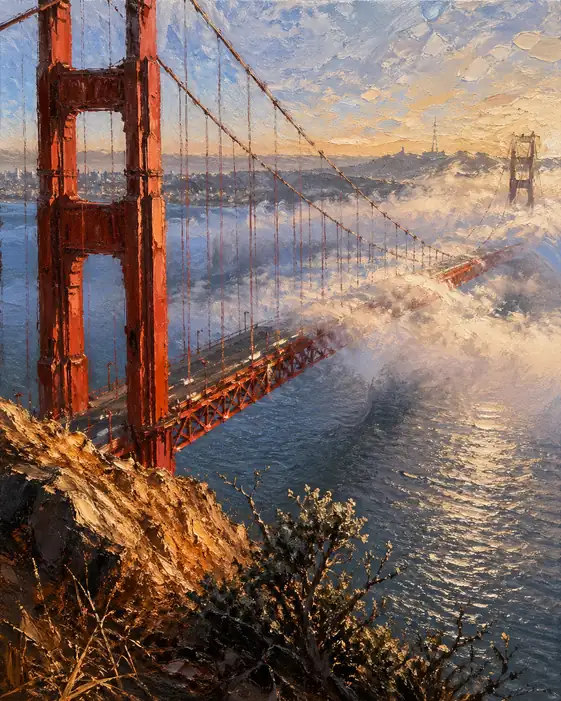 Whispers of the Golden Gate
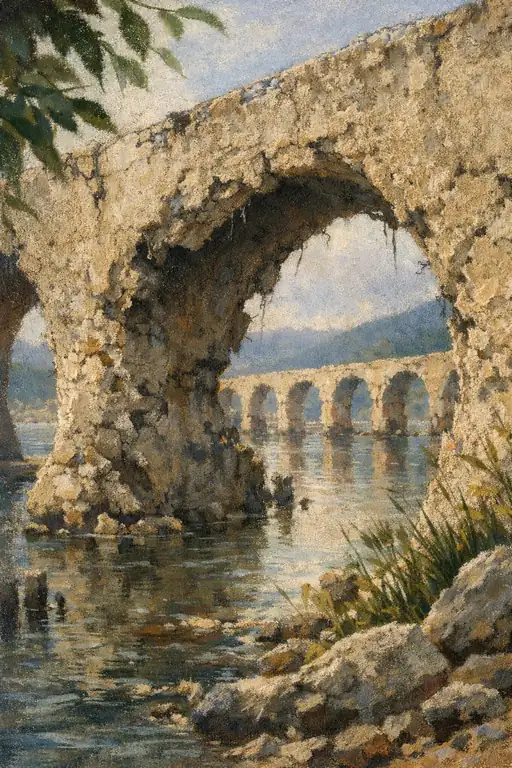 Echoes of the Ancients
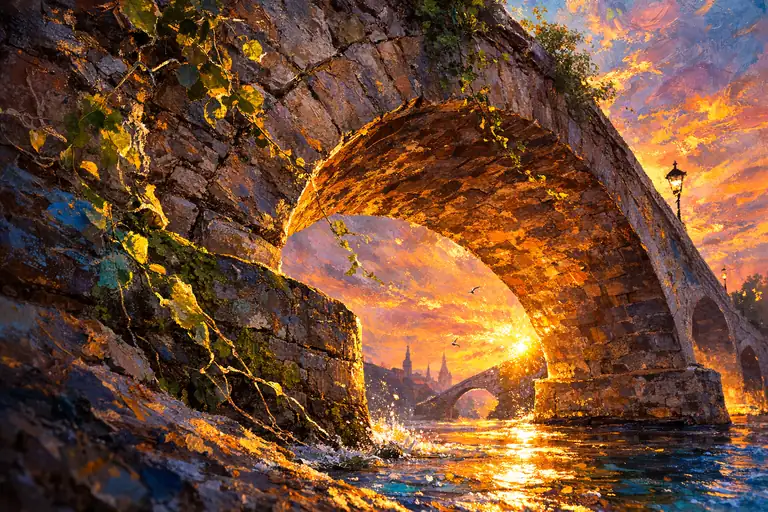 Bridge to the Sunburst
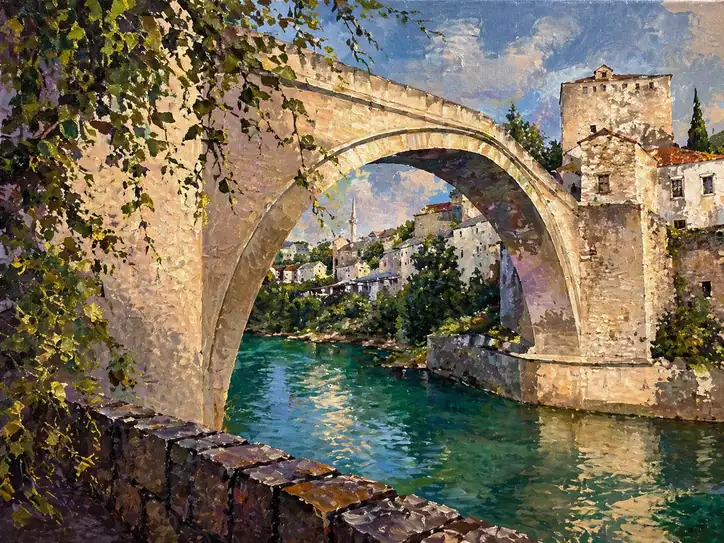 The Eternal Span of Emerald Dreams