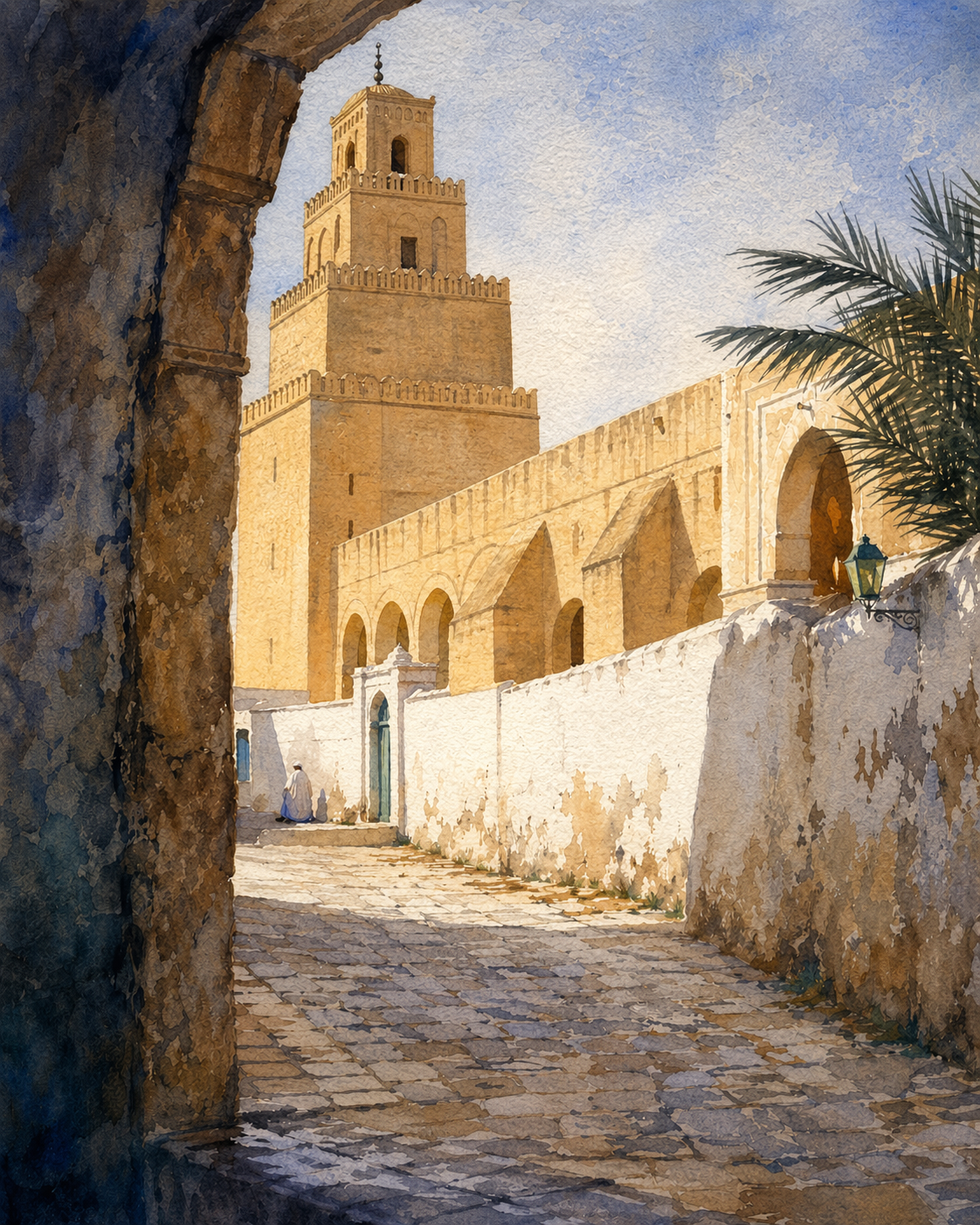
The Guardian of the Cobbled Sands
Critique
1. Introduction This watercolor painting presents a compelling view of historical North African architecture, centered on a majestic tiered minaret. The composition effectively utilizes an architectural frame to draw the viewer into a sunlit, narrow thoroughfare. It captures the essence of a bygone era, where the interplay of light and stone creates a profound sense of place and historical weight. The work is a testament to the enduring beauty of traditional urban landscapes. 2. Description The focal point is a multi-tiered, sandy-hued tower that rises against a pale blue sky, exhibiting intricate defensive or decorative brickwork. In the foreground, a cobblestone street leads toward a white-washed wall and an arched doorway where a solitary figure in white robes sits. To the right, a weathered wall is topped with a green lamp and partially obscured by the fronds of a palm tree. The entire scene is framed by a dark, textured stone arch on the left. 3. Analysis The artist demonstrates mastery in the application of chiaroscuro, using the intense sunlight to create sharp, dramatic shadows that define the architectural volumes. The warm, ochre tones of the masonry contrast beautifully with the cool shadows and the subtle blues of the sky. Spatial depth is achieved through the receding lines of the cobblestones and the layered arrangement of the foreground arch, the street, and the towering minaret. 4. Interpretation and Evaluation The painting evokes a mood of quiet contemplation and timelessness, suggesting the midday heat and the stillness of an ancient city. The technical execution of the textures, particularly the rough-hewn stone and the cracked plaster of the walls, is exceptional in its detail. The inclusion of the solitary figure provides a human scale and reinforces the theme of solitude and historical continuity within the vast architectural setting. 5. Conclusion The artwork is a highly successful atmospheric study that balances grand architectural forms with intimate environmental details. The initial focus on the impressive tower transitions into a deeper appreciation for the subtle textures and the masterly control of light. It leaves the viewer with a lasting impression of the dignity and silent presence of the past, marking it as a work of significant technical and emotive merit.
Same Subcategory
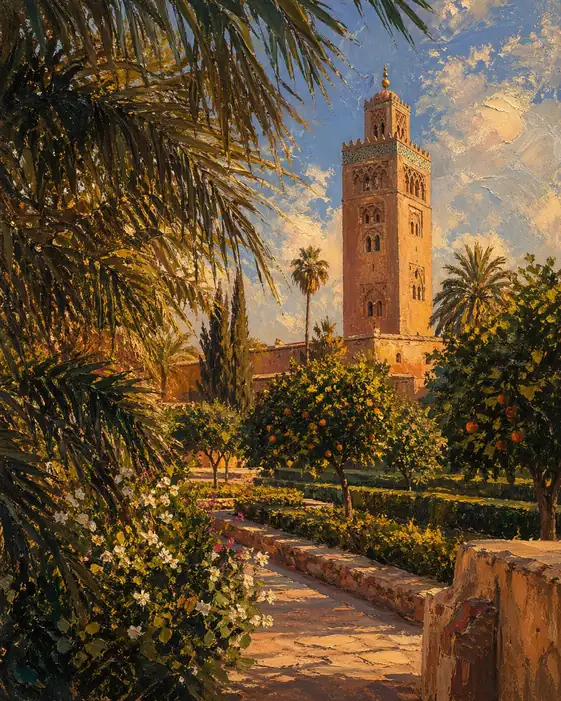 Symphony of the Golden Minaret
Similar Artworks
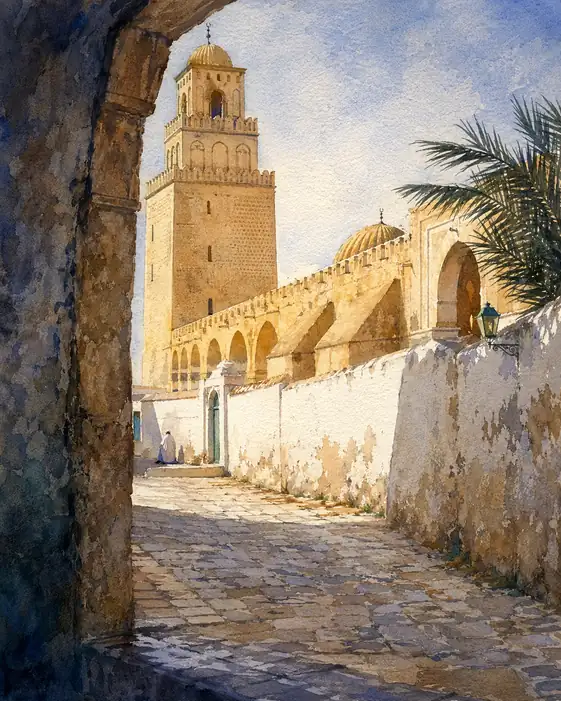 Echo of Prayer from the Sun-Drenched Arch
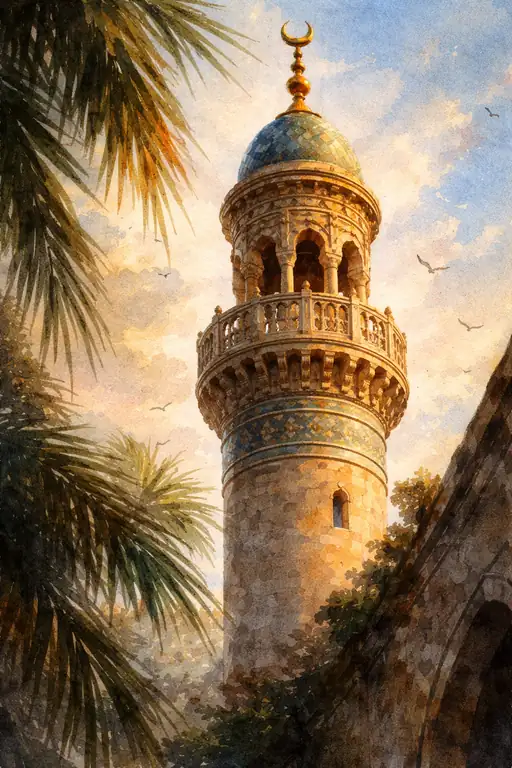 Golden Hour at the Minaret
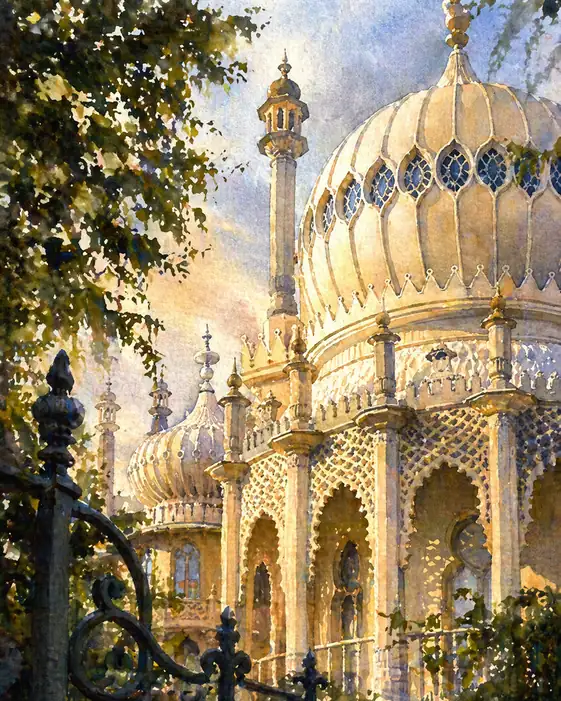 Radiance of the Grand Pavilion
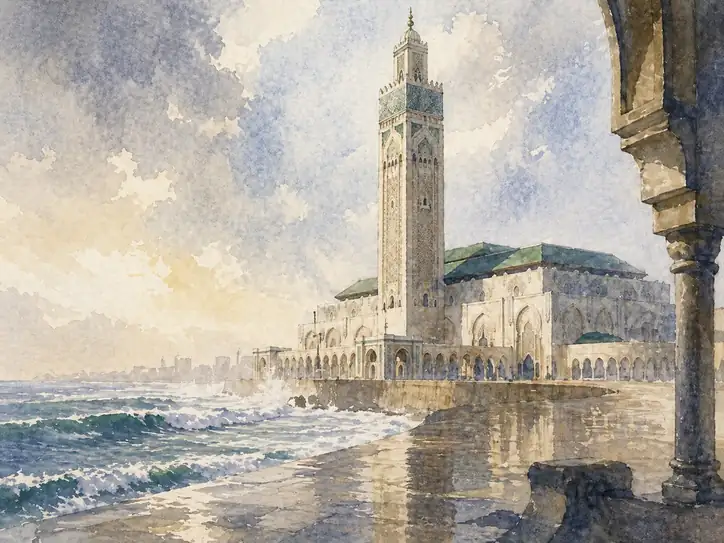 Monolith of Faith and the Resolute Sea
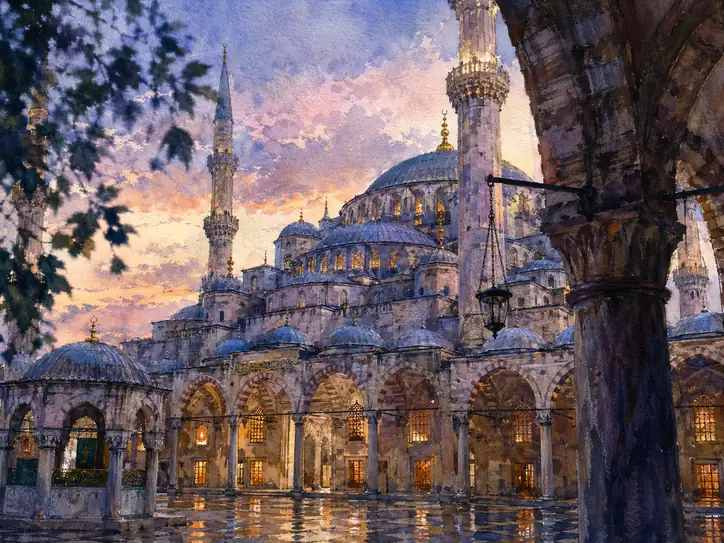 Twilight Prayer: When the Sacred Sky Whispers
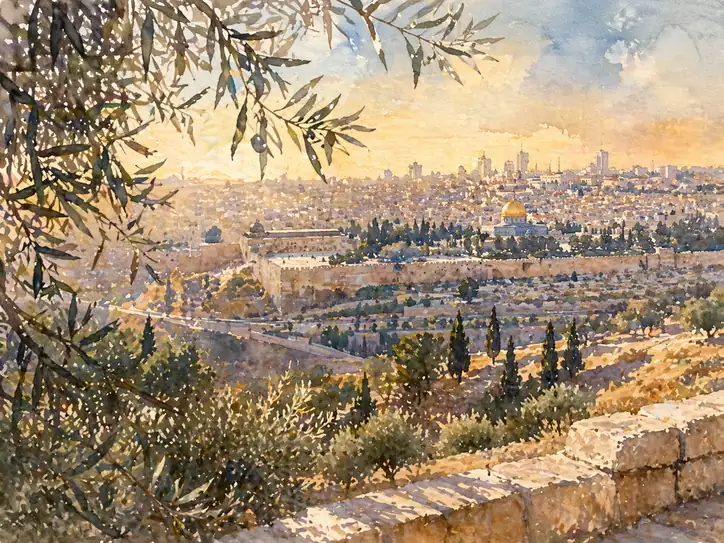 Jerusalem's Golden Radiance
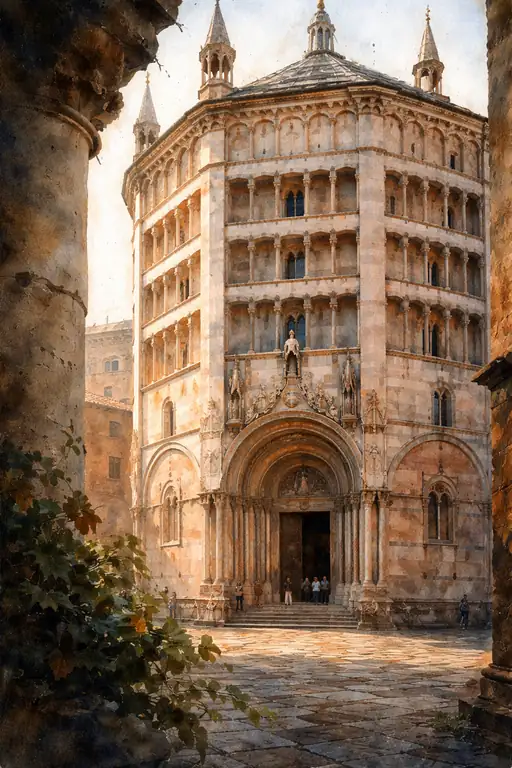 The Golden Sanctum: A Solitary Journey Through Time
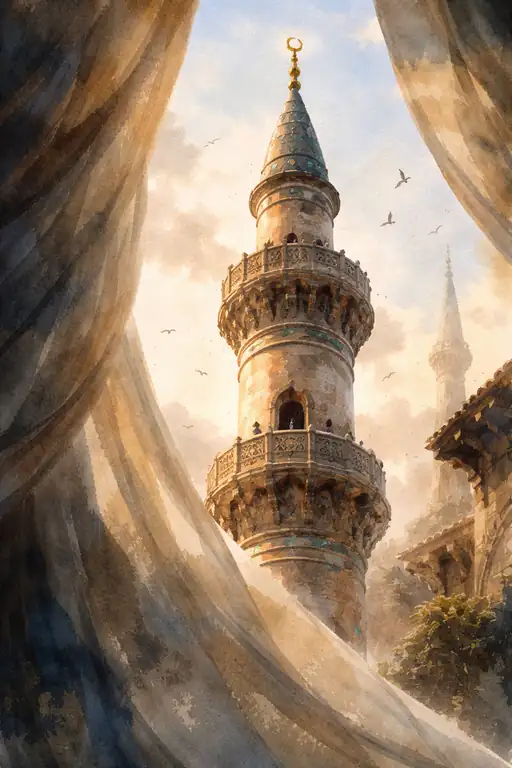 Minaret Beyond the Veiled Arch
 Emerald Dome of the Setting Sun
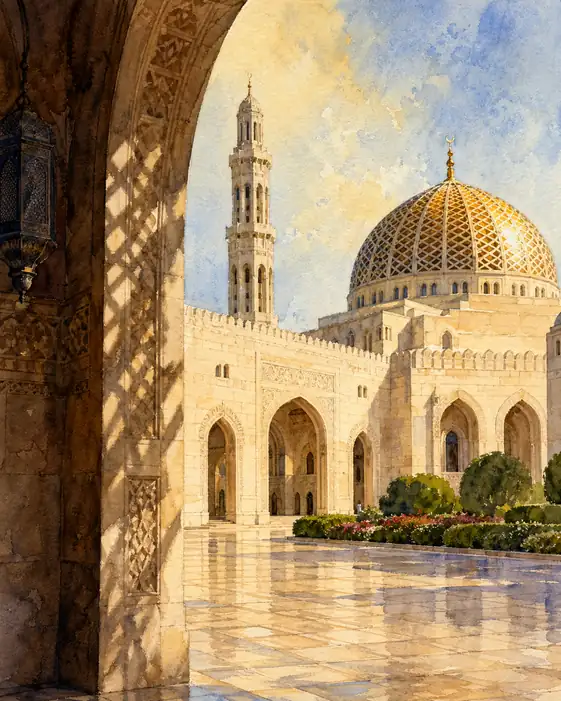 Where the Sun Kneels in Prayer