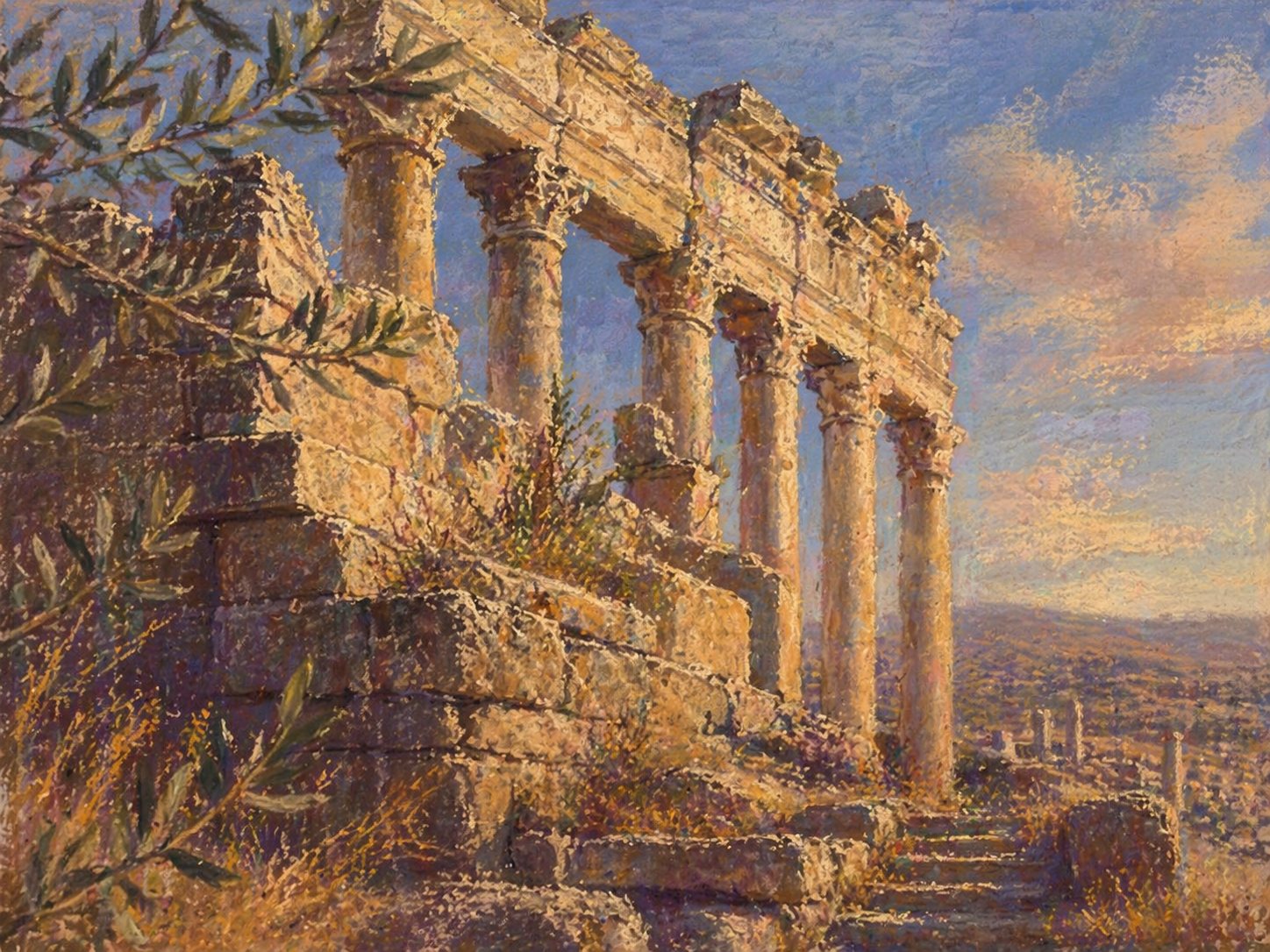
The Last Light on Sacred Pillars
Critique
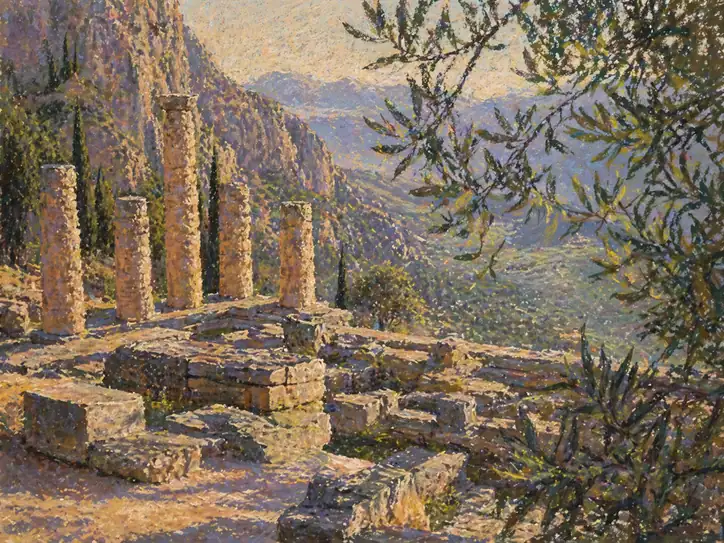
1. Introduction This evocative oil painting depicts the remains of an ancient classical temple perched upon a rugged hillside, overlooking an expansive valley during sunset. The work captures the enduring majesty of stone ruins against the backdrop of a vast, natural landscape. It explores the themes of historical passage and the serene beauty found in the intersection of architectural heritage and the cyclical rhythms of nature. 2. Description The composition features a prominent row of weathered Corinthian columns that recede diagonally into the background, supported by massive, tiered stone blocks. In the left foreground, the delicate foliage of an olive tree frames the scene, its leaves catching the fading light. The right side of the canvas opens up to a wide-angle view of a distant valley and undulating hills under a sky filled with soft, pastel-hued clouds. The entire scene is unified by the warm, golden glow of the setting sun, which illuminates the textures of the stone and the parched grass. 3. Analysis The artist employs a highly textured application of paint, likely using a combination of brushes and palette knives to create a vibrant, tactile surface. This technique allows the light to appear as though it is flickering across the uneven surfaces of the ancient masonry. The color palette is sophisticated, utilizing warm ochres, siennas, and oranges for the sunlit areas, contrasted with deep purples and blues in the shadows. The diagonal recession of the columns creates a strong sense of spatial depth, drawing the viewer’s gaze toward the horizon. 4. Interpretation and Evaluation The painting is a profound meditation on time and the sublime. The contrast between the solid, enduring presence of the ruins and the fleeting, ethereal quality of the sunset creates a poignant emotional resonance. The artist demonstrates exceptional skill in capturing the atmospheric perspective of the distant valley, which fades into soft, hazy tones. The use of texture is particularly effective, as it conveys the physical weight and weathered history of the stone structures. The overall composition is masterfully balanced, blending historical grandeur with a sense of peaceful isolation. 5. Conclusion What begins as a study of classical architecture transforms into a lyrical exploration of light and atmosphere. The harmony between the human-made monumental structures and the eternal landscape suggests a sense of continuity and quiet reverence. This piece successfully conveys the awe-inspiring experience of standing before the remnants of a lost civilization, leaving a lasting impression of historical depth and natural beauty.
Same Subcategory
Similar Artworks
 Echoes of Empire in the Golden Hour
 Echoes in Stone: A Sunlit Requiem
 The Eternal Glow of Forgotten Wisdom
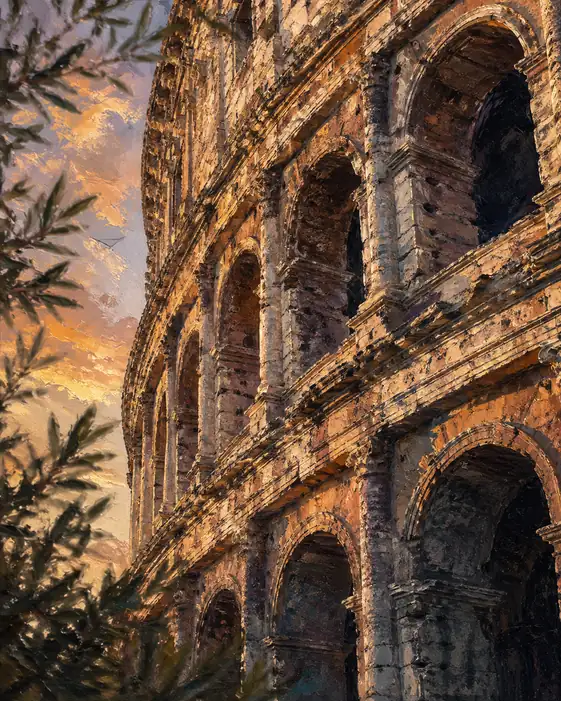 Stone of the Ages, Light of the Moment
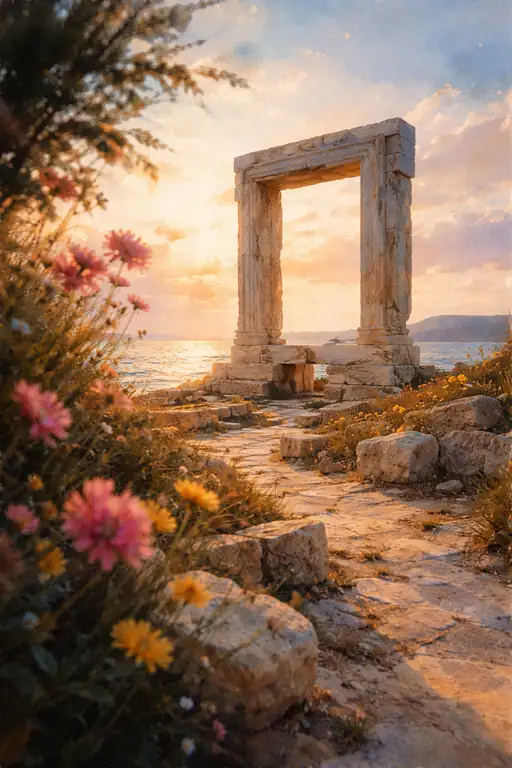 Golden Gaze Through the Ancient Portal
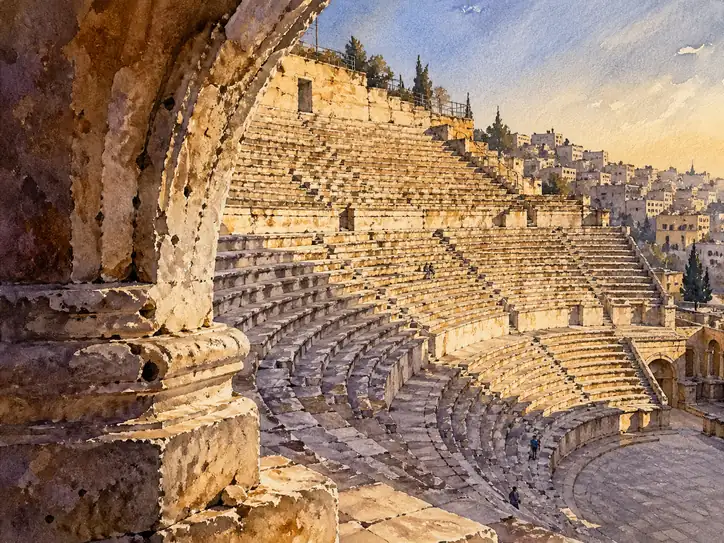 Echoes of the Arena: Where Silence Meets Past Glory
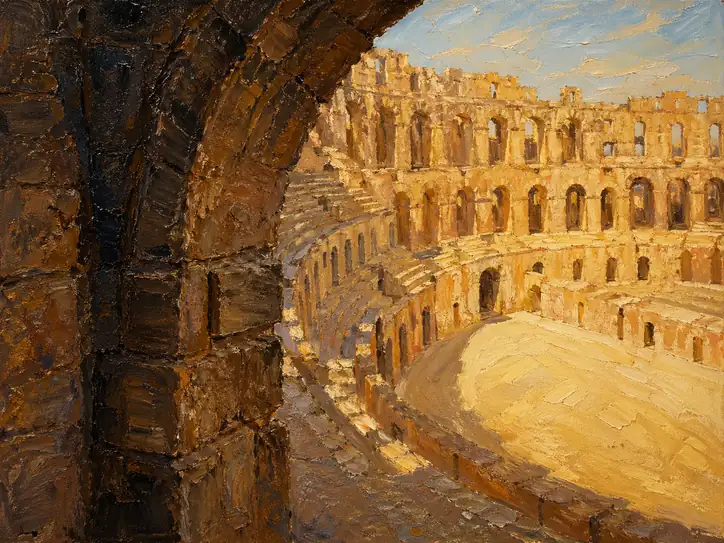 A Requiem of Light for Eternal Stone
 Where Time Dissolves in Morning Gold
 Twilight Over the Eternal Stage
 The Enduring Pillars of Time