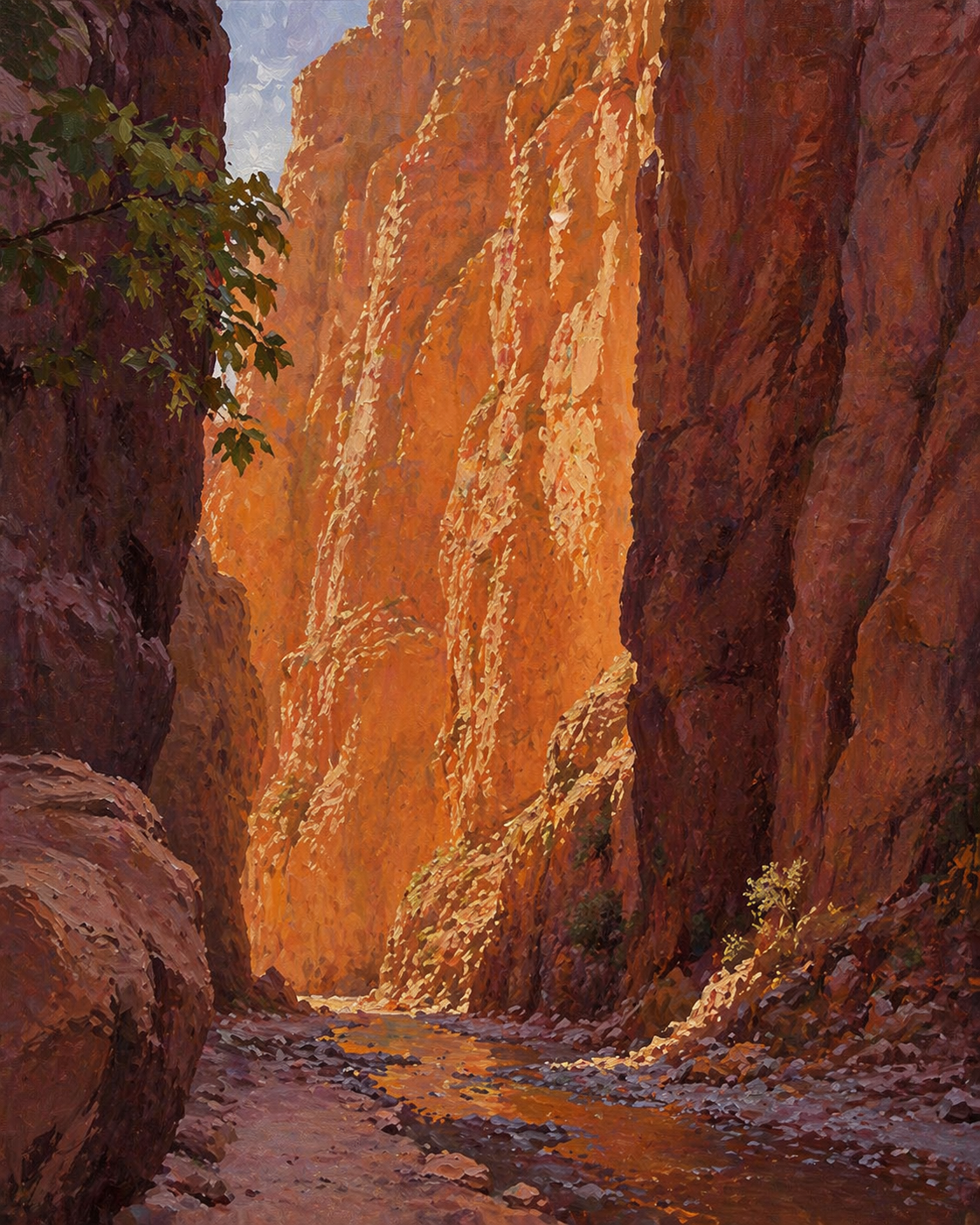
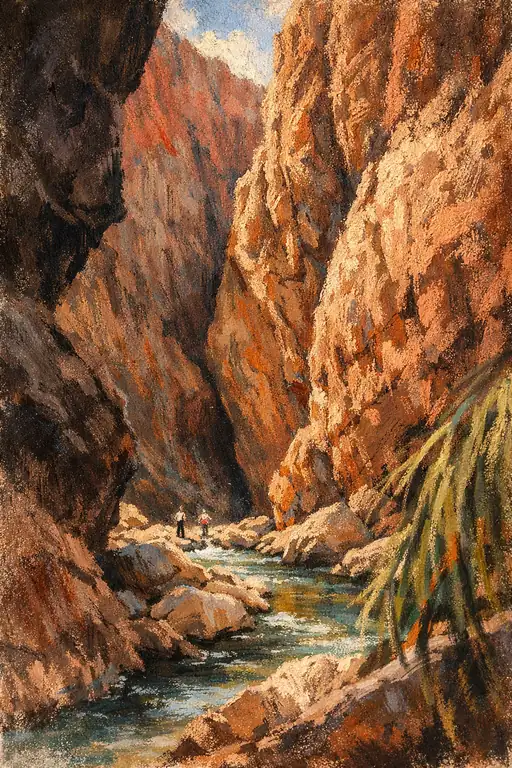
Resonance of the Sun-Drenched Gorge
Critique
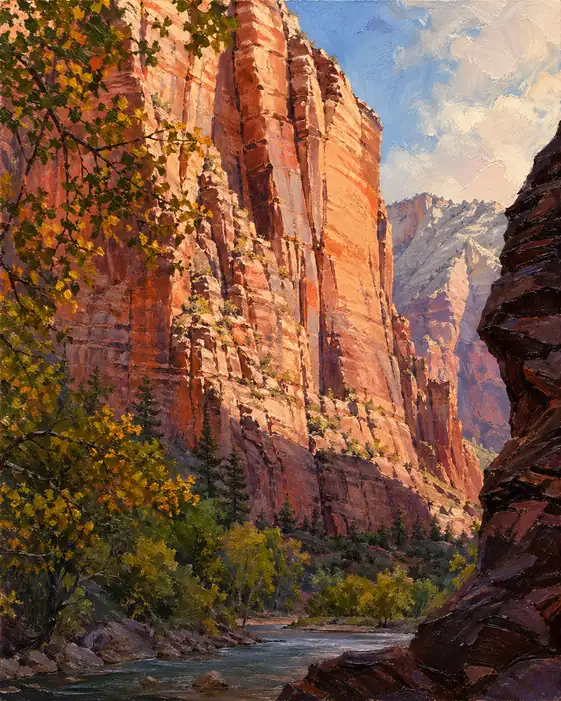
1. Introduction This vertical oil painting presents a dramatic view of a deep canyon, characterized by towering cliffs and a small stream at its base. The work captures the monumental scale of the natural landscape through a focus on light and geological texture. It emphasizes the contrast between the immense rock formations and the delicate elements of life within the gorge. 2. Description The composition is dominated by massive canyon walls that rise steeply on both sides of the frame. In the center, sunlight illuminates a distant rock face, turning it into a vibrant, glowing orange. The foreground features shadowed, textured rocks on the left and a small stream reflecting the warm light at the bottom. A branch with green leaves overhangs from the upper left, while small yellow plants catch the light on the lower right slope. 3. Analysis The artist employs a strong vertical emphasis, using the height of the cliffs to create a sense of awe and enclosure. A rich impasto technique is evident, with thick, energetic brushstrokes defining the craggy surfaces of the rock. The color palette is centered on a dramatic interplay between fiery oranges and deep, cool shadows in tones of purple and brown. This lighting effect creates a powerful sense of depth and volume within the narrow space of the canyon. 4. Interpretation and Evaluation This piece effectively conveys the raw power and enduring presence of the natural world. The use of bold textures and saturated colors transforms a geological subject into a highly expressive visual experience. The inclusion of small-scale foliage serves as a vital counterpoint to the massive cliffs, highlighting the resilience of life in harsh environments. The technical execution is confident, particularly in how the sunlight is rendered as if it were emanating from the stone itself. 5. Conclusion What begins as a study of geological forms develops into a profound meditation on light and scale. The painting successfully balances the overwhelming magnitude of the canyon with careful attention to atmospheric conditions. It stands as a testament to the ability of landscape art to evoke both a sense of place and an emotional response to nature's grandeur.
Same Subcategory
 Echoes from the Valley of Endurance
Similar Artworks
 Reflections in the Quiet Flow
 Emerald Veins Through Ancient Stone
 The Imposing Shadows of the Deep Gorge
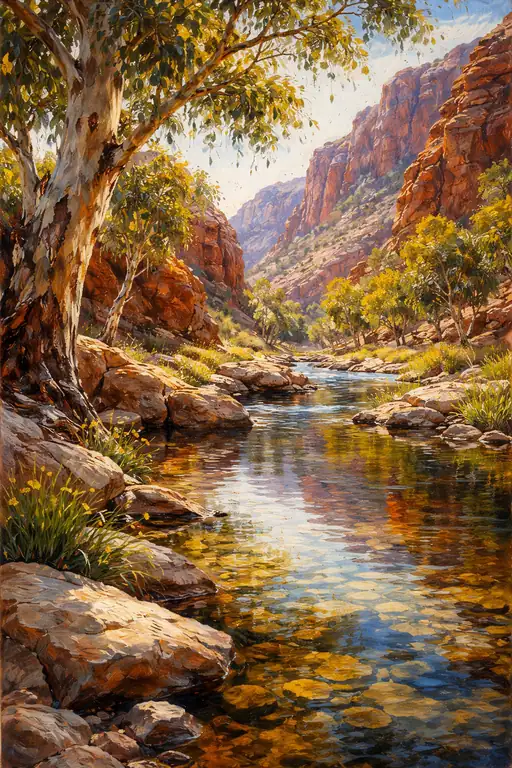 The Wild Oasis
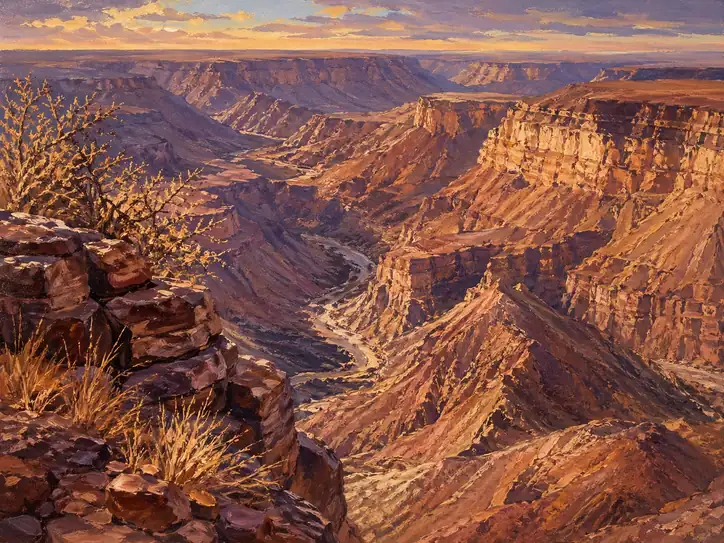 Canyon of the Crimson Heart
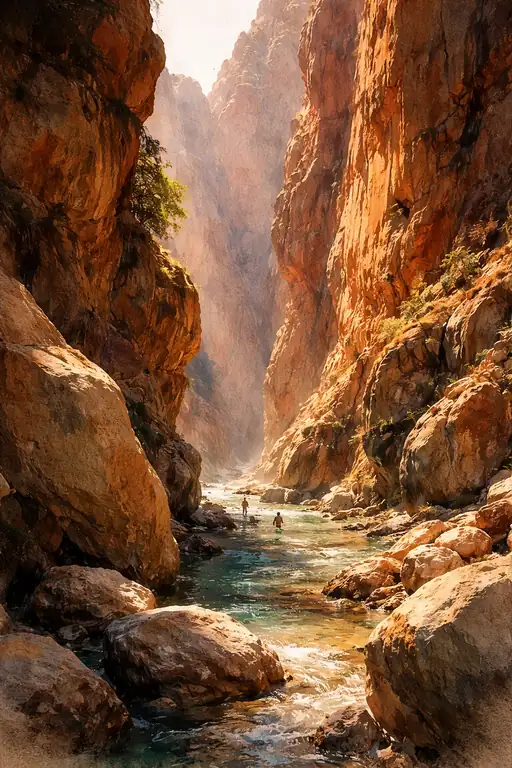 Journey Into the Heart of the Canyon
 Where Silence Meets the Golden Dawn
 Whispers from the Ancient Abyss
 Altar of the Afternoon Sun
 The Silent Watchers of Qadisha