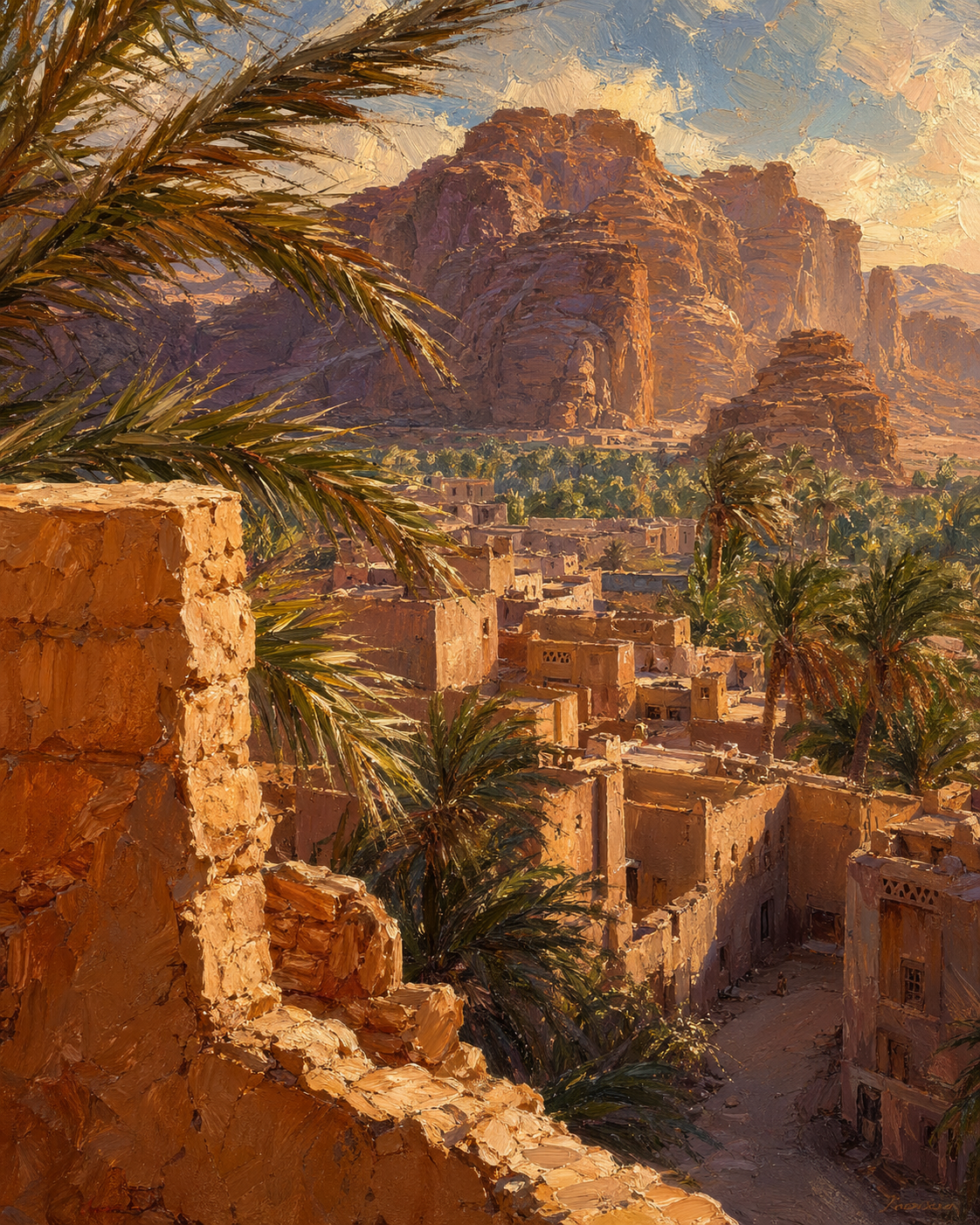
The Silent Watchers: A Village in the Sun
Critique
Introduction This oil painting presents a captivating vista of an ancient desert settlement situated beneath a towering mountain range. The work captures a moment of serene transition as the golden light of late afternoon washes over the rugged terrain. It serves as a testament to the enduring relationship between human architecture and the natural environment in arid landscapes. Description In the foreground, a heavily textured stone wall in shades of ochre frames the left side of the composition. Beyond it, a dense cluster of mud-brick buildings with flat roofs and narrow windows forms the heart of a village. Numerous palm trees with long, slender fronds are interspersed among the structures, their dark green needles contrasting with the warm earth tones. The background is dominated by massive, jagged sandstone formations that glow with radiant oranges and pinks under a sunlit sky filled with soft, expressive clouds. Analysis The artist employs a vigorous impasto technique, using thick, rhythmic brushstrokes to build a tangible sense of relief and surface tension. This tactile quality is particularly effective in rendering the crumbling textures of the stone walls and the faceted surfaces of the distant peaks. The composition uses the foreground ruin as a repoussoir, guiding the viewer's gaze from the immediate vicinity toward the expansive horizon. A warm color palette of sienna and gold creates a unified atmosphere, while the diagonal lines of the mountain ridges add a dynamic sense of scale. Interpretation and Evaluation The painting evaluates the beauty of a harsh yet vibrant ecosystem through its masterful handling of light and shadow. The play of luminosity across the uneven surfaces suggests a profound appreciation for the subtle shifts in desert color. The artist demonstrates exceptional control over both composition and technical execution, effectively balancing the intricate details of the village with the monumental presence of the mountains. This original interpretation avoids clichés by focusing on the physical weight and atmospheric depth of the scene rather than mere representation. Conclusion Initially, the viewer is struck by the intense warmth and vibrant texture, but a closer examination reveals a carefully structured harmony. The work successfully captures the quiet dignity of a place that has remained unchanged for centuries. It is a powerful reminder of the sublime beauty found in the most remote corners of the world.
Same Subcategory
Similar Artworks
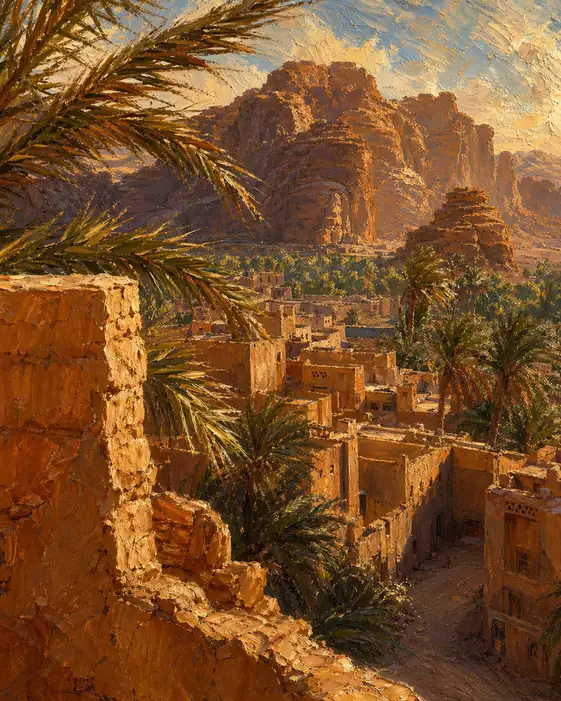 The Breath of the Oasis: A Golden Stronghold
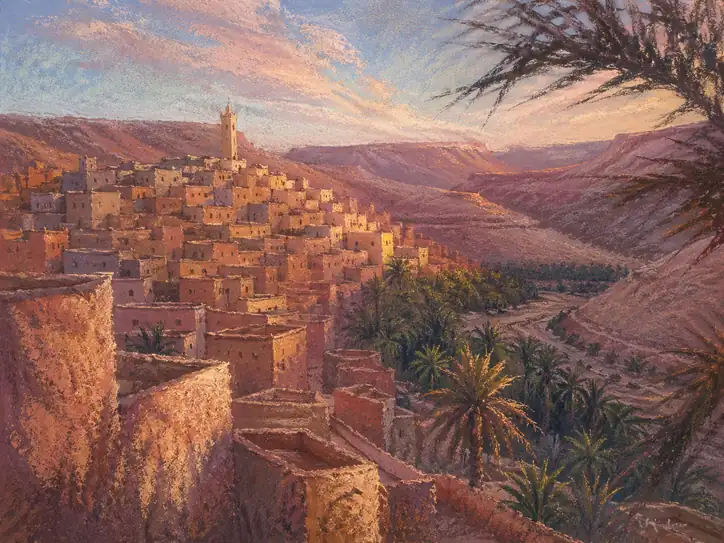 The Golden Pulse of a Desert Heart
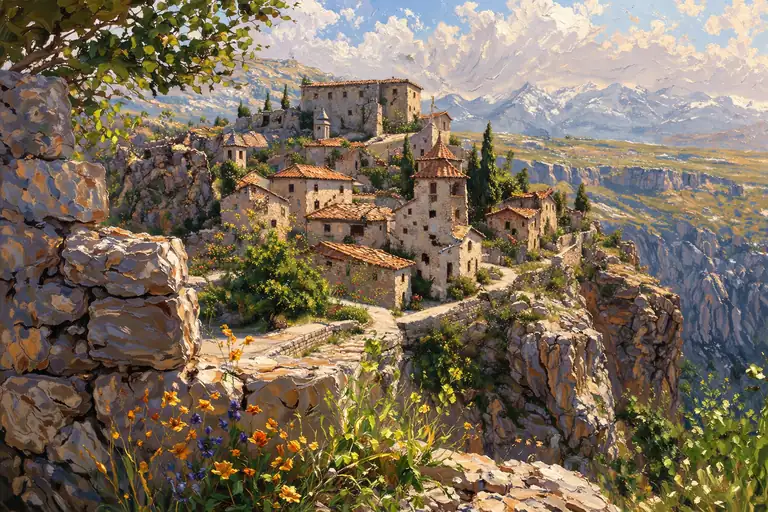 Fortress Among the Alpine Flora
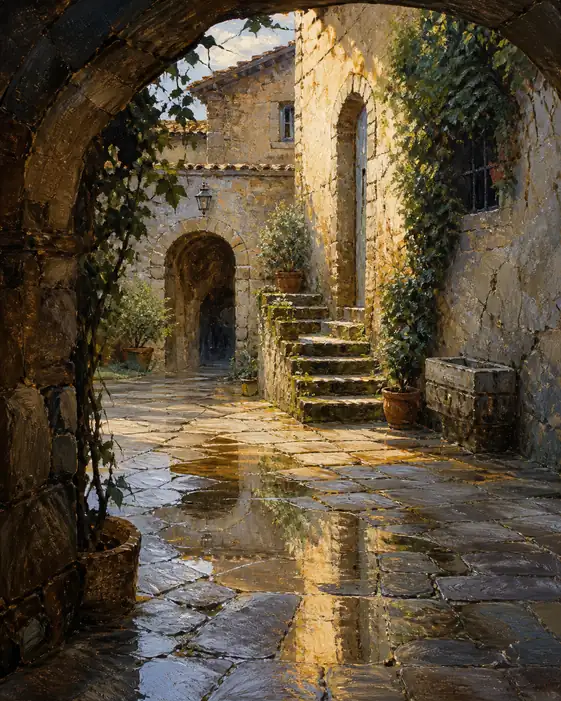 Reflections of a Sunlit Silence
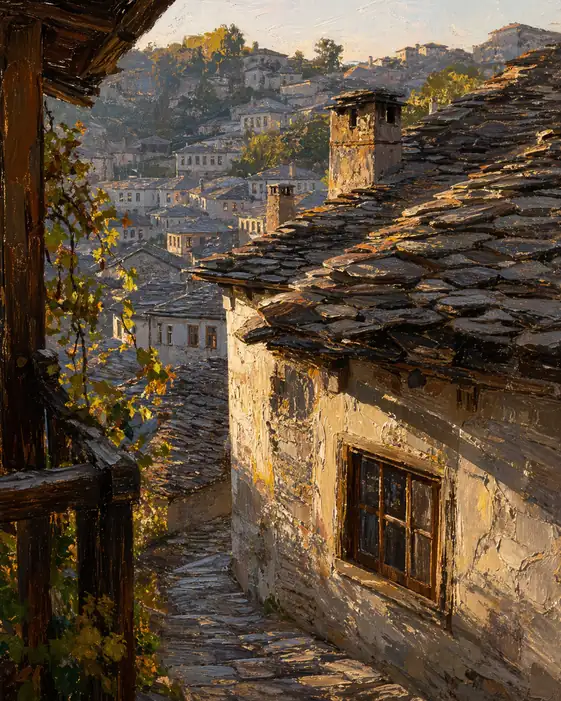 Slumber of the Stone Roofs
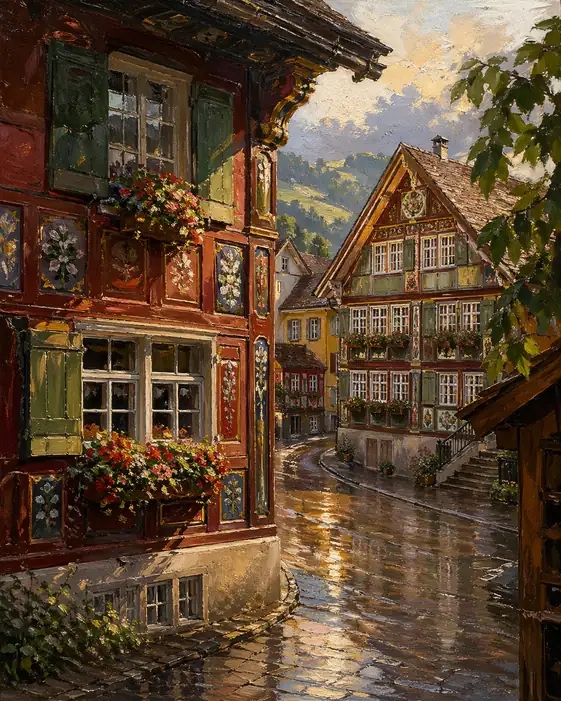 Fence Line to the Snow-capped Majestic Peaks
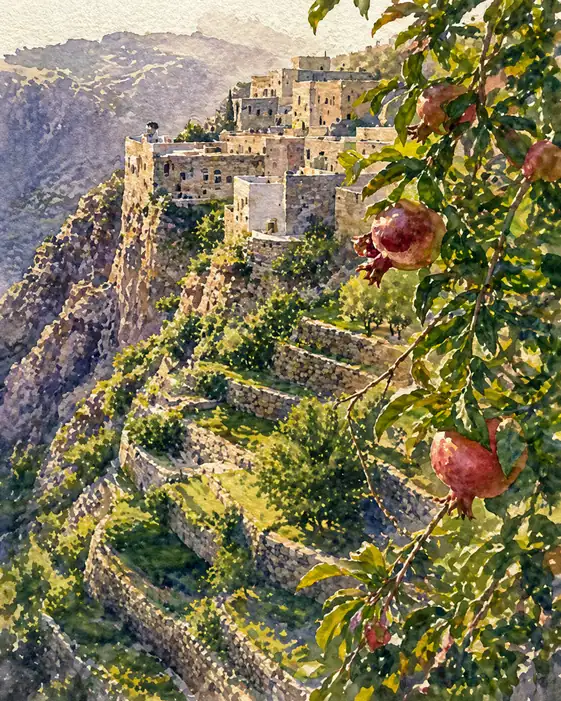 Harvest on the Terraced Slopes
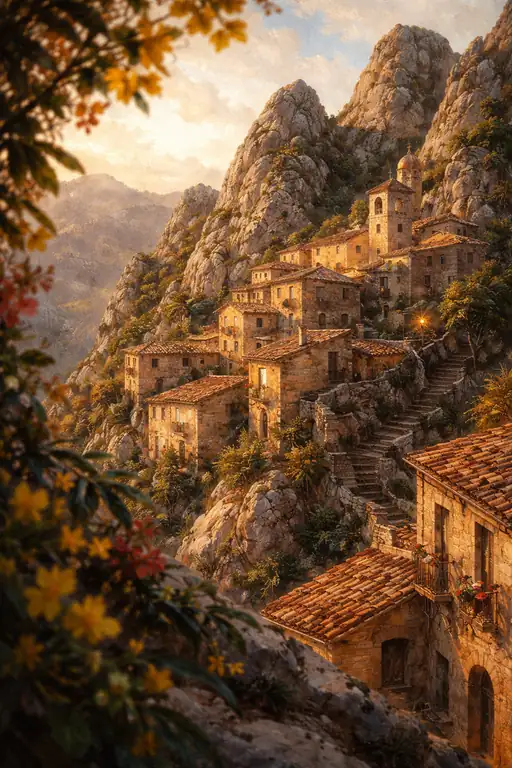 Golden Embrace of the Mountain Village
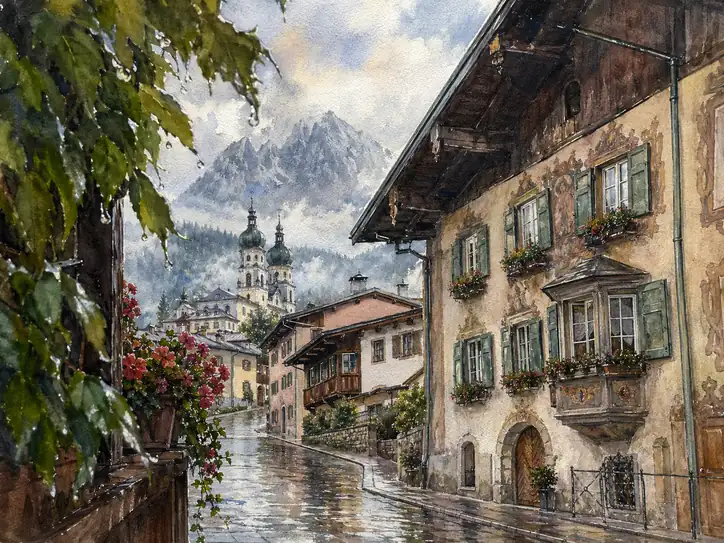 A Charming Alpine Village Glistening Under a Gentle Rainfall
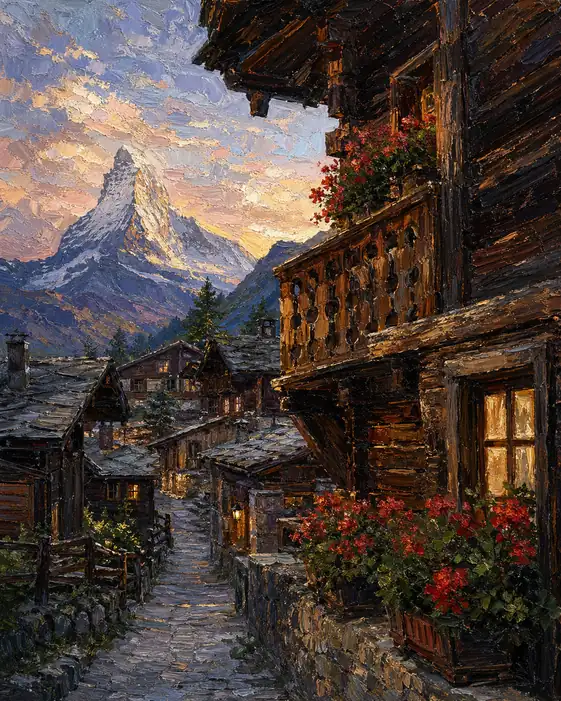 Golden Echoes of the Peak