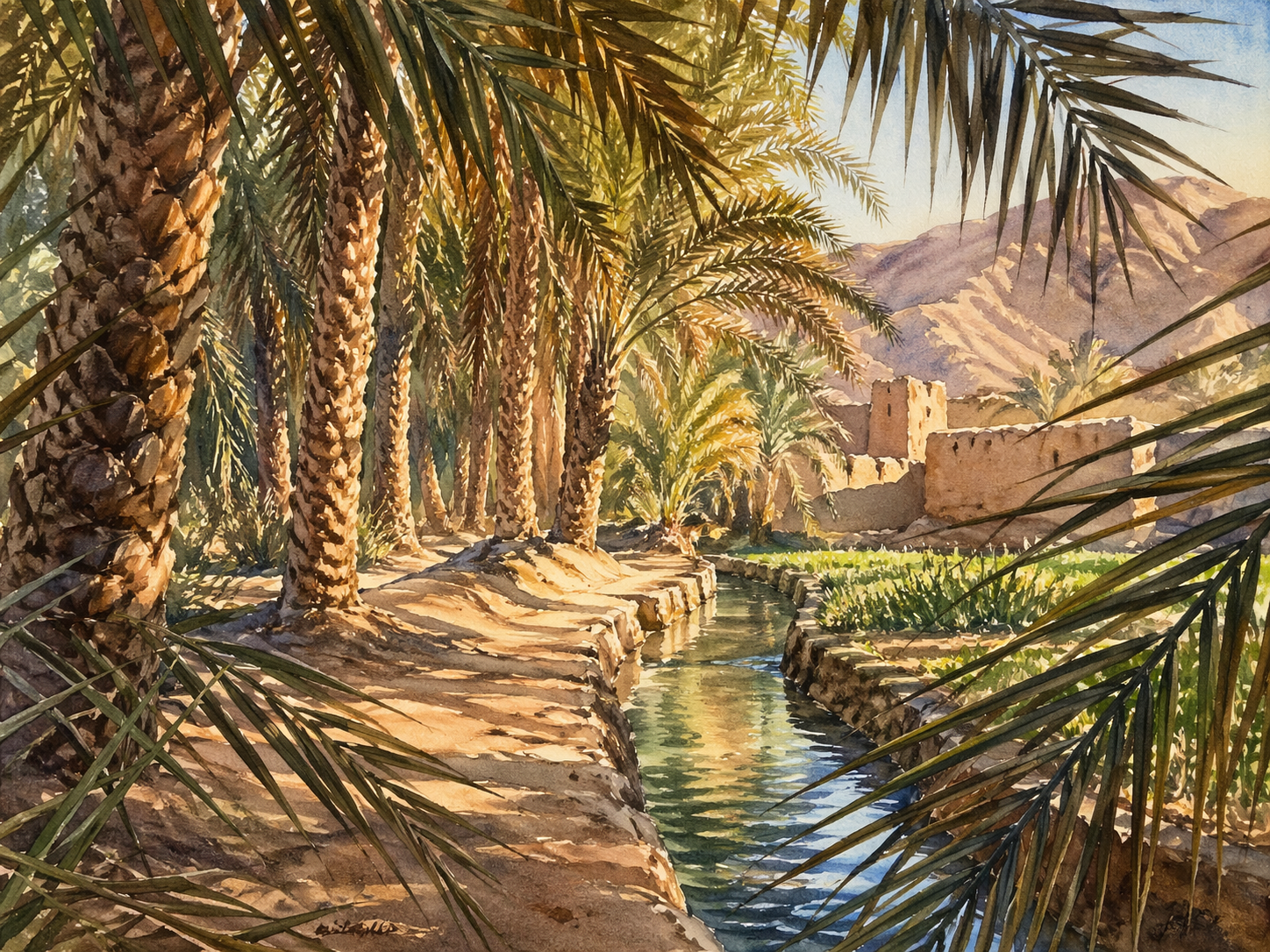
Sanctuary of the Date Palms
Critique
1. Introduction This vibrant watercolor painting captures the tranquil beauty of an oasis, centered around a traditional stone-lined irrigation canal known as a falaj. The work beautifully illustrates the delicate balance of life in an arid environment, highlighting the essential role of water in sustaining both nature and human settlement. It invites the viewer to appreciate the ingenious traditional engineering that has fostered greenery amidst the desert for generations. 2. Description A clear stream of water flows through a narrow channel in the center, reflecting the bright sky and the surrounding foliage. Flanking the canal are tall, slender date palms with textured trunks, their expansive fronds casting intricate, dark shadows across the sun-baked path. In the background, simple mud-brick structures stand at the foot of rugged, purplish mountains, while lush green plots of cultivation thrive alongside the vital water source. 3. Analysis The artist utilizes a strong one-point perspective, with the irrigation channel serving as a leading line that draws the eye deep into the composition. The interplay of light and shadow is particularly effective, with the bright, direct sunlight on the path contrasting sharply with the cool, shaded areas beneath the palms. A harmonious color palette of warm ochres, earthy browns, and refreshing greens creates a sense of thermal and visual relief within the scene. 4. Interpretation and Evaluation This piece can be interpreted as a celebration of the resilience and resourcefulness of desert cultures, symbolized by the thriving vegetation and the orderly flow of water. The technical execution is superb, especially in the transparent layering of the watercolor washes that capture the reflective surface of the water and the filtered light through the leaves. The composition is expertly framed by overhanging palm fronds, which adds a sense of intimacy and immersion to the viewer's experience. 5. Conclusion In conclusion, the painting successfully portrays the oasis not just as a geographical feature, but as a sanctuary of life and human ingenuity. The initial impression of a peaceful garden eventually reveals the complex interplay between the harsh climate and the carefully managed natural resources. It stands as a masterful tribute to the cultural landscapes of the desert, rendered with both technical precision and deep atmospheric sensitivity.
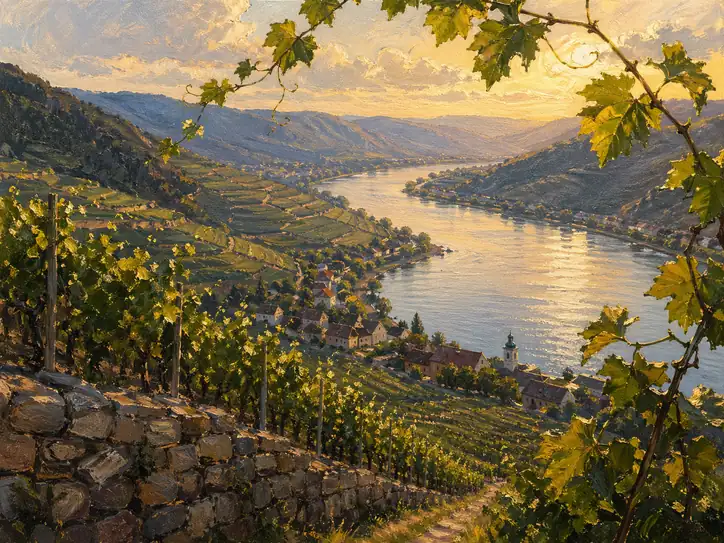 Wachau Valley Sunset
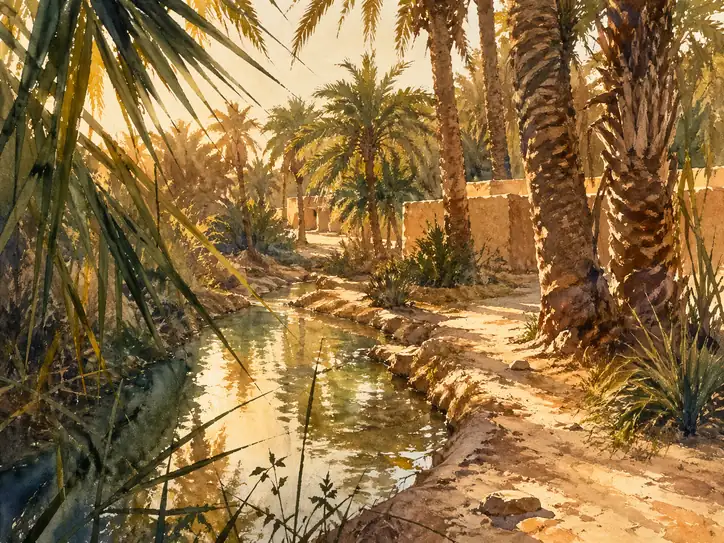 Whispers of the River in the Scorching Silence
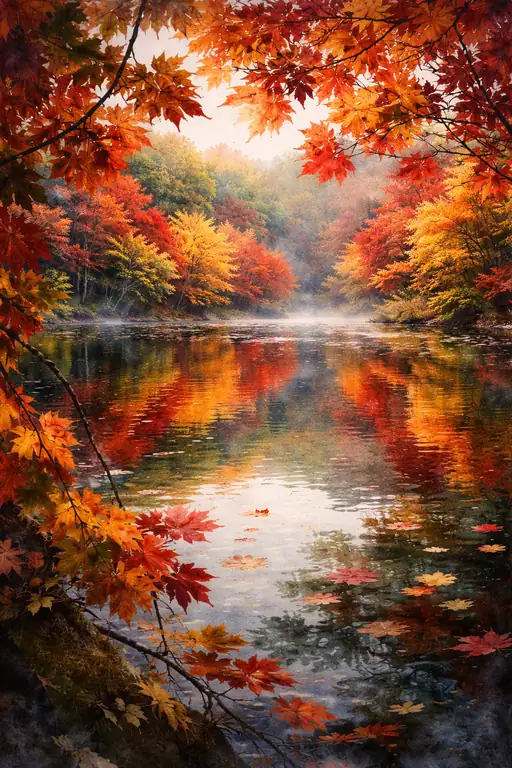 Crimson Canopy: The Heart of Autumn
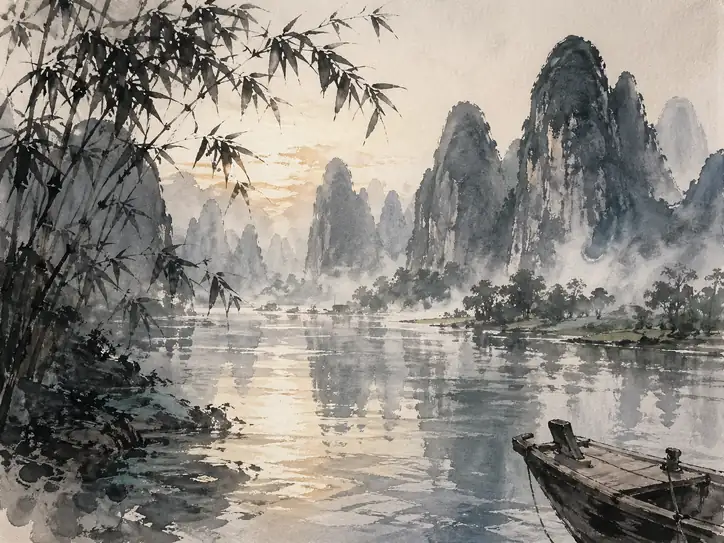 Awakening of the Misty Peaks
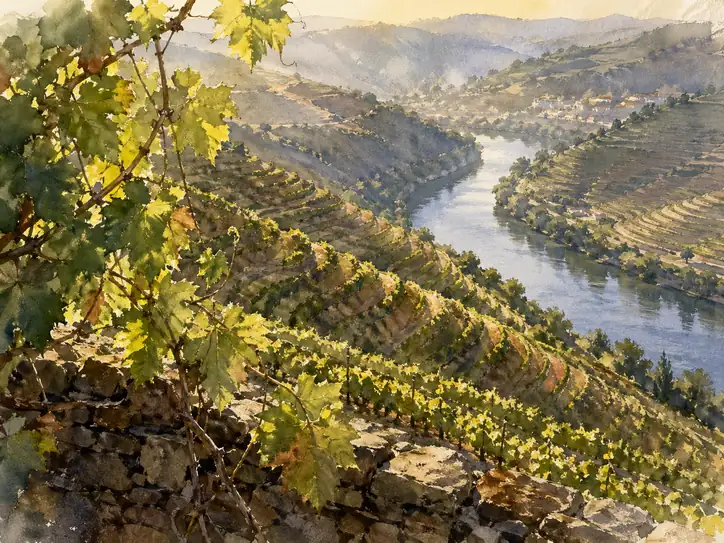 Eternal Terraces: A River's Song
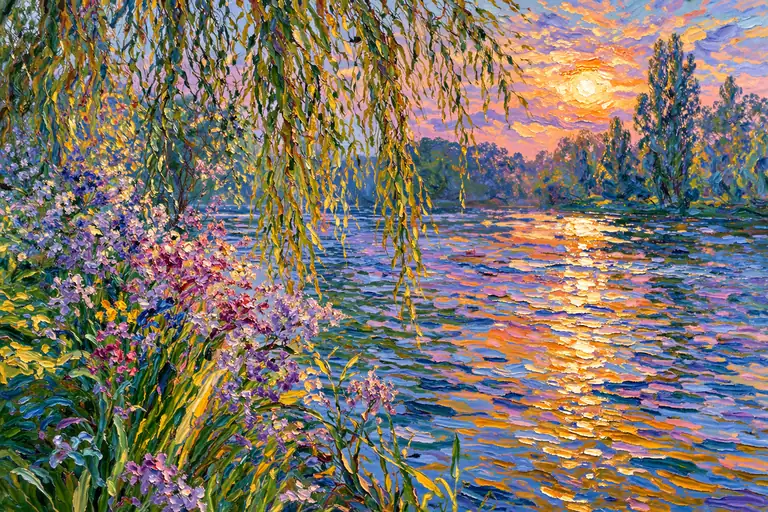 River's Song at Dusk
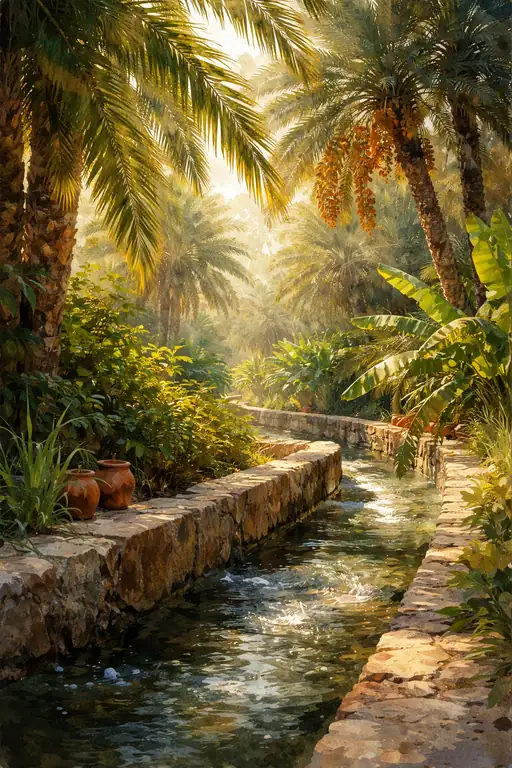 The Golden Vein of Commerce
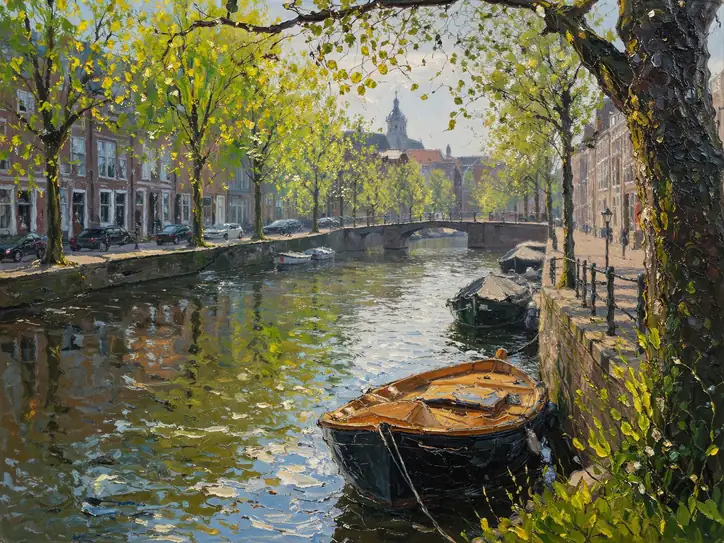 A Brushstroke of Romance
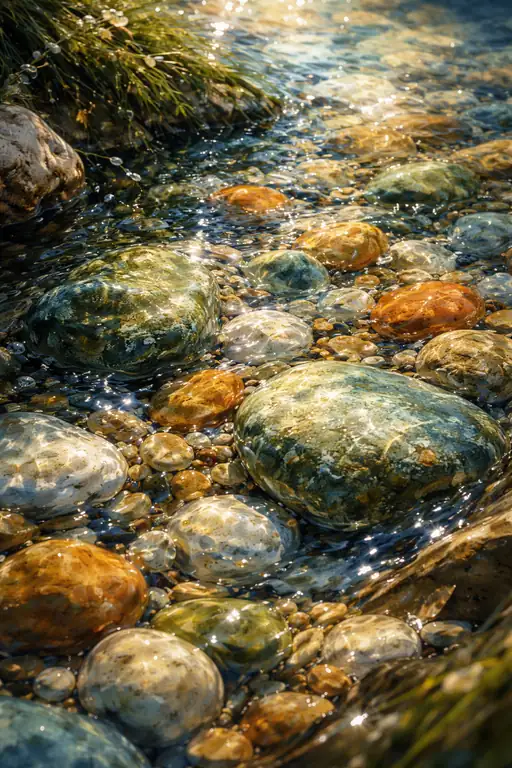 Gems Beneath the Crystal Stream
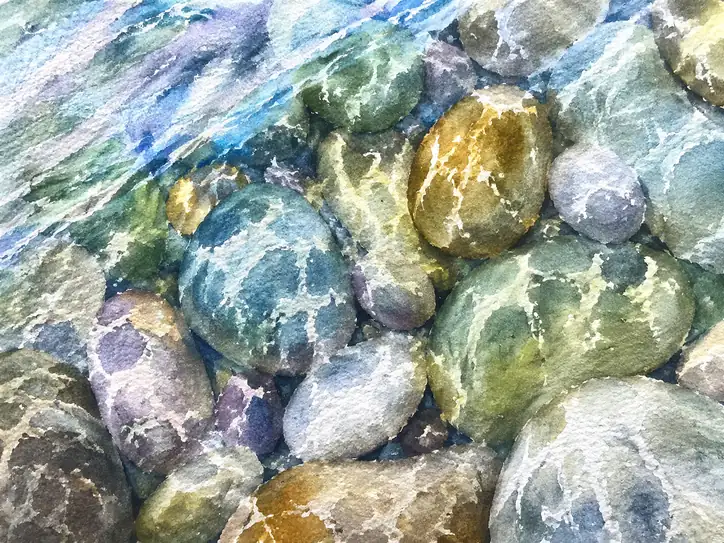 Pebbles in the Stream