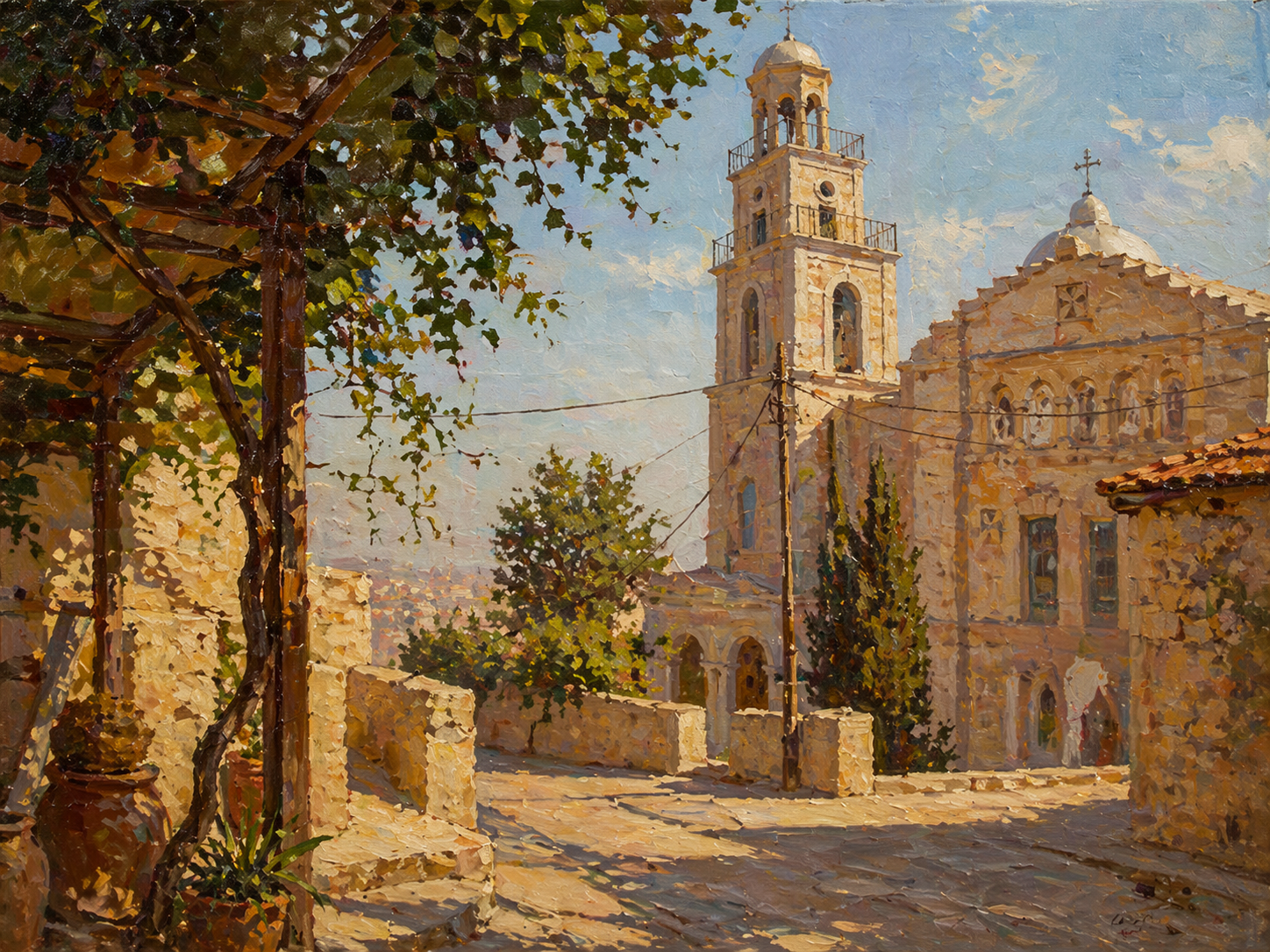
Under the Vineyard's Watch
Critique
1. Introduction This impressionistic oil painting presents a picturesque view of a sunlit Mediterranean plaza dominated by a historic church and a stately bell tower. The artwork captures the essence of a warm afternoon through a vibrant interplay of light and texture. The composition effectively draws the viewer into a space that feels both timeless and full of life. 2. Description The scene features a grand stone church with a domed roof and a tiered campanile set against a pale blue sky. In the foreground, a wooden pergola covered in thick green vines casts soft shadows over a cobbled path. Warm shades of gold, ochre, and sand define the buildings, while deep browns and greens provide depth in the shaded areas. 3. Analysis The artist utilizes bold, rhythmic brushwork and impasto layers to create a tactile surface that mimics the ruggedness of stone and the softness of foliage. The strong directional light from the right creates a dramatic play of highlights and shadows, emphasizing the architectural volumes. The use of a warm-toned palette reinforces the sun-drenched atmosphere of the locality. 4. Interpretation and Evaluation The painting displays a sophisticated understanding of light and its ability to transform architectural forms into a sensory experience. The contrast between the rigid structure of the church and the organic, sprawling vines under the pergola creates a visually engaging balance. This work successfully conveys the quiet majesty of Mediterranean heritage through a modern, expressive lens. 5. Conclusion This artwork is a compelling study of light and atmosphere within a traditional village setting. Through its tactile execution and harmonious color scheme, it captures the fleeting beauty of a sunny day in a historic town. The initial impression of a bright landscape evolves into an appreciation for the artist's masterful control of texture and radiant illumination.
Same Subcategory
 The Grand White Cathedral of Helsinki
Similar Artworks
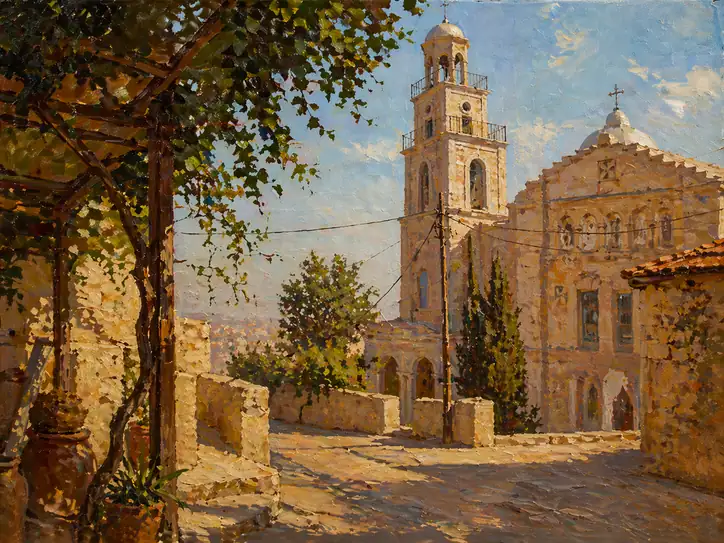 A Mediterranean Summer Song
 Sunlit Path to Turku Cathedral
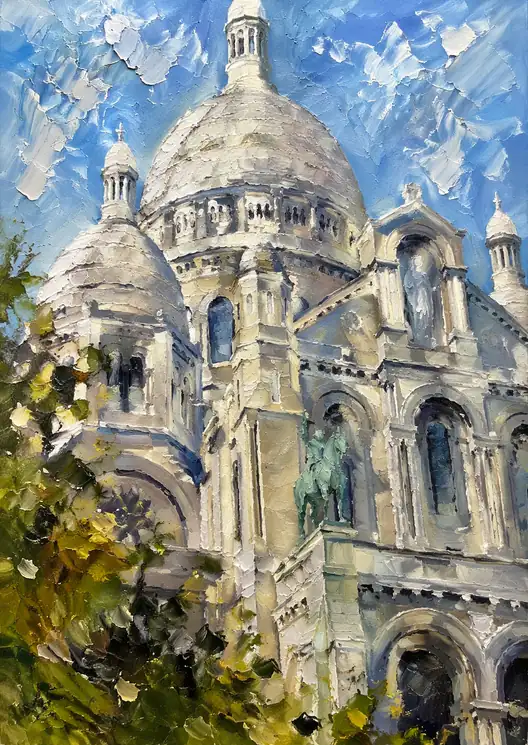 Majesty in Impasto: A Cathedral's Gaze
 Fire in the Sky: Flight of the Dragon
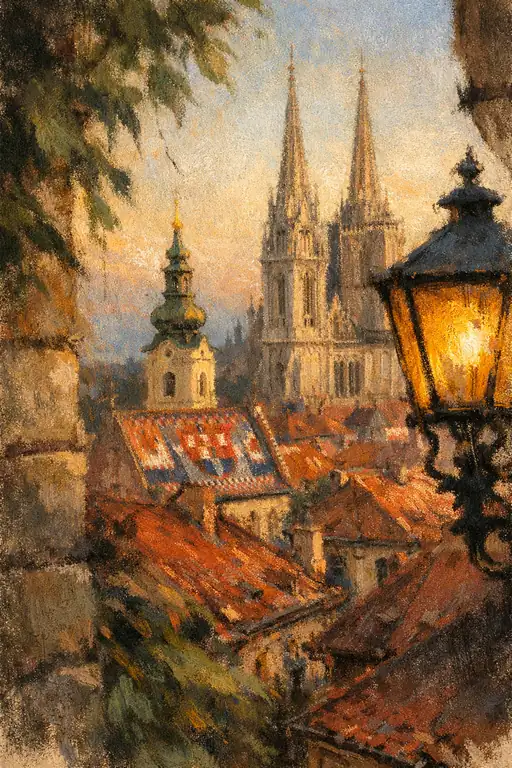 Twilight's Golden Embrace over the Spires
 Ancient Scales of the Forest
 Quiet Sanctuary in the Twilight Snow
 Sanctuary of the Whispering Woods
 Lavender Bloom over the Azure Sea
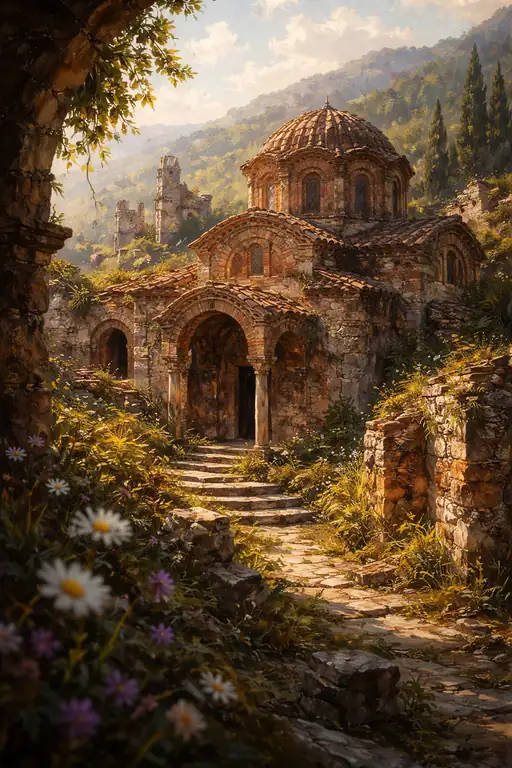 Footsteps of Time: The Sanctuaries' Slumber