Echoes of the Corinthian Path
Critique
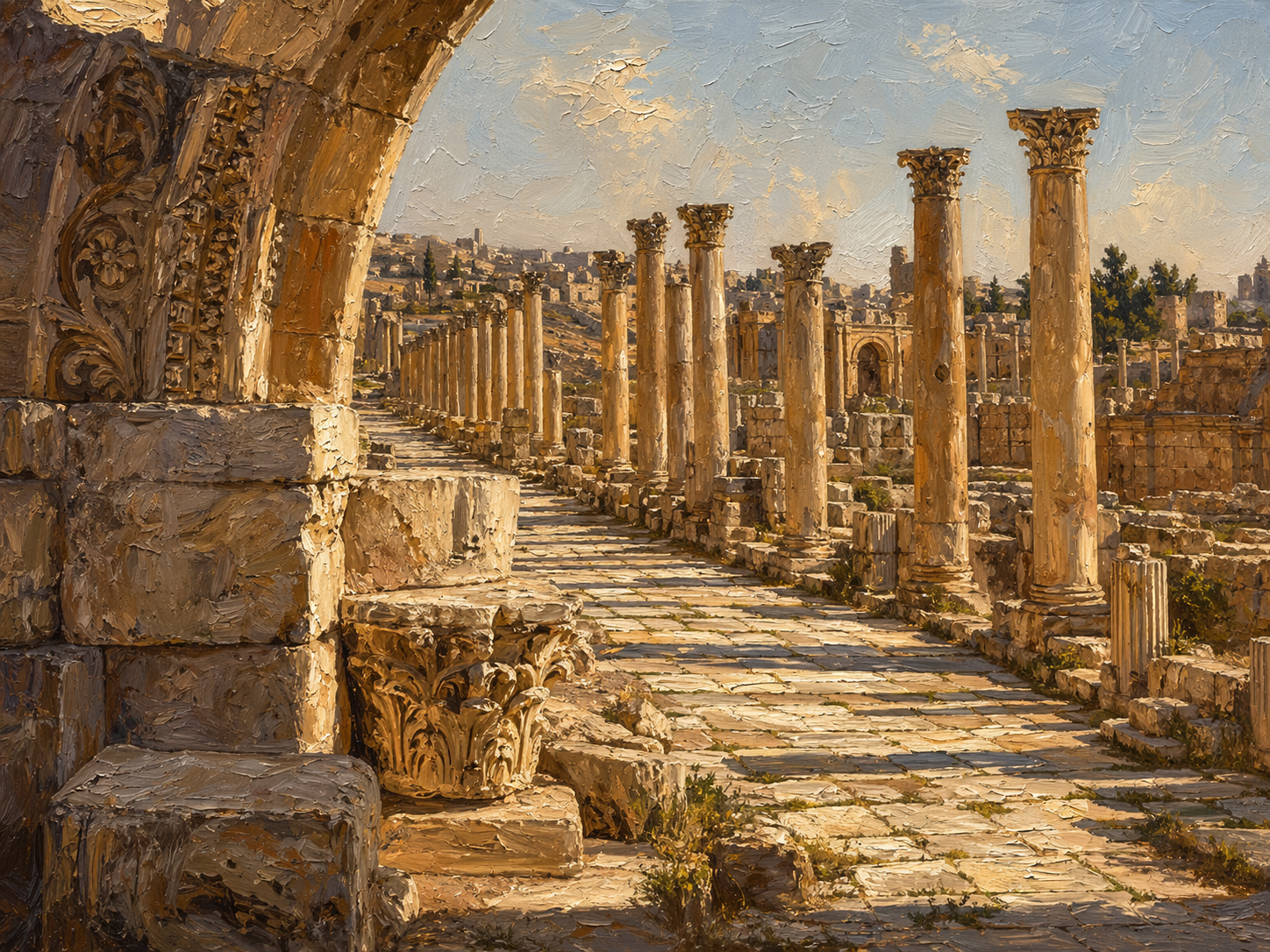
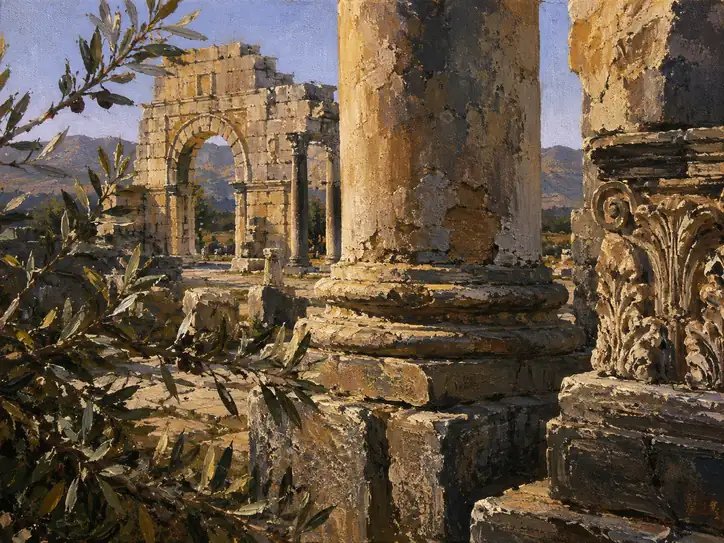
1. Introduction This oil painting depicts a grand colonnade of ancient Corinthian columns, capturing the architectural majesty of a classical Roman city. The composition is defined by a dramatic perspective that leads the viewer’s eye along a stone-paved road into the heart of the ruins. Through a bold application of impasto, the artist emphasizes the physical weight and intricate carvings of the ancient masonry. This work serves as a powerful meditation on the enduring legacy of classical civilization, where the rhythm of repeated architectural forms creates a sense of order amidst the passage of time. 2. Description In the foreground, a large, ornate stone arch on the left is decorated with intricate floral reliefs, its heavy surface rendered with thick, expressive brushstrokes. A long row of tall, slender Corinthian columns stretches into the background, their weathered capitals and fluted shafts catching the bright, clear sunlight. The stone road is composed of irregular blocks that reflect the warm, golden tones of the surrounding environment. In the distance, the remains of other structures and a hazy landscape under a pale blue sky suggest the vast scale of the original urban site. 3. Analysis The artist utilizes a strong one-point perspective, with the lines of the road and the tops of the columns converging toward a distant focal point, creating a profound sense of depth. The impasto technique is used to exceptional effect on the carved details of the arch and column capitals, giving them a three-dimensional quality that mimics the texture of real stone. The color palette is dominated by warm ochres, creams, and siennas, which are balanced by the cool, light blue of the sky. Sunlight strikes the scene from the upper left, creating sharp shadows that define the cylindrical volumes of the columns. 4. Interpretation and Evaluation This work succeeds in conveying both the monumental scale and the delicate craftsmanship of ancient architecture through its tactile use of the medium. The repetition of the columns creates a rhythmic, musical quality that suggests the original harmony and intentionality of the city’s design. By focusing on the physical presence of the ruins through thick layers of paint, the artist makes the historical subject feel immediate and tangible. The painting achieves a remarkable balance between the loose, expressive quality of the brushwork and the rigorous geometric structure of the classical architecture, resulting in a work that is both disciplined and vibrant. 5. Conclusion A close examination of the textured surfaces reveals a sophisticated understanding of how light interacts with complex architectural forms. While the initial impression is one of overwhelming grandeur, the coherent perspective eventually provides a sense of stable, enduring beauty. The artist has effectively captured the silent, majestic atmosphere of the ruins, inviting the viewer to contemplate the civilizations that once flourished there. Ultimately, the painting stands as a refined and powerful tribute to the resilience of classical form and the evocative power of oil as a medium for historical subjects.
Same Subcategory
 Echoes of Eternity: The Monastic Ascent
 Whispers in the Sacred Depths
Similar Artworks
 The Golden Echo of Antiquity
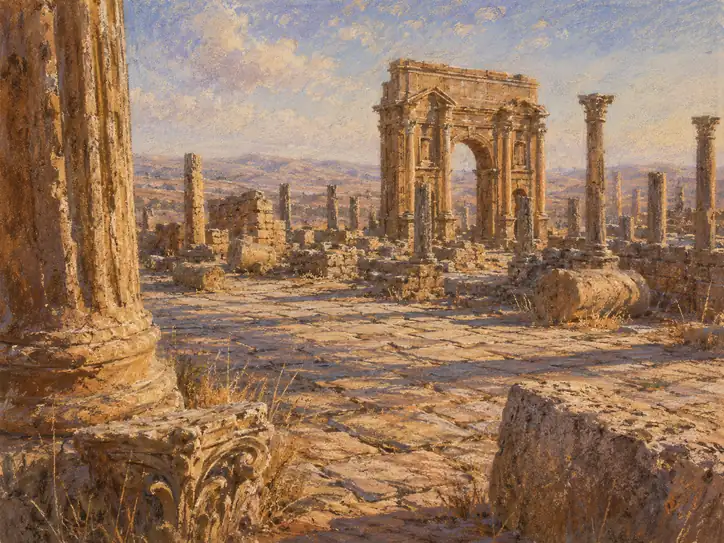 The Silent Dignity of Time
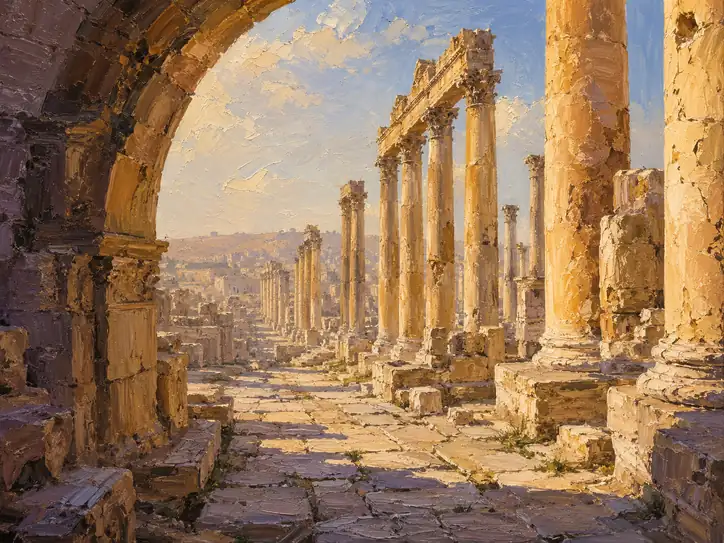 Whispers of Stone and Golden Light
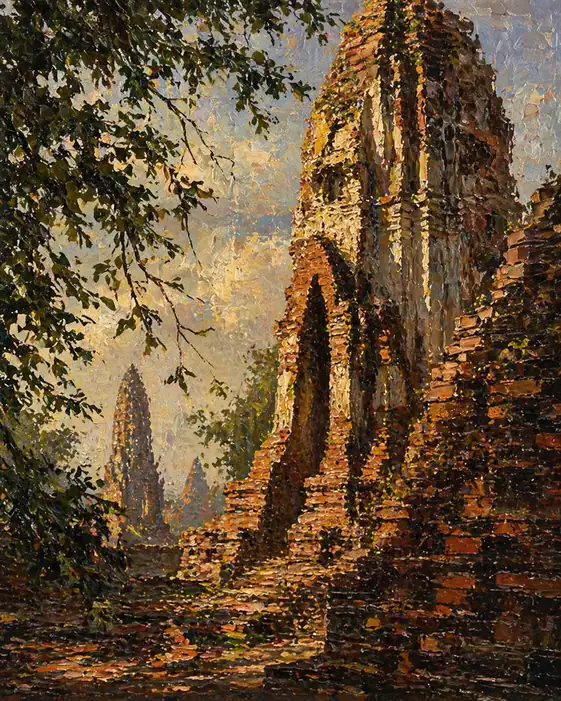 Echoes of a Forgotten Kingdom
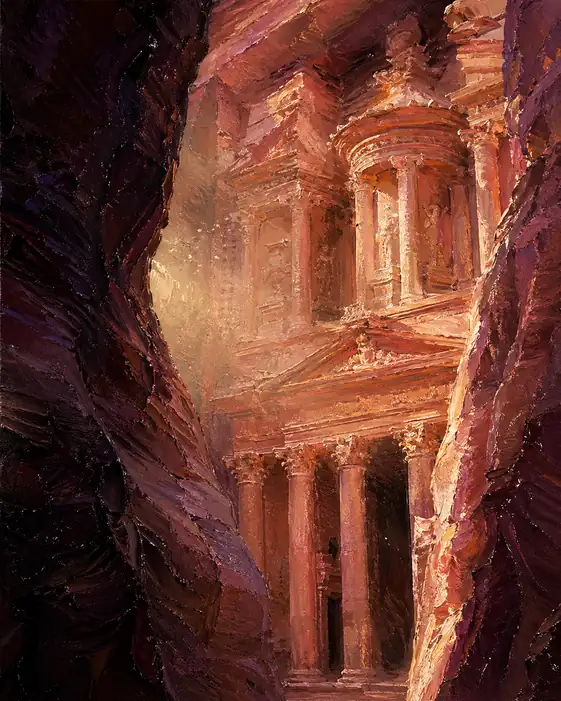 Threshold of Eternity: The Golden Secret of the Canyon
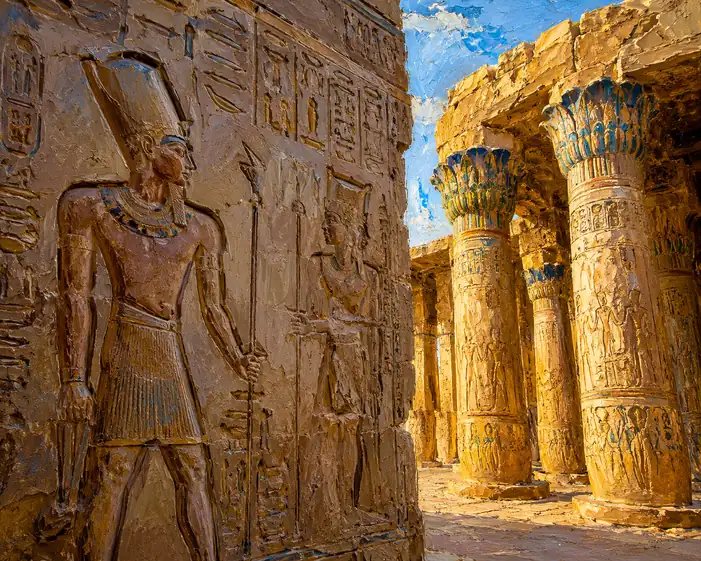 Echoes of the Golden Dynasty
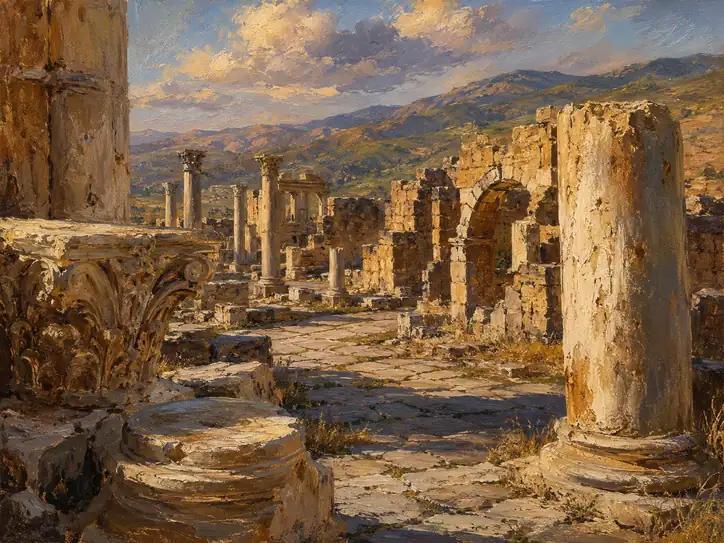 Where Glory Rests in Gold
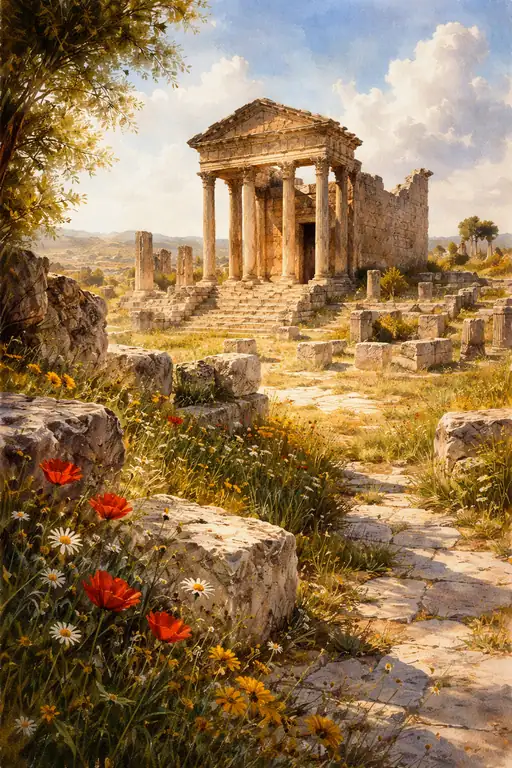 Where Time Sleeps Among the Ruins
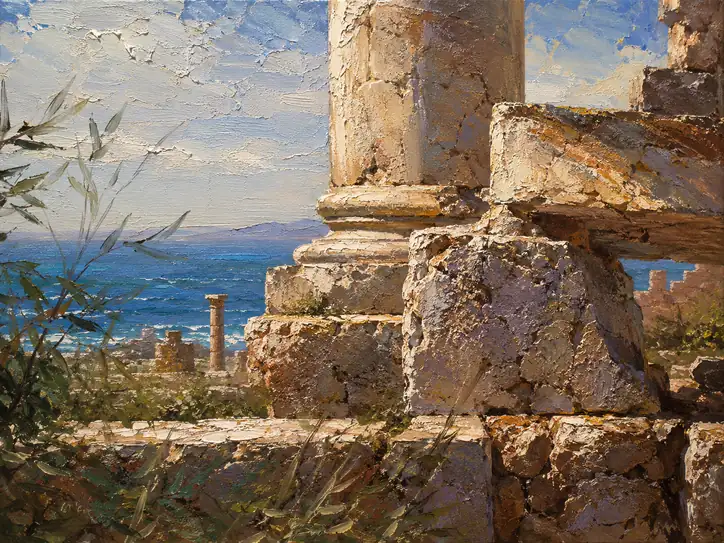 Sentinel of the Eternal Ocean
 The Silent Witness of Ages