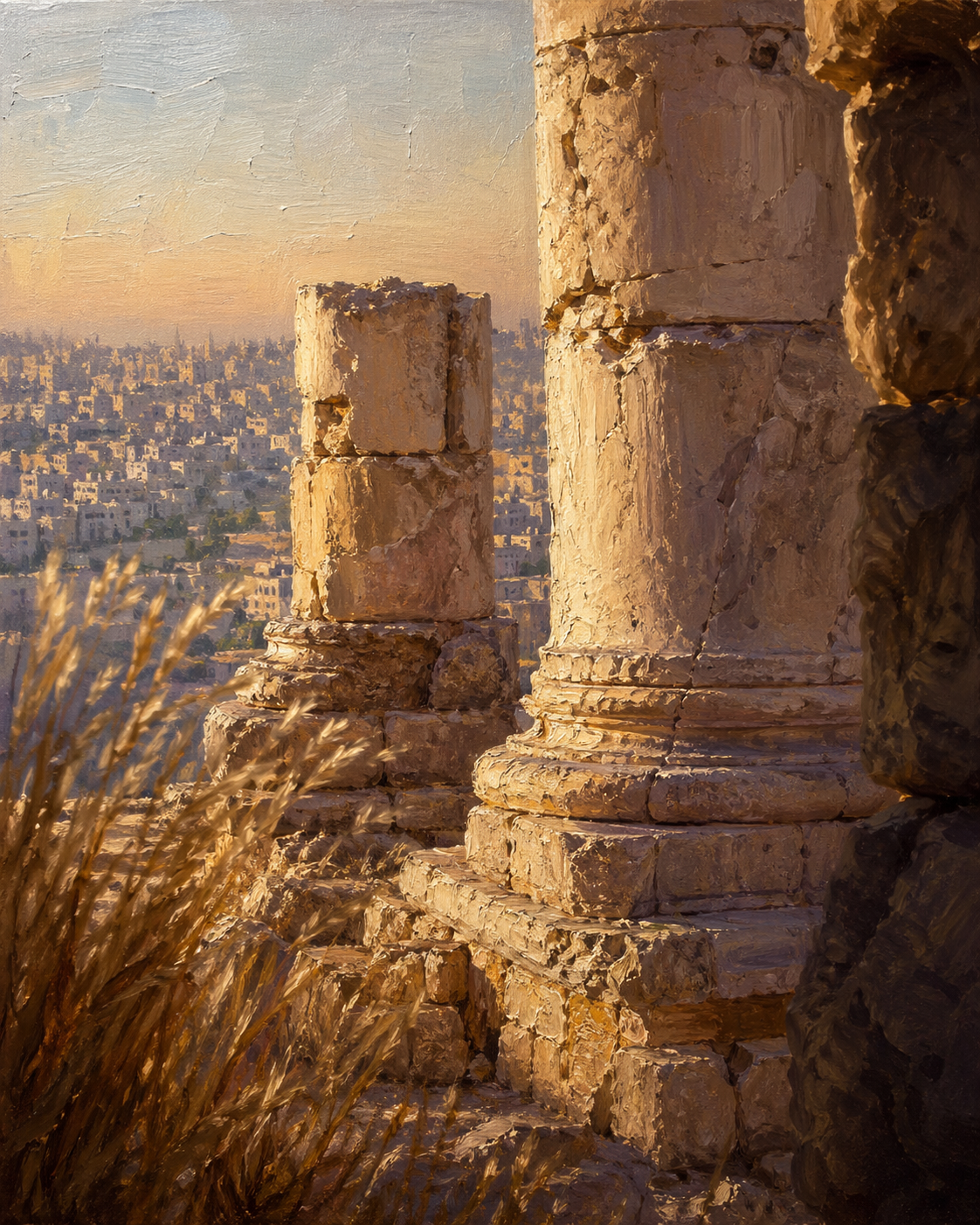
Amman's Golden Memory
Critique
1. Introduction This oil painting presents a dramatic juxtaposition between ancient architectural ruins and a modern urban landscape, all unified under the warm glow of the golden hour. The composition is anchored by several weathered stone columns in the foreground, which look out over a sprawling city that recedes into a hazy, sunlit horizon. Through the bold use of impasto and a warm, monochromatic-leaning palette, the artist explores the themes of time, endurance, and the layers of human history. This work invites a contemplative look at how the remnants of the past continue to overlook and inform the present. 2. Description In the immediate foreground, a cluster of dry, golden-brown grass catches the light, leading the eye to two massive, crumbling stone columns that dominate the right and center of the frame. These columns are rendered with thick, tactile layers of paint that emphasize their cracked and weathered surfaces. Beyond the ruins, a vast valley is filled with a dense, pale urban sprawl consisting of countless buildings that stretch toward the distant hills. The sky above is a soft, graduated blend of pale yellow and blue, suggesting the quiet transition of late afternoon into evening. 3. Analysis The artist employs a shallow depth of field in the foreground, with the sharp textures of the stone and grass contrasting against the softer, more atmospheric rendering of the distant city. The impasto technique is particularly effective here, giving the ancient masonry a physical presence that seems to push out from the canvas. The color palette is harmoniously restricted to warm ochres, tans, and pale yellows, which creates a sense of heat and pervasive sunlight. Light originates from the left, casting long, deep shadows on the right side of the columns and adding to their monumental and weathered character. 4. Interpretation and Evaluation The painting successfully communicates the weight of history through the physical intensity of its medium and the careful choice of perspective. By placing the viewer among the ruins, the artist creates a sense of shared space with the ancient past, while the modern city remains a distant, almost abstract entity. This contrast serves as a powerful metaphor for the persistence of memory and the physical foundations upon which modern civilizations are built. The technical execution is exceptional, specifically in the way the heavy texture of the paint manages to capture the delicate effects of late-afternoon light on stone. 5. Conclusion A closer inspection of the brushwork reveals a sophisticated interplay of light and shadow that gives the ancient columns a remarkable sense of solidity and age. While the initial impression focuses on the dramatic contrast between old and new, the unified lighting eventually suggests a deep connection between these two disparate worlds. The artist has effectively captured the silent, watchful quality of the ruins as they stand above the ever-changing city below. Ultimately, the work stands as a poignant and beautifully executed meditation on the relationship between time, architecture, and the landscape.
Same Subcategory
 The Paintbrush
Similar Artworks
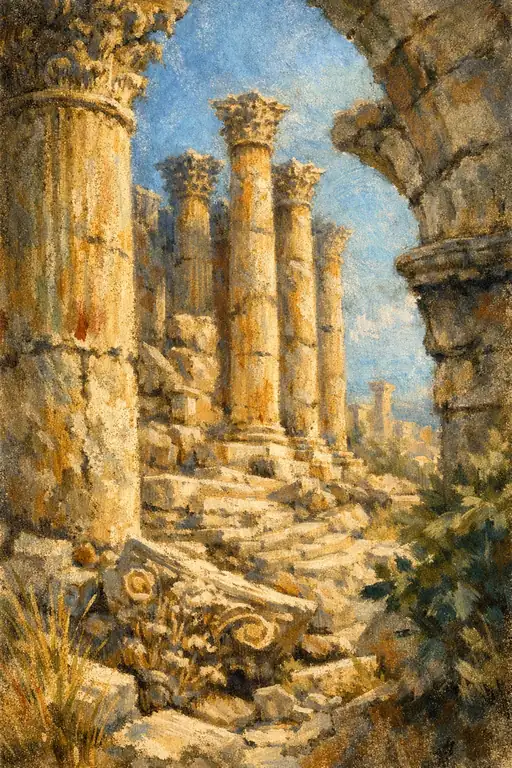 Timeless Grandeur: Weathered Corinthian Columns
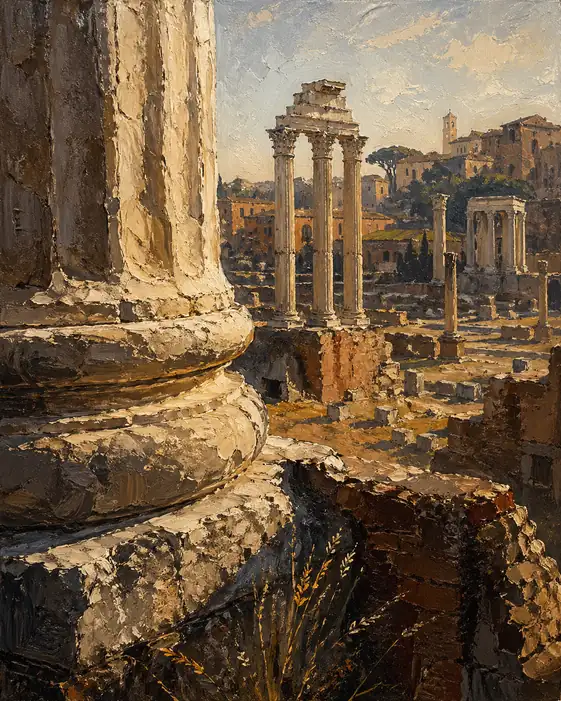 Whispers of the Gilded Forum
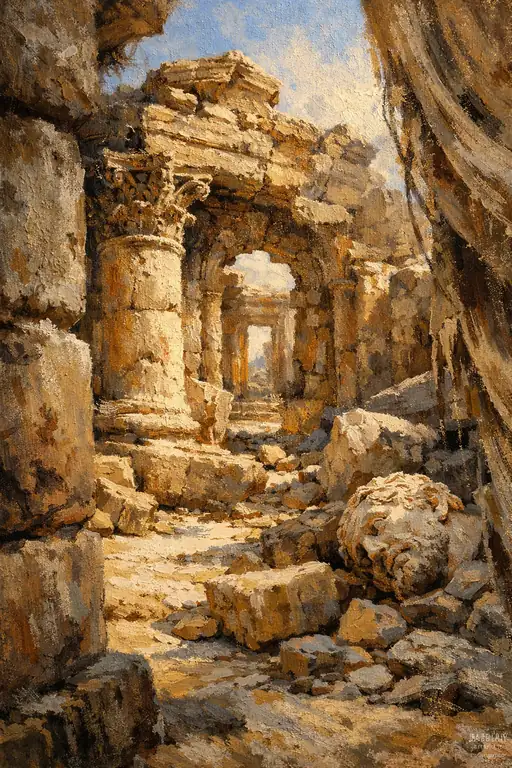 Echoes in Stone: The Sunlit Majesty of Forgotten Arches
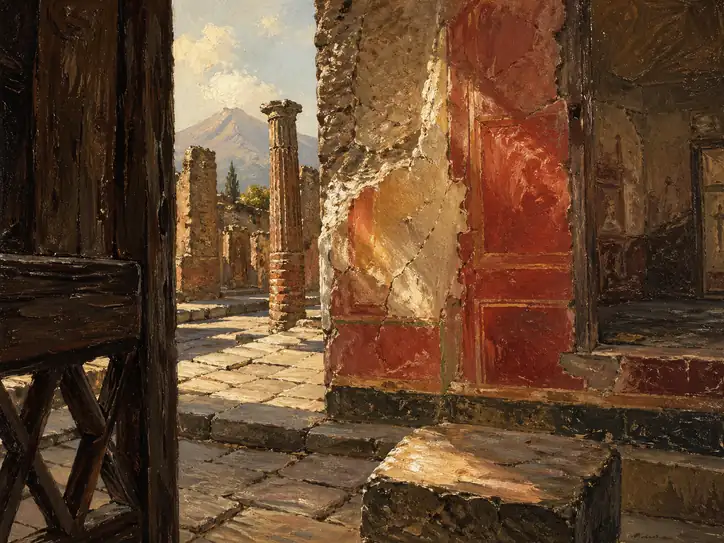 Threshold to a Vanished Sun
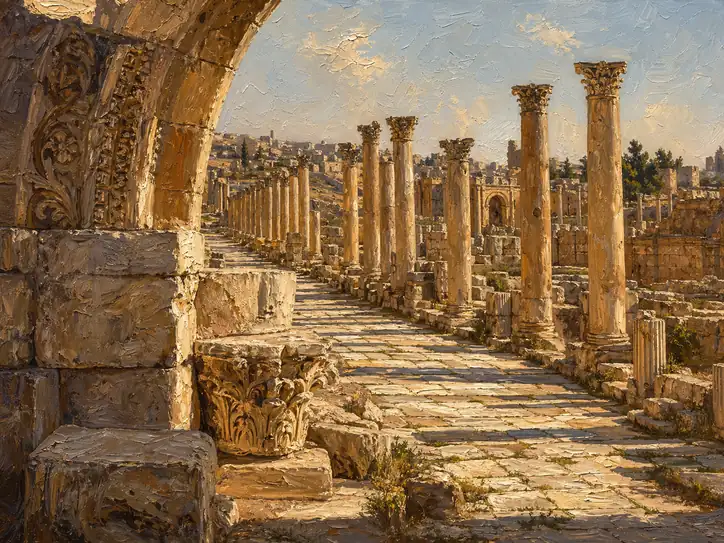 Echoes of the Corinthian Path
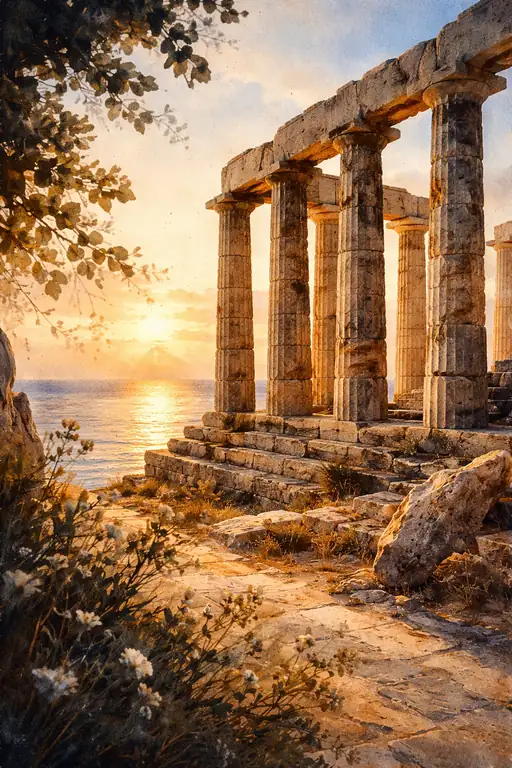 Golden Sun on Ancient Pillars
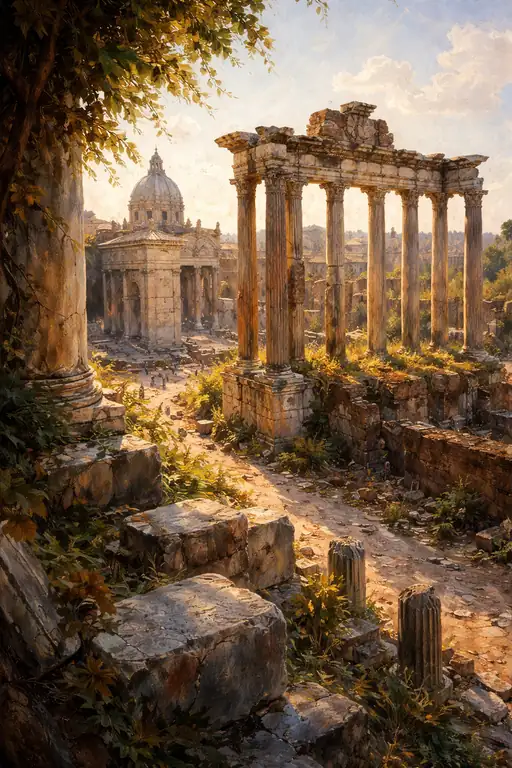 Whispers of the Eternal City's Dawn
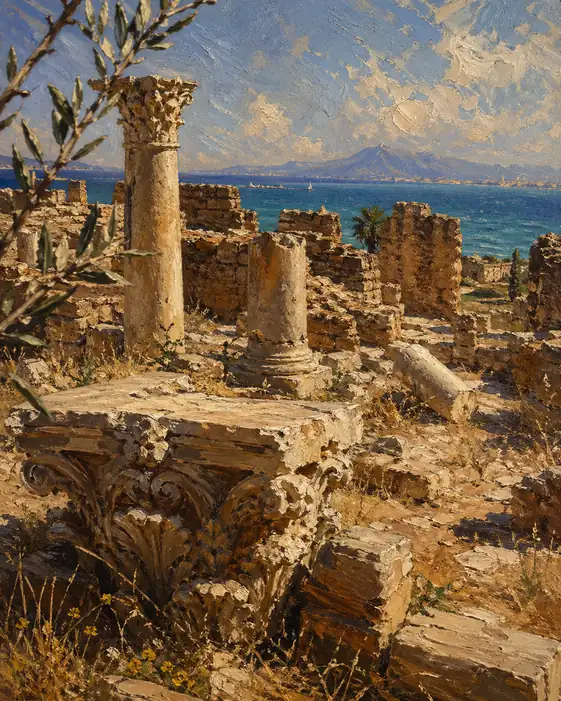 Echoes of Eternity: Where Stone and Sea Unfold
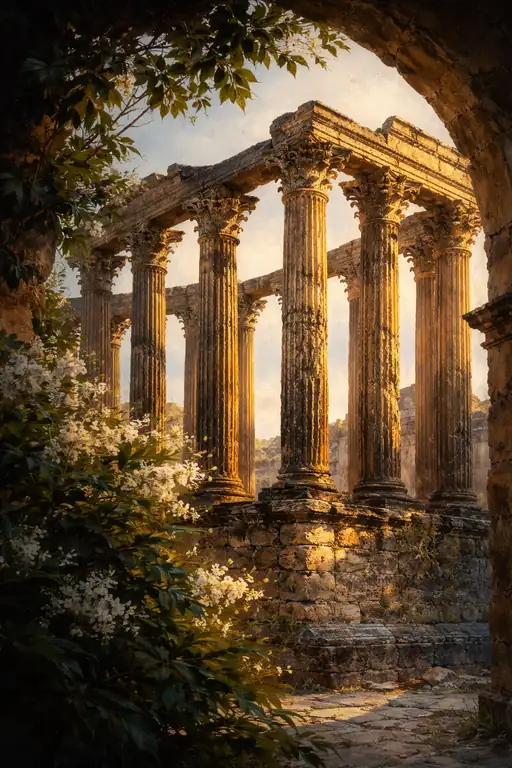 Echoes of Antiquity
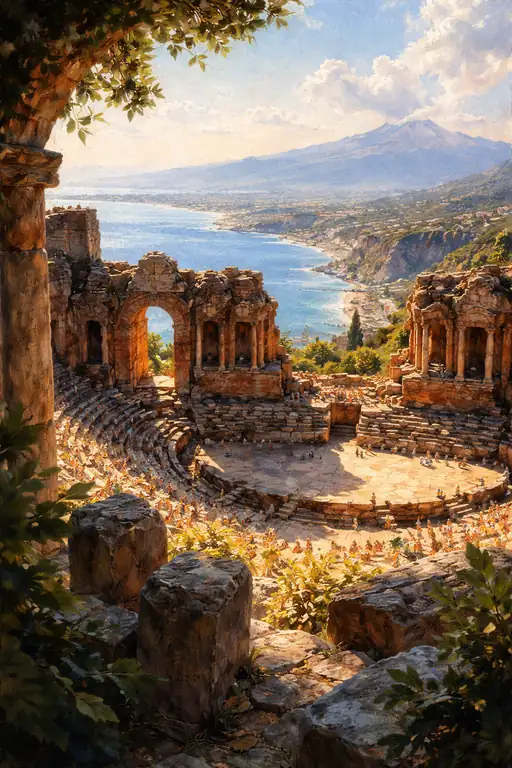 The Ancient Stage's Whisper: A Timeless Romance Overlooking the Sea