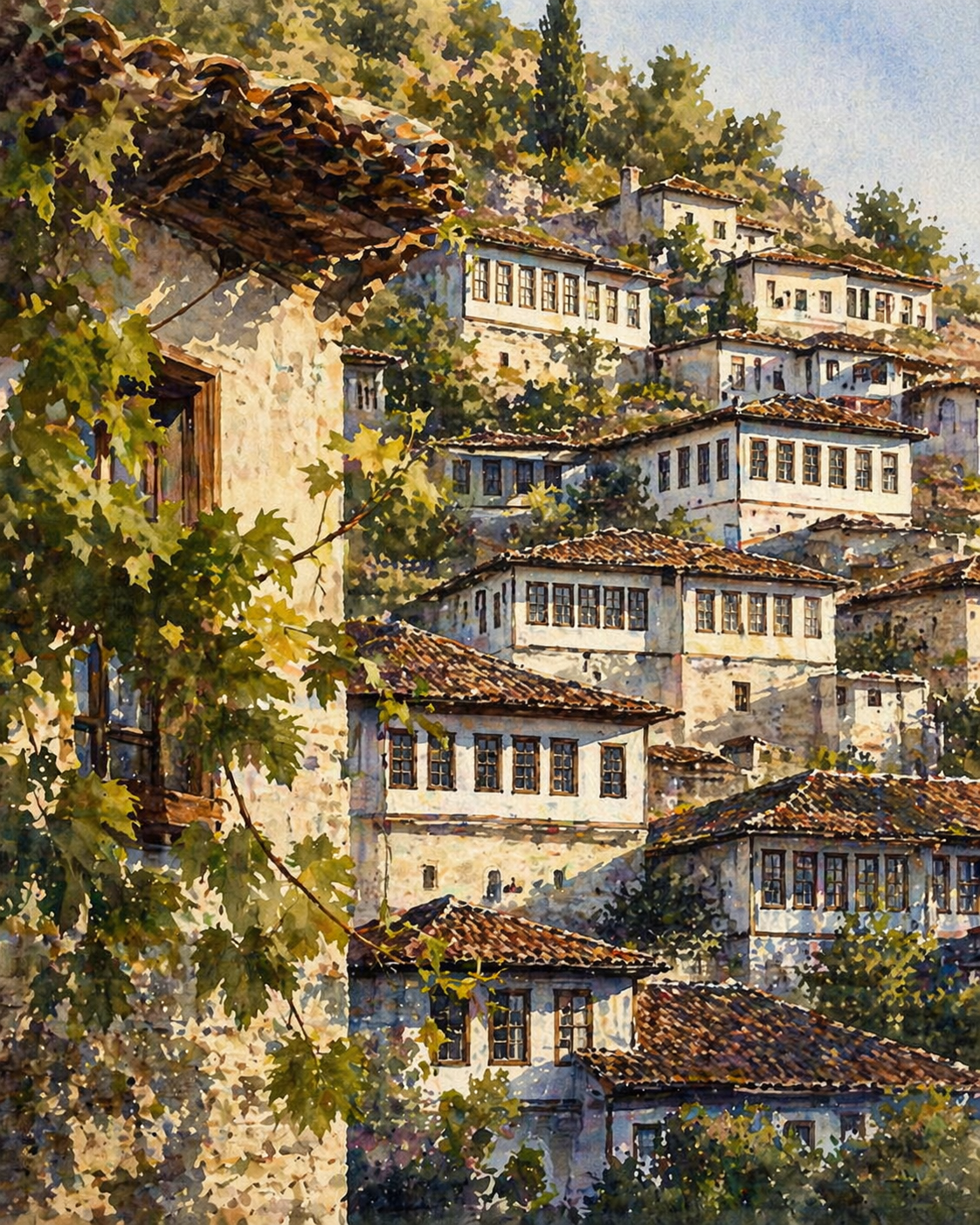
Rhythm of the White Houses
Critique
1. Introduction This vibrant watercolor painting depicts a hillside village characterized by its distinctive historical architecture and steep terrain. The composition is densely packed with white-walled houses featuring multiple rows of windows, creating a rhythmic pattern that leads the viewer’s eye upward toward the summit of the hill. This vertical arrangement effectively highlights the dense spatial organization typical of traditional settlements built on challenging mountain slopes. 2. Description In the immediate foreground on the left, a sun-drenched stone wall is partially covered by a lush green vine with broad leaves, adding a touch of organic life. The rest of the scene is occupied by Ottoman-style residences with terracotta tile roofs and dark wooden window frames, all built in close proximity on the sloping landscape. Above the cluster of houses, the hillside continues with scattered greenery under a clear, pale blue sky. 3. Analysis The artist effectively uses a high-contrast lighting scheme, where bright highlights on the white facades are set against deep, cooling shadows that define the structural depth. The fine details in the masonry and the individual tiles of the roofs are rendered with a delicate yet precise touch, showcasing the technical range of the watercolor medium. The greenery provides a soft, organic contrast to the structured geometric forms and repetitive window patterns of the buildings. 4. Interpretation and Evaluation The repetitive nature of the windows and the vertical stacking of the houses evoke a sense of a tightly knit and enduring community. The warmth of the sunlight and the abundance of foliage suggest a harmonious relationship between the man-made structures and the natural environment of the region. Technically, the mastery of the medium is evident in the control of transparency and the subtle layering of washes that give the scene its luminous quality. 5. Conclusion By capturing the unique architectural rhythm of a historical mountain town, the work succeeds in conveying a sense of timeless cultural heritage. What begins as a study of repetitive windows and stone walls ultimately transforms into a vibrant celebration of a lived-in landscape that has evolved over centuries. The painting leaves the viewer with a deep appreciation for the aesthetic and structural integrity of this traditional urban form, standing as a quiet tribute to architectural endurance.
Same Subcategory
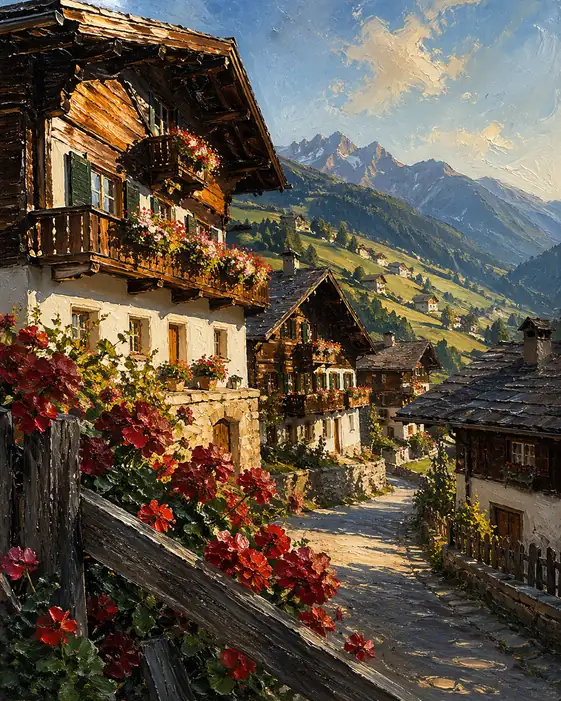 Alpine Chalet Bloom
Similar Artworks
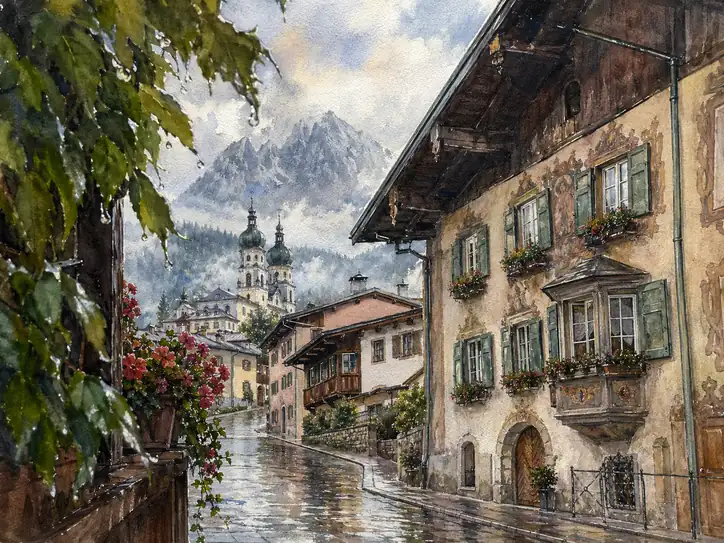 A Charming Alpine Village Glistening Under a Gentle Rainfall
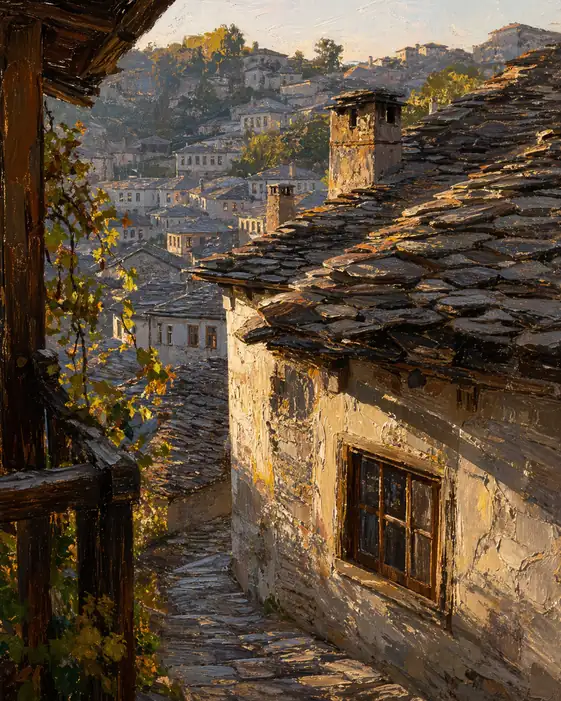 Slumber of the Stone Roofs
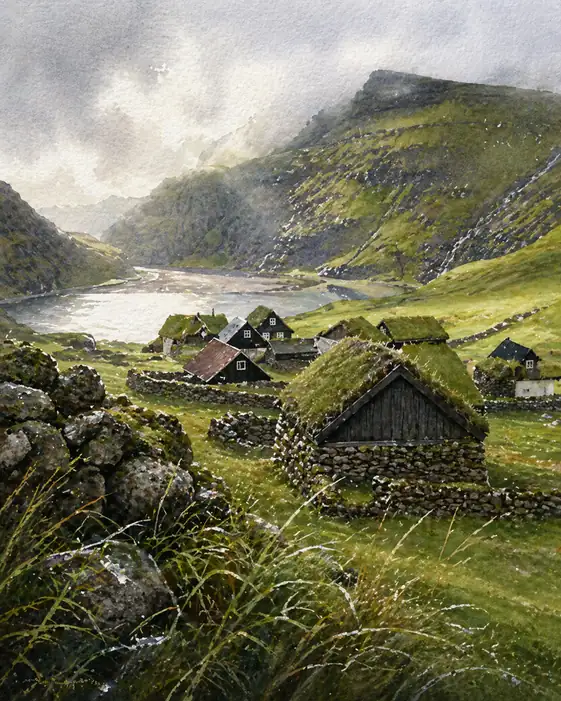 Valley of Quiet Time
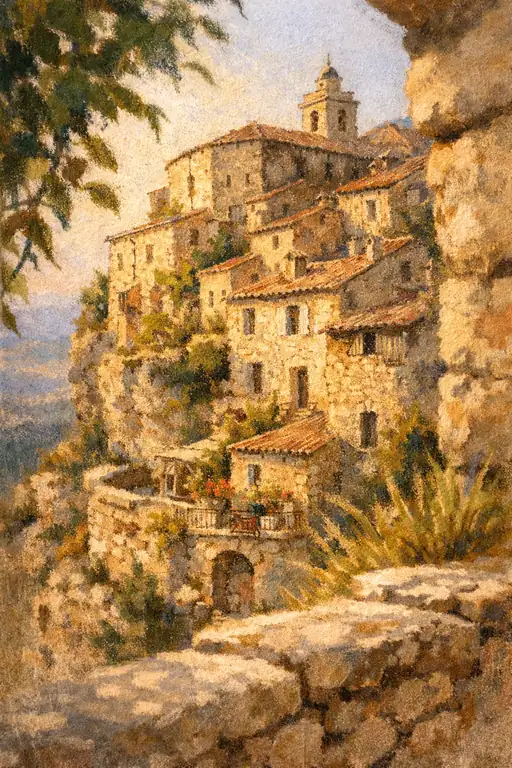 Golden Ascent to the Medieval Bell
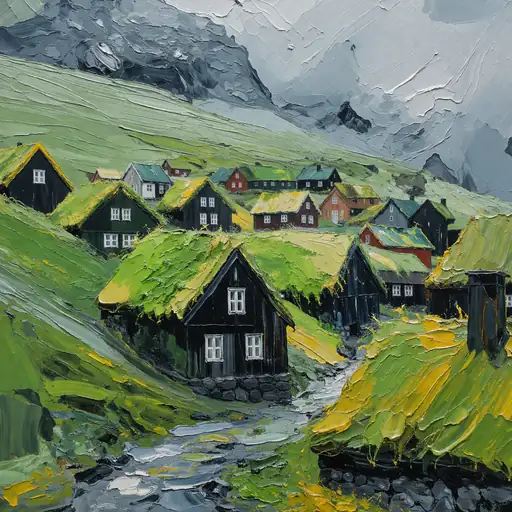 Embrace of the Slumbering Mountains
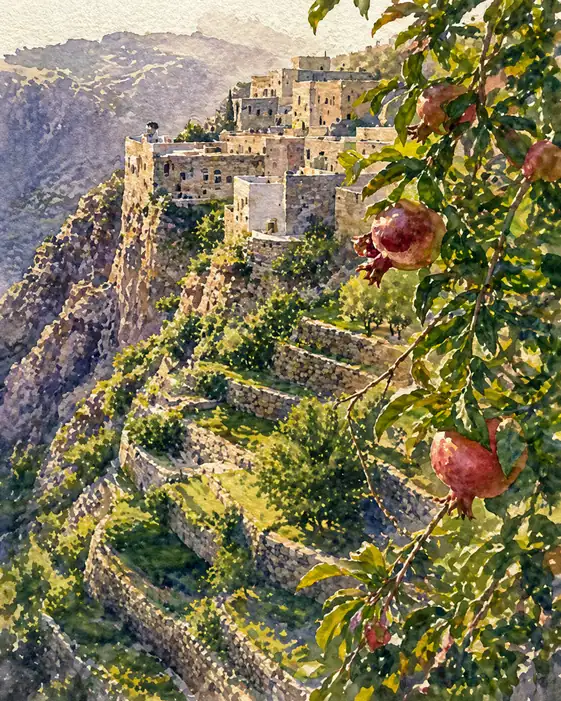 Harvest on the Terraced Slopes
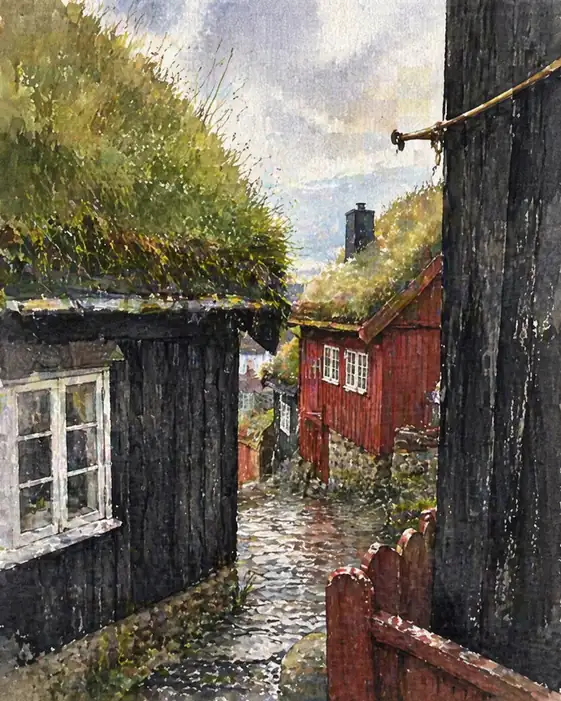 Whispers of the Turf Roof
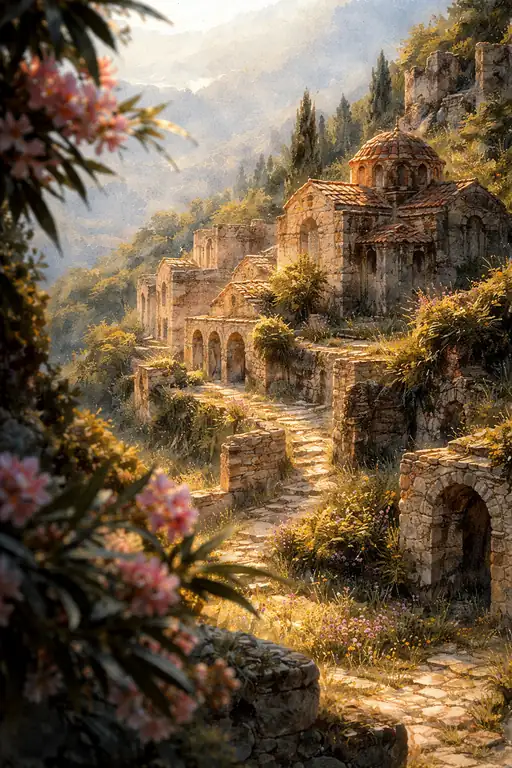 Whispers of the Mount: A Byzantine Reverie
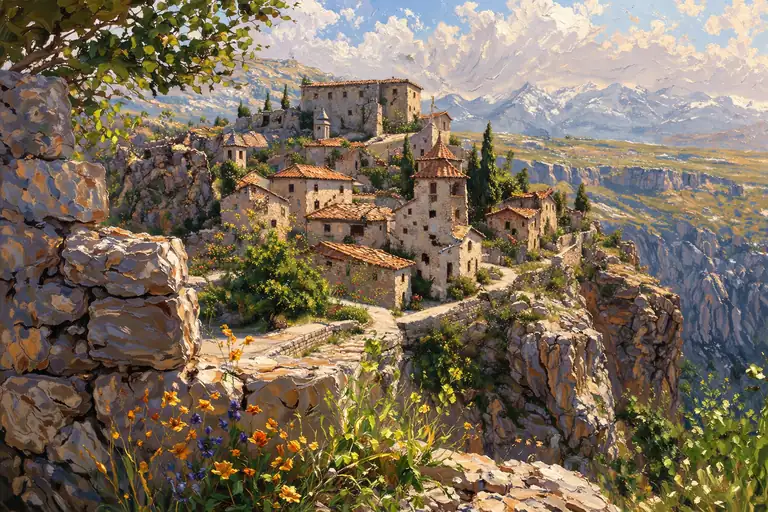 Fortress Among the Alpine Flora
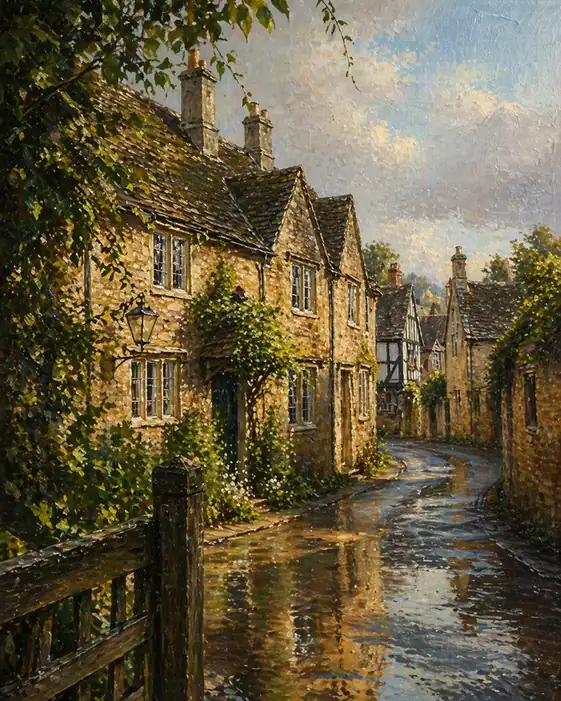 Rainy Cotswolds Street