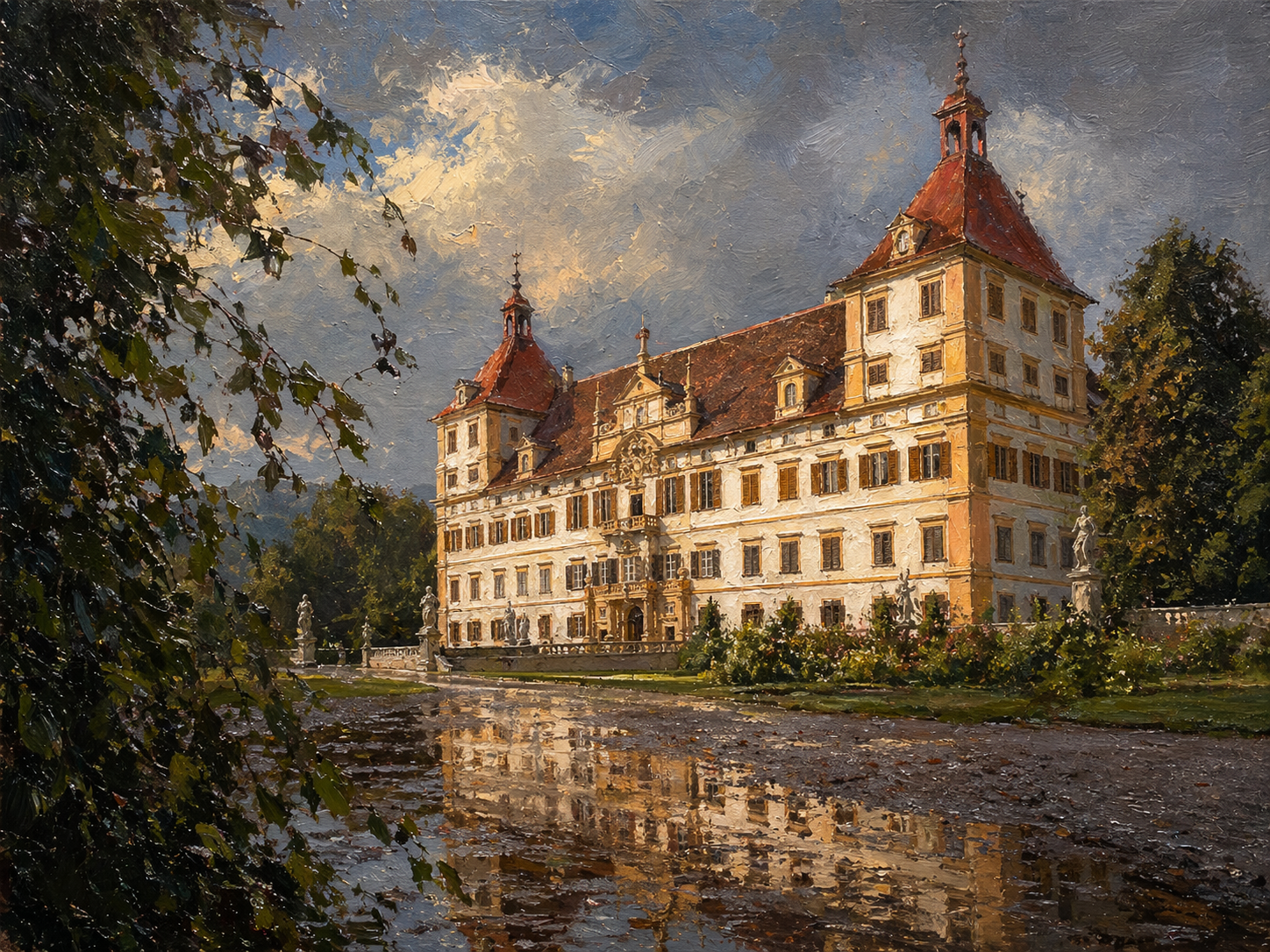
Baroque Palace
Critique
1. Introduction This oil painting presents a magnificent historical edifice, a Baroque palace whose grand presence is doubled by its reflection in the foreground water. The composition centers on the architectural structure, which dominates the mid-ground and extends toward the right, anchored by two prominent towers with crimson roofs. The dramatic sky filled with billowing clouds creates a sense of movement that contrasts with the solid, enduring nature of the stone building. 2. Description The palace features four levels of systematically arranged windows, suggesting a sense of classical order and grandeur. These windows, depicted with dark rectangular strokes, punctuate the light-colored facade of the building. In the foreground, a reflective surface, perhaps a shallow pond or a wet plaza, captures the building’s likeness in shimmering, fragmented colors. To the left, a curtain of delicate foliage frames the scene, providing a naturalistic contrast to the structured geometry of the architecture. 3. Analysis The work is characterized by its expressive impasto technique, where thick layers of paint are applied with visible, energetic brushstrokes. This tactile approach is particularly evident in the sky and the water’s surface, where the heavy texture creates a dynamic interplay of light and shadow. The color palette is composed of harmonious earth tones, with the creamy whites of the building walls balanced by the warm reds of the roofs and the deep blues of the sky. 4. Interpretation and Evaluation This piece meditates on the relationship between permanent man-made structures and fleeting natural elements like light and weather. The decision to prioritize texture and atmosphere over meticulous detail imbues the scene with a poetic quality that transcends mere documentation. The artist’s technical proficiency is especially notable in the handling of reflections, which successfully translate the complex physics of light into a series of emotive, colorful strokes. 5. Conclusion While the initial impression is one of architectural majesty, a closer inspection reveals a profound sensitivity to the environment's sensory qualities. The painting succeeds in merging historical gravitas with a modern, painterly sensibility that remains engaging. It stands as a testament to the power of texture in conveying both the weight of history and the lightness of a passing moment.
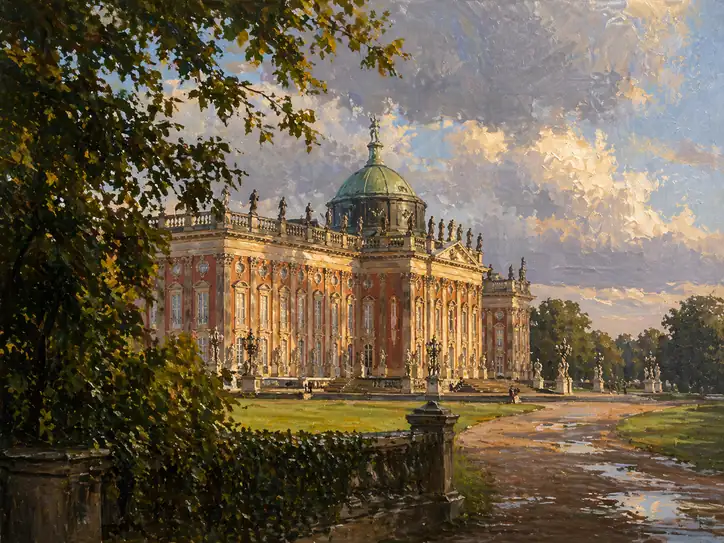 Sublime Pillars of the Misty Dawn
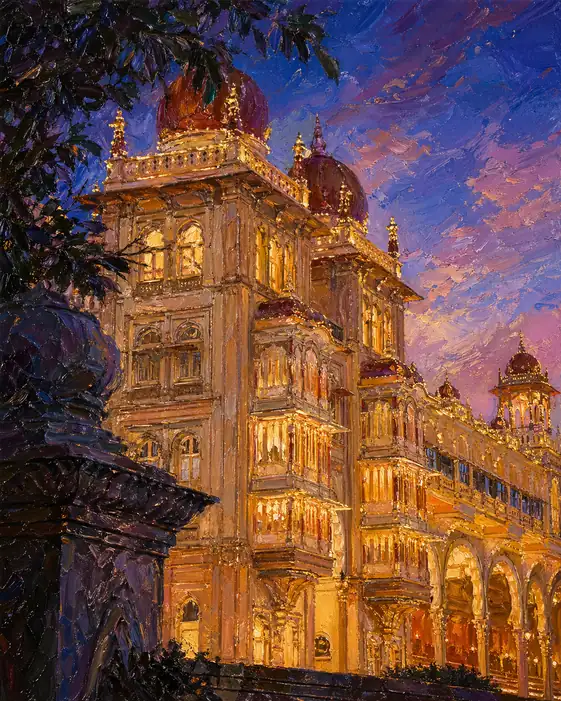 The Sanctuary of Golden Dreams
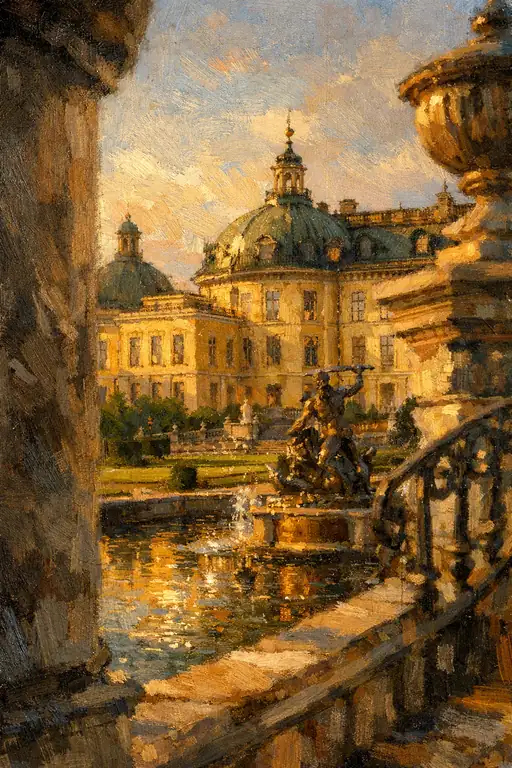 Drottningholm Palace in Golden Splendor
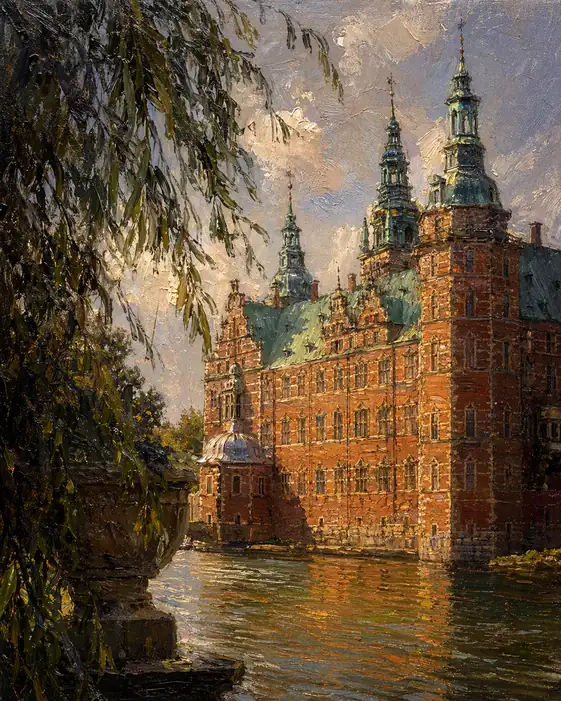 Echoes of the Fiery Palace
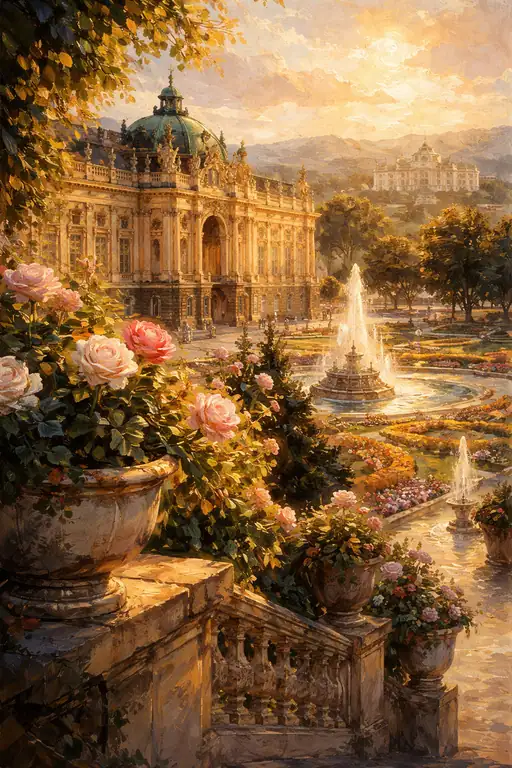 Baroque Sunsets over the Estate
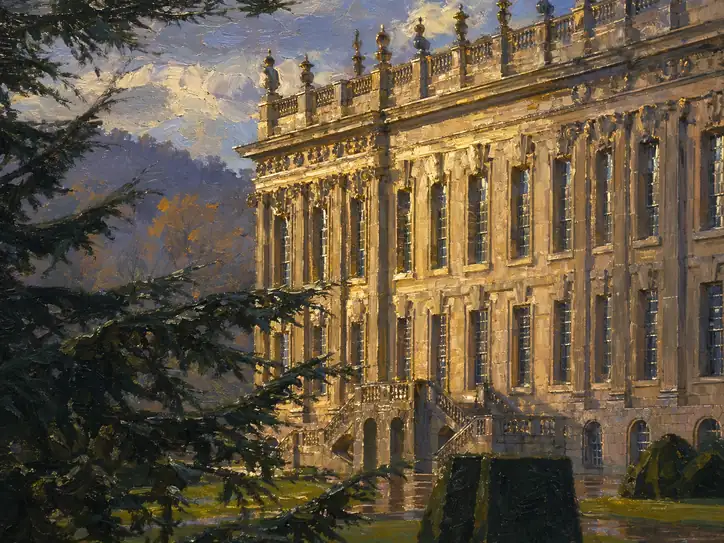 Golden Chatsworth
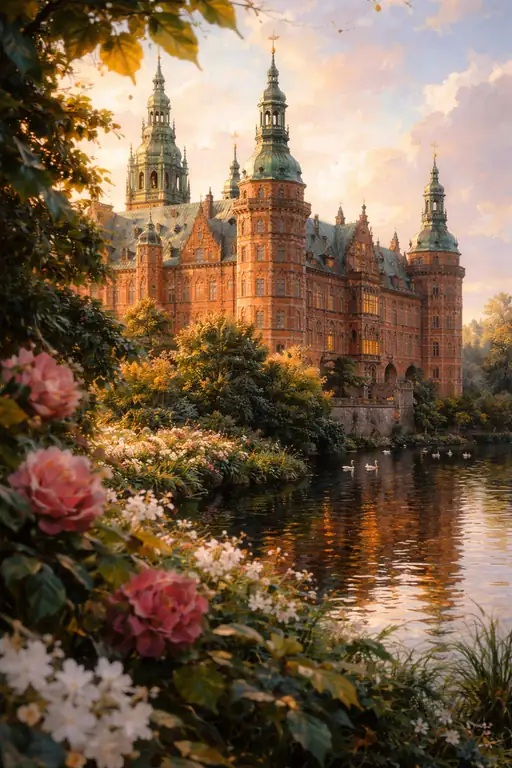 Serenade of the Dawn Lake
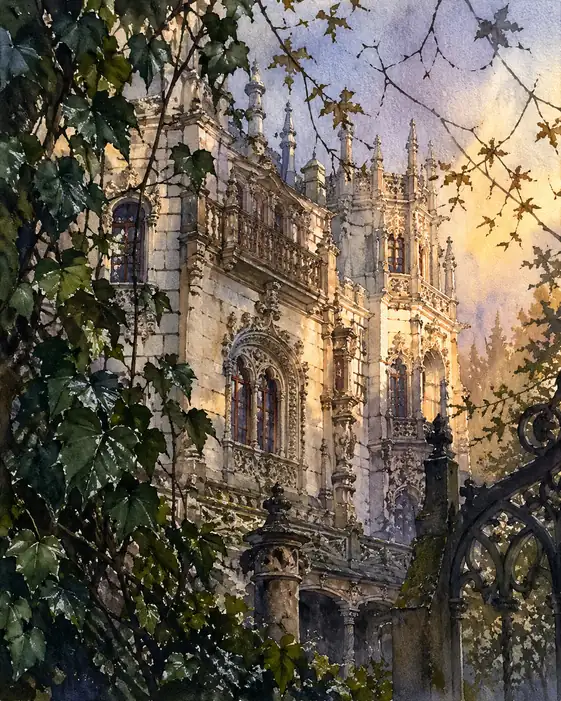 Echoes of the Gilded Era
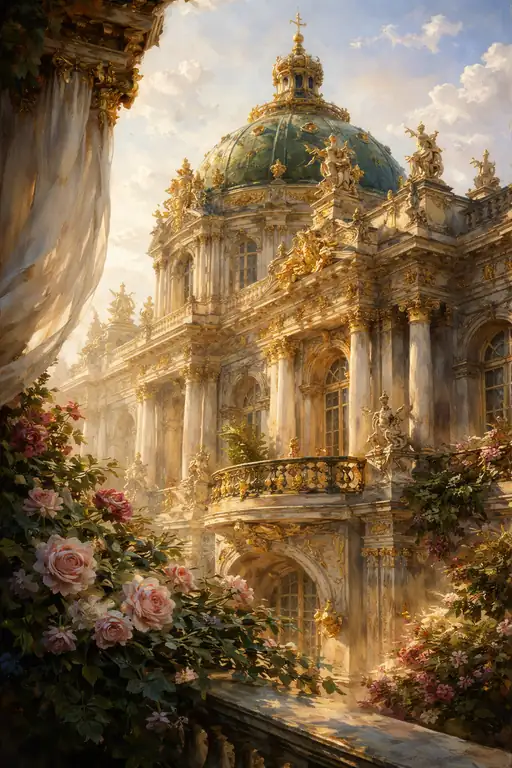 Golden Roses of the Baroque Era
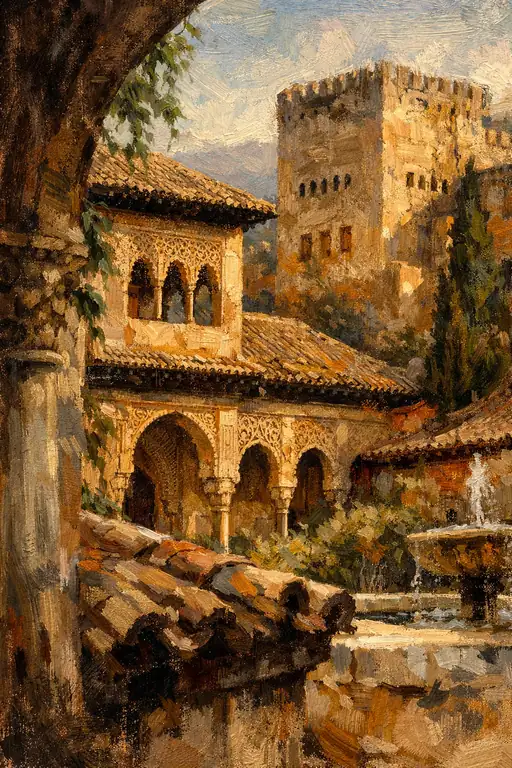 Whispers of the Moorish Stone
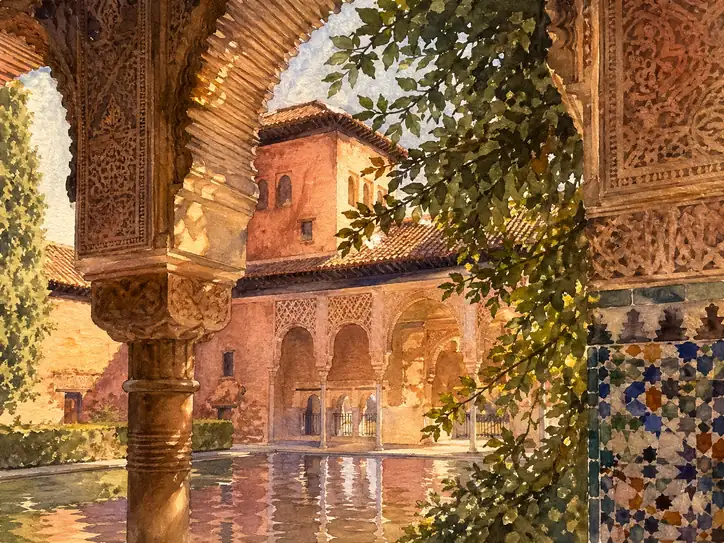 Whispers of the Alhambra Pool