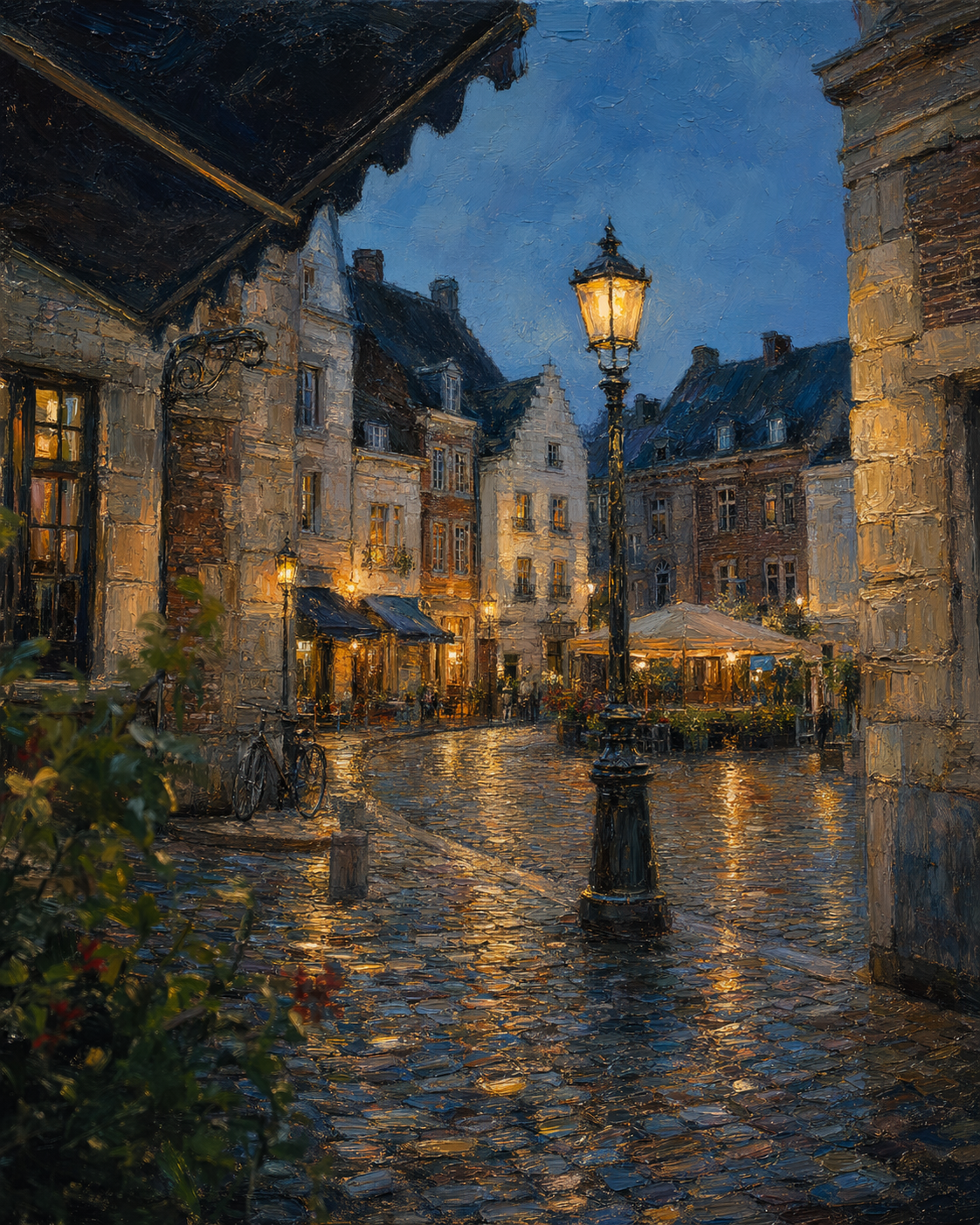
Nocturnal Glow on Wet Cobblestones
Critique
1. Introduction This oil painting captures a poetic night scene in an old European city square. It depicts a moment where the warm glow of street lamps reflects off wet cobblestones, creating a balance between silence and vitality. The heavy impasto technique provides the canvas with a distinctive texture and significant depth. The work successfully crystallizes the lyrical atmosphere inherent in urban nocturnal environments. 2. Description A single street lamp glows with golden light at the center of the composition, illuminating the surroundings. In the background, historic stone buildings line the street, with several windows emitting a soft interior light. The ground consists of rain-slicked cobblestones that brilliantly reflect the various light sources. A black bicycle is parked on the left, while foliage in the immediate foreground frames the scene. 3. Analysis The color scheme is built upon the contrast between the deep navy of the night sky and the warm amber tones of the lights. Bold brushstrokes and thick layers of paint give the shimmering light a physical presence on the surface. Particularly in the depiction of the wet street, the accumulation of small touches effectively represents the scattering of light. The vertical lamp post and the converging street lines create a stable composition. 4. Interpretation and Evaluation The work succeeds in drawing out the lyricism of the city through the dramatic interplay of light and shadow. The expressive power achieved through the impasto technique possesses an emotional resonance that goes beyond simple visual reproduction. A keen sensitivity in capturing light reflections as clusters of color gives the entire screen a sense of rhythm. It is an excellent piece that reconstructs a traditional subject with a modern sensibility. 5. Conclusion As one continues to observe, the layers of overlapping colors begin to feel like the actual density of the night air. The multilayered expressions of light resonate with the viewer's own memories of nocturnal landscapes. Ultimately, this painting serves as both a celebration of the beauty of light and a symbol of the peacefulness found in a quiet city at night.
Same Subcategory
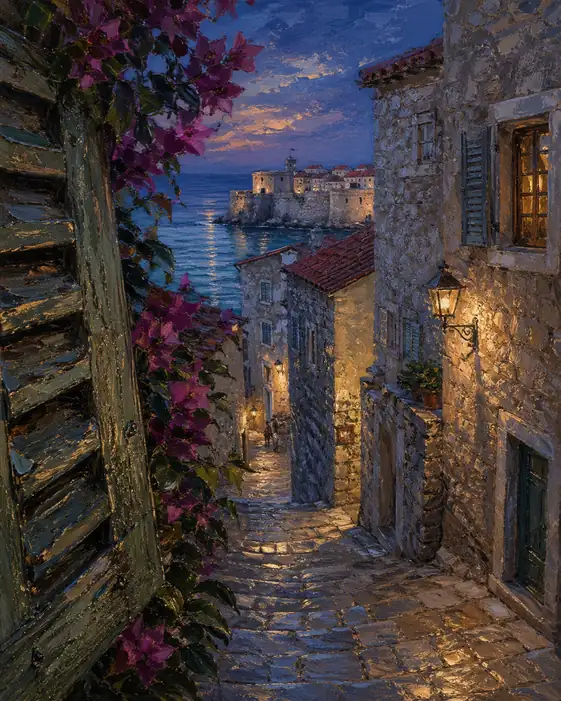 Twilight's Embrace on the Adriatic
Similar Artworks
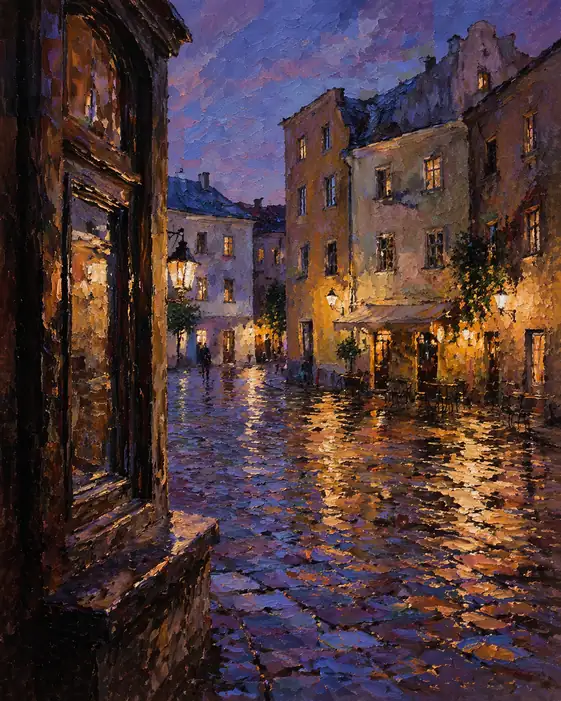 Reflections of Evening: Cobblestone Glow
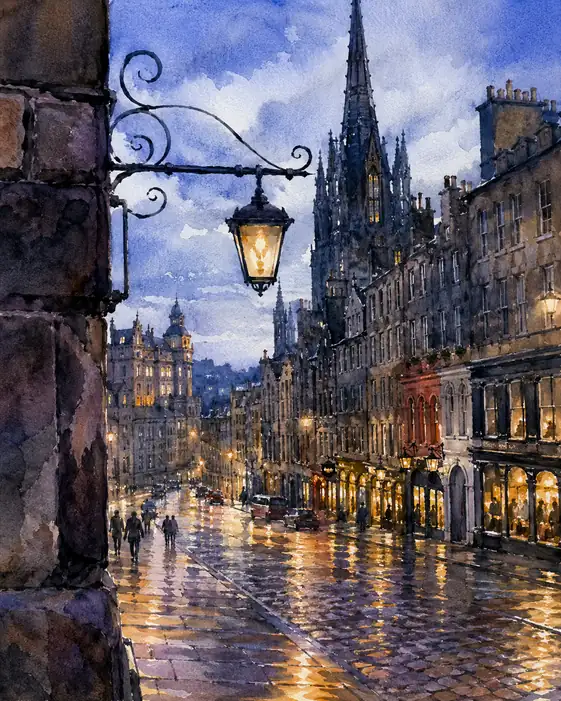 Tears of the Cobblestones
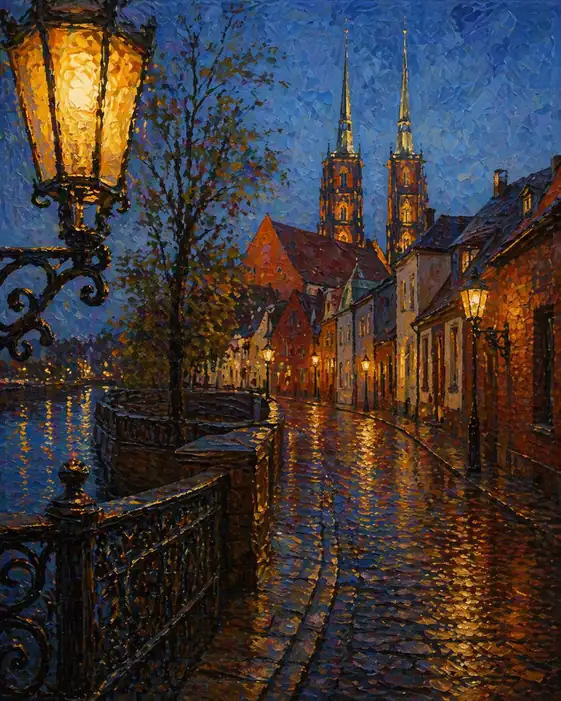 Gleaming Footsteps in the Cobalt Night
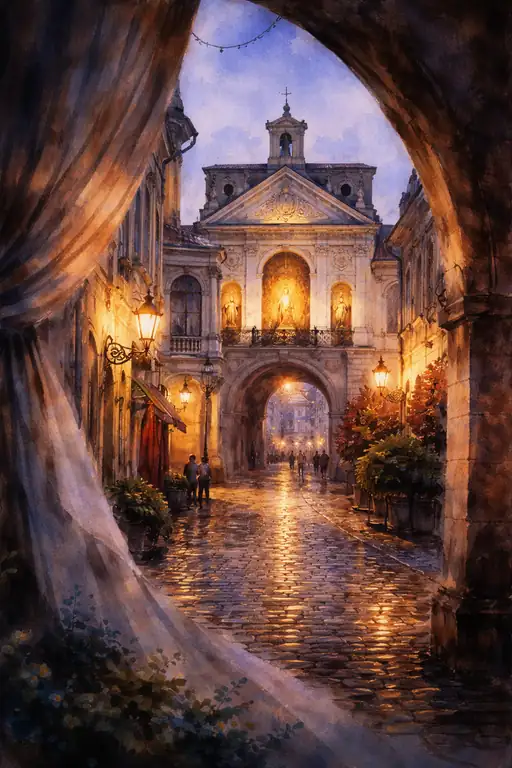 Rain-Slicked Cobblestones at Twilight
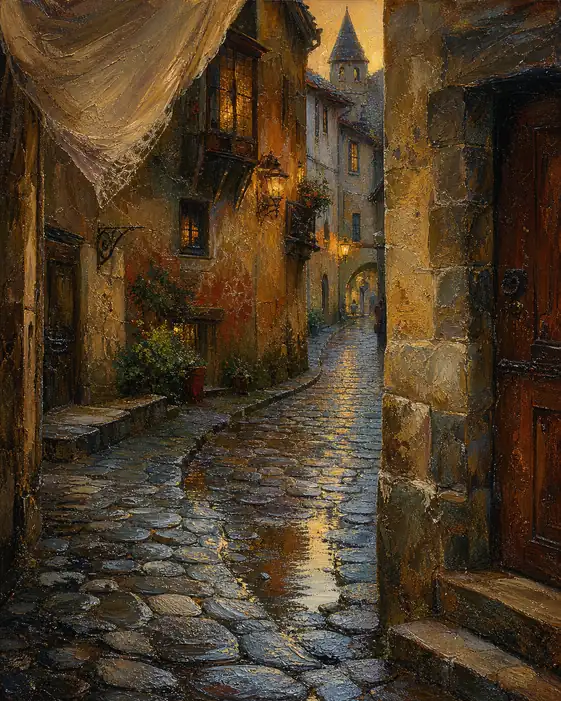 Amber Dreams on the Cobblestone Alley
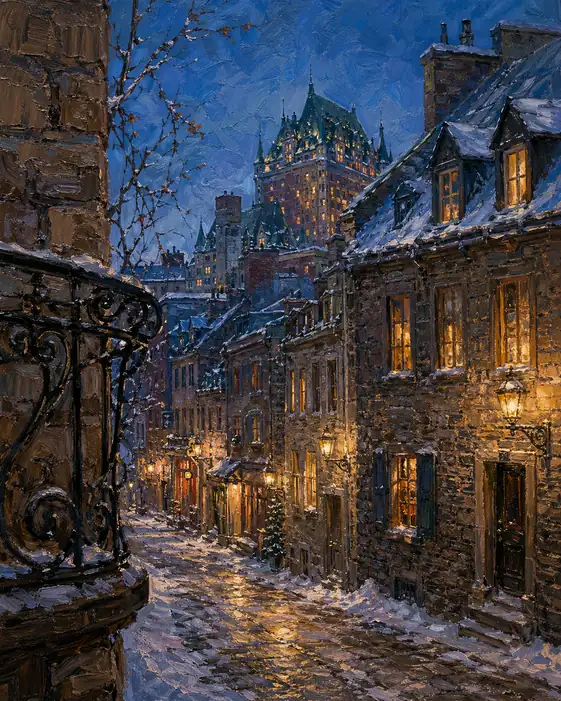 The Warmth of the Northern Night: A Quebec Winter
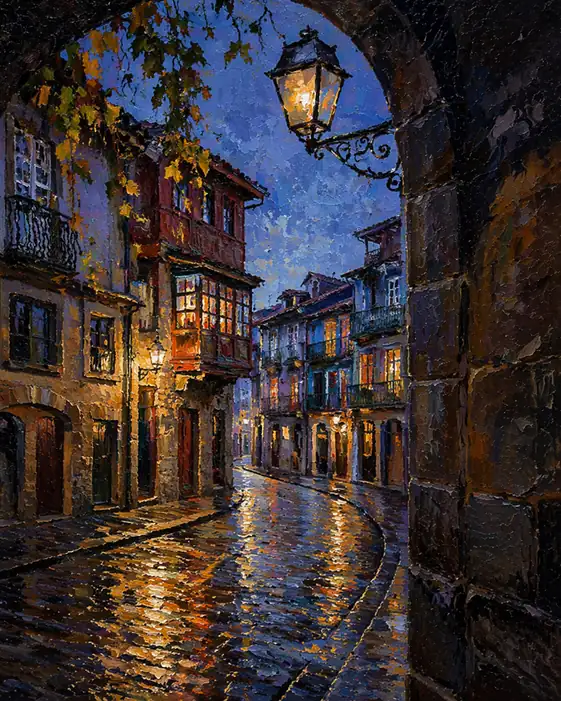 A Moment of Solitude
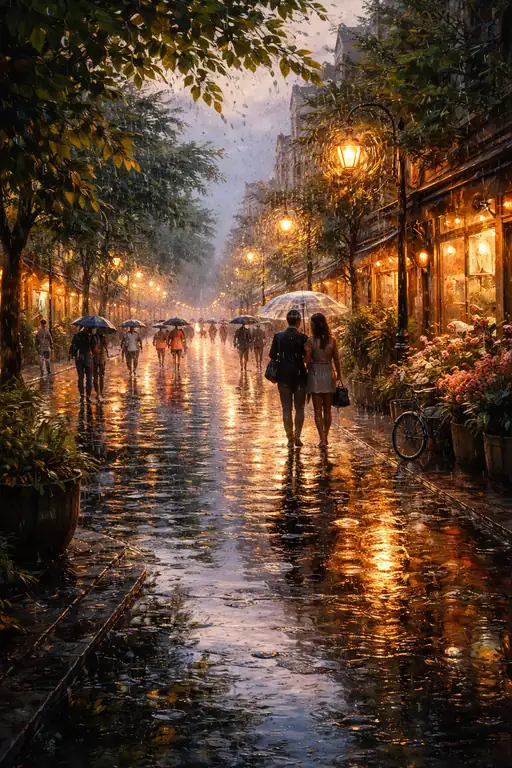 Echoes of Warmth in the Urban Downpour
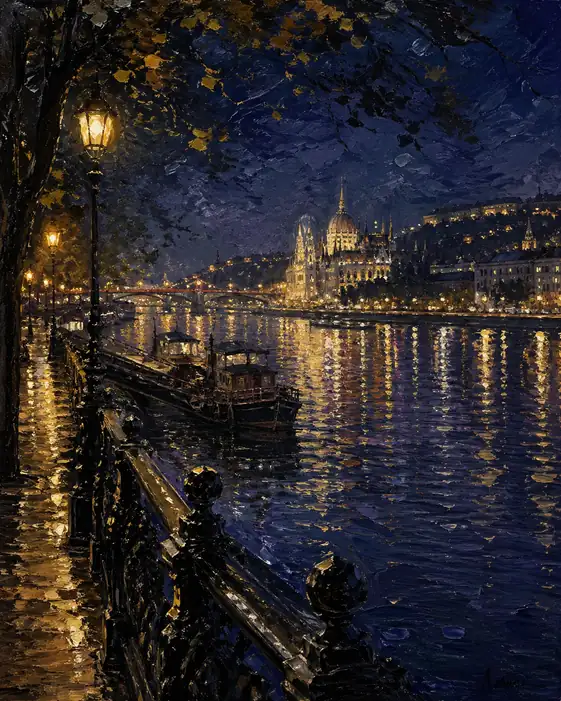 The River's Golden Pulse
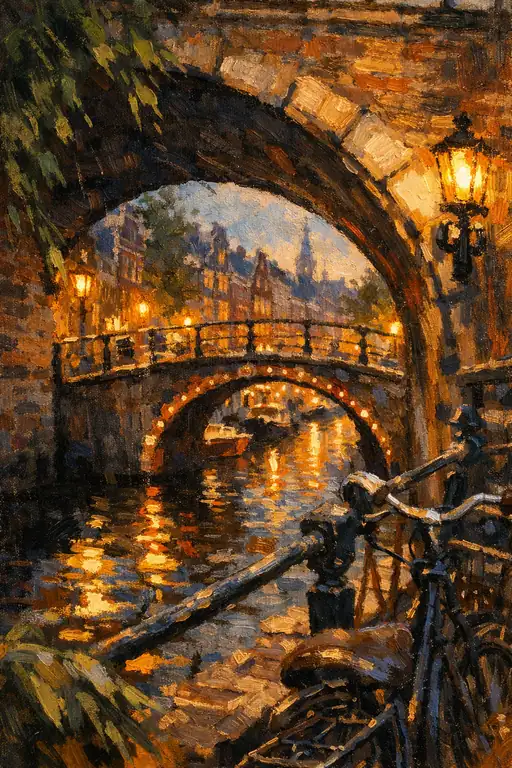 Romantic Amsterdam Canal Night