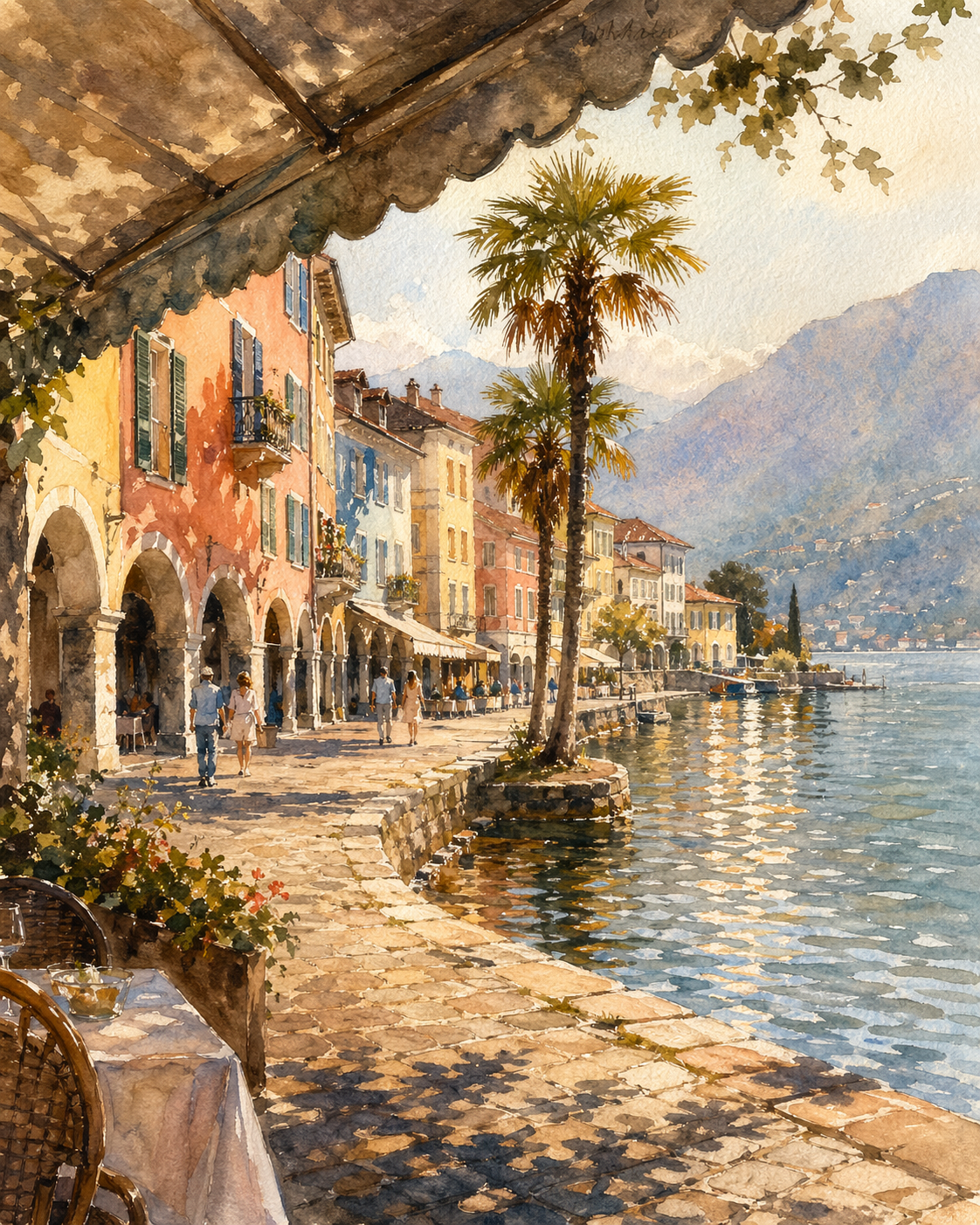
A Mediterranean Dream Through Framed Awnings
Critique
1. Introduction This evocative watercolor painting offers a detailed and luminous view of a Mediterranean lakeside town, capturing a scene of refined architectural beauty and natural splendor. The work invites the viewer to experience the serene atmosphere of a historic promenade, where the interplay of light and water creates a sense of peaceful permanence. Through a skillful application of traditional watercolor techniques, the artist successfully conveys the unique character of a sunlit afternoon in Northern Italy. 2. Description The viewpoint is positioned behind a foreground dining area, framed by an overhead awning and a set table that adds a layer of depth to the composition. Beyond the shaded foreground, a vibrant row of multi-colored buildings with arched porticos lines the curving stone walkway. Several figures are seen strolling along the shore, and two slender palm trees provide a vertical contrast to the horizontal expanse of the lake. The shimmering water reflects the bright sky, which meets a range of distant, soft-hued mountains. 3. Analysis Technical excellence is evident in the artist's handling of complex lighting conditions. The sharp, detailed shadows cast by the foliage and awning across the stone pavement contrast with the broad, transparent washes used for the sky and distant peaks. The color palette is carefully orchestrated, with warm terracotta and gold tones in the buildings harmonizing with the cool blues and greens of the natural environment. The sweeping curve of the promenade effectively leads the spectator's eye from the foreground details into the vastness of the lake and mountains. 4. Interpretation and Evaluation The painting succeeds in creating an atmosphere of idealized tranquility, reflecting a romantic appreciation for Mediterranean coastal life. The balance between the architectural precision of the town and the fluid, atmospheric rendering of the lake demonstrates a high degree of artistic control. The work is particularly effective in its use of reflections to suggest the movement of water and the quality of the light. Overall, the piece is a sophisticated example of topographical landscape art that prioritizes aesthetic harmony and emotional resonance. 5. Conclusion In summary, this watercolor is a masterful representation of a picturesque lakeside setting, distinguished by its luminous quality and engaging composition. The use of a "frame-within-a-frame" technique through the foreground elements enhances the sense of depth and immersion. Analysis reveals a deep proficiency in the medium, particularly in the management of tonal values and textural variations. The resulting image is one of enduring charm, capturing the timeless appeal of a European retreat with remarkable clarity.
Same Subcategory
 Ascending the Cobblestone Street to Twilight
Similar Artworks
 Echoes of Summer on the Mediterranean Shore
 Whispers of a Timeless Afternoon
 Twilight Path to the Timeless Shore
 Descending the Cobblestone Path to the Lake
 Sunlit Path: A Cobblestone Memory
 Rain-washed Cobblestones Under the Arch
 A Vibrant Descent into a Sunlit Haven
 The Spire's Watch: Afternoon in the Old Town
 Beyond the Horizon
 Lost in the Starlight